



What Central Illinois Water Quality and What It Means for Your Plumbing Actually Tells You
Central Illinois water quality and what it means for your plumbing is something every homeowner in the region needs to understand — because the water flowing through your pipes right now may be quietly damaging them.
Here's a quick summary of what Central Illinois homeowners face:
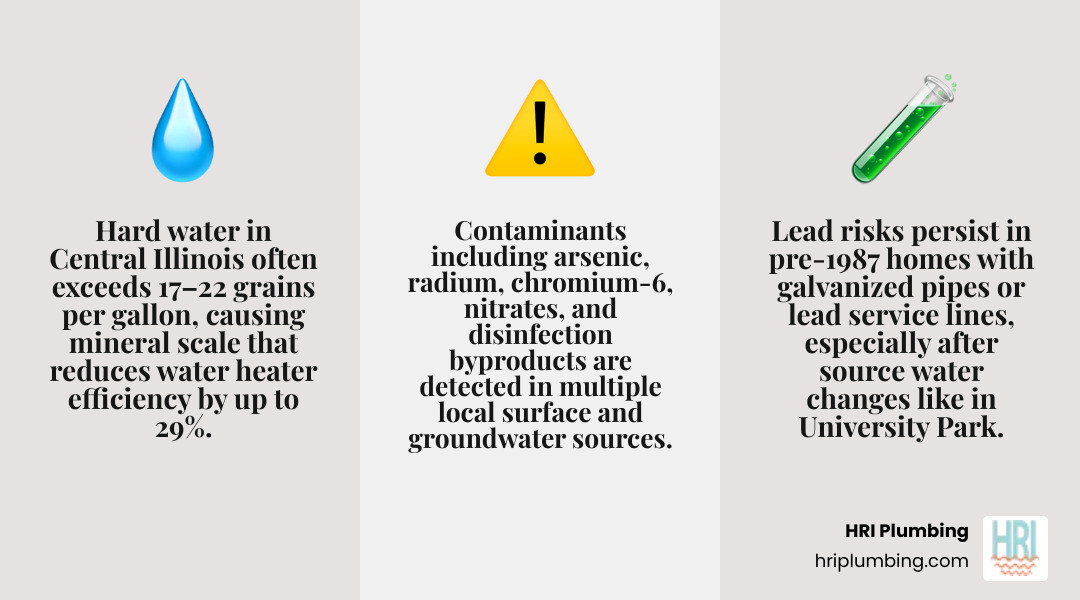
- Hard water (often 17–22+ grains per gallon) causes mineral scale that shortens appliance life and cuts water heater efficiency by up to 29%
- Lead risks exist in older homes with pre-1987 plumbing or galvanized service lines, especially after source water changes
- Contaminants like arsenic, radium, chromium-6, nitrates, and disinfection byproducts are detected in multiple local water systems
- Agricultural runoff and aging infrastructure add pressure on both surface water and groundwater sources
- Your pipes, water heater, and appliances bear the long-term cost of untreated water problems
The water in Central Illinois comes from a mix of sources — the Illinois River, Lake Springfield, Lake Michigan (for communities like Naperville), and deep limestone aquifers. Each source brings its own set of challenges for your home's plumbing system. In 2017, for example, a source water switch in University Park triggered elevated lead levels that weren't detected until 2019, leading to years of regulatory action and remediation efforts. That kind of ripple effect — from water source to household pipe — is exactly why understanding your local water matters.
Understanding Central Illinois Water Quality and What It Means for Your Plumbing
In our experience serving Jacksonville, Springfield, and Rushville, we’ve seen how the geography of Illinois dictates the health of your home's pipes. Central Illinois is a unique landscape where urban centers meet vast agricultural fields, and our water sources reflect that diversity.
The region relies on two primary types of water: surface water and groundwater. Surface water sources, such as Lake Springfield or the Illinois River, are susceptible to seasonal changes. For instance, residents in Springfield often notice "earthy" or "musty" tastes and odors during the summer and fall. This is typically caused by algal compounds like Geosmin and MIB. While these are non-toxic, they often require the utility to use activated carbon treatments and increased flushing of the distribution system to keep the water palatable.
Groundwater, drawn from deep aquifers like the San Koty or various limestone formations, presents a different set of challenges. Because this water filters through rock for centuries, it is packed with minerals. While these minerals aren't necessarily "bad" for your health, they are a nightmare for your plumbing.
Comparing Surface vs. Groundwater Impacts
| Feature | Surface Water (e.g., Lake Springfield) | Groundwater (Aquifers/Wells) |
|---|---|---|
| Primary Issue | Algal blooms, runoff, taste/odor | Extreme hardness, radium, arsenic |
| Plumbing Impact | Potential for corrosive "soft" water | Rapid scale buildup, clogged valves |
| Common Contaminants | Nitrates, disinfection byproducts | Radium, iron, chromium-6 |
| Treatment Needed | Carbon filtration, UV, Chlorine | Water softening, Reverse Osmosis |
Agricultural runoff is another major factor in our region. Nitrates from fertilizers can leach into both surface and groundwater, posing risks to infants and requiring diligent monitoring by local utilities. Industrial activity also plays a role; in areas like Pekin, sandy soils make wells particularly vulnerable to surface contamination from VOCs (volatile organic chemicals), necessitating advanced carbon treatment at the source.
Hard Water Impacts: Central Illinois Water Quality and What It Means for Your Plumbing
If you live in Central Illinois, you likely have "Very Hard" water. In Peoria, hardness levels have been measured at a staggering 22.4 Grains Per Gallon (GPG). To put that in perspective, every gallon of water entering your home contains enough dissolved minerals to fill a tablespoon.
This isn't just a minor inconvenience that causes spots on your wine glasses. It is a financial drain. Hard water is a silent predator for your appliances. When hard water is heated, the minerals (calcium and magnesium) solidify into "scale." This scale acts as an insulator. In a water heater, this means the element has to work much harder to heat the water through a layer of rock.
The statistics are eye-opening:
- Efficiency Loss: Water heaters can lose up to 29% efficiency due to scale buildup.
- Lifespan Reduction: A water heater designed to last 12–15 years often fails in just 6–8 years in our region.
- Hidden Costs: Between extra detergent (up to 35% more needed), energy penalties, and premature appliance repairs, hard water can cost a local family over $1,500 annually.
Addressing these issues requires more than just a basic pitcher filter. You need robust Water Filtration Solutions for Hard Water Problems to protect your home's infrastructure.
Lead Risks and Aging Infrastructure
Lead remains a significant concern across Illinois, particularly in older communities. While the water leaving the treatment plant is lead-free, it can pick up lead as it travels through aging service lines or home plumbing.
In University Park, a switch in water sources changed the water chemistry, causing lead to leach from pipes into the drinking supply. This crisis highlighted the importance of "corrosion control." Utilities often add chemicals like zinc orthophosphate to create a protective coating inside pipes, preventing lead from flaking off.
Illinois has some of the strictest regulations in the country regarding lead service lines. Utilities are currently inventorying these lines, with many programs aiming for full replacement by 2037. However, if your home was built before 1987, there is a high probability you have lead solder or brass fixtures that contain lead. Even galvanized pipes can be a risk, as they can "trap" lead particles over decades and release them later.
Contaminant Risks: Central Illinois Water Quality and What It Means for Your Plumbing
Beyond lead and hardness, several other contaminants frequently exceed health advocacy guidelines in Central Illinois supplies. These include:
- Arsenic and Radium: Naturally occurring elements found in deep Illinois groundwater.
- Chromium-6: A carcinogen often linked to industrial activity.
- Nitrates: Primarily from agricultural fertilizers.
- Disinfection Byproducts (DBPs): Chemicals like Trihalomethanes that form when chlorine reacts with organic matter in surface water.
One of the most overlooked risks is dermal absorption. A study published in the American Journal of Public Health suggests that the body can absorb up to 64% of water contaminants through the skin during a 10-minute shower. Inhaling the steam from a hot shower can also expose you to vaporized chemicals. This is why we often tell our customers that Improving Water Quality Through Filtration is about more than just what you drink; it's about the water you bathe in and wash your clothes with.
Proactive Solutions for Home Water Protection
Knowing the risks is the first step, but taking action is what saves your plumbing and your health. We always recommend a multi-layered approach to water safety.
Benefits of Water Softeners and Filtration
A high-quality water softener is the MVP of Central Illinois plumbing. By using a process called ion exchange, softeners swap out "hard" minerals like calcium for "soft" sodium or potassium ions.
The Benefits of Using a Water Softener on Your Home are immediate and measurable:
- Pipe Protection: Prevents scale from narrowing the diameter of your pipes, which maintains water pressure.
- Fixture Longevity: No more "crusty" faucets or clogged showerheads.
- Energy Savings: By keeping your water heater clean, you keep your utility bills low.
- Skin and Hair Health: Soft water doesn't strip natural oils, helping to alleviate conditions like eczema which are often exacerbated by hard water chemicals.
Advanced Purification with Reverse Osmosis
While a softener handles the minerals, it doesn't remove chemical contaminants like arsenic or nitrates. For that, we recommend Reverse Osmosis (RO). These systems use a semi-permeable membrane to strip away up to 98% of dissolved solids and contaminants.
When choosing a system, look for NSF-58 certification. This ensures the unit has been independently tested to perform as promised. Most RO systems are installed at the "point-of-use" (like under the kitchen sink), but whole-home systems are becoming increasingly popular for those who want total peace of mind. Understanding Reverse Osmosis Systems is key to deciding which level of protection your family needs.
Professional Maintenance and System Protection
At HRI Plumbing, we believe that your home’s plumbing system is only as good as the maintenance it receives. Serving Jacksonville, Springfield, and Rushville, we’ve built our reputation on honesty and integrity. We don't just fix leaks; we help you prevent them by managing the water quality that causes them.
Our comprehensive maintenance plans include:
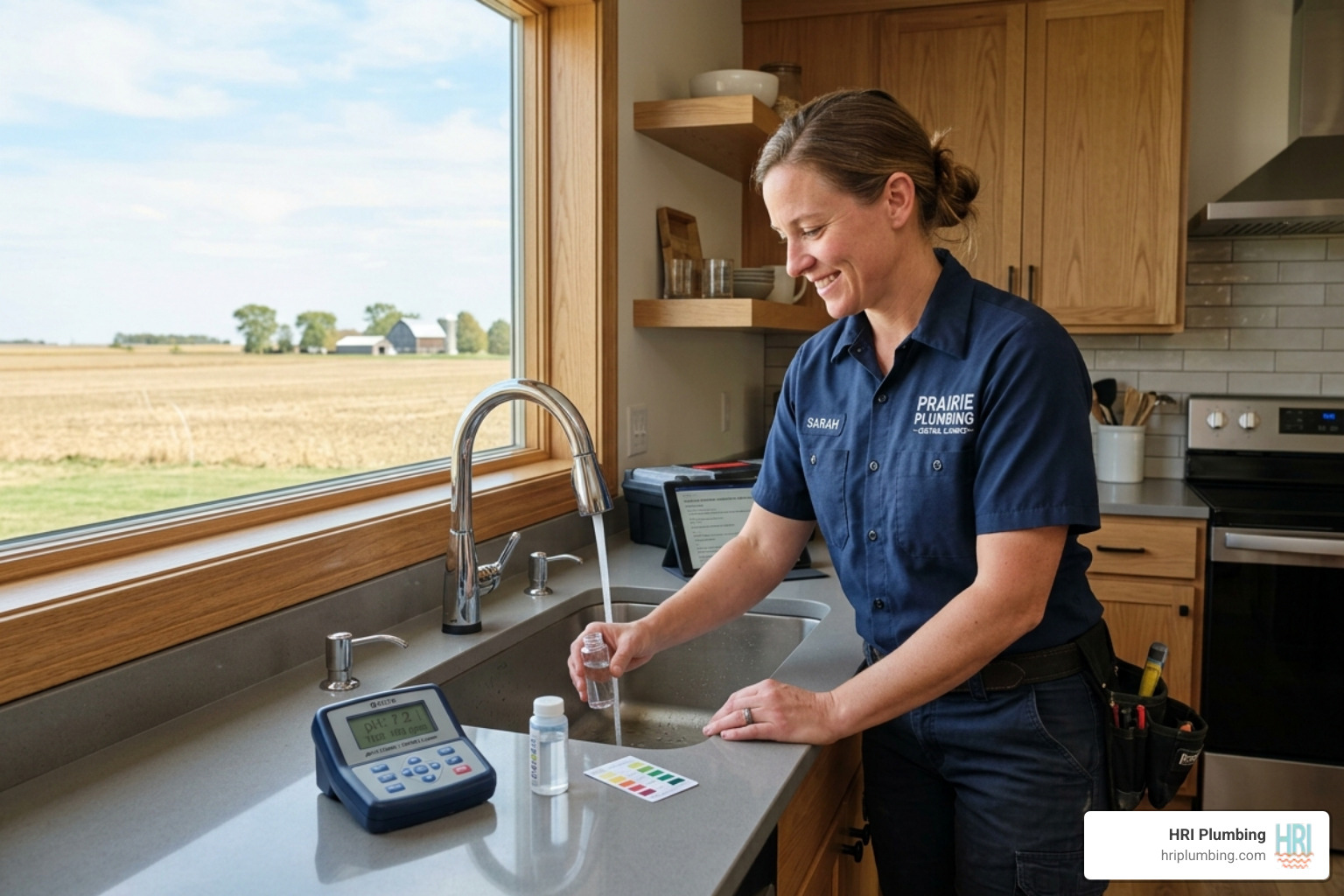
- Water Quality Testing: We can help you identify lead, hardness, and specific contaminants.
- Anode Rod Inspection: Checking the "sacrificial" rod in your water heater that prevents the tank from rusting.
- System Flushing: Periodically draining your water heater to remove sediment buildup.
- Backflow Prevention: Ensuring that contaminated water cannot flow backward into your clean supply.
- Aerator Cleaning: Removing the "grit" that accumulates in your faucets and slows down flow.
Whether you need a new filtration system or a Water Softener Repair Springfield IL Guide, we are here with 24/7 support. Don't wait for a pipe to burst or an appliance to fail. Take control of your home’s water quality today.
For expert assistance with your home's plumbing and water treatment, visit hriplumbing.com/plumbing or call us to discuss a customized solution for your household.


