



Navigating Exhaust Challenges in Historic Jacksonville IL Properties
You know your system is struggling, but understanding exactly how direct vent water heaters solve exhaust issues in older Jacksonville homes can save you from a massive masonry headache. In our experience working on historic Jacksonville IL properties, our team frequently sees owners facing a frustrating dilemma: they go to upgrade a failing water heater, only to discover their existing brick chimney is no longer safe to use for venting. The brick is crumbling, the mortar is failing, and modern safety codes require a completely different approach. This leaves you at a critical decision point. Do you pay for a complex, highly invasive chimney relining just to support a standard water heater? Or do you adopt a modern bypass solution that leaves your historic architecture intact?
If you need professional guidance on your system, our comprehensive Plumbing Services can help you map out the safest path forward. Making the right choice requires looking beyond the appliance itself and understanding how your home's structure interacts with modern plumbing technology.
The Hidden Challenge Inside Your Walls
Most homeowners don't spend much time thinking about how their appliances breathe. For decades, the standard practice was simply to route a metal exhaust pipe from the top of the water heater directly into the home's central masonry chimney. The natural heat from the exhaust would cause the gases to rise up and out of the roof. However, as these historic homes age, we consistently see the infrastructure that supports this passive venting method deteriorating.
Discovering that a chimney is compromised usually happens at the worst possible time—right when you need a new appliance. Plumbers and inspectors will flag the masonry as unsafe, bringing your project to a grinding halt. You are suddenly faced with the reality that the home's original architecture can no longer safely support basic utility functions without major modifications. Fortunately, our team relies on advancements in venting technology to provide a clean, efficient workaround that completely removes the failing chimney from the equation.
Why Pre-1950s Masonry Chimneys Fail Modern Exhaust Standards
When planning a water heater replacement in an older home, evaluating the chimney is the most critical first step. The root of the problem lies in how these structures were originally built. Back in the early 20th century, builders constructed chimneys primarily to handle the extreme, dry heat of wood or coal fires. When natural gas appliances became the standard, these same brick chimneys were simply repurposed to vent gas exhaust.
The Missing Clay Liner Problem
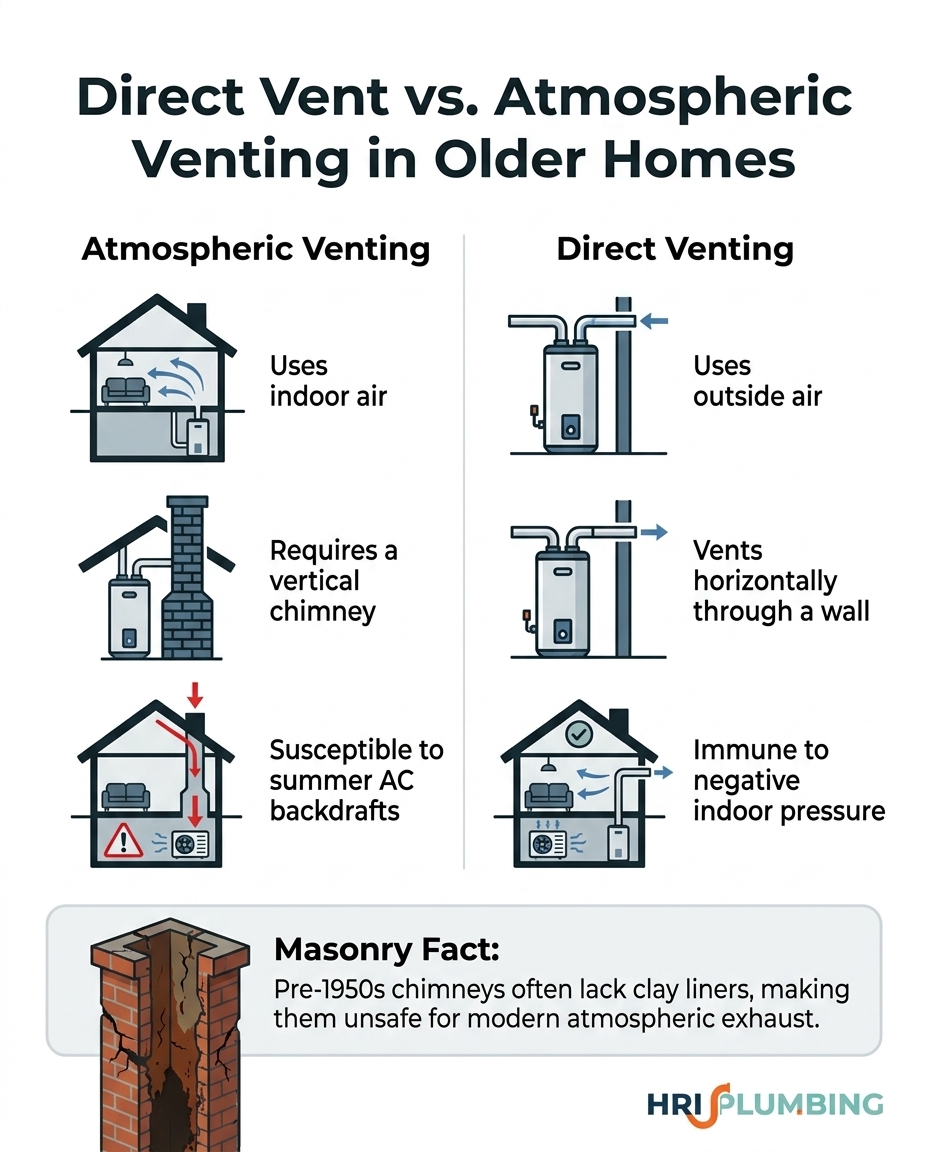
When our plumbers inspect older properties, we consistently run into this core issue: the vast majority of pre-1950s masonry chimneys were built without internal clay flue liners. Modern building codes mandate these liners because they provide a smooth, protected barrier between the exhaust gases and the combustible structure of the home. Without a liner, the raw brick and mortar are directly exposed to whatever is traveling up the flue.
The signs of an unlined or failing chimney we look for include:
• White efflorescence: Powdery white stains on the exterior brickwork, indicating moisture is traveling through the masonry.
• Crumbling mortar: Sand and debris collecting at the base of the chimney cleanout door.
• Spalling brick: The faces of the bricks flaking or popping off due to internal moisture expansion.
• Drafting issues: Noticeable smells of exhaust or dampness in the basement near the appliance.
The Destructive Cycle of Condensation
Gas combustion is a chemical process that produces a significant amount of water vapor. When a standard atmospheric water heater sends this warm, moisture-heavy exhaust up a cold, unlined masonry chimney, the vapor quickly hits its dew point. It condenses against the cold interior bricks before it can reach the roof.
This condensation is highly acidic. Over years of daily use, we see how this acidic moisture literally eats away at the lime-based mortar used in older homes. The structural integrity of the chimney degrades from the inside out. More importantly, as the mortar crumbles and gaps form, the chimney can no longer contain the exhaust. This creates a severe safety hazard, allowing dangerous carbon monoxide to leak through the brickwork and seep directly into your living spaces.
How Direct Vent Water Heaters Safely Bypass Chimney Infrastructure
The safest way to solve a failing chimney is to stop using it entirely. This is where direct vent water heaters completely change the landscape of historic home retrofits. Instead of relying on the home's vertical architecture, our installers utilize a specialized, self-contained mechanical design that vents horizontally directly through an exterior wall.
The Mechanics of Dual-Pipe Venting
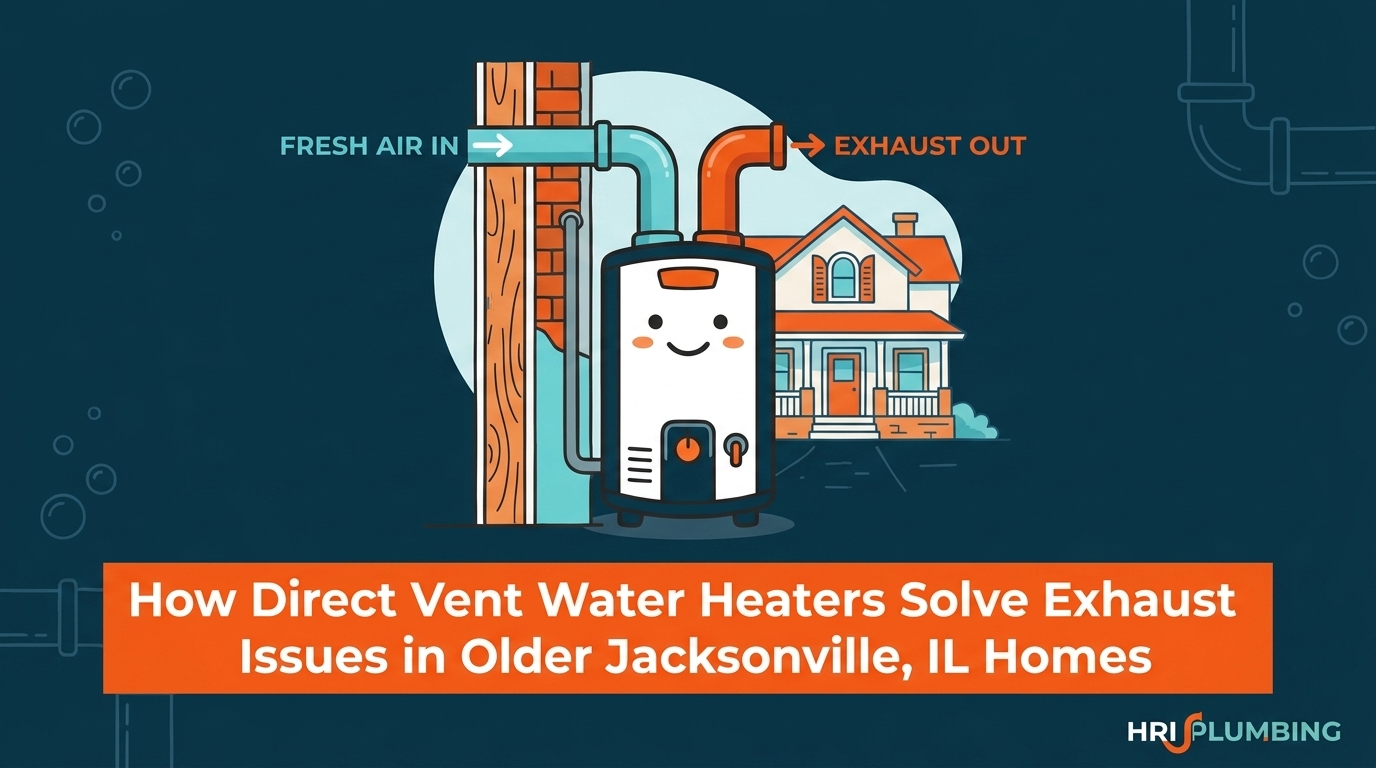
Direct vent technology relies on a brilliantly simple concentric pipe design—essentially a pipe within a pipe. The outer pipe draws in fresh, outside air to feed the combustion flame, while the inner pipe pushes the toxic exhaust gases safely outside. Because the system pushes exhaust straight out the side of the house, it completely bypasses the need for a vertical chimney draft.
The mechanical advantages of this design include:
• Total indoor isolation: The combustion chamber is completely sealed off from the air inside your home.
• Zero chimney reliance: The crumbling masonry is abandoned in place, requiring no further structural intervention.
• Improved efficiency: Drawing outside air for combustion means the system isn't consuming the conditioned air you've already paid to cool during our hot summers.
A Clean Break from Masonry Headaches
By shifting the exhaust pathway from the roof to the nearest exterior wall, direct vent systems allow homeowners to modernize their plumbing without triggering a massive masonry restoration project. The old chimney can simply be capped off and left alone, preserving the exterior look of the home while neutralizing the safety hazards hidden inside the walls.
The Hidden Summer Backdraft Risk in Tightly Sealed Homes
While crumbling masonry is a year-round structural issue, atmospheric venting presents a unique, seasonal danger that peaks during the hottest months of the year. For owners of historic Jacksonville IL properties, the combination of modern air conditioning and traditional plumbing can create a silent hazard known as negative pressure backdrafting.
The Physics of Negative Pressure
Standard atmospheric water heaters rely on natural thermal buoyancy to work. Because hot air is lighter than cold air, the hot exhaust gases naturally want to float up and out of the chimney. However, this delicate balance is easily disrupted by modern home habits.
During peak summer heat here in Jacksonville, usually around July, our team fields numerous indoor air quality concerns. Because you likely have your windows shut tight and your air conditioning running full blast, your home becomes a tightly sealed envelope. If you then turn on a bathroom exhaust fan, a kitchen range hood, or a clothes dryer, those appliances forcefully push air out of the house. Because the house is sealed, this creates a vacuum, or negative indoor air pressure.
The Danger of Reverse Drafting
The setup: The house is sealed, the AC is running, and exhaust fans are pulling air out of the living space.
The trigger: The water heater turns on to heat a fresh tank of water, sending hot exhaust into the chimney.
The danger: The negative pressure inside the sealed house is stronger than the natural buoyancy of the exhaust gas. Instead of floating up the chimney, the toxic exhaust is violently sucked backward, spilling carbon monoxide directly into your basement or utility room.
Because direct vent water heaters are completely sealed and draw their own air directly from the outside, we recommend them specifically because they are entirely immune to this summer backdraft risk. The pressure inside your home has absolutely zero effect on the system's ability to safely vent exhaust.
Weighing Chimney Relining Against Direct Vent Retrofits
When an inspector or one of our technicians condemns your chimney, you generally have two paths forward to restore safe hot water to your home. Consulting with an experienced plumber in Jacksonville ensures you weigh these options based on your specific floor plan and long-term goals.
The Reality of Chimney Relining
Restoring pre-1950s masonry chimneys to modern safety standards usually involves dropping a continuous, corrugated stainless steel liner down the entire length of the flue. While this solves the safety issue, our experience shows it is incredibly invasive. It often requires scaffolding, roof access, and sometimes breaking through the masonry walls inside the home to navigate bends in the original brickwork. The disruption to your property is significant, and you are still left relying on an atmospheric drafting process that is vulnerable to negative pressure.
The Direct Vent Advantage
Conversely, a direct vent retrofit focuses on bypassing the obstacle entirely. By routing a specialized pipe a few feet to the nearest exterior wall, our installers keep the work localized to the utility room. It requires a single, carefully placed penetration through the home's exterior, leaving the roof and central architecture completely untouched.
• Invasiveness — Chimney Relining: High (requires roof access, possible wall demolition) — Direct Vent Retrofit: Low (localized to the utility room and one exterior wall)
• Structural Impact — Chimney Relining: Relies on aging masonry remaining stable — Direct Vent Retrofit: Abandons failing masonry entirely
• Air Quality Safety — Chimney Relining: Still vulnerable to summer backdrafts — Direct Vent Retrofit: 100% sealed from indoor air
• Installation Timeline — Chimney Relining: Often takes multiple days with masonry contractors — Direct Vent Retrofit: Typically completed in a single day
For most homeowners we work with, bypassing the chimney proves to be the more practical, less invasive, and structurally sound long-term choice. It solves the immediate plumbing need while permanently eliminating a major structural liability.
Preserving Your Home's Architectural Integrity During Upgrades
One of the biggest hesitations homeowners have about side-wall venting is the thought of drilling a hole through the side of a historic property. Whether your home features original clapboard siding, intricate brick veneer, or thick stone foundations, altering the exterior envelope requires precision and respect for the architecture.
At HRI Plumbing, our team has spent years retrofitting modern plumbing and safe venting systems into older Jacksonville properties. We know firsthand how to ensure these upgrades happen without compromising structural integrity. Our professional installation crew follows a strict, careful process to minimize visual and structural impact.
The Strategic Routing Process
1. Evaluating the exterior envelope: Our technicians survey the outside of the home to find an exit point that is discreet—often exiting through the rim joist just above the foundation line, which is easily hidden by standard landscaping.
2. Mapping interior utility paths: The route from the water heater to the exterior wall is planned to avoid cutting major structural joists. This careful coordination often ties into gas line installation or modification, ensuring all utilities run parallel and hidden.
3. Verifying safety clearances: Building codes require the exterior exhaust vent to maintain strict distances from operable windows, doors, walkways, and dense shrubbery. We rigorously check these measurements to ensure that the dissipated exhaust gases can never re-enter the home.
4. Sealing the penetration: Once the concentric pipe is routed through the wall, the exterior penetration is meticulously sealed and finished with a specialized termination cap that blends cleanly with the home's siding.
By coordinating the placement of the unit with the existing utility layout, modern safety standards can be seamlessly integrated into a century-old floor plan. You get the peace of mind of a perfectly safe exhaust system without sacrificing the curb appeal that makes historic Jacksonville IL properties so special.
Frequently Asked Questions About Direct Venting
What is a direct vent water heater?
A direct vent water heater is a system that pulls outside air for combustion and vents exhaust directly outside through a sealed pipe. Unlike standard units, it operates completely independently of your home's indoor air quality and pressure. This sealed design makes it incredibly safe and highly efficient for modern retrofits.
Do direct vent water heaters need a chimney?
No, they are designed specifically to operate without a vertical chimney. These systems push exhaust horizontally through an exterior wall, making them ideal for homes with damaged, unlined, or completely missing masonry chimneys. Bypassing the chimney eliminates the need for expensive masonry repairs.
Can you vent a gas water heater through the wall?
Yes, direct vent models use specialized concentric pipes to safely vent horizontally through an exterior wall. The installation requires specific clearances from windows, doors, and walkways to ensure exhaust gases dissipate safely outside. This horizontal routing is what allows them to bypass traditional vertical roof vents.
What is the difference between direct vent and power vent?
Direct vent relies on natural thermal dynamics through a sealed dual-pipe system without needing electricity. A power vent uses an electrical blower fan to actively push exhaust gases out, and it often uses indoor air for the combustion process. While both can vent through a wall, direct vent systems remain operational during power outages.
Why do atmospheric water heaters backdraft in the summer?
Running your air conditioning requires tightly sealed windows and doors, which can lead to negative indoor air pressure. When exhaust fans run in a negatively pressurized house, they can overpower the natural upward draft of an atmospheric water heater. This pressure imbalance pulls dangerous exhaust gases down the chimney and into your living space rather than letting them rise naturally.
Securing a Safer Exhaust Solution for Your Older Home
Navigating how direct vent water heaters solve exhaust issues in older Jacksonville homes is the key to making smart, long-lasting upgrades to your property. If your home features an aging, unlined masonry chimney, continuing to rely on it for atmospheric venting is a risk you no longer have to take. In our experience, direct vent technology offers the safest path forward, completely bypassing structural hazards and eliminating the risk of summer backdrafts.
By choosing a sealed, side-wall venting solution, you preserve your home's historic integrity while bringing its vital utilities up to modern safety codes. If you are ready to explore how direct vent water heaters can be integrated into your specific floor plan, consulting with our local experts will give you the clear explanation and safe solutions you need to protect your home and your family.


