

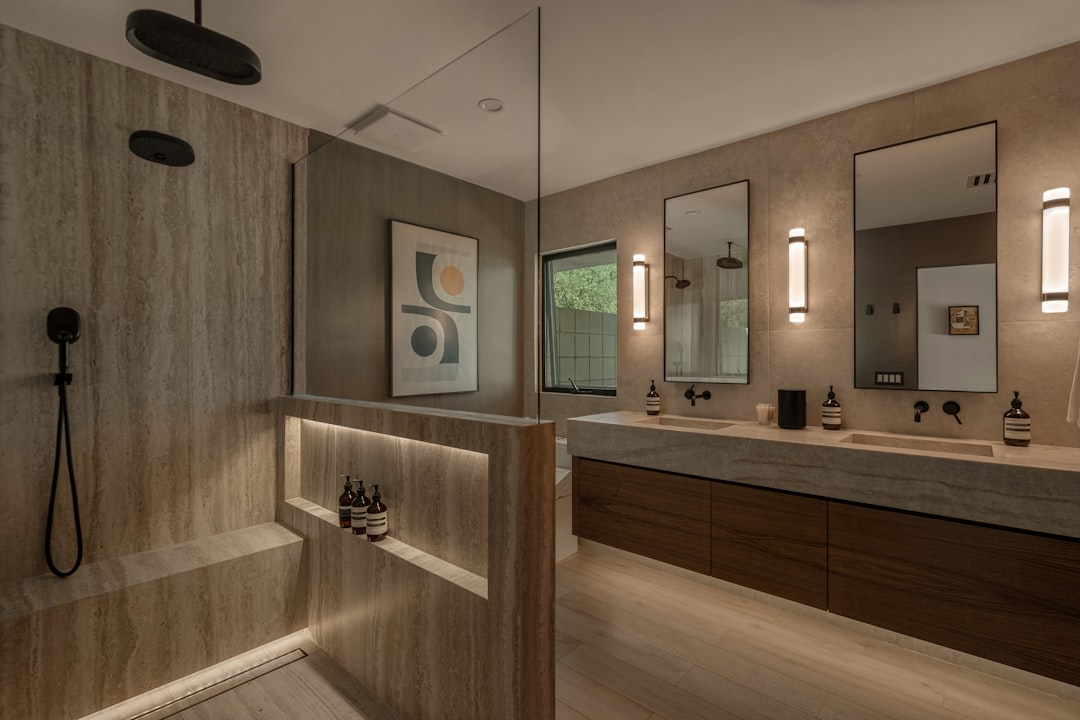


What to Expect Before Demo Day: Bathroom Remodel Timelines Explained
How long does a bathroom remodel take? For most homeowners, the honest answer is somewhere between 3 and 8 weeks of active construction — but when you factor in planning, permits, and ordering materials, the full project often runs 2 to 3 months from start to finish.
Here's a quick breakdown to set realistic expectations:
| Project Type | Active Construction | Total Timeline |
|---|---|---|
| Cosmetic refresh (paint, fixtures, hardware) | 1-2 weeks | 4-8 weeks |
| Standard remodel (new tile, vanity, shower) | 3-4 weeks | 6-10 weeks |
| Full gut renovation (layout changes, plumbing) | 4-6 weeks | 8-12+ weeks |
| Small bathroom (under 50 sq ft, no plumbing moves) | 10-12 working days | 4-6 weeks |
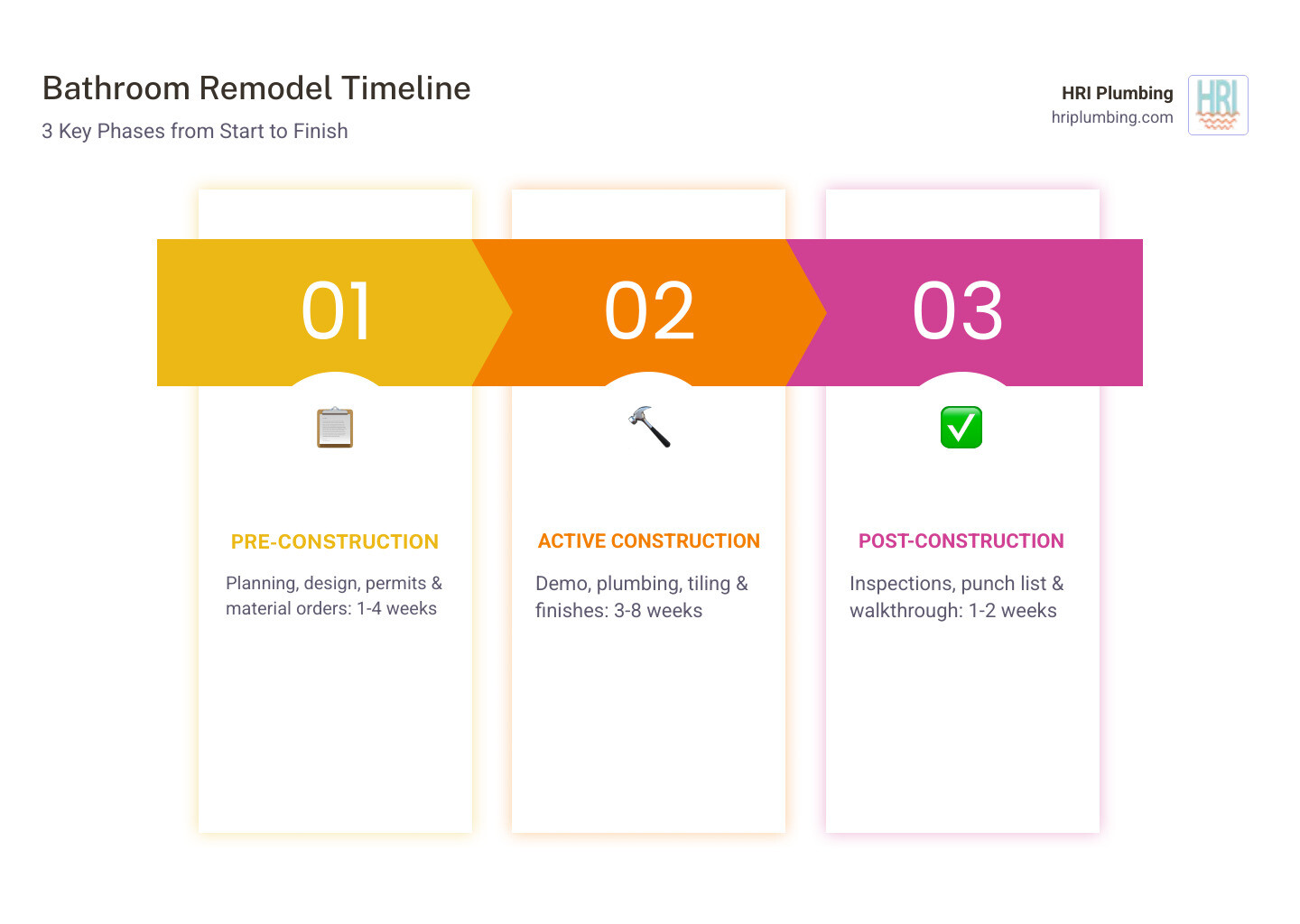
Every bathroom remodel moves through three phases: pre-construction (planning, design, permits), active construction (demo through finishing), and post-construction (inspections, punch list, final walkthrough). Skipping steps in any phase is usually what turns a 4-week job into a 4-month headache.
For homeowners in central Illinois, plumbing is often where timelines get tricky. Moving a drain line, updating old supply lines, or bringing fixtures up to code can add days — or weeks — to any project if it's not planned for upfront.
This guide walks you through each phase so you know exactly what to expect before the first wall comes down.
How Long Does a Bathroom Remodel Take?
When we sit down with homeowners to discuss Bathroom Remodeling in Springfield, IL, the first question is almost always about the schedule. While the table above provides a snapshot, the reality is that no two bathrooms are identical. Several primary "levers" determine whether your project leans toward the three-week or the eight-week mark.
Project Scope and Bathroom Size
The "scope" refers to how much you are actually changing. A cosmetic refresh—where we might swap a vanity, replace a toilet, and add a fresh coat of paint—can often be wrapped up in a week of active labor. However, a full gut renovation involves stripping the room down to the wall studs and floor joists. This allows us to inspect for hidden water damage or mold, which is common in older Illinois homes.
Existing Condition
If your home was built in the 1960s, demolition might take two days instead of one because of thick mortar beds behind the wall tiles. Conversely, a 1990s bathroom with fiberglass inserts and drywall usually comes apart much faster. The "surprises" found behind the walls—like outdated galvanized piping or electrical wiring that isn't up to modern code—are the most frequent causes of timeline extensions.
How Long Does a Bathroom Remodel Take for Small Spaces?
You might think a small powder room or a 50-square-foot guest bath would be a "weekend warrior" project. In reality, a small bathroom remodel often takes an average of 23 days.
Why does a small room take three weeks? It comes down to "trade sequencing." Even in a tiny space, you still need a plumber, an electrician, a drywaller, and a tile setter. Because the room is small, only one or two people can physically work in it at the same time. You cannot have the plumber installing the toilet while the tile setter is grouting the floor.
Typical 50 sq. ft. Full Gut Timeline (10-12 Working Days):
- Days 1-2: Demolition and debris removal.
- Days 3-4: Rough-in plumbing and electrical updates.
- Day 5: Inspections and subfloor prep.
- Days 6-7: Hanging and finishing moisture-resistant drywall or backer board.
- Days 8-10: Tile installation (setting and grouting).
- Days 11-12: Installing the vanity, toilet, and final fixtures.
How Long Does a Bathroom Remodel Take When Moving Plumbing?
If your dream bathroom involves moving the toilet to the other side of the room or turning a cramped tub into a walk-in shower, prepare for the timeline to grow. Moving plumbing is one of the most labor-intensive parts of a remodel.
When you need plumbing services for a bathroom remodeling project that involves layout changes, we have to "open up" the floor. In central Illinois, this often means cutting into a concrete slab or navigating tight crawlspaces.
- Drainage Lines: Moving a drain is significantly more complex (and time-consuming) than moving a supply line. Drains require a specific "slope" to function correctly. If the new location doesn't allow for that slope within the existing floor joists, structural work may be required.
- Supply Lines: Rerouting hot and cold water lines is generally faster but still requires "rough-in" time where the walls must remain open for inspections.
- The "Footprint" Rule: If you want to expedite your project, keeping your fixtures in their current locations can shave 3 to 5 days off the active construction phase.
Factors That Extend Your Project Timeline
Even with a perfect plan, certain variables are outside of a contractor's direct control. Understanding these things to keep in mind when remodeling will help you stay patient during the process.
- Permits and Inspections: In cities like Springfield or Jacksonville, IL, major plumbing and electrical work requires permits. Once the "rough-in" work is done, we must stop and wait for a city inspector to approve the work before we can close the walls. This can add 24 to 72 hours of "dead time" to the schedule.
- Material Availability: We always recommend having every single item—the tile, the vanity, the faucets, and even the grout—on-site before demo begins. Waiting on a backordered "specialty" tile can halt a project for weeks.
- Custom Tile Work: A standard 12x24 inch tile is relatively quick to install. However, intricate patterns like herringbone, mosaics, or penny tiles require significantly more cuts and precision, easily adding 2 to 4 days to the tiling phase.
- The Best Time of Year: Scheduling your remodel in the winter (after the holidays) is often ideal. Many contractors see a slight dip in outdoor projects, making it easier to line up subcontractors without long lead times.
Navigating the Phases from Demo to Done
A successful remodel is like a choreographed dance. If one dancer (or trade professional) misses a beat, everyone else has to wait. This is why "labor sequencing" is so critical. We manage the flow of work to ensure that as soon as the plumber finishes the rough-in, the inspector is called, and the drywaller is scheduled for the following morning.
To help you stay on track, we’ve put together some time-saving tips for your home remodeling project, starting with the most important phase: the one that happens before the sledgehammer swings.
Pre-Construction and Planning (1-3 Weeks)
Many homeowners think the project starts on Demo Day. In reality, the most successful projects have already been "underway" for a month. During this phase, you are finalizing your design and selecting fixtures.
Whether you are looking for a shower installation in Jacksonville, IL or a full master suite overhaul, you should use this time to:
- Order Long-Lead Items: Custom vanities and specific glass shower enclosures can take 4 to 6 weeks to arrive.
- Finalize the Layout: Changing your mind about where the sink goes once the walls are open is the fastest way to double your timeline.
- Secure Your Contractor: Vetting and signing a contract usually takes 1 to 2 weeks of walkthroughs and revisions.
The Active Construction Week-by-Week Breakdown
If you are doing a standard full-gut remodel, here is what your life will look like over a typical four-week stretch:
Week 1: Demolition and Rough-InThis is the "loud and messy" week. We remove the old tub, vanity, flooring, and wall coverings. Once the room is bare, our plumbing and electrical teams move in. This is also when we address any shower remodeling needs in Springfield, IL, ensuring the new valves and drains are perfectly positioned. By Friday, we usually have our first round of inspections.
Week 2: Prep and WaterproofingAt the start of week two, your bathroom might look like a "warzone," but this is the most critical phase for longevity. We install the subfloor, hang moisture-resistant drywall, and—most importantly—install the shower pan and waterproofing membranes. A "flood test" is often performed here to ensure there are zero leaks before the tile goes on.
Week 3: Tile and FlooringThis is the "transformation" week. The tile setter will spend 3 to 5 days laying the floor and wall tiles. Because thin-set and grout require specific "cure times," there may be hours or even a full day where no one can walk in the room. Patience here is key to a beautiful finish.
Week 4: Finishing TouchesThe home stretch! We install the "trim" (the visible parts of the faucets and showerheads), the vanity, the toilet, and the lighting fixtures. The final day usually involves "punch list" items—caulking, paint touch-ups, and a thorough cleaning.
Post-Construction and Final Walkthrough
Once the tools are packed away, we don't just hand over the keys. The post-construction phase is about quality assurance. We conduct a thorough walkthrough with you to test every feature.
- We check that the hot and cold water lines aren't swapped.
- We ensure the toilet flush is powerful and leak-free.
- We verify that the GFCIs (electrical outlets) are functioning safely.
At HRI Plumbing, we pride ourselves on honesty and integrity. We know that being without a bathroom is a major disruption to your life. That’s why we focus on efficient scheduling and clear communication. Whether you are in Springfield, Jacksonville, or Rushville, we work to keep your Bathroom Remodeling in Springfield, IL on schedule and within the agreed-upon scope.
Expert Tip: To expedite your remodel, stay engaged but avoid making design changes mid-stream. Every time a plan changes after construction starts, it adds "change order" time, which can involve re-ordering materials or re-scheduling busy subcontractors.
Ready to Start Your Transformation?
Understanding how long does a bathroom remodel take is the first step toward a stress-free renovation. By planning for a 3-to-8-week window and accounting for the complexities of plumbing and permits, you can go into your project with confidence.
If you’re ready to turn your outdated bathroom into a modern sanctuary, our team is here to help. From 24/7 support to comprehensive maintenance plans, we ensure your new bathroom's plumbing is built to last. Contact us today to discuss your project and let’s get your timeline started!


