



What Is a Pedestal Sump Pump — and Do You Need One?
A pedestal sump pump is a column-style water removal pump where the motor sits elevated on a tall shaft above the sump basin, keeping it completely out of the water. This design is different from submersible pumps, which sit fully underwater inside the pit.
Here's a quick overview of what makes a pedestal sump pump unique:
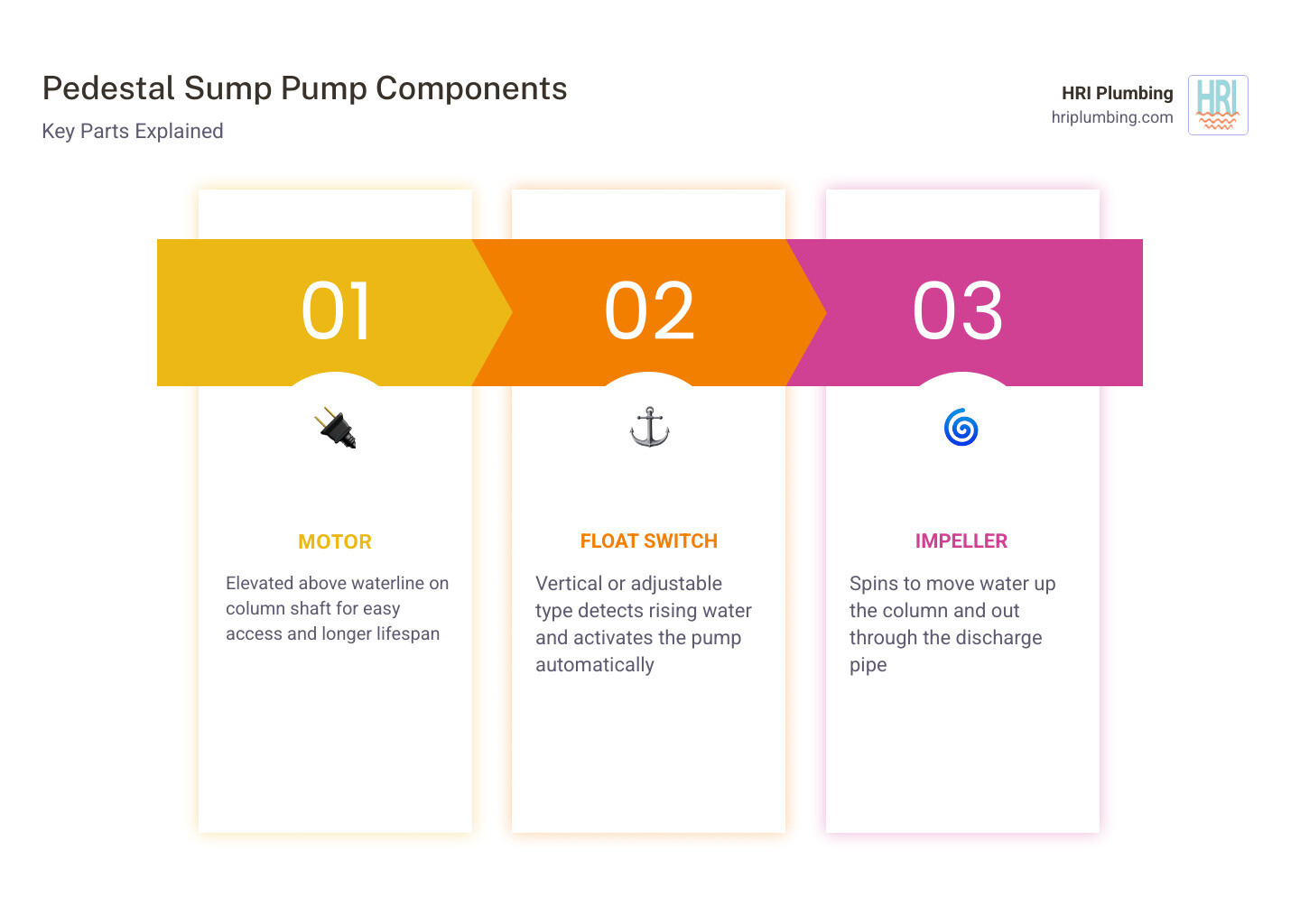
- Motor placement: Mounted high on a vertical column, above the waterline
- Basin requirements: Designed for pits with a minimum 11" diameter and up to 24" depth
- Common power ratings: 1/3 HP for most homes; 1/2 HP for heavier water flow
- Materials: Available in cast iron, bronze, stainless steel, or thermoplastic
- Solids handling: Typically handles small solids (up to 3/8")
- Best for: Narrower sump pits where a submersible pump won't fit, or where easy motor access matters
If your basement in Jacksonville, Springfield, or Rushville, IL takes on water during heavy rain or snowmelt, understanding your sump pump options is the first step to keeping your home dry and protected.
Pedestal sump pumps have been a go-to solution for residential water management for decades. They're dependable, easier to service than submersible models, and well-suited to the narrower sump basins common in central Illinois homes. Whether you're replacing an aging pump or installing one for the first time, this guide covers everything you need to know.
Understanding the Pedestal Sump Pump and Its Benefits
When we talk to homeowners in Springfield or Jacksonville about basement waterproofing, the conversation often turns to the "pedestal vs. submersible" debate. The pedestal sump pump is often favored for its longevity and accessibility. Because the motor is not submerged in water, it isn’t subjected to the same level of corrosive minerals or moisture-related wear as its submersible counterparts.

One of the most significant Advantages of Choosing a Pedestal Sump Pump is the extended lifespan of the motor. Since the motor stays dry, it doesn't face the risk of seal failure that can lead to electrical shorts in underwater models. Additionally, if the pump ever requires maintenance, the motor is right there at the top of the pit—no more reaching into a muddy, water-filled basin to see what’s wrong.
Key Features of a Pedestal Sump Pump
When selecting a pedestal sump pump for your home, several technical specifications will determine how well it performs during a heavy Illinois storm.
- Horsepower (HP): The most common rating for residential use is 1/3 HP, which is sufficient for average water volumes. However, if your home in Rushville experiences heavy groundwater inflow or you need to move water over a long distance, a 1/2 HP model is recommended.
- Switch Type: These pumps typically use a vertical float switch. As the water rises, the float moves up a rod, eventually triggering the motor. These are often fully adjustable, allowing us to set the "on" and "off" points to match your specific basin depth.
- Construction Material:
- Cast Iron: Offers the best heat dissipation and durability.
- Thermoplastic: Corrosion-resistant and lightweight, though with a lower liquid temperature range (usually up to 120°F).
- Stainless Steel/Bronze: High-end options that offer maximum rust protection.
- Solids Handling: Most pedestal pumps can handle small debris or solids up to 3/8", preventing clogs from minor sediment.
- Discharge Size: Standard sizes are 1-1/4" or 1-1/2" FNPT, which dictates how much water can be moved per hour (GPH).
To ensure you never face a surprise flood, we often recommend pairing your pump with a Sump Pump Alarm System that alerts you if water levels rise beyond the safety threshold.
Pedestal vs. Submersible Models
The main difference between these two types of pumps is the location of the motor. A submersible pump is a "sealed unit" that sits at the bottom of the pit. While quieter, it is harder to repair. The pedestal sump pump is a "column style" unit.
In terms of basin size, pedestal pumps are the champions of tight spaces. They are perfectly suited for sumps with a minimum 11-inch diameter. Because the motor is above the pit, you don't need a wide basin to accommodate a bulky submersible housing.
| Feature | Pedestal Sump Pump | Submersible Sump Pump |
|---|---|---|
| Motor Location | Above the basin (dry) | Inside the basin (submerged) |
| Average Lifespan | 10–15 years | 5–10 years |
| Ease of Repair | High (easy access) | Low (sealed unit) |
| Basin Diameter | Minimum 11" | Minimum 14"–18" |
| Noise Level | Audible motor hum | Very quiet |
| Thermal Protection | Built-in motor protection | Oil-cooled / Water-cooled |
Common Applications for a Pedestal Sump Pump
We find that the pedestal sump pump is an ideal choice for several specific scenarios in Central Illinois:
- Narrow Sump Pits: Many older homes in Springfield and Jacksonville have small, hand-dug or narrow clay pits where a submersible pump simply won't fit.
- Crawl Spaces: Because crawl spaces are often difficult to navigate, the easy accessibility of a pedestal motor makes maintenance much simpler for homeowners.
- Seasonal Flooding: If your basement only sees water during the spring thaw or heavy April rains, a pedestal pump is a cost-effective, long-term solution.
- Rainwater Removal: They excel at moving average volumes of clear drainage water away from the foundation.
However, even the best primary pump can fail if the power goes out. That’s why we always suggest looking into a Sump Pump Backup System Jacksonville to keep your basement dry during severe weather.
Professional Installation and Maintenance in Central Illinois
Installing a pedestal sump pump might seem like a straightforward DIY weekend project, but precision is key to ensuring it works when you need it most. Proper alignment of the column and the float switch is vital to prevent the pump from "binding" against the side of the basin.
Step-by-Step Installation Basics
- Clear the Basin: Ensure the sump pit is free of large rocks or debris that could clog the intake.
- Position the Pump: Place the pump on a solid, level surface. We often use a sump pump stand or a brick to elevate the intake slightly above the floor of the liner to prevent sediment from being sucked in.
- Install the Discharge Pipe: Connect the 1-1/2" or 1-1/4" piping to the pump.
- The Check Valve: This is a critical step. A check valve prevents water from flowing back into the pit once the pump turns off. Without it, your pump will work twice as hard and wear out prematurely.
- Adjust the Float: We set the adjustable vertical switch so the pump turns on before the water reaches the basement floor level.
- Test: We always perform a "bucket test" by filling the pit with water to ensure the cycle starts and stops correctly.
For a more detailed look at the process, check out our Sump Pump Installation Jacksonville IL Guide.
Maintaining Your System for Peak Performance
In April 2026, as we head into the peak rainy season, maintenance should be at the top of your home to-do list. A pedestal sump pump requires a bit of attention to stay in top shape.
- Clean the Intake: Every few months, check the bottom of the pump for debris.
- Test the Float: Manually lift the float to ensure the motor kicks on immediately.
- Check the Discharge Line: Ensure the water is actually leaving your home and isn't blocked by leaves or ice at the exit point.
- Inspect the Sump Pump Check Valve: If you hear a loud "thunk" when the pump stops, or if the pit refills immediately, your check valve may need replacement.
Regular upkeep is the best way to avoid a flooded basement. Our Sump Pump Maintenance Springfield IL Guide provides a comprehensive checklist for local homeowners.
Troubleshooting and When to Call for Repairs
Even the most reliable pedestal sump pump can run into issues. Here are a few common problems we see in the field:
- Motor Hum but No Pumping: This often indicates a jammed impeller or a failed capacitor.
- Pump Won't Start: Check the power source first. If the outlet has power, the vertical switch may be stuck or corroded.
- Constant Running: If the pump never turns off, the float switch may be tangled or the check valve may be broken, allowing water to cycle back into the pit.
- Low Performance: If the pump is running but water levels aren't dropping, there may be a clog in the discharge line or the pump may be undersized for the inflow.
If you notice your Sump Pump Not Working during a storm, don't wait. Recognizing the Signs Your Sump Pump Needs Professional Repairs early can save you from a major restoration bill. For residents in the state capital, we offer specialized Sump Pump Repair Springfield IL to get your system back online quickly.
Reliable Sump Pump Services with HRI Plumbing
At HRI Plumbing, we understand that a functioning sump pump is your home's last line of defense against water damage. We have been serving the communities of Jacksonville, Springfield, and Rushville, IL, with a commitment to honesty and integrity.
Whether you need a quick repair or a full system upgrade, our expert technicians are available 24/7 to handle your emergencies. We offer affordable rates, flexible options, and comprehensive maintenance plans designed to give you peace of mind. From installing a high-efficiency pedestal sump pump to setting up advanced backup systems, we ensure the job is done right the first time.
If you are worried about your current system's reliability, contact us today for Sump Pump Repair Replacement services. We’ll help you choose the right pump for your home’s specific needs and ensure your basement remains a dry, usable space for years to come.


