



Why Learning How to Extend the Life of Your Water Heater Can Save You From a Costly Surprise
Knowing how to extend the life of your water heater is one of the smartest things a homeowner in central Illinois can do to avoid unexpected repair bills and cold-shower emergencies. The average residential water heater lasts just 8 to 12 years — but with the right preventative care, that lifespan can stretch to 15 years or more.
Here's a quick overview of the most effective ways to get more years out of your water heater:
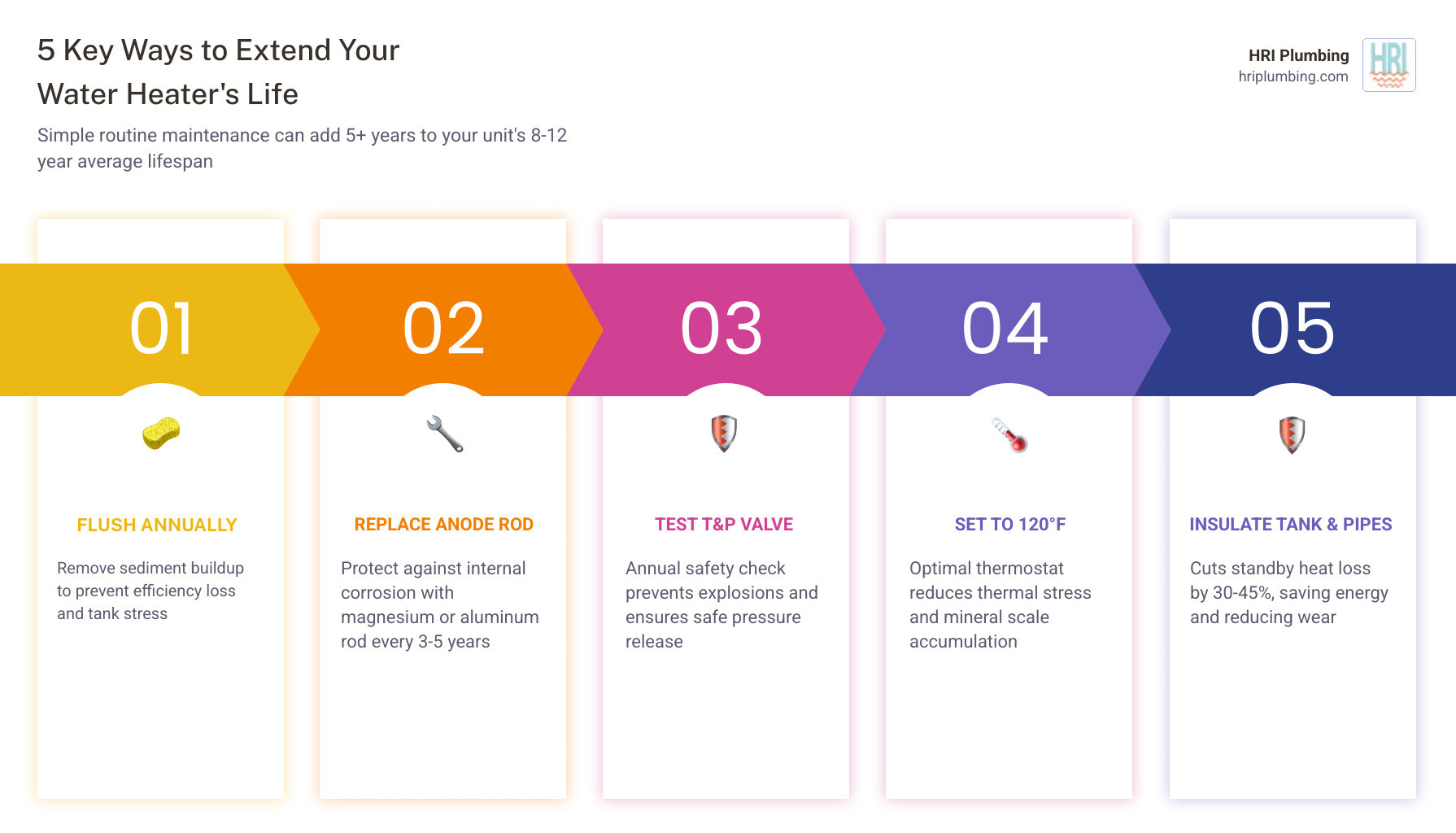
- Flush the tank annually to remove sediment buildup that reduces efficiency and stresses the tank
- Inspect and replace the anode rod every few years to prevent internal corrosion
- Test the temperature and pressure (T&P) relief valve once a year for safe operation
- Set the thermostat to 120°F to reduce thermal stress and scale buildup
- Insulate pipes and the tank to cut standby heat loss by up to 30–45%
- Install a water softener if your home has hard water (common in the Springfield and Jacksonville, IL area)
- Add an expansion tank if you have a closed water system, to prevent pressure damage
- Schedule regular professional inspections to catch problems before they become emergencies
Most of these tasks are simple, low-effort habits — yet most homeowners skip them entirely until the water heater fails. That's when the real headaches begin: no hot water, potential flooding, and an urgent replacement call.
The good news is that a little consistency goes a long way. Whether you have a traditional tank, a tankless unit, or a heat pump water heater, the principles are the same — reduce stress on the system, keep it clean, and catch problems early.
How to Extend the Life of Your Water Heater Through Routine Maintenance
It is now April 2026, and if you haven't looked at your water heater since last year, you aren't alone. Most of us treat our water heaters like that one relative who only calls when they need money—we ignore them until there is a problem. However, your water heater is a steel tank constantly under pressure, expanding when hot and contracting when cold. This physical stress, combined with the chemical nature of water, means that without a plan for how to extend the life of your water heater, you are essentially on a countdown to a leak.
The primary enemies of your water heater are sediment and corrosion. In cities like Springfield and Jacksonville, IL, our water contains minerals that eventually settle at the bottom of the tank. This "sludge" creates an insulating layer between the burner (or element) and the water, forcing the unit to work harder and stay hot longer, which eventually leads to Sediment Buildup and Potential Water Heater Issues like tank failure.
How to Extend the Life of Your Water Heater with Annual Flushing
If you hear a strange knocking, popping, or "kettling" sound coming from your basement, your water heater isn't haunted—it’s just struggling. When sediment builds up, steam bubbles can get trapped underneath the layer of minerals. When those bubbles finally burst through, they create those loud noises. If your Water Heater Is Making Unusual Sounds, it’s a cry for help.
Flushing your tank annually is the single most effective way to remove this buildup. To do this safely:
- Turn off the power (at the breaker for electric) or the gas (set to "Pilot").
- Shut off the cold water supply valve.
- Attach a standard garden hose to the drain valve at the bottom of the tank and run it to a floor drain or outside.
- Open a hot water faucet upstairs to prevent a vacuum.
- Open the drain valve and let the water flow until it runs clear.
In areas with particularly hard water, we recommend doing this every six months. Removing those few gallons of "mineral soup" ensures your heater transfers heat efficiently, saving you money on energy bills while protecting the glass lining of the tank.
How to Extend the Life of Your Water Heater by Replacing the Anode Rod
Think of the anode rod as your water heater’s personal bodyguard. It is a long metal rod—usually made of magnesium or aluminum—that hangs inside the tank. Its sole purpose is to "sacrifice" itself by corroding so the steel tank doesn't have to. Because the rod is more reactive than steel, the water attacks the rod first.
Once that rod is completely dissolved, the water starts eating your tank. This leads to rust-colored water and, eventually, a hole in the unit. We suggest inspecting the rod every 2 to 3 years. If the rod is less than half an inch thick or looks like a chewed-up piece of wire, it’s time for a replacement. This simple swap can literally double the life of your unit. For those with electric models, checking the rod is just as vital as checking the heating elements. You can find more details in our Water Heater Element Replacement Guide.
Testing the Temperature and Pressure Relief Valve
Safety first! Every water heater has a Temperature and Pressure (T&P) relief valve. This valve is designed to open and release water if the pressure or temperature inside the tank gets too high, preventing a literal explosion.
To test it, simply lift the lever briefly and let it snap back. You should hear a "whoosh" of water entering the discharge pipe. If no water comes out, or if the valve continues to drip after you close it, the valve is faulty and needs immediate attention. This is one of the most Common Water Heater Issues That Require Repair and should never be ignored.
Advanced Strategies for Long-Term Water Heater Health
Once you've mastered the basics of flushing and anode rods, you can look at the environment surrounding your water heater. Even the best-maintained tank can be stressed by external factors like extreme pressure or heat loss.
One simple upgrade is setting your thermostat to 120°F. Many manufacturers ship units set to 140°F, which is often hotter than necessary for most households. Lowering the temperature reduces the rate of mineral scale buildup and lessens the thermal stress on the tank's glass lining. Plus, it saves you a significant amount on your monthly utility bills. This is a big part of Why Some People Still Buy Traditional Water Heaters—they are easy to adjust and maintain with just a little bit of knowledge.
Managing Water Quality and Pressure in Springfield
In Springfield and Jacksonville, water pressure and quality vary significantly. High water pressure (anything over 80 PSI) acts like a hammer against the inside of your pipes and tank. We recommend keeping your home's pressure around 55 to 60 PSI. If your pressure is too high, installing a pressure-reducing valve (PRV) can save your water heater from premature cracks.
Furthermore, hard water is the "silent killer" of plumbing appliances. If you find yourself constantly dealing with limescale on your faucets, imagine what the inside of your water heater looks like. Installing a water softener or a whole-home filtration system can drastically extend the life of your heater by removing the minerals before they ever reach the tank. This is Why You Should Consider a New Water Purification System for your home's long-term health.
Maintaining Tankless and Heat Pump Systems
If you've upgraded to a tankless or heat pump water heater, your maintenance routine looks a little different. Tankless units don't have a big reservoir to flush, but they do have narrow heat exchanger coils that can become clogged with scale. These units require a "descaling" procedure using a specialized solution or white vinegar once a year to maintain their high efficiency.
Heat pump water heaters (also known as hybrid heaters) require you to clean the air filter every few months. Because they pull heat from the air, a clogged filter makes the compressor work harder, shortening its lifespan. You should also check the condensate drain line to ensure it isn't blocked by debris. Proper Maintaining a Tankless Water Heater or heat pump system ensures you get the 20+ years of service these modern units are capable of providing.
Professional Maintenance and Replacement in Jacksonville
While many homeowners enjoy the DIY aspect of water heater care, there are times when you need an expert eye. At HRI Plumbing, we provide comprehensive maintenance plans that take the guesswork out of how to extend the life of your water heater. Whether you need Springfield water heater repair or a routine check-up in Rushville, our team is available 24/7 to ensure your home stays comfortable.
Regular professional inspections are especially important for gas water heaters, where we check the venting system for safety and ensure the burner assembly is clean and efficient. If your unit is approaching that 10-year mark, we can help you decide if a repair is worth it or if it's time to look at Water Heater Repair & Replacement options.
Neglecting maintenance doesn't just shorten the life of the unit—it can also void your manufacturer’s warranty. Most brands require proof of annual maintenance to honor claims. By partnering with us, you ensure your investment is protected by the highest standards of honesty and integrity.
Frequently Asked Questions About Water Heater Longevity
Does a lack of maintenance really void my warranty?
Yes, in many cases it does. Most manufacturers specify in their manuals that the tank must be flushed and the anode rod must be inspected to keep the warranty valid. If the tank leaks because of sediment buildup (which is preventable), they may deny your claim.
How do I know if my water heater is failing or just needs a tune-up?
If you see water pooling at the base of the tank, that is usually a sign of a structural leak, and replacement is likely. However, if you just have "lukewarm" water or hear noises, a simple flush or element replacement might be all you need.
Is an expansion tank necessary?
If you have a "closed" plumbing system (common in modern homes with check valves or pressure regulators), an expansion tank is vital. It gives the water a place to go as it expands during heating, preventing pressure spikes that can cause your main tank to burst.
Can I replace the anode rod myself?
Most homeowners can, provided they have a 1 1/16-inch socket wrench and enough overhead clearance to pull the old rod out. If your ceiling is low, you can buy "segmented" anode rods that fold like a chain, making them easier to install in tight spaces.
Final Thoughts on Water Heater Care
Your water heater is the unsung hero of your home. It works 24 hours a day, 365 days a year, to ensure you have hot water for showers, laundry, and dishes. By following these simple steps—flushing the tank, checking the anode rod, and managing your water pressure—you can easily push your unit's lifespan well beyond the typical 10-year average.
If you’re unsure where to start or if you’ve noticed a drop in your hot water performance, don’t wait for a flood to happen. HRI Plumbing offers reliable, high-quality plumbing solutions in Jacksonville, Springfield, and Rushville. From emergency repairs to routine maintenance plans, we are here to help you get the most out of your home’s plumbing system.
Ready to give your water heater the attention it deserves? Contact HRI Plumbing today for a professional inspection and tune-up!


