



The September Window: Why Unheated Crawlspaces Hide Freeze Risks
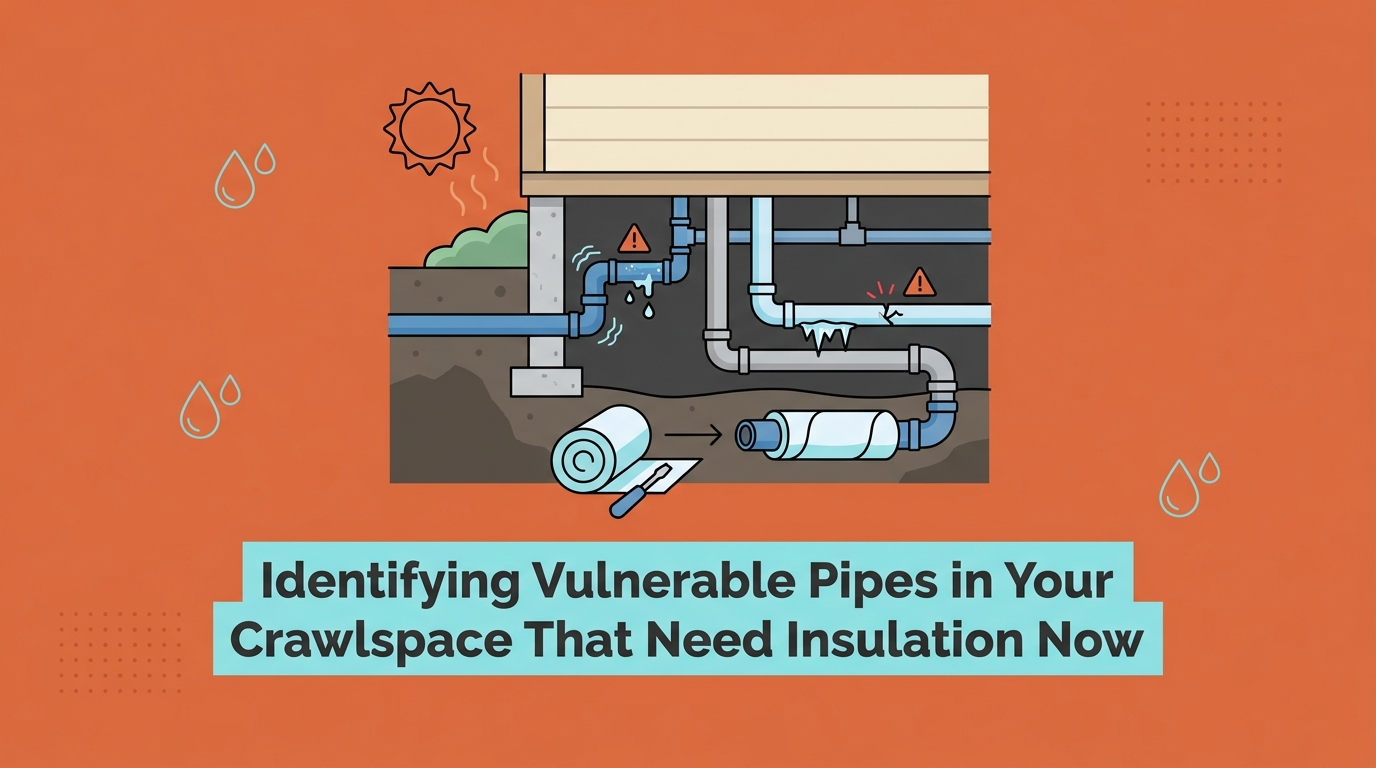
Here at HRI Plumbing, our team knows firsthand that the transition from summer to fall in Central Illinois happens fast, making identifying vulnerable pipes in your crawlspace that need insulation now a critical priority before the first harsh freeze. The September pre-heating season provides a narrow, highly valuable window of opportunity. While the days may still feel relatively mild, the overnight temperatures are already beginning their steady decline. Waiting until the dead of winter to think about the unheated spaces beneath your floors is a gamble that we often see result in catastrophic water damage.
If you need professional plumbing services to evaluate your system, or emergency plumbing repair when the unexpected happens, relying on a trusted local expert is the smartest move you can make.
The Danger of "Out of Sight, Out of Mind"
For most homeowners, the crawlspace is a forgotten zone. Because you do not interact with this space daily, it is easy to assume that the plumbing network running through it is completely secure. However, not all pipes freeze equally. The specific location of a water line within your crawlspace dictates its vulnerability. A pipe situated dead center in a well-sealed foundation might survive a cold snap, while a pipe located just a few feet away near an unsealed vent could freeze solid.
During the September pre-heating season, the ambient temperature in your crawlspace is still manageable, and the ground retains some summer heat. This is the exact time to physically inspect the area. Identifying these localized risks early prevents catastrophic bursts once temperatures drop. Water expands as it turns to ice, and the resulting pressure buildup between the ice blockage and your closed faucets is what ultimately splits copper, CPVC, and PEX piping wide open.
Proactive Maintenance vs. Reactive Disasters
There is a massive difference between proactive seasonal maintenance and reactive emergency situations. A proactive approach involves a calm, calculated visual inspection while the weather is pleasant. You have the luxury of time to schedule professional assessments, upgrade insulation, and seal drafts. A reactive approach involves waking up at 3:00 a.m. in January to the sound of rushing water, scrambling to shut off the main valve, and dealing with extensive structural drying. By utilizing this early fall window, you take control of your home's winter readiness.
How Drafts and Exterior Walls Accelerate Pipe Vulnerability
Understanding the environmental mechanics beneath your home is essential for winter preparation. Jacksonville, IL experiences sudden, harsh overnight temperature drops and freezing winds that easily penetrate unsealed vents. It is rarely the ambient outdoor temperature alone that causes a pipe to burst; it is the combination of cold air and constant wind movement.
The Chilling Effect of Crawlspace Vents
Wind chill drastically lowers the temperature around nearby pipes. When freezing air enters through unsealed crawlspace vents, it creates a direct stream of cold air that strips heat away from exposed water lines far faster than stagnant air would. Even if the outdoor temperature is hovering right at 32 degrees Fahrenheit, a steady 15-mile-per-hour wind blowing directly onto a copper pipe can cause the standing water inside to flash-freeze in a matter of hours.
The Microclimate Under Your Floors
Many homeowners in Jacksonville IL homes with unheated crawlspaces do not realize that their foundation creates distinct microclimates. The center of the crawlspace often stays several degrees warmer because it benefits from the radiant heat of the earth and the heated living space directly above it. Conversely, the perimeter exterior walls are significantly colder. These uninsulated concrete or block walls transfer cold directly into the crawlspace.
Key vulnerability factors include:
• Sudden overnight drops: Daytime temperatures might reach 50 degrees, but a sudden plunge to 15 degrees overnight catches uninsulated pipes off guard.
• Direct draft paths: Pipes located directly in the cross-breeze between two open vents are always the first to fail.
• Thermal bridging: Pipes strapped directly to cold foundation walls lose heat rapidly through direct physical contact.
By understanding these microclimates, you can prioritize which pipes need immediate attention, ensuring that drafts and freezing perimeters do not compromise your water supply.
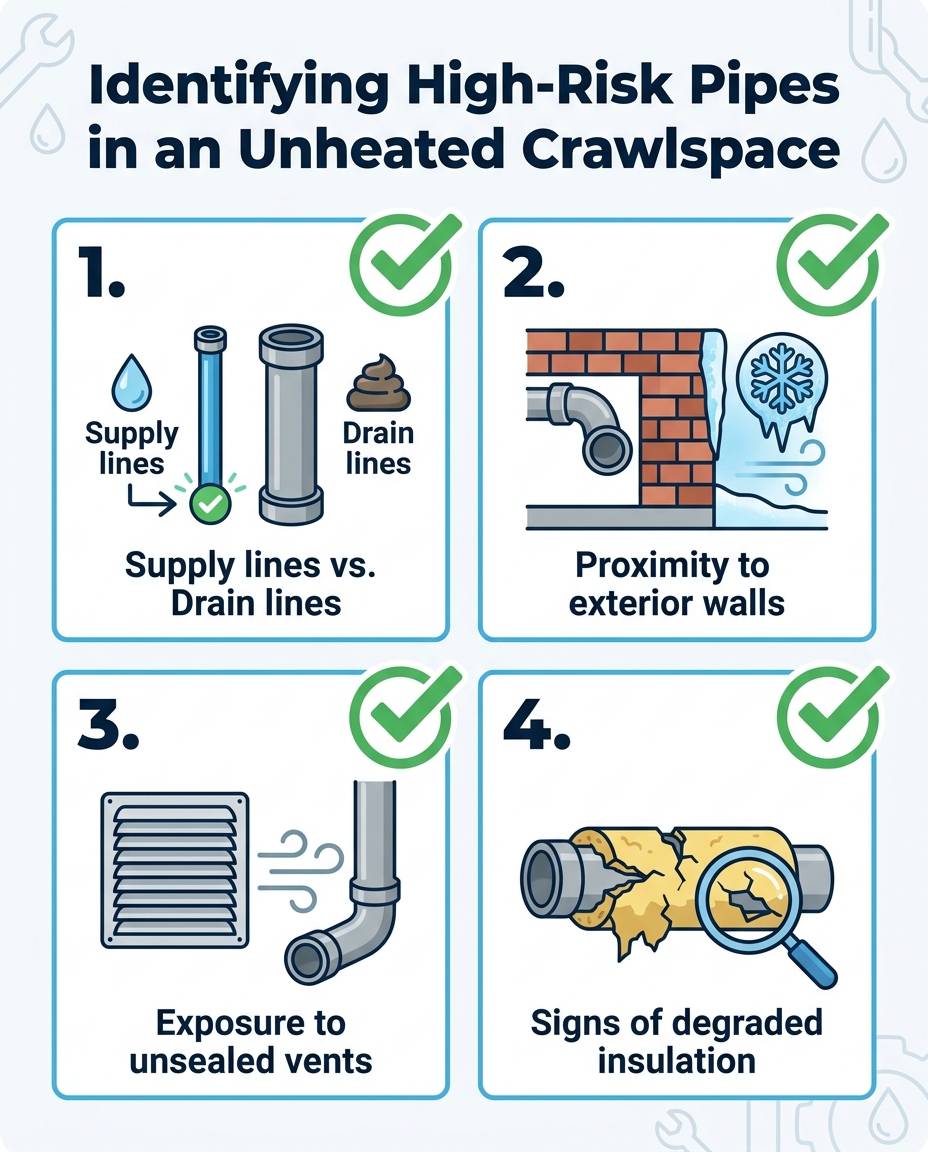
Visual Checklist: High-Risk Supply Lines vs. Lower-Risk Drain Lines
When you venture beneath your home, you will see a tangled network of different pipes. Our HRI Plumbing technicians always remind homeowners that not all of them pose the same risk during a winter freeze. Knowing the difference between high-risk supply lines and lower-risk drain lines is the first step in a successful visual inspection. If you suspect hidden issues during this check, professional leak detection can pinpoint vulnerabilities before they become emergencies.
Understanding Your Plumbing Lines
Pressurized water supply lines are the high-risk targets. These are the smaller diameter pipes (usually 1/2 inch to 1 inch) made of copper, PEX, or CPVC that carry fresh, pressurized water to your faucets, toilets, and appliances. Because they are always full of standing water waiting to be used, they are highly susceptible to freezing.
Conversely, drain lines are much wider (usually 2 to 4 inches), typically made of white or black PVC, and are gravity-fed. Because wastewater flows through them and empties out, they rarely hold standing water, making them a significantly lower risk for freezing.
The Early Fall Inspection Checklist
Use this checklist for Jacksonville IL homes with unheated crawlspaces to identify your highest-risk supply lines:
1. Locate perimeter supply lines: Trace any small-diameter supply lines running parallel to uninsulated exterior foundation walls. These are in the coldest zone of the crawlspace.
2. Check the vent zones: Look for any vertical or horizontal supply pipes that sit directly adjacent to, or in front of, crawlspace vents.
3. Inspect ground-level pipes: Spot any pipes resting directly on the dirt floor or buried very shallowly in the soil. Dirt floors conduct cold rapidly, pulling heat away from the pipe.
4. Look for signs of past stress: Check the entire length of these high-risk lines for signs of previous moisture, corrosion, green oxidation on copper, or old water marks. These indicate the pipe has struggled with temperature fluctuations or condensation in the past.
5. Trace lines to exterior fixtures: Pay special attention to the supply lines feeding your outdoor hose bibs, as cold transfers directly through the metal fixture into the crawlspace.

The Quirk of Older Homes: Retrofitted Plumbing Layouts
Many of the beautiful, historic houses in our area were built long before modern indoor plumbing was a standard feature. As a result, the plumbing in these homes was added decades later, leading to unique architectural challenges. In our years serving the community, the HRI Plumbing team has gained deep familiarity with the specific crawlspace plumbing layouts typical to older Central Illinois housing stock, and we know exactly where these retrofitted systems tend to fail.
The Hidden Risks of Past Renovations
In older homes, retrofitted plumbing is often routed dangerously close to exterior walls simply because it was the easiest path for the installers at the time. Instead of running pipes through the warmer, central interior walls, contractors frequently ran them along the cold stone or brick foundation perimeters.
Furthermore, decades of subsequent renovations—such as kitchen bump-outs or bathroom additions—might have left certain sections of pipe completely exposed to cold air pockets. You might find a modern PEX line spliced into an old copper line, suspended haphazardly near a drafty sill plate. Understanding your home's specific layout is crucial when assessing freeze risk in Jacksonville IL homes with unheated crawlspaces.
One local homeowner reached out to our team last fall regarding a major leak underneath their slab foundation home. Because older homes often feature complex, retrofitted layouts, our technicians walked through all the options and ultimately provided comprehensive home repiping services, installing completely new plumbing, an exhaust fan, and updated toilet fittings, finishing everything within the exact timeframe discussed. This highlights a critical point we always stress: major systemic layout issues often require comprehensive, professional solutions rather than simple patch jobs.
Recognizing the Signs of Inadequate or Failing Pipe Insulation
Even if your pipes were insulated years ago, that protective layer does not last forever. The harsh environment of an unheated crawlspace takes a toll on materials. During your September pre-heating season inspection, evaluating the condition of existing insulation is just as important as finding bare pipes.
What to Look For During Your Visual Inspection
Foam insulation degrades over time due to temperature swings, humidity, and occasionally pest activity. When insulation fails, it leaves your high-risk supply lines completely exposed to the winter cold.
• Brittle or Crumbling Foam — What It Means for Your Pipes: The material has lost its thermal resistance. It is no longer trapping heat and will easily let freezing air reach the pipe.
• Exposed Joints and Elbows — What It Means for Your Pipes: Insulation often shrinks. Gaps at elbows, tees, and valves create localized freeze points where ice blockages form rapidly.
• Makeshift Materials — What It Means for Your Pipes: Rags, old towels, or thin plastic wrapped around pipes offer zero R-value and actually trap moisture against the pipe.
• Condensation or Water Marks — What It Means for Your Pipes: Moisture on the outside of the insulation means the vapor barrier has failed, rendering the insulation useless against the cold.
The quick fix: Do not attempt to tape over rotting foam. If you spot degraded, brittle, or crumbling insulation, the entire section needs to be stripped and professionally replaced to ensure continuous, gap-free thermal protection.
Moving from Inspection to Protection Before the Freeze
Identifying vulnerable pipes is only the first half of the equation. Transitioning from inspection to active protection before the cold weather sets in is what actually saves your home from water damage. The urgency of addressing the vulnerable pipes identified during your early fall inspection cannot be overstated.
Why Professional Insulation Application Matters
A common misconception is that wrapping a pipe is a foolproof DIY project. However, the cause of many winter bursts is improperly applied insulation. Proper insulation requires specific materials—such as high-density closed-cell foam or fiberglass with a dedicated vapor barrier—and professional application to ensure total coverage without a single gap. A quarter-inch gap at a copper elbow is all it takes for the wind chill to freeze the line.
Beyond wrapping the interior pipes, additional protective measures are necessary. Addressing exterior fixtures that connect directly to your crawlspace lines is vital. For instance, upgrading to frost-free sillcocks to prevent burst pipes pushes the freezing point safely back into the conditioned envelope of the home, protecting the supply line that feeds it.
Last winter, a Jacksonville homeowner called our HRI Plumbing dispatch with unspecified plumbing issues as the temperature plummeted. We had a technician over within an hour to help resolve the issues professionally, turning a chaotic morning back into a normal day. That is the exact scenario we want to help you avoid. The calm of proactive fall maintenance is always preferable to the chaos, damage, and expense of a winter emergency response.
Frequently Asked Questions About Crawlspace Plumbing
Homeowners often have specific questions about how cold weather impacts their unheated spaces. Here are the answers to the most common concerns for Jacksonville IL homes with unheated crawlspaces.
At what temperature do pipes freeze in a crawl space?
Ambient outdoor temperatures of 20 degrees Fahrenheit are the general threshold for pipes freezing in unheated spaces. However, this is not a hard and fast rule. Wind chill blowing through open vents can cause freezing at much higher ambient temperatures, sometimes even when the thermometer reads just above 32 degrees.
Which pipes freeze first in a house?
Pipes located in unheated interior spaces like crawlspaces, attics, and garages are always the first to freeze. Specifically, pressurized water supply lines running along uninsulated exterior walls or directly in the path of drafty vents are the most vulnerable points in your entire plumbing system.
Should I insulate the pipes in my crawl space?
Yes, insulating pipes in an unheated crawlspace is absolutely essential, especially for pressurized water supply lines. Proper insulation slows the transfer of heat from the water to the freezing air, significantly reducing the risk of a burst pipe during a cold snap.
How do I keep pipes from freezing in an unheated crawl space?
The most effective method is to ensure proper, professional insulation on all supply lines, leaving no gaps at joints or elbows. Additionally, sealing drafts, closing crawlspace vents for the winter, and managing the overall ventilation properly before the cold weather hits will protect your plumbing infrastructure.
Does a dirt floor in a crawlspace increase freezing risks?
Yes, dirt floors can significantly increase freezing risks. Dirt floors contribute to high moisture levels in the crawlspace, which can degrade pipe insulation over time. Furthermore, pipes resting directly on the cold ground are at a much higher risk of rapid heat loss through direct thermal transfer.
Secure Your Crawlspace Before the Freeze Hits
The September pre-heating season is here, and the window to prepare your home is actively closing. Taking the time now to visually inspect your unheated spaces and identify high-risk supply lines is a small investment of time that prevents massive headaches later.
Do not wait for the first hard freeze to test the limits of your plumbing. Rely on local experts to thoroughly assess, insulate, and protect your vulnerable pipes with professional-grade materials. Schedule a professional evaluation with HRI Plumbing today, and gain the peace of mind that comes from knowing your home is fully secured against whatever the Central Illinois winter brings.


