

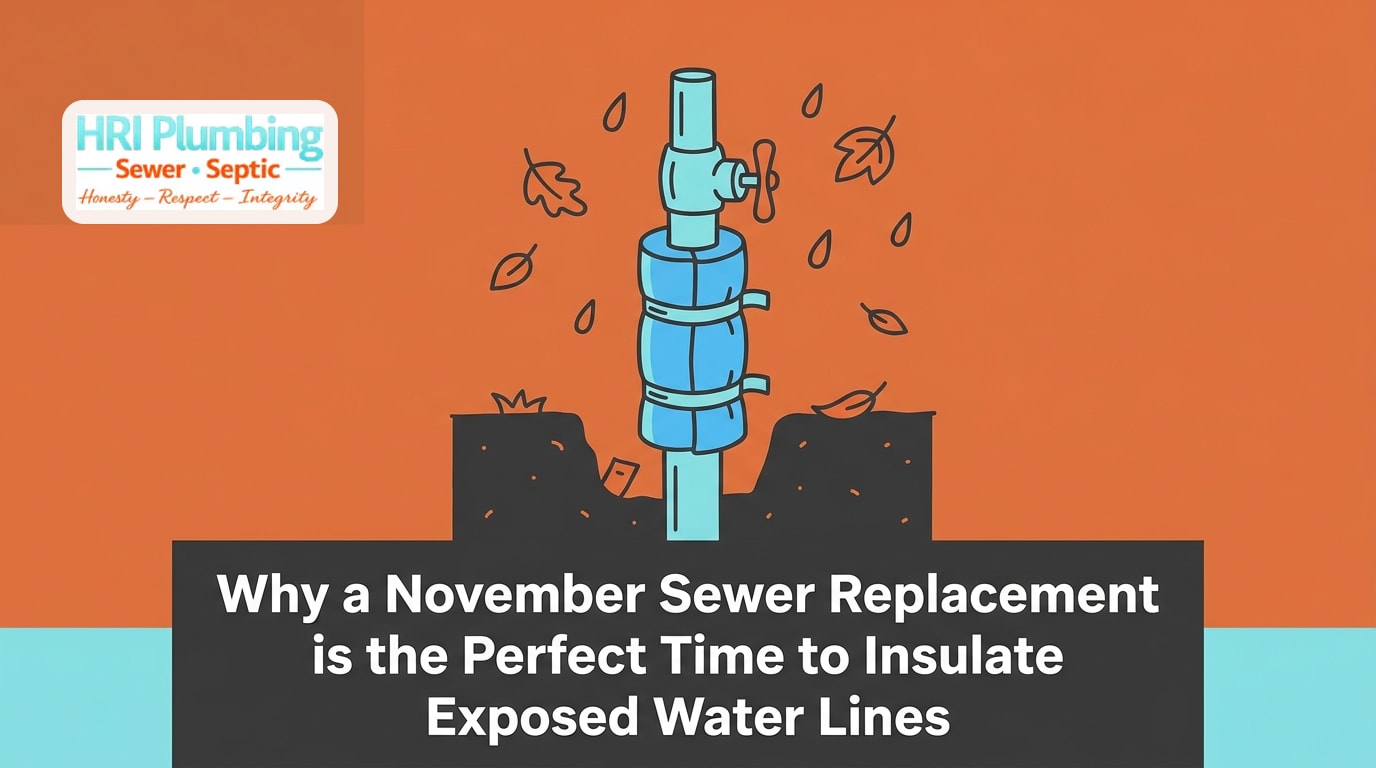


Facing a Late-Fall Excavation: An Unexpected Winterization Opportunity
With the November pre-winter frost rapidly approaching in central Illinois, our team at HRI Plumbing considers insulating exposed water lines during a November sewer replacement one of the most critical preventative steps a homeowner can take. A collapsed sewer main is incredibly stressful on its own, but the late-fall timing adds the intense pressure of impending winter weather. When your yard is suddenly transformed into an active excavation site, the immediate focus is naturally on restoring the drainage system. However, this massive disruption presents a rare, strategic opportunity to protect the rest of your home's infrastructure.
Trenching deep into the yard to replace a failing sewer line almost always exposes the main water line, temporarily stripping away the natural soil insulation that protects it from freezing temperatures. Rather than simply backfilling the trench once the sewer pipe is replaced, you face a critical decision: proactively insulate that newly exposed water line before the ground freezes solid. Choosing to secure this vulnerable pipe while the trench is already open prevents a devastating secondary plumbing emergency when temperatures inevitably plummet in the coming weeks.
Taking action now requires working with professionals who understand how to integrate these solutions seamlessly. By leveraging comprehensive plumbing services, you can ensure that an unexpected late-fall excavation is transformed from a point of anxiety into a long-term upgrade for your home's winter readiness.
The Physics of Frost Depth and Disturbed Soil
Understanding why an open trench is so dangerous to your water supply requires a brief look at the physics of frost depth. In its natural state, undisturbed, compacted soil acts as a powerful thermal barrier. Over decades, the earth settles, creating a dense layer that traps geothermal heat rising from deep underground while blocking freezing surface air. This natural insulation is exactly what keeps your underground pipes safely above freezing temperatures, even during the harshest central Illinois winters.
Once a backhoe digs a trench for a sewer line replacement, that natural thermal protection is instantly destroyed. The dense, compacted earth is broken apart, allowing freezing air to penetrate much deeper and faster than it normally would. In our years of trenching and repairing utilities in Jacksonville IL, we know that local municipal codes typically require water lines to be buried at a specific depth—often 36 inches or more—specifically to sit safely below the regional frost line. However, the depth alone is only half the equation; the density of the soil above it provides the actual insulation.
Even after the trench is backfilled, the newly disturbed soil lacks the density to immediately provide the same level of frost protection. It is loose, aerated, and highly susceptible to rapid temperature drops. Without added thermal resistance—known as R-value—the exposed water pipe is left virtually defenseless against the season's first deep freeze. The cold penetrates the loose dirt rapidly, pulling heat away from the water inside the pipe until it crystallizes and expands, leading to catastrophic bursts.

Why Water and Sewer Lines Frequently Overlap
It is a common misconception that residential utility lines are entirely separate entities buried in isolated corners of a property. In reality, municipal plumbing codes and the practical limitations of property layouts dictate how these vital systems are routed. Because both water and sewer lines must connect the municipal mains at the street to the primary utility access point at your foundation, they frequently run parallel or cross paths underground.
Municipalities mandate specific burial depths for both systems, often pushing them into the same horizontal plane beneath the yard. A major trenching operation to access a collapsed sewer pipe will inevitably uncover long sections of the water main. This physical overlap is why a sewer emergency so frequently becomes a water line exposure event.
While this overlap can seem like a complication, it actually provides a rare, unobstructed view of the pipe's condition. Excavating a yard is highly labor-intensive and disruptive. Having the water line exposed for free during a sewer repair is the perfect time for identifying vulnerable pipes that need insulation or structural reinforcement—a pattern we see often and always encourage homeowners to take advantage of.
Comparing Soil Thermal Protection
• Undisturbed / Compacted — Thermal Resistance (R-Value): High (Natural Thermal Barrier) — Frost Penetration Speed: Slow and shallow — Risk to Water Lines: Low (Pipes at code depth are safe)
• Open Trench — Thermal Resistance (R-Value): Zero (Direct Air Exposure) — Frost Penetration Speed: Immediate — Risk to Water Lines: Extreme (Immediate freezing risk)
• Newly Backfilled — Thermal Resistance (R-Value): Low (Loose and Aerated) — Frost Penetration Speed: Fast and deep — Risk to Water Lines: High (Until soil compacts over years)
Assessing the Exposed Water Line for Hidden Damage
Before any insulation is applied and long before the first scoop of soil is returned to the trench, our plumbing professionals thoroughly evaluate the exposed water line. Insulating over a compromised pipe simply hides a future blowout beneath a layer of foam. The pipe must be structurally sound, free of severe corrosion, and completely watertight before it is sealed in a thermal barrier.
Addressing necessary pipe replacements or targeted repairs while the ground is already open saves thousands in future excavation costs. If a section of the water main is heavily corroded or showing signs of stress, handling repiping in Jacksonville IL while the trench is active is the most cost-effective decision we can recommend.
Verifying System Integrity
Evaluating an aging water line requires a methodical approach to ensure no minor defects are overlooked:
1. Visual Surface Inspection: Our team examines the entire exposed circumference of the pipe, looking for pitting, scaling, or galvanic corrosion that weakens the metal or plastic over time.
2. Joint and Fitting Verification: The connections are the most vulnerable points. We look for weeping joints, mineral deposits, or moisture accumulation that indicates a slow, hidden leak.
3. Pressure Testing: Checking for pressure inconsistencies helps confirm that the system is watertight. Ensuring structural integrity is critical before sealing the pipe inside a specialized thermal barrier.
Choosing the Right Underground Insulation Materials
Not all pipe insulation is created equal, and using the wrong material underground is just as bad as using no insulation at all. The standard foam tubes you might see wrapped around indoor plumbing in a basement or garage are completely unsuited for direct burial. In our experience, when placed under three or more feet of heavy, wet soil, standard open-cell foam quickly compresses. Once compressed, it loses the trapped air pockets that provide its R-value, rendering it thermally useless.
Underground applications require specialized, closed-cell insulation designed specifically for direct burial. These professional-grade materials resist moisture intrusion and retain their structural shape and R-value even under immense soil pressure. If groundwater seeps into the insulation, it can freeze directly against the pipe, accelerating the exact problem the insulation was meant to prevent.
Furthermore, the insulation must be properly sealed at all seams using specialized underground tapes or adhesives. Professional installation ensures the thermal barrier meets local municipal plumbing codes for burial and guarantees that the pipe remains protected. If a compromised pipe is discovered during this wrapping process, prioritizing leak detection and repair before finalizing the insulation wrap is absolutely vital.
Turning an Emergency Repair Into a Preventative Win: Insulating Exposed Water Lines During a November Sewer Replacement
Treating a sewer replacement in isolation misses the bigger picture of whole-home plumbing health. When a major component of your plumbing system fails, it is easy to develop tunnel vision and focus solely on the immediate broken pipe. However, a holistic approach to home maintenance requires looking at how different systems interact and affect one another.
Working with a proactive, comprehensive plumbing service means you have our professionals on-site who notice and fix adjacent vulnerabilities—like uninsulated water lines—while they are already in the trench. This level of foresight saves homeowners from future headaches and redundant excavation costs. By addressing the adjacent water line during the same excavation, you maximize the value of the trenching work that has already been done.
This comprehensive approach eliminates the risk of a frozen water main in January. Instead of spending the winter worrying about whether the newly backfilled soil will protect your pipes from the dropping temperatures, you can enjoy absolute peace of mind knowing the system is fortified with professional-grade thermal barriers.
What to Ask Your Plumber Before the Trench is Closed
Empowering yourself with the right questions ensures your system is fully protected before the heavy machinery fills the trench back in. Once the soil is compacted, verifying the work becomes impossible without digging it all up again. Have a clear conversation with your plumbing professionals to confirm the winterization steps are complete.
• Verify the material rating: Ask about the specific R-value and moisture resistance of the insulation being applied to the water line. Confirm it is rated for direct burial.
• Confirm the inspection scope: Ask if the entire exposed section of the water main has been visually inspected for wear, corrosion, and micro-fractures.
• Check the sealing method: Ensure the seams of the closed-cell foam are being sealed with appropriate waterproof adhesives to prevent groundwater intrusion.
• Discuss the backfill timeline: Request a timeline for when the trench will be safely backfilled and compacted to begin restoring the natural soil protection before the deep freeze arrives.
Frequently Asked Questions About Trenching and Pipe Insulation
Why should I insulate an underground water line?
Insulating an underground water line protects it from freezing when the natural soil barrier is disturbed. Disturbed or newly backfilled soil lacks the density to block cold air effectively. Adding professional-grade insulation restores the necessary thermal resistance to keep the water flowing freely during winter.
Can water and sewer lines share a trench?
Yes, water and sewer lines frequently share the same general trenching path due to property layouts and municipal code requirements. While they must maintain specific vertical or horizontal separations based on local regulations, repairing one often exposes the other, creating an opportunity for simultaneous maintenance.
How deep is the frost line in Illinois?
In central Illinois, the frost line typically reaches depths that require water lines to be buried at least 36 inches underground. However, severe winters can push the frost line deeper, making proper burial depth and dense soil compaction critical for preventing frozen pipes.
What happens to exposed pipes when the ground freezes?
When the ground freezes around an uninsulated, exposed pipe, the cold rapidly pulls heat from the water inside. The water crystallizes and expands, creating immense internal pressure that eventually causes the pipe to rupture, leading to severe leaks once the ice thaws.
How quickly can an exposed water pipe freeze in November?
An exposed water pipe in an open trench can freeze in a matter of hours if the ambient temperature drops below freezing overnight. Without the thermal mass of compacted soil protecting it, the pipe is entirely at the mercy of the surface air temperature.
Secure Your Plumbing System Before the Ground Freezes
An open trench in late fall represents a rapidly closing window of opportunity to protect your home's vital water lines. As the November pre-winter frost approaches, leaving a newly exposed water main uninsulated under loose backfill is a risk you simply do not have to take. Ensure your entire plumbing system is ready to withstand dropping temperatures by working with professionals who look at the whole picture, rather than just the immediate repair.
Do not wait until the first hard freeze causes a secondary emergency. Schedule a thorough inspection or discuss your current excavation project with our local experts today, because we know firsthand that prioritizing insulating exposed water lines during a November sewer replacement is the smartest way to guarantee a stress-free winter.


