


October Temperature Drops: Protecting Your Plumbing Before the First Freeze
October in Central Illinois signals a beautiful shift in the weather, but it also brings a critical deadline for your home's exterior. When looking for common homeowner questions answered during this time of year, our team at HRI Plumbing knows that the most urgent priority is always preparing your exterior water lines for the cold. The first hard freeze is often just weeks away, and your outdoor hose bibs are sitting directly in its path. Taking action right now, in mid-fall, is the difference between a secure home and an emergency plumbing disaster when temperatures plummet.
Historical climate data for Central Illinois shows a distinct pattern of sudden, steep temperature drops in late fall. A mild October afternoon can easily transition into a freezing night, catching many property owners completely off guard. The concrete problem is simple but destructive: exposed pipes and hose bibs freeze rapidly when the mercury drops, and the resulting ice expansion shatters metal and plastic alike. The decision point for homeowners is recognizing that this preparation cannot wait for a winter weather advisory; it must happen while the weather is still relatively mild.
By securing your exterior plumbing early, you eliminate the risk of burst pipes and the extensive water damage that follows. To help you get started on the right foot, we offer comprehensive plumbing services designed to keep your entire system running smoothly year-round. Taking care of the outside of your property now allows you to safely turn your attention indoors, where you can focus on interior upgrades and comfortable living throughout the long winter ahead.
The Critical Timeline: When Should You Disconnect Outdoor Hoses?
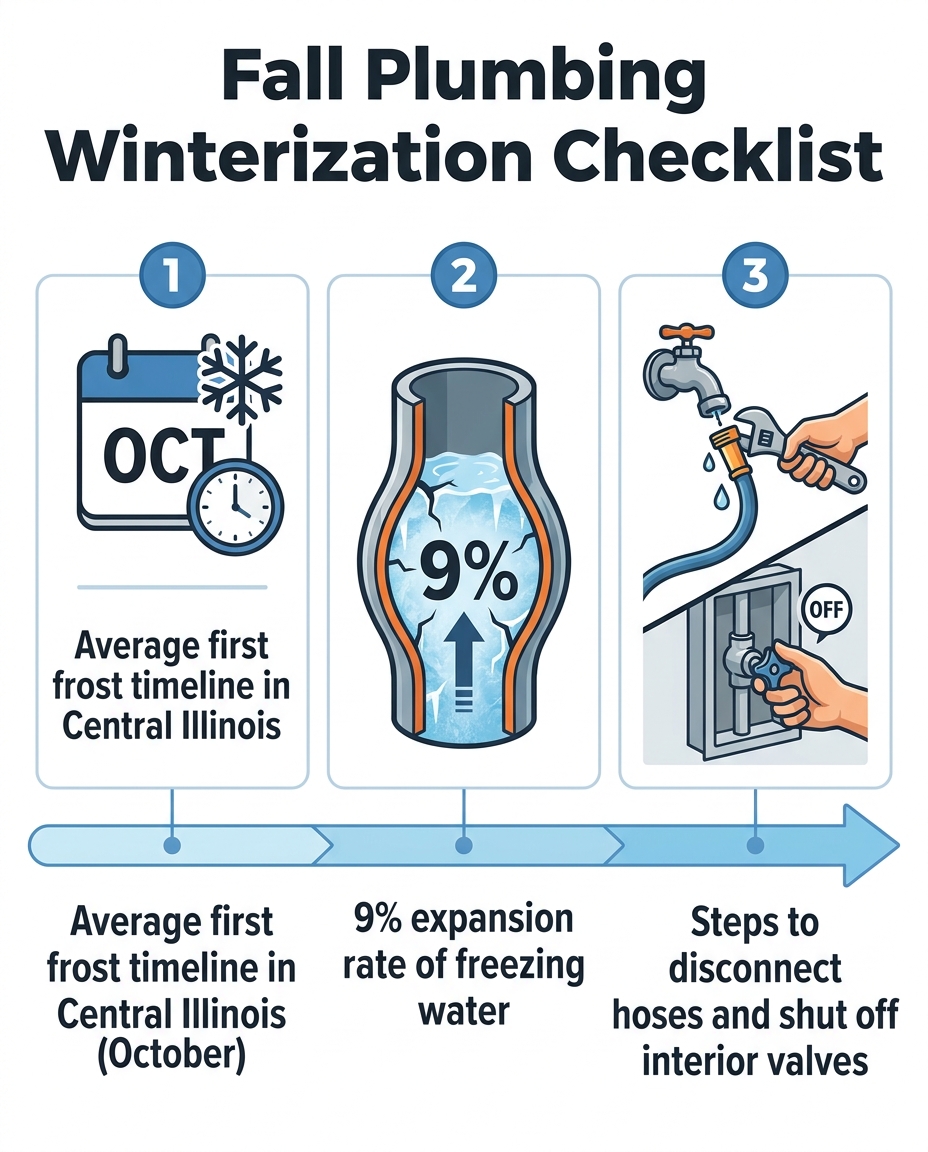
Understanding the seasonal timeline is the most important step in protecting your property. The average first frost in Jacksonville IL and central Illinois typically occurs in October. Because of this, mid-fall is the absolute latest you should be thinking about exterior water lines. Waiting until November or December is a gamble that, in our years of responding to winter plumbing emergencies, frequently results in severe pipe damage.
To understand why timing is so critical, you have to look at the physics of freezing water. When water turns to ice, it expands by approximately 9%. Inside a rigid metal or PVC pipe, that expansion creates immense, unavoidable pressure. If the water has nowhere to go, the pipe simply bursts. This pressure does not just affect the exposed tip of the faucet; it can travel backward into the pipes resting inside your walls.
Leaving a garden hose connected is one of the most dangerous mistakes a homeowner can make during this season. Here is exactly how that scenario plays out and why proactive disconnection is essential:
1. Water gets trapped: A connected hose prevents the outdoor faucet (hose bib) from draining completely. Even if the water is turned off, residual water sits right at the connection point.
2. The freeze travels: When the temperature drops, the trapped water freezes inside the hose and the bib. Because the hose blocks the ice from expanding outward, the freezing pressure is forced backward into your home's plumbing system.
3. Hidden bursts occur: The pipe often bursts behind your exterior wall, meaning you might not notice the catastrophic leak until the ice thaws and floods your basement or crawlspace.
Do not wait for the local news to announce a freeze warning. Disconnecting your hoses proactively in October ensures that when the sudden central Illinois cold snaps arrive, your home is already protected.

Identifying Exposed Pipes and Vulnerable Exterior Lines
Before the mid-fall / October weather turns permanently cold, you need to know exactly where your property is vulnerable. Missing even a single exposed line can lead to a massive headache in January. Taking a slow, deliberate walk around your property is the best way to identify potential freeze risks.
Your goal is to locate every single point where water exits the house or runs through an unheated space. Once you find them, you can take the necessary steps to secure them. Here is a checklist of vulnerable areas and steps to take:
• Hidden hose bibs: Check behind thick landscaping bushes, underneath raised decks, and near secondary entrances. It is common to winterize the main backyard faucet but completely forget the one hidden by the driveway.
• Unheated garage lines: If you have a utility sink or a water line running through an uninsulated garage, these are highly susceptible to freezing. Treat them with the same urgency as outdoor lines.
• Interior shut-off valves: Once you locate the exterior bibs, find their corresponding shut-off valves inside the house. These are usually located in the basement, utility room, or crawlspace, directly opposite the outdoor faucet.
• Draining the residual water: After turning off the interior valve, you must go back outside and open the hose bib. This allows the remaining water trapped between the valve and the faucet to drain out, leaving the pipe empty and safe from freezing.
While basic visual observation, disconnecting hoses, and turning accessible interior valves are safe homeowner tasks, remember that you should never attempt to alter pipe structures or disassemble plumbing fixtures on your own. If a valve is stuck or corroded, force will only cause it to break.
How Historic Plumbing Systems Handle Rapid Temperature Shifts
Jacksonville IL and central Illinois are home to beautiful historic properties, but those older structures come with unique plumbing challenges. In our experience working on these classic homes, the materials and construction methods used decades ago react very differently to rapid temperature shifts than modern builds do. If you live in an older home, your freeze risk is inherently higher.
Vulnerable piping materials are a major factor. Many historic homes still feature older copper or galvanized steel lines running through areas that were never designed for modern insulation standards. These older metals can become brittle over time, making them even more susceptible to the 9% expansion of freezing water. When a rapid late-fall temperature plummet hits, these older pipes offer very little resistance.
Drafty crawlspaces and stone foundations accelerate the freezing process drastically. In a modern home, the basement or crawlspace usually retains enough ambient heat from the house to keep pipes safe. In historic structures, uninsulated stone foundations and drafty floorboards allow freezing winds to blow directly across exposed plumbing lines. This means your indoor pipes can freeze just as easily as your outdoor hose bibs.
In our years of restoring and maintaining historic Jacksonville homes, the team at HRI Plumbing has seen exactly how vulnerable these older crawlspaces can be to sudden cold snaps. To protect your historic plumbing without invasive renovations, focus on simple ambient heat improvements. Ensure crawlspace vents are properly closed and sealed for the winter. Use heavy-duty weatherstripping on basement windows, and consider wrapping exposed pipes in basic foam insulation sleeves to provide a buffer against sudden drafts.
Shifting Focus Indoors: Planning Off-Season Bathroom Upgrades
Once you have secured your exterior lines against the mid-fall / October cold, you can safely shift your attention to the inside of your home. Interestingly, indoor plumbing is largely insulated from Central Illinois' changing seasons, making the long winter months the absolute ideal time to plan and execute interior remodeling projects.
Winter accessibility planning is a smart move for many homeowners. Upgrading your bathroom for better accessibility ensures safer indoor movement when icy sidewalks and freezing temperatures keep you cooped up inside. Swapping out a standard, high-sided bathtub for a modern, accessible shower significantly reduces slip-and-fall risks in the home.
Professional assessment requirements are strict when it comes to these interior changes. While disconnecting a hose is a DIY task, structural changes to a bathroom require a professional to evaluate subfloor integrity, drainage slopes, and local code compliance. If you are considering a major upgrade, exploring options for a shower installation in Jacksonville during the off-season ensures your home is comfortable and safe all year long.
Coordinating Comprehensive Bathroom Renovations
Planning major indoor upgrades during the colder months allows for a much smoother timeline. Because exterior maintenance naturally pauses, contractors and homeowners alike can focus entirely on interior details. When coordinating a comprehensive renovation, the key is integrating various fixtures seamlessly into a single project.
Instead of replacing a vanity in November and a tub in February, tackling the entire space at once ensures that the plumbing routes, drainage systems, and water pressure balancing are all handled cohesively. Mid-fall is the perfect time to finalize these designs so the physical work can take place while the snow flies outside.
Safe Fall Plumbing Maintenance vs. Professional Intervention
Knowing where to draw the line between a weekend chore and a professional service call is vital for protecting your home in Jacksonville IL and central Illinois. Misjudging a plumbing task can lead to severe water damage, especially when dealing with pressurized lines and freezing temperatures.
Safe DIY tasks are strictly limited to surface-level adjustments. Disconnecting garden hoses, turning accessible interior shut-off valves, and visually inspecting your exterior for leaks are all things you should do yourself. However, we will never provide step-by-step instructions for altering pipes, installing frost-proof bibs, or performing deep system draining, because those tasks require a licensed professional to ensure they meet local safety codes.
The risks of improper winterization are severe. At HRI Plumbing, we frequently see the aftermath of well-intentioned but improper DIY winterization. If a pipe is not drained correctly, or if a valve is installed backward, you can easily create hidden leaks inside your walls that rot your framing and invite mold growth over the winter. Furthermore, if you need to upgrade indoor fixtures, it is highly efficient to have a professional handle those replacements while they are already on-site assessing your winterization needs. For example, scheduling a toilet installation alongside your fall maintenance check saves time and ensures everything is properly sealed.
• Exterior Preparation — Safe Homeowner Tasks: Removing hoses, storing splitters, turning off accessible indoor valves. — Licensed Professional Required: Installing frost-proof hose bibs, altering exterior pipe routes.
• System Draining — Safe Homeowner Tasks: Opening the outdoor tap to let residual water drip out. — Licensed Professional Required: Using compressed air to blow out irrigation lines or deep plumbing systems.
• Indoor Upgrades — Safe Homeowner Tasks: Replacing showerheads, changing basic flappers. — Licensed Professional Required: Rerouting drainage, setting new flanges, altering subfloor plumbing.
• Leak Management — Safe Homeowner Tasks: Placing a bucket under a drip and turning off the main water supply. — Licensed Professional Required: Cutting into drywall to repair burst pipes or replace corroded copper lines.
Detailed FAQ: Top Homeowner Questions About Fall Plumbing
As mid-fall / October settles in, we receive a surge of inquiries regarding seasonal preparation. To help you navigate the shift in weather, we have compiled the most urgent answers to your seasonal questions. If you are also curious about deeper structural projects for the winter, you can read more about the structural realities of designing a roll-in shower to see how off-season planning works.
When should I turn off my outside water for winter?
You should turn off your outside water supply in mid-to-late October, well before the first hard freeze hits the region. Waiting until November drastically increases the risk of a sudden overnight temperature drop freezing the water inside the bib. Proactive timing is your best defense against burst pipes.
How do I keep my pipes from freezing?
The most effective way to keep exterior pipes from freezing is to shut off the interior water supply valve and drain the residual water from the outside tap. For indoor pipes located in unheated areas like crawlspaces, adding foam pipe insulation and sealing drafty vents will provide the necessary ambient heat retention.
What happens if I leave my garden hose connected in winter?
Leaving a garden hose connected traps water inside the outdoor faucet, preventing it from draining properly. When temperatures drop, that trapped water freezes, expands, and pushes the freezing pressure backward into your home's plumbing, often causing the pipe to burst inside your exterior wall.
Do frost-proof faucets still need to be winterized?
Yes, frost-proof faucets must still have all hoses and attachments removed before freezing weather arrives. While these specialized faucets are designed to keep the actual water valve safely inside the heated portion of the house, leaving a hose attached defeats their design and will still cause them to freeze and split.
How can I tell if my historic home's crawlspace pipes are at risk?
If your crawlspace features unsealed vents, loose stone foundation walls, or lacks proper insulation, the plumbing lines running through it are at high risk during a freeze. A simple visual inspection for daylight coming through the foundation or feeling for strong drafts will indicate if the ambient temperature is dropping too low.
Are indoor plumbing upgrades safe to do during the winter?
Yes, indoor plumbing upgrades are completely safe and highly recommended during the winter months. Because your interior system is protected from the freezing outdoor climate, the off-season is the perfect time to schedule bathroom remodels, fixture replacements, and accessibility upgrades without worrying about weather delays.
Secure Your Home's Plumbing System Before Winter Hits
Taking the time to address your exterior water lines in Jacksonville IL and central Illinois before the frost arrives provides incredible peace of mind. By disconnecting hoses, locating your shut-off valves, and draining vulnerable pipes, you actively prevent the catastrophic damage that comes with a burst line. Once the outside of your property is locked down for the season, you can comfortably shift your focus to enjoying your indoor living space.
If you are unsure about the winter readiness of your historic home, or if you want to start planning those off-season interior upgrades, do not wait until the ground freezes. Schedule a professional assessment today to ensure your system is secure, or start exploring options for your next bathroom remodeling project while the timing is perfect.


