



Why Does the Tub Clog Again Right After You Clear It?
Why does water back up just days after removing surface hair, and what is the real reason your bathtub drain keeps clogging after every shower? It is a frustrating cycle: you notice the water draining slowly, you use a plastic zip tool to pull out a visible clump of hair, and the water immediately flows freely again. You assume the problem is solved. Yet, less than a week later, you are standing in an ankle-deep puddle of soapy water once more. At HRI Plumbing, our team sees this recurring failure constantly, bringing homeowners to a critical decision point: continue relying on temporary chemical cleaners and surface-level plunging, or finally address the physical pipe degradation that is actively causing the backup.
When a bathtub drain clogs repeatedly after every shower, the true culprit is rarely just the hair you shed. Instead, the root cause lies deep within the mechanical structure of the plumbing itself. Most homeowners blame their shedding hair or the specific shampoo they use, but a pattern we see often in Jacksonville IL homes built between 1950 and 1980 is that the underlying issue is the rough, degraded interior of the pipes acting like Velcro. Rather than a smooth 1.5-inch chute, the pipe walls have become a jagged obstacle course that catches every passing particle.
If you are tired of treating the symptoms while the root cause worsens, exploring professional plumbing services is the first step toward restoring proper drainage. Particularly in older homes in Jacksonville IL, the original plumbing materials undergo decades of wear that fundamentally change how water and debris flow out of your house.
The Mechanical "Velcro Effect" Inside Your Pipes
To understand why clogs return so quickly, you have to look at the materials used to build your plumbing system. Many homes built more than 40 years ago rely on metallic drain lines. While cast iron pipes are incredibly durable and can last for generations before failing structurally, their interior surfaces begin to break down long before leaks appear. This internal breakdown completely alters the flow dynamics of the drain.
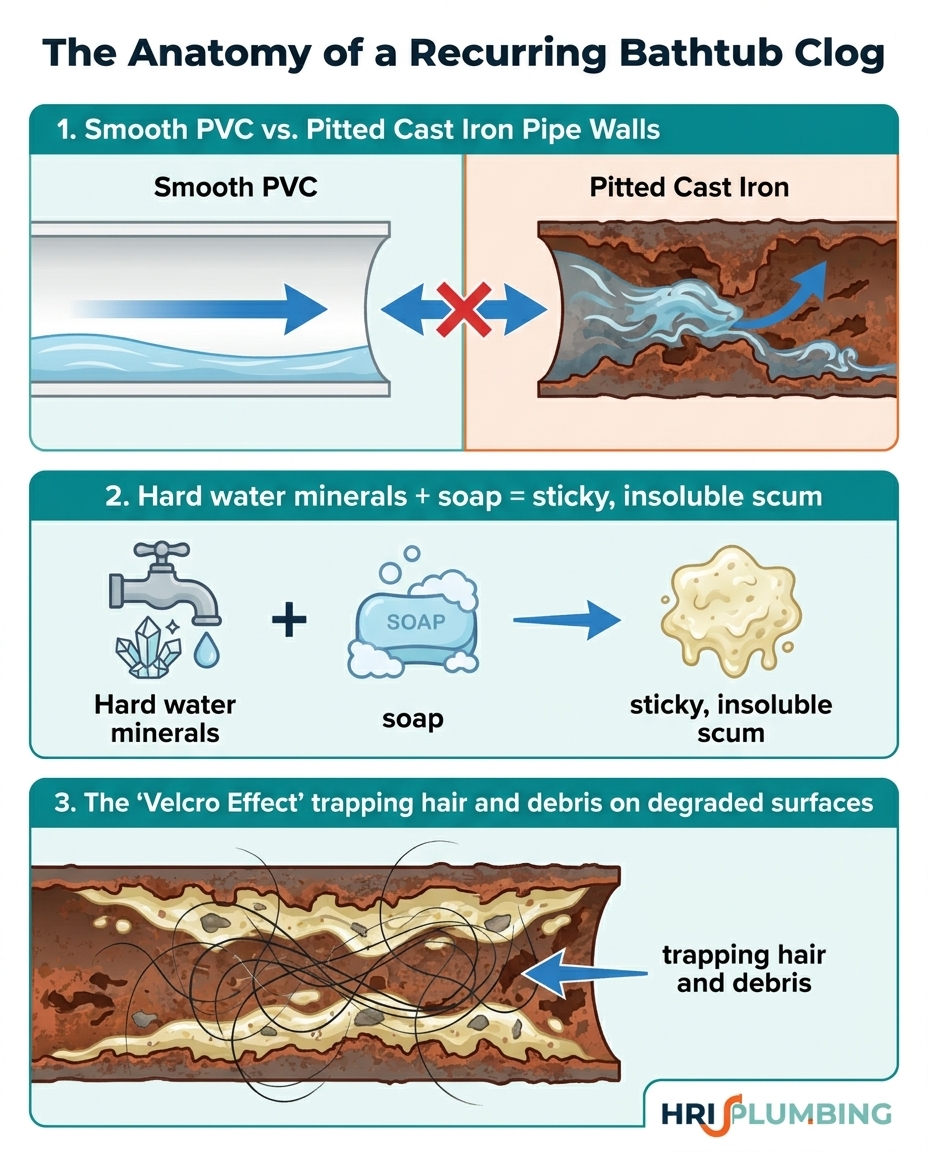
When our technicians inspect a cast iron p-trap that has degraded over decades, we typically find the interior walls experiencing extensive pitting and scaling. Oxidation creates a rough, flaky texture along the bottom curve of the pipe where water sits constantly to block sewer gases. Instead of a smooth, frictionless channel where debris can glide away, the pipe develops a jagged, uneven surface. This creates what plumbing professionals call the "Velcro effect."
• Snagging long hairs: A single strand of hair that would normally flush cleanly down a smooth PVC pipe gets caught on a microscopic rust flake.
• Trapping lint and fibers: Cotton fibers from washcloths and microscopic lint particles bind to the trapped hair, creating a web.
• Anchoring the blockage: Because the base of this clog is physically anchored to the pitted pipe wall, it resists being flushed away by heavy water flow.
When you use a surface tool to pull out the hair, you are only removing the symptom. The jagged pipe wall remains entirely intact, sitting in the dark, ready to catch the very next shower's debris. If you are dealing with a recurring clogged drain in Jacksonville, this mechanical degradation is often the underlying reason why surface clearing never lasts.
How Pipe Pitting Traps Debris
Pipe pitting is a localized form of corrosion where small cavities or "pits"—often measuring just 2 to 4 millimeters deep—form in the metal. In a plumbing context, this pitting completely disrupts the laminar flow of water. In a smooth pipe, water flows in parallel layers, carrying debris efficiently in the center of the stream. In a pitted pipe, the rough walls create localized turbulence. This turbulence causes heavy particles to drop out of the water stream and settle into the microscopic craters on the pipe floor. Once debris settles into these pits, it creates a foundation for larger blockages to grow rapidly, explaining why your drain goes from perfectly clear to completely stopped up in a matter of days.
The Chemical Reaction: Hard Water Meets Soap Scum
Mechanical degradation is only half of the equation. The other half is a continuous chemical reaction happening every time you step into the shower. Central Illinois groundwater is known for high mineral content (hard water), often exceeding 120 parts per million of dissolved minerals. This significantly increases scaling risks and accelerates a sticky soap scum formation that plagues local plumbing systems.
Hard water contains high levels of dissolved calcium and magnesium. When these minerals interact with the fatty acids (stearic acid) found in traditional bar soaps and many moisturizing body washes, a distinct chemical reaction occurs. The minerals bind to the fatty acids to form an insoluble precipitate known as soap scum. Unlike liquid soap, which dissolves in water, this newly formed compound is completely water-resistant. It does not wash away; it clings.
The compounding effect on your pipes:
1. The hard water and soap react to form the sticky matrix.
2. This sticky matrix flows down the drain and coats the already pitted, rough walls of a cast iron p-trap.
3. The soap scum hardens slightly between showers, creating a thick, adhesive layer over the rust flakes.
4. The pipe's internal diameter narrows, often choking a standard 1.5-inch pipe down to less than half an inch of clearance, and the walls become incredibly sticky.
This specific combination of hard water minerals and degraded pipes makes clogs recur with astonishing speed. The hair you shed in the shower isn't just snagging on a rough piece of metal; it is being glued to the wall by an insoluble mineral matrix. This is why pouring hot water or gentle household cleaners down the drain fails to clear the blockage—the soap scum matrix is fundamentally resistant to basic water dissolution.
Why Liquid Drain Cleaners Accelerate the Damage
Faced with a bathtub that clogs every week, many homeowners turn to the plumbing aisle at the local hardware store. Store-bought liquid drain cleaners promise a quick, dissolving fix for stubborn hair blockages. However, our team strongly advises against this. Using these chemicals on an already compromised pipe is one of the most damaging actions you can take for your plumbing system.
Liquid drain cleaners are highly caustic, typically relying on concentrated sodium hydroxide (lye) or sulfuric acid to eat through organic material. When you pour these heavy liquids down the drain, they sink through the standing water and settle directly into the lowest point of the system: the cast iron p-trap. Once there, they initiate a violent chemical reaction designed to dissolve the hair and grease.
The irony is that while the chemicals might successfully dissolve today's hair clog, they severely worsen the pipe's internal texture. The extreme pH of these cleaners strips away any protective patina on the metal and aggressively accelerates oxidation. By attempting to burn away a temporary clog, you are actively deepening the pits and craters along the pipe wall, effectively guaranteeing a faster, more stubborn clog the next time you shower.
The Hidden Cost of Chemical Drain Clearing
The chemical reaction inside a metal trap is exothermic, meaning it generates extreme heat—sometimes spiking pipe temperatures over 200 degrees Fahrenheit. When caustic chemicals sit in a cast iron p-trap, this intense heat can cause thermal expansion and contraction, stressing older joints and threads. Over time, the repeated use of chemical cleaners transforms a slow-draining pipe into a structurally compromised one. What began as a rough interior wall can eventually corrode all the way through, turning a nuisance clog into an active leak beneath your floorboards. Relying on chemicals as a recurring maintenance strategy is never recommended for stubborn drains.
Summer Showering: A Catalyst for Rapid Debris Buildup
The frequency of recurring clogs often spikes during specific times of the year, driven by changes in household behavior. As we head into the peak heat of July 2026, frequent showers to wash off sweat and outdoor grime are heavily stressing the drainage capacity of older plumbing. A drain that was barely keeping up with a household's needs in the mild spring months will often fail repeatedly under heavy summer usage.
During the summer, the volume of water and debris entering the drain increases dramatically. Homeowners in older homes in Jacksonville IL are not just washing away standard soap and water. Summer showers introduce a dense, oily mix of debris into the plumbing system:
• Heavy sunscreens: Sunblocks contain zinc oxide, titanium dioxide, and heavy carrier oils that are specifically designed to be water-resistant.
• Outdoor dirt and sand: Particulate matter from yard work or outdoor recreation washes down the drain, acting like an abrasive aggregate.
• Increased sweat and body oils: Higher temperatures mean more natural oils are flushed into the system.
When heavy sunscreen oils combine with the existing hard water soap scum matrix, they create an incredibly dense sludge. This sludge coats the jagged pipe walls even faster than standard soap. Because the pipe's internal diameter is already narrowed by pitting and scaling, the introduction of this thick summer debris overwhelms the limited flow capacity. The trap simply cannot process the heavy, oily water fast enough, leading to rapid, repeated backups after almost every shower.
Permanent Solutions vs. Temporary Surface Fixes
Transitioning away from the frustration of a constantly clogged bathtub requires shifting your approach from temporary surface fixes to permanent plumbing solutions. Pulling out surface hair with a plastic tool or a wire hanger provides immediate gratification, but it does absolutely nothing to alter the condition of the pipe wall. To break the cycle, the interior of the pipe must be addressed.
Professional drain clearing entails far more than just pushing a standard hand auger down the drain. A standard cable might punch a small hole through the center of the blockage to let water drain, but it leaves the sticky, hair-trapping soap scum matrix fully intact on the pipe walls. HRI Plumbing provides comprehensive drain solutions that diagnose and address the root cause of sticky pipe walls, rather than just temporarily pulling out surface hair.
• DIY Surface Tools — Methodology: Pulling hair from the uppermost section of the drain. — Impact on Pipe Walls: None. The deep trap remains jagged and sticky. — Long-Term Result: Clog returns in days or weeks.
• Chemical Cleaners — Methodology: Caustic chemical burn of organic matter. — Impact on Pipe Walls: Worsens pitting and accelerates metal corrosion. — Long-Term Result: Faster clogs; potential structural pipe failure.
• Standard Cable Auger — Methodology: Punches a hole through the center of the clog. — Impact on Pipe Walls: Leaves sticky soap scum matrix on the walls. — Long-Term Result: Temporary flow restored, but trap remains sticky.
• Professional Descaling — Methodology: Mechanical clearing of the pipe's interior diameter. — Impact on Pipe Walls: Removes scale, rust flakes, and hardened soap scum. — Long-Term Result: Restores smooth flow dynamics permanently.
Depending on the age and condition of the cast iron p-trap, professional solutions range from advanced mechanical descaling to physical replacement. Descaling involves using specialized equipment to scour the interior walls, removing the jagged rust flakes and hardened mineral deposits to restore a smoother surface. However, if the trap is severely degraded or structurally compromised, physically replacing the trap with modern, smooth-walled materials is the only permanent fix. Investing in professional drain snaking and diagnostic services ensures you apply the right permanent solution.
Frequently Asked Questions About Stubborn Bathtub Drains
Why does my tub keep clogging?
Your tub keeps clogging because degraded pipe walls and hard water soap scum create a sticky surface that catches new debris immediately after clearing. Even if you remove the visible hair near the surface, the deeper trap remains coated in a jagged, adhesive matrix. Every time you shower, new lint, hair, and soap bind to this rough surface, rebuilding the blockage in a matter of days.
What causes recurring bathtub clogs?
The primary factors causing recurring clogs are pitted metal pipes, hard water mineral buildup, soap scum, and the resulting Velcro effect. While shedding hair is the visible material that forms the blockage, it is the underlying texture of the pipe that physically traps it. Without that rough texture, normal amounts of hair and soap would simply wash out to the main sewer line.
How do you clean a cast iron p-trap?
Cleaning a cast iron p-trap requires professional descaling or mechanical snaking to safely remove hardened scale without damaging the metal. Our technicians strongly advise that you should never use corrosive liquid chemicals, as they generate extreme heat and accelerate the rusting and pitting of the iron. If a cast iron trap is severely corroded, professional removal and replacement is often safer and more effective than aggressive cleaning.
Does hard water cause clogged drains?
Yes, hard water directly contributes to clogged drains by reacting with the fatty acids in soap to form insoluble soap scum. This sticky scum binds to the pipe walls, narrowing the diameter of the drain and creating an adhesive surface. Over time, this hard water scaling severely restricts flow and traps passing debris.
Is it normal for a tub to clog every month?
No, a monthly clog indicates a structural or severe buildup issue within the trap that requires professional diagnosis. A healthy, smooth-walled plumbing system should easily process normal household wastewater without backing up. If you find yourself clearing the drain every few weeks, the pipe interior has likely failed and needs professional remediation.
Stop the Cycle of Recurring Bathtub Clogs
Recurring clogs are a clear sign of compromised pipe walls, not just an excess of shedding hair. When a bathtub backs up repeatedly after every shower, the mechanical "Velcro effect" of degraded pipes and sticky soap scum is actively trapping debris. Continuing to rely on temporary chemical fixes will only accelerate the corrosion of your plumbing, worsening the pits and craters that cause the blockages in the first place.
If you live in one of the older homes in Jacksonville IL and are tired of standing in standing water, it is time to break the cycle. Stop wasting money on caustic chemicals that damage your system. Schedule a professional diagnosis with our team at HRI Plumbing to inspect the interior condition of your pipes and implement a permanent structural fix. Reach out today for professional drain cleaning to restore smooth, reliable flow to your bathtub.


