




Why a Spring Septic System Checkup Matters After an Illinois Winter
Spring septic system checkup what to look for is one of the most important questions central Illinois homeowners can ask in April 2026 — right when snowmelt and saturated soils are putting maximum stress on underground systems across Jacksonville, Springfield, and Rushville.
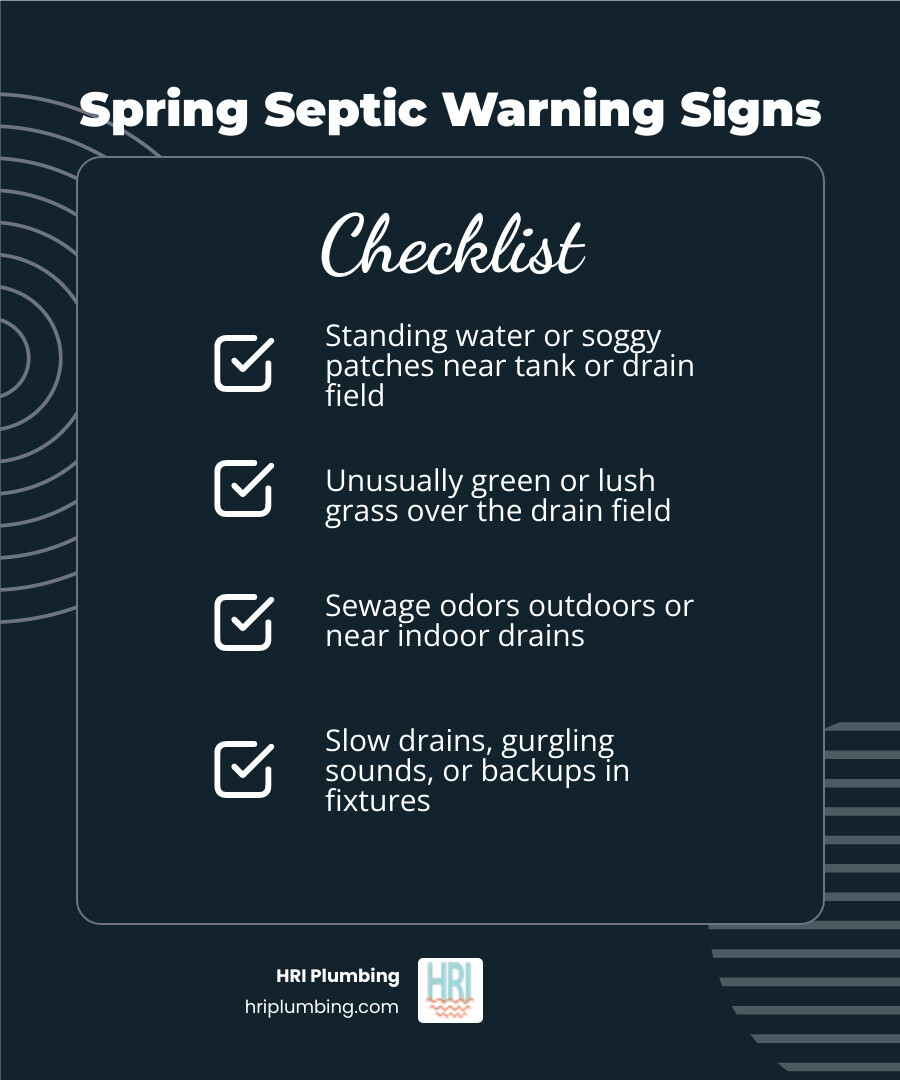
Here is a quick reference for what to look for:
- Standing water or soggy patches near the tank or drain field
- Unusually green or lush grass over the drain field (a sign effluent may be surfacing)
- Sewage odors outdoors or near indoor drains
- Slow drains or gurgling sounds in multiple fixtures inside the home
- Cracked, shifted, or unsealed tank lids caused by frost heaving
- Dips or settling soil above buried components
- Backups in toilets or floor drains after heavy rain or snowmelt
Winter is hard on septic systems. Freeze-thaw cycles can shift lids, crack pipes, and stress drain field soils. Then spring arrives with heavy rain and snowmelt, and suddenly a system that seemed fine in January is struggling to keep up. Saturated ground can't absorb effluent properly, which means hidden problems from winter often surface — literally — in the spring. A proactive checkup now can mean the difference between a quick service call and a costly drain field repair.
Essential Spring Septic System Checkup: What to Look For in Your Yard
Now that the Illinois frost has finally retreated, it is time to put on your boots and take a walk. We recommend doing this on a day when the sun is out, but the ground is still showing the effects of recent spring showers. In areas like Springfield, IL, the soil often contains heavy clay, which can hold onto moisture longer than sandy soils. This makes your spring septic system checkup what to look for even more critical, as clay soil is prone to saturation.
When you begin your visual inspection, you are looking for anything that seems "out of place." Your septic system is designed to be invisible. If you can see it, smell it, or feel it under your feet, something is likely wrong. Start at the area where your main sewer line leaves the house and follow the path to the septic tank and then out to the drain field.
In Springfield, the transition from frozen ground to spring thaw can cause the earth to shift. This movement can sometimes stress the Septic Tank Plumbing Springfield IL that connects your home to the tank. Look for any new depressions in the soil along this path, which could indicate a pipe has settled or even cracked under the weight of the thawing earth.
Identifying Surface Warning Signs During a Spring Septic System Checkup
The most obvious signs of a struggling system will appear right on the surface. While we all want a beautiful lawn, there is such a thing as grass that is too green. If you notice a patch of grass over your drain field that looks like it’s been hit with a double dose of professional-grade fertilizer while the rest of your yard is still waking up, take note. This "lush grass" is often a sign that wastewater (effluent) is rising too close to the surface, providing an accidental nutrient boost to the lawn.
Here are the specific surface signs to watch for:
- Soggy Spots or Standing Water: If you haven't had rain in a few days but you still have "puddles" over your drain field, that isn't rainwater. It's likely effluent that has nowhere else to go because the soil is saturated.
- Algae Blooms: In some cases, you might see a thin, greenish-black film or algae growing in consistently damp areas near the tank.
- The "Squish" Test: Walk across the drain field. If the ground feels spongy or you hear a "squishing" sound under your boots, the soil is likely waterlogged.
- Odors: This is the one sign nobody misses. A healthy septic system should not smell. If you catch a whiff of "rotten eggs" or raw sewage while standing downwind of your tank, you need a professional Septic Tank Repair Jacksonville IL specialist to take a look.
Inspecting Tank Components and Lids After the Winter Freeze
The "Big Freeze" doesn't just affect the water inside your pipes; it affects the very structures holding your system together. In places like Sherman, IL, where winter temperatures can plummet, the ground undergoes "frost heaving." This is when moisture in the soil freezes and expands, literally pushing objects upward.
During your spring septic system checkup what to look for should include a close look at your tank lids and risers.
- Cracked Lids: Check for any new cracks in concrete lids. Even a small crack can allow spring rainwater to pour into the tank, causing a "hydraulic overload."
- Shifted Risers: If you have risers (the plastic or concrete pipes that bring the tank lid to the surface), ensure they are still level and the seals are tight.
- Security: Ensure all bolts or locking mechanisms are secure. Thawing ground can sometimes loosen these components.
If you find that your old concrete lid has finally given up the ghost after years of Illinois winters, it might be time to consider a Septic Tank Installation Sherman IL for a new, modern riser system that makes future inspections much easier.
Monitoring Indoor Drains and Plumbing Performance
Sometimes the best way to check your septic system is to stay inside and listen. Your home’s plumbing will often tell you there is a problem long before the yard starts smelling. In Rushville, IL, we often see older homes where the plumbing venting might not be perfect, making these signs even more apparent.
- The Gurgle: If you flush a toilet and hear a "glug-glug" sound coming from the shower drain, your system is struggling to vent or move waste.
- Slow Drains: If every sink in the house seems to be draining slowly, the problem isn't a simple clog in one pipe; it’s a backup at the tank or the drain field.
- Multiple Backups: A single clogged toilet is a nuisance. Two clogged toilets and a backup in the basement floor drain is a septic emergency.
If you are experiencing these issues, we often recommend a Sewer Camera Inspection Rushville IL to see exactly what is happening inside the lines. This technology allows us to find tree root intrusions or pipe collapses that happened during the winter without digging up your entire yard.
Professional Maintenance and Long-Term Protection Strategies
While a DIY walk-through is a great start, there are some things only a professional can do. Most septic tanks need to be pumped every 3 to 5 years. However, this depends heavily on the size of your household and your water usage. If you have a large family in Rochester, IL, or if you use a garbage disposal frequently, you might need to pump more often.
Spring is actually an ideal time for pumping. The ground is soft enough for easy access, but the heavy "summer rush" hasn't started yet. Pumping your tank in the spring removes the accumulated solids from the winter and gives your system maximum capacity to handle the heavy spring rains.
A professional Septic Inspection Rochester IL includes checking the "sludge" and "scum" levels. The scum is the floating layer of grease and oils, while the sludge is the heavy solids at the bottom. If either layer gets too thick, solids can escape the tank and clog your drain field — a mistake that can lead to a failure costing thousands of dollars to fix.
Why Homebuyers Need a Spring Septic System Checkup: What to Look For Before Closing
Spring is the peak of the real estate season in Chatham, IL. If you are looking at a beautiful home with a septic system, do not rely on a standard home inspection. Most general home inspectors only check if the toilets flush; they do not perform a "load and dye" test or open the tank to check its structural integrity.
When buying a home, you should ask for:
- Pumping Records: When was it last serviced?
- The Age of the System: Most drain fields last 20 to 30 years. If the house was built in 1995 and the drain field has never been replaced, you are looking at a system near the end of its life.
- A Professional Inspection: We highly recommend a Septic Inspection Chatham IL before you sign the closing papers.
A "Title V" or similar regulatory inspection may even be required by your lender. It is much better to find out a system is failing before you own it, giving you the power to negotiate repairs with the seller.
Protecting Your Drain Field During Spring Landscaping
April is when everyone in Springfield gets the "gardening bug." However, your septic system and your landscaping dreams need to maintain a respectful distance. The drain field is the most sensitive part of your system. It relies on the soil's ability to "breathe" and filter water.
- Avoid Compaction: Never park a car, trailer, or heavy lawn equipment on your drain field. This compacts the soil and can crush the perforated pipes buried beneath.
- Watch the Roots: Avoid planting trees or large shrubs near the lines. Roots are naturally drawn to the moisture and nutrients in septic lines and can quickly cause a total blockage.
- Divert Runoff: Ensure your gutter downspouts are pointed away from the septic area. You don't want to add thousands of gallons of roof runoff to a drain field that is already trying to process your household waste.
If you suspect that roots have already found their way into your system, you may need a Sewer Line Repair Springfield IL to clear the obstruction and seal the pipes.
Conclusion: Scheduling Your Seasonal Septic Service
Taking the time for a spring septic system checkup what to look for is the best way to ensure your home stays comfortable and your yard stays clean all through the summer. By being proactive, you can catch small issues — like a cracked lid or a clogged filter — before they turn into a full-blown sewage backup in your basement.
At HRI Plumbing, we believe in honesty and integrity. We’ve been serving Jacksonville, Springfield, and Rushville for years, providing reliable solutions for both residential and commercial clients. Whether you need a routine inspection, a tank pumping, or an emergency repair, our team is here to help with 24/7 support and flexible options.
DIY vs. Professional Inspection: What Can You Handle?
| Task | DIY-Friendly? | Why? |
|---|---|---|
| Visual Yard Check | Yes | You know your yard best; look for soggy spots and odors. |
| Checking Indoor Drains | Yes | Listen for gurgling and watch for slow drainage. |
| Cleaning Effluent Filter | Maybe | If you have easy access and don't mind a "messy" job. |
| Measuring Sludge/Scum | No | Requires specialized tools and carries health risks. |
| Pumping the Tank | No | Requires a vacuum truck and proper waste disposal permits. |
| Camera Inspections | No | Requires high-tech equipment to see deep into the lines. |
Don't let a winter-damaged septic system ruin your spring. If you've noticed any of the warning signs we've discussed, or if it's simply been a few years since your last service, give us a call. We offer comprehensive Septic Services to keep your system running smoothly for years to come. From Jacksonville to Rushville, we are your local experts in keeping things flowing the right way!


