



Is Your Basement Taking on Water? Immediate Sump Pump Triage
Are you currently standing at the top of your basement stairs, watching water rise and wondering how to handle triaging a sump pump that fails during a downpour: a first-hand look from our team at HRI Plumbing reveals that every single minute counts. When severe weather hits and your primary line of defense stops working, the immediate panic is completely understandable. The sound of rushing water combined with a silent mechanical pit is one of the most stressful experiences a homeowner can face.
Your primary goal right now is to methodically troubleshoot the system to determine if you are dealing with a simple electrical trip or a total mechanical failure. Before you take a single step forward, you must prioritize electrical safety. Never wade into standing water if the power to your basement is still active, as stray voltage can be deadly. If you can safely access the pump's power source without stepping in water, you can begin basic checks. However, when those initial checks fail to jumpstart the system, relying on professional plumbing services becomes critical. Especially during late-summer August downpours, water intrusion moves faster than most people realize, and having a reliable team ready to dispatch can save your foundation from extensive damage.
First Minutes Matter: Sump Pump Not Working What To Do
When you realize your system has stopped functioning during an active storm, you need a calm, step-by-step emergency checklist. In our experience working in Jacksonville IL area basements, acting quickly and safely can mean the difference between a small puddle and a catastrophic flood.
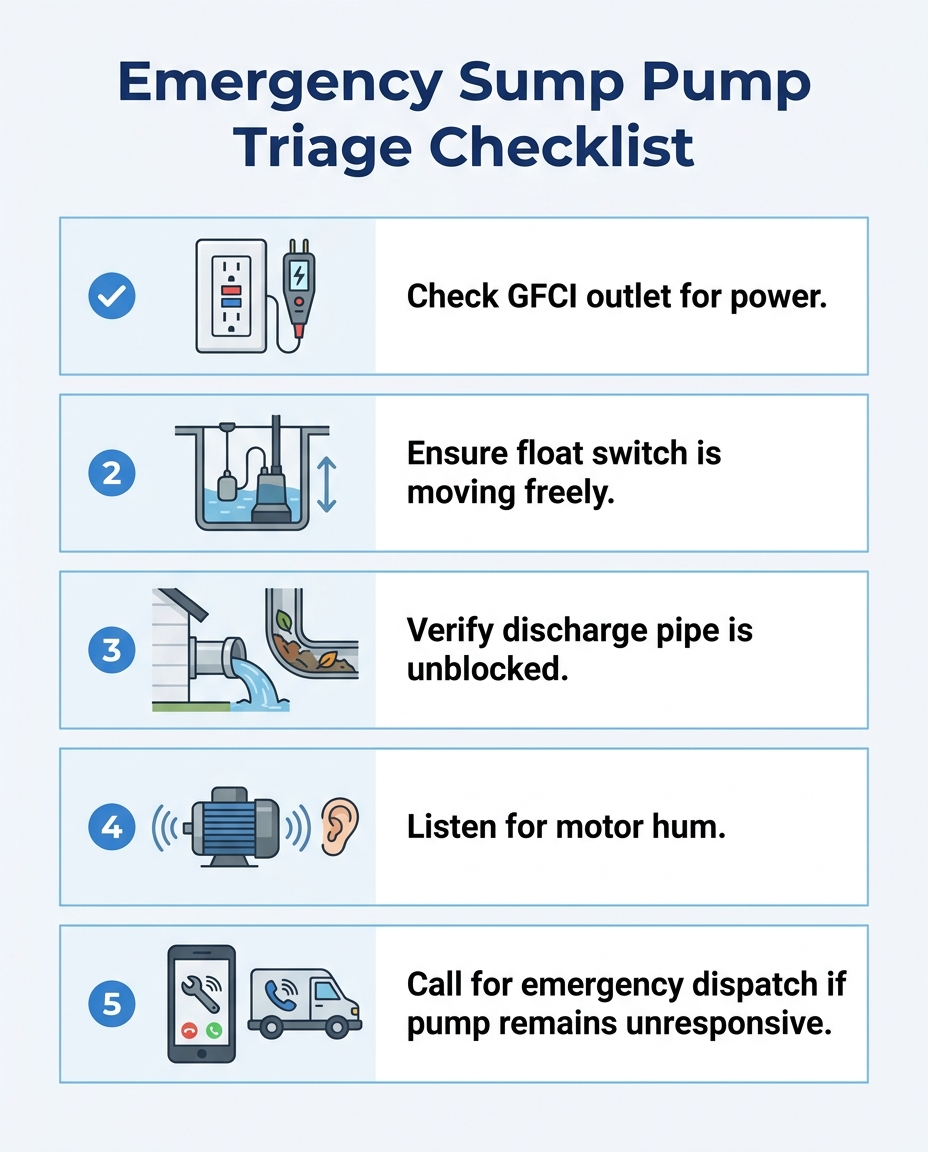
1. Check the power supply and GFCI outlet: Lightning strikes and power surges frequently trip the Ground Fault Circuit Interrupter (GFCI) outlet that your pump plugs into. Look for the small reset button on the face of the outlet. If it has popped out, press it back in. If the pump immediately roars to life, a simple surge was the culprit.
2. Inspect the float switch for obstructions: The float switch is the buoyant bulb attached to the side of the pump. As water rises, the float rises, eventually triggering the motor. Look into the pit with a flashlight to see if the float is pinned against the basin wall or tangled in debris.
3. Verify the discharge pipe is clear: Follow the PVC pipe up and out of your basement. If the exit point outside is buried under heavy mud, blocked by yard debris, or crushed, the pump cannot push water out. The system will stall to prevent burning out the motor.
4. Listen closely for a motor hum: Stand near the pit and listen. If you hear a low, vibrating hum but no water is moving, the motor is receiving electricity, but the internal impeller is jammed or the discharge line is blocked. If there is absolute silence, the motor is either dead or not getting power.
5. Decide on your next action immediately: If these basic checks do not resolve the issue, you must decide right away to call for sump pump repair or replacement. Do not wait to see if the rain stops.

Diagnosing the Silence: Why Your Sump Pump Won't Turn On Automatically
One of the most common questions homeowners ask our technicians during severe weather is why your sump pump won't turn on automatically. The answer usually lies in the communication between the water level and the pump's "brain"—the float switch. When water enters the basin, it lifts the float. Once the float reaches a specific height, an internal switch clicks, completing the electrical circuit and turning on the motor.
If the float switch fails, the pump simply does not know there is water in the pit. This often happens because the vibrations of the pump running over time cause the unit to slowly rotate inside the basin. Eventually, the float switch gets wedged against the plastic wall of the pit, unable to rise. Power interruptions are another major culprit. During late-summer August downpours, heavy lightning can blow fuses or trip dedicated breakers on your electrical panel.
In one instance during a sudden late-summer downpour right around the back-to-school transition, a local homeowner reached out to our team at HRI Plumbing about a broken sump pump that refused to activate. One of our technicians provided a rapid response and an informative diagnosis on the underlying mechanical issue, leaving the customer relieved and anticipating a reliable new sump pump installation. We've found that a rapid response is absolutely vital when the system is completely unresponsive.
Mechanical vs. Electrical Failures
Understanding the difference between mechanical and electrical failures helps you communicate better with our dispatchers.
• Electrical failures (The Dead Motor): If the pit is overflowing and the pump is making absolutely no sound, the issue is electrical. Either power is not reaching the outlet, the internal wiring has failed, or the motor is completely burnt out.
• Mechanical failures (The Jammed Impeller): If you hear a distinct humming or buzzing sound but the water level continues to rise, the unit has power. However, the mechanical impeller—the fan-like blade that pushes the water—is jammed by rocks, silt, or debris, or there is an airlock in the system.
Automatic activation relies on both a perfectly clear basin and consistent voltage. When either is compromised, the system fails.
Safe Homeowner Checks: How to Fix Sump Pump Not Working (Without Risk)
When the water is rising in Jacksonville IL area basements, the urge to rip into the machinery and fix it yourself is strong. However, our plumbers cannot stress this enough: mixing standing water with 120 volts of electricity is incredibly dangerous. There is a strict line between safe homeowner troubleshooting and dangerous DIY plumbing.
Safe Troubleshooting Steps:
• Testing the outlet: If you suspect a bad outlet, unplug the pump and plug in a simple device like a lamp or a radio. If the lamp doesn't turn on, you have a tripped breaker or a dead outlet, not necessarily a broken pump.
• Manually testing the float: Using a dry, non-conductive item like a wooden broom handle, gently reach into the pit and lift the float switch upward. If the pump kicks on, the switch was simply stuck. If it doesn't, the switch or motor has failed.
• Resetting a tripped GFCI outlet — Dangerous DIY (Requires a Pro): Opening the sealed motor casing
• Lifting the float with a wooden stick — Dangerous DIY (Requires a Pro): Splicing or rewiring power cords
• Clearing leaves from the exterior pipe — Dangerous DIY (Requires a Pro): Replacing the internal impeller
• Checking the electrical panel for tripped breakers — Dangerous DIY (Requires a Pro): Bypassing the float switch to hardwire the pump
We cannot overstate this: opening the pump motor casing or attempting to rewire the system is extremely dangerous and requires a licensed professional. If you see exposed wires, frayed cords, or if you feel even a slight tingle when touching the discharge pipe, step away immediately. Keep clear of standing water and wait for emergency dispatch.
The Hidden Danger: Heavy Soils and Rapid Water Intrusion
To understand why time is of the essence during a failure, you have to understand the sheer volume of water these systems handle. A standard 1/3 horsepower pump moves over 2,000 gallons of water per hour. When the pump stops, those 2,000 gallons per hour have nowhere to go but onto your basement floor.
The real hidden danger lies outside your walls in the form of hydrostatic pressure. As rain soaks into the ground, the soil around your foundation becomes saturated. Our plumbing experts see this constantly: when you weave in the reality of Central Illinois dense clay soils, the problem multiplies. Clay acts like a sponge initially, but once saturated, it becomes incredibly heavy and refuses to let water drain away naturally. This creates intense hydrostatic pressure—literally the weight of the water pushing against your concrete foundation walls and floor.
During intense late-summer August downpours, this pressure forces water rapidly through microscopic cracks in your foundation and up through the floor joint. Because local soils retain water so aggressively, the intrusion doesn't stop just because the rain slows down. The water table remains high, forcing massive volumes of water into the basement. This is why triage must happen in minutes, not hours. You do not have the luxury of waiting until tomorrow.
Drawing the Line: When to Call for Professional Emergency Dispatch
There is a definitive threshold where DIY checks must end and professional intervention must begin. If you have confirmed that the outlet has power, but the pump remains completely silent while the water rises, stop troubleshooting. Your motor or internal switch has failed, and no amount of resetting will fix it.
Likewise, if the pump hums loudly but the water continues to rise, the impeller or discharge line is severely compromised. Continuing to let it hum will eventually burn out the motor entirely, creating a fire hazard. This is the exact moment to call for emergency plumbing assistance.
Following a massive late-summer storm, our HRI Plumbing dispatchers took a call from a local homeowner who found their entire basement flooded when their system failed unexpectedly. One of our technicians arrived within two hours, quickly identified the problem, and fixed it, fully resolving the flooding issue before the damage could spread to the upper drywall. This highlights the immense value of having local emergency plumbing readiness. For Jacksonville and Springfield area homeowners facing sudden basement flooding, knowing that our fully stocked trucks can arrive quickly provides incredible peace of mind. Our local technicians are equipped for these exact scenarios, carrying replacement pumps, check valves, and the tools needed to clear stubborn discharge lines safely.
Critical FAQs: Managing Sump Pump Failures During a Downpour
Why is my sump pump not turning on automatically?
Your sump pump usually fails to turn on automatically because the float switch is stuck, tangled, or broken. The float acts as the system's brain, telling the motor when the water is high enough to start pumping. If the float is wedged against the side of the basin, the motor will never receive the signal to activate. Additionally, a tripped GFCI outlet or a blown fuse on your main electrical panel will prevent automatic activation during severe storms.
How to fix sump pump not working?
To safely fix a sump pump that isn't working, start by checking the power source and resetting any tripped GFCI outlets. Next, use a wooden broom handle to gently lift the float switch to see if it was simply wedged against the wall. Clear any visible debris from the pit that might be clogging the intake screen. If these safe, basic triage steps do not restore function, you must call a licensed professional, as internal motor repairs are dangerous for homeowners to attempt.
What to do when your sump pump fails during a storm?
When your sump pump fails during an active storm, immediately unplug any electronics or appliances on the basement floor to prevent electrical hazards. Perform a rapid check of the outlet power and float switch mobility without stepping into standing water. If the pump remains dead, move valuable items to higher ground and immediately call for emergency plumbing dispatch. Do not wait for the storm to pass, as hydrostatic pressure will continue forcing water inside.
How do you manually trigger a sump pump float switch?
You can manually trigger a sump pump float switch by gently lifting the buoyant bulb upward using a dry, non-conductive item like a wooden stick or PVC pipe. As you lift the float to a horizontal position, you should hear the internal switch click and the motor engage. If the motor turns on, the switch was likely just physically stuck. If the motor remains silent, the switch mechanism has failed or the motor is dead.
Why is my sump pump full of water but not pumping?
If your sump pump basin is full of water but the unit isn't pumping, it usually indicates an airlock, a jammed impeller, or a completely clogged discharge pipe. You will often hear a low humming sound in this scenario, meaning the motor is trying to work but is physically blocked from moving water. This requires professional intervention to clear the discharge line or safely disassemble the unit to remove the impeller blockage.
How fast can a basement flood if the sump pump fails?
A basement can flood incredibly fast during a failure, sometimes taking on several inches of water in less than an hour. A standard residential pump removes roughly 2,000 gallons of water per hour, which gives you an idea of how much water is actively pushing against your foundation. During late-summer August downpours, heavy soils become saturated instantly, drastically accelerating the rate at which water pours through foundation joints.
Secure Your Basement Before the Water Rises Further
Waiting is simply not an option when the water table is actively rising around your foundation. If you are currently standing over a silent pit, every passing minute increases the risk of severe water damage to your drywall, flooring, and stored belongings. The process of triaging a sump pump that fails during a downpour: a first-hand look at the mechanics proves that safe homeowner checks can only go so far.
If your basic power and float switch checks have not brought the system back to life, it is time to act. Schedule an immediate inspection or request emergency dispatch to secure your home. You can rest assured knowing that our local experts at HRI Plumbing are ready to safely restore your property's protection, providing the immediate, clear resolution you need to get your Jacksonville IL area basement through the storm safely.


