



Why Is My Sump Pump Pit Filling Up Without Pumping During This Storm?
Is groundwater creeping up your basement walls while you stand there wondering why your sump pump is not turning on automatically? Watching the water level rise in your sump pit during a torrential downpour is incredibly stressful. You hear the rain pounding outside, but the familiar hum of your pump is completely absent. When heavy July summer rainstorms hit the Midwest, they can overwhelm residential drainage systems in a matter of minutes, making immediate responsiveness critical.
Right now, you face an urgent decision: you need to figure out if this is a quick, safe electrical reset you can handle yourself, or if you are dealing with a severe mechanical failure that requires immediate professional rescue. While some pump issues require complex mechanical repairs, others are simple electrical resets that take only seconds to fix. This guide focuses strictly on safe triage while the storm is active, helping you protect your home right now.
If you need immediate assistance with this or other home water systems, explore our plumbing services to get your home back to a safe, dry state.
What to Do If Your Sump Pump Is Not Turning On Automatically
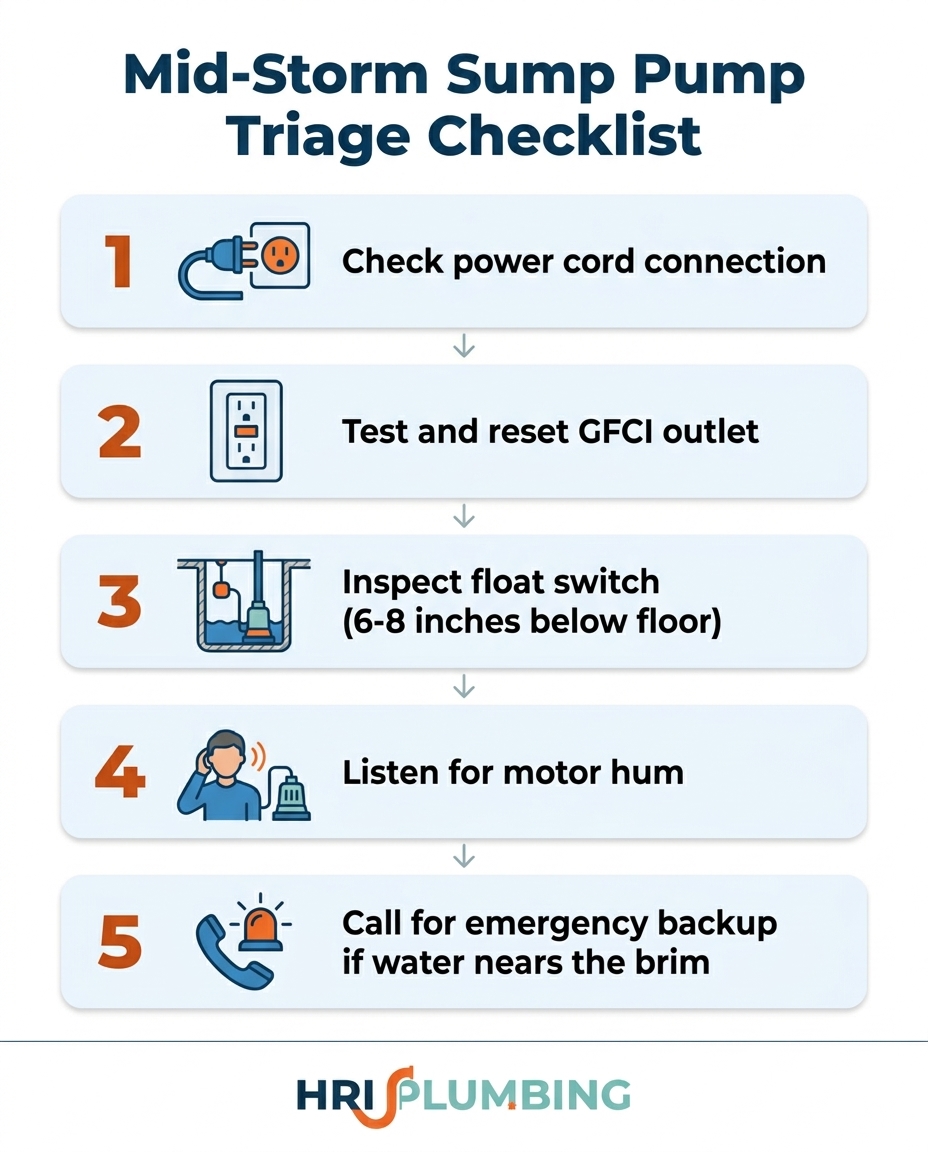
When the water is rising fast, you need a clear, safe plan of action. Follow these immediate triage steps to diagnose the problem without putting yourself in danger. Remember, water and electricity are a deadly combination, so safety is your highest priority.
1. Check the power source connection: Look at the wall outlet. Ensure the heavy power cord hasn't been accidentally jostled loose by stored boxes or heavy vibrations. The plug should be firmly seated in the receptacle.
2. Inspect the GFCI outlet for a tripped reset button: Most basement outlets have a built-in circuit breaker. Look for a small button labeled "Reset" that may have popped out during a power surge.
3. Look at the float switch position: Shine a flashlight into the pit. Check if the floating bulb (the switch) is pinned against the side of the basin or tangled in its own cord, preventing it from rising with the water level.
4. Listen closely for a humming noise: Stand near the pit and listen. A low, continuous humming or buzzing sound indicates the motor is receiving power but cannot spin—usually pointing to a jammed impeller or a burned-out motor.
5. Prioritize electrical safety: Never step into standing water or reach directly into the sump pit if the device is plugged in. If there is any risk of electrical shock, back away immediately.
If these basic checks do not resolve the issue, you likely need professional sump pump repair and replacement before the water breaches the top of the basin in your Jacksonville IL home.
Did a Lightning Strike Trip Your GFCI Outlet?
One of the most common reasons a sump pump falls silent during severe weather has nothing to do with the pump itself. The intense electrical activity typical of peak July summer rainstorms frequently causes power surges and lightning strikes that impact your home's electrical grid.
The Role of GFCI Outlets in Your Basement
National Electrical Code (NEC) guidelines require Ground Fault Circuit Interrupter (GFCI) outlets in unfinished basements for your safety. These sensitive outlets monitor the electrical current flowing to your pump. If they detect even a tiny imbalance—which can happen when moisture interacts with the electrical connection or when a lightning strike causes a sudden surge—they instantly cut the power to prevent electrocution.
How to Safely Reset the Outlet
If your pump is plugged into a GFCI outlet, look closely at the face of the receptacle. You will typically see two small buttons: "Test" and "Reset." If the outlet has tripped, the Reset button will be popped outward.
The quick fix: Firmly press the Reset button back in until you hear a click. If the pump immediately roars to life and begins draining the pit, a temporary power surge was the culprit, and your system is back online.
However, if you press the reset button and it instantly pops back out with a sharp click, stop immediately. This indicates a hard electrical fault, a short circuit in the pump's wiring, or water inside the motor housing. Do not tape the button down or attempt to bypass the outlet with an extension cord. This is a dangerous electrical hazard that requires professional intervention.
How to Safely Check a Stuck Float Switch
If the power is on but the pump remains silent, the float switch is the next most likely suspect. The float switch acts as the brain of the operation, telling the motor when the water is high enough to start pumping.
Understanding How the Switch Works
According to the Sump and Sewage Pump Manufacturers Association (SSPMA), these switches are generally calibrated to trigger when the water level reaches 6 to 8 inches below the basement floor. As groundwater fills the pit, the buoyant float rises. Once it hits a specific angle or height, an internal mechanism clicks, sending power to the motor.
Common Causes of a Jammed Switch
In many Jacksonville IL basements, the float switch fails to activate simply because it gets stuck. The heavy vibrations of the motor running over time can cause the entire pump unit to walk or twist slightly across the bottom of the basin. This movement can pin the float switch against the plastic wall of the pit. Alternatively, debris washed into the pit can weigh the float down, or a tethered switch can become tangled around the discharge pipe.
Safe Triage for a Stuck Float
If you look into the pit and see the float submerged or wedged against the wall, you can attempt to free it. Do not reach your hands into the water. Instead, find a dry, non-conductive item, such as a wooden broom handle or a piece of PVC pipe.
Gently use the wooden handle to nudge the float away from the wall or untangle it from the pipe. If the switch was simply stuck, freeing it should cause the pump to turn on instantly. If the float moves freely but the pump still does not activate, the internal switch mechanism has likely failed. Never attempt to manually bypass the switch or rewire the unit during an active storm.
Recognizing a Burned-Out Motor or Clogged Intake Screen
When electrical resets and float switch nudges fail, you are likely dealing with a mechanical breakdown. It is vital to differentiate between an issue you can manage and a severe failure that requires a technician. July summer rainstorms bring massive volumes of water, and mechanical failures under this heavy load are common.
Comparing Mechanical Symptoms
Use this table to identify what your pump is experiencing:
• Pump runs constantly, but water level does not drop. — Likely Cause: Clogged Intake Screen or Jammed Impeller — What is Happening: Mud, gravel, or debris has blocked the water from entering the pump, or the internal fan (impeller) is jammed by a small rock.
• Loud humming or buzzing sound, but no pumping action. — Likely Cause: Seized Motor or Jammed Impeller — What is Happening: The motor is trying to turn, but physical resistance is stopping it. This will quickly cause the motor to overheat and burn out.
• Complete silence despite confirmed power and free float switch. — Likely Cause: Burned-Out Motor or Severed Internal Wiring — What is Happening: The motor has completely failed due to age, overheating, or a severe electrical short. The unit must be replaced.
• Water sprays back into the pit from the discharge pipe. — Likely Cause: Failed Check Valve — What is Happening: The valve that prevents pumped water from flowing back down the pipe has broken, causing the pump to recycle the same water.
The Danger of Active-Storm DIY Repairs
If you suspect a clogged intake screen or a jammed impeller, your first instinct might be to pull the pump out of the pit to clean it. Do not do this during an active flood. Attempting to disconnect the heavy, water-filled pump from the discharge plumbing while groundwater is rapidly filling the basin is incredibly dangerous. You risk severe electrical shock, and without a working pump in the pit, the water will quickly overflow onto your floor. Mechanical failures during a severe storm require immediate, specialized intervention.
When to Stop Triage and Call for Emergency Rescue
There is a strict boundary between safe homeowner troubleshooting and the need for professional rescue. Knowing exactly when to step back can save your property from catastrophic water damage and protect your family from electrical hazards.
The Threshold for Professional Intervention
You must stop your DIY efforts and call for backup if you encounter any of the following scenarios:
• The GFCI outlet refuses to reset: If the button instantly pops back out, you have a dangerous short circuit.
• The float switch is free, but the pump remains dead: This indicates an internal mechanical or switch failure that cannot be fixed from the outside.
• The water is inches from overflowing: If the water level is rapidly approaching the top of the basin and your triage steps haven't worked, time is up.
• You smell burning plastic or ozone: This is a clear sign that the motor has burned out or wiring is actively melting.
Continuing to struggle with a broken system while your basement actively takes on water only delays the inevitable and increases your risk. If you are wondering how to fix sump pump not working under these extreme conditions, the safest answer is to let an expert take over.
Working with a dedicated local team means you benefit from fast, reliable emergency plumbing availability, reassuring you that help is accessible even in the middle of a torrential downpour. Emergency response teams carry backup pumps, heavy-duty extraction equipment, and the expertise to swap out a failed unit safely while the water is still flowing. If you have crossed the threshold, contact our emergency plumbing team immediately.
Securing Your Basement Against Future Torrential Downpours
Once the storm passes and the immediate threat of flooding is resolved, it is time to shift your focus from active panic to long-term prevention. Relying on a single, aging pump connected to your home's main power grid is a risky strategy during severe weather.
Upgrades and Dry-Weather Maintenance
To ensure you never face a silent pump during a storm again, consider these essential upgrades and maintenance steps:
• Install a Battery Backup System: Heavy rain often brings power outages. A battery backup sump pump operates independently of your home's electrical grid. If the main power fails, or if the primary pump suffers a mechanical breakdown, the backup unit automatically takes over.
• Schedule a Comprehensive Inspection: Have a professional evaluate your entire drainage system during dry weather. They can check the discharge lines for blockages, ensure the check valve is functioning correctly, and verify that the pit is free of silt and debris.
• Invest in Routine Professional Maintenance: An annual tune-up prevents the panic of mid-storm failures. A technician will test the amp draw of the motor, clean the intake screens, and verify the float switch calibration.
If you have a history of your sump pump not pumping efficiently, addressing these weak points now is the best defense against the next wave of July summer rainstorms. Proactive care ensures your system is ready for the worst weather. Reach out to a trusted plumber in Jacksonville to schedule your post-storm system evaluation.
Frequently Asked Questions About Sump Pump Failures During Storms
Why is my sump pump pit full of water but not pumping?
This is usually caused by a tripped GFCI outlet, a stuck float switch, or a burned-out motor. If you verify that the outlet has power but the pump takes no action as the water rises, a jammed or failed float switch is the most likely culprit. Checking these basic components is the first step in diagnosing a silent pump.
Can a GFCI outlet stop my sump pump from working?
Yes, if the GFCI trips due to a power surge or moisture, it completely cuts all electrical current to the pump. Resetting the outlet by pressing the button on the receptacle is the first and most common step in troubleshooting. However, if it trips repeatedly, you have a serious electrical fault.
How do I safely unstick a sump pump float switch?
Use a non-conductive object like a dry wooden broom handle to gently move the float away from the basin wall. Never reach your bare hands into the water if the pump is plugged into the wall. Nudging the float can free it from debris or untangle the cord, allowing it to trigger the motor.
Is there a reset button on a sump pump?
Most sump pumps do not have a built-in reset button on the unit itself. The "reset" action is typically done at the GFCI wall outlet where the pump is plugged in, or at your home's main electrical breaker panel. If the motor has an internal thermal overload switch, it resets automatically once the motor cools down.
Why did my sump pump stop working during a storm?
Lightning strikes cause severe power surges that trip breakers and GFCI outlets, shutting off power to the unit. Additionally, the heavy vibrations from massive water intake during a severe storm can cause the pump to shift, which often jams the float switch against the side of the pit.
How fast can groundwater fill a basement during a heavy rainstorm?
Depending on the soil saturation around your foundation and the rainfall intensity, a standard pit can overflow in a matter of minutes if the pump fails to activate. This is why immediate triage is critical in Jacksonville IL basements when the pump falls silent during a downpour.
Get Immediate Help to Protect Your Home from Flooding
While some pump issues are as simple as pushing a reset button on an outlet or nudging a stuck float switch, a silent pump during a torrential downpour is a serious threat to your property. July summer rainstorms wait for no one, and groundwater can ruin a finished basement in minutes.
You now have the clear, immediate steps needed to safely check your system, and you know exactly when it is time to step back and call a professional. Don't wait for the water to breach the basin. If your triage efforts haven't worked, contact our expert team immediately to schedule an emergency inspection and protect your home from devastating flood damage.


