

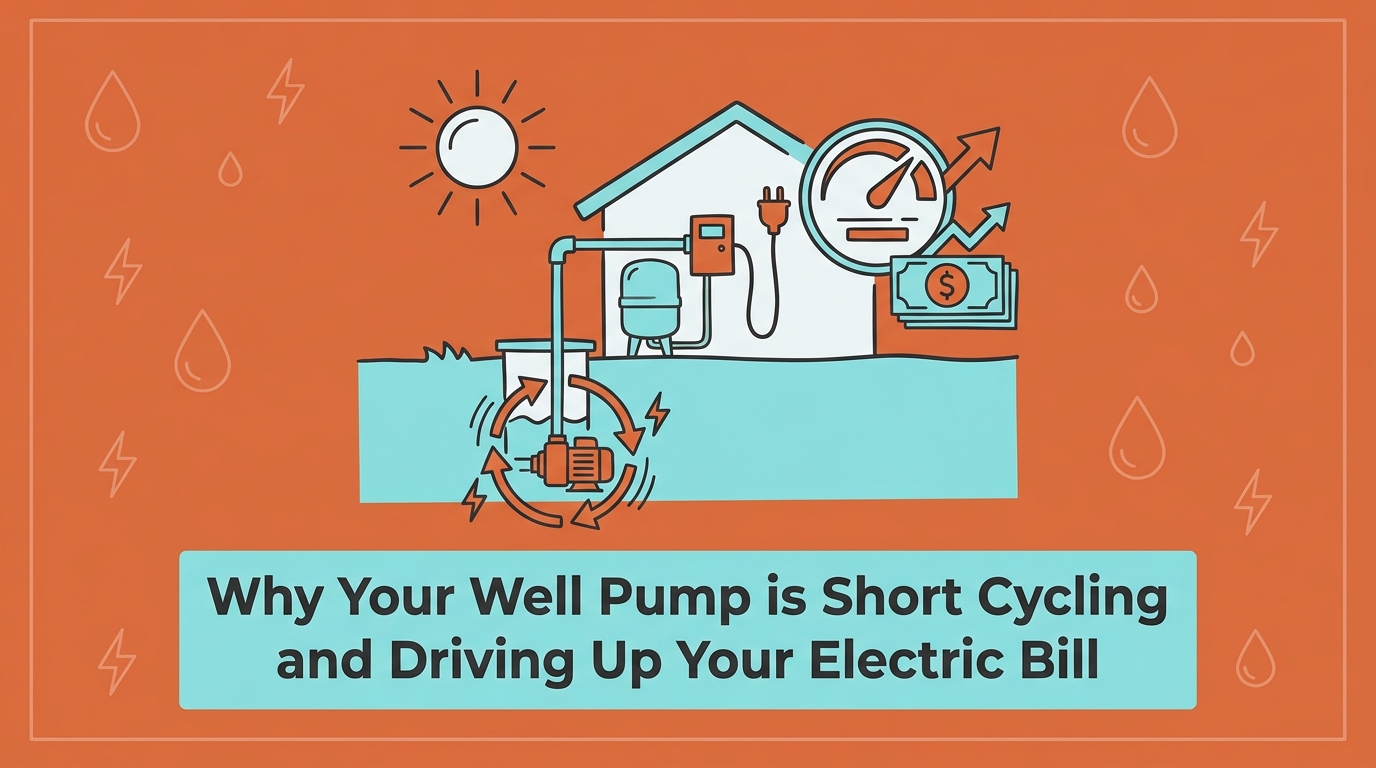


The Shock of a High Electric Bill and a Constantly Clicking Well Pump
Your monthly statement arrives, and you immediately start wondering why your well pump is short cycling and driving up your electric bill. You haven't changed your thermostat settings, and you haven't added any major appliances to your home. Yet, a sudden, unexplained spike in energy costs is often the first glaring sign of a hidden mechanical failure in your rural plumbing system. If you listen closely near your pressure tank, you might notice a repetitive, rapid clicking sound. That noise is your system turning on and off every few seconds, struggling to maintain water pressure.
This rapid on-and-off cycle is known in the industry as "short cycling." It is a serious mechanical distress signal that requires immediate professional attention before it causes a catastrophic failure of your entire water delivery system. During the peak heat of late summer (August), when irrigation and household water usage are at their highest, a short-cycling pump works overtime. Addressing these symptoms early is the only way to prevent a complete system burnout right when you need reliable water the most.
Understanding the Hidden Cost of Constant Pump Starts
The Problem: Many homeowners assume that a pump only uses a significant amount of electricity if it runs continuously for hours. In reality, the exact opposite is true when it comes to well pump motors.
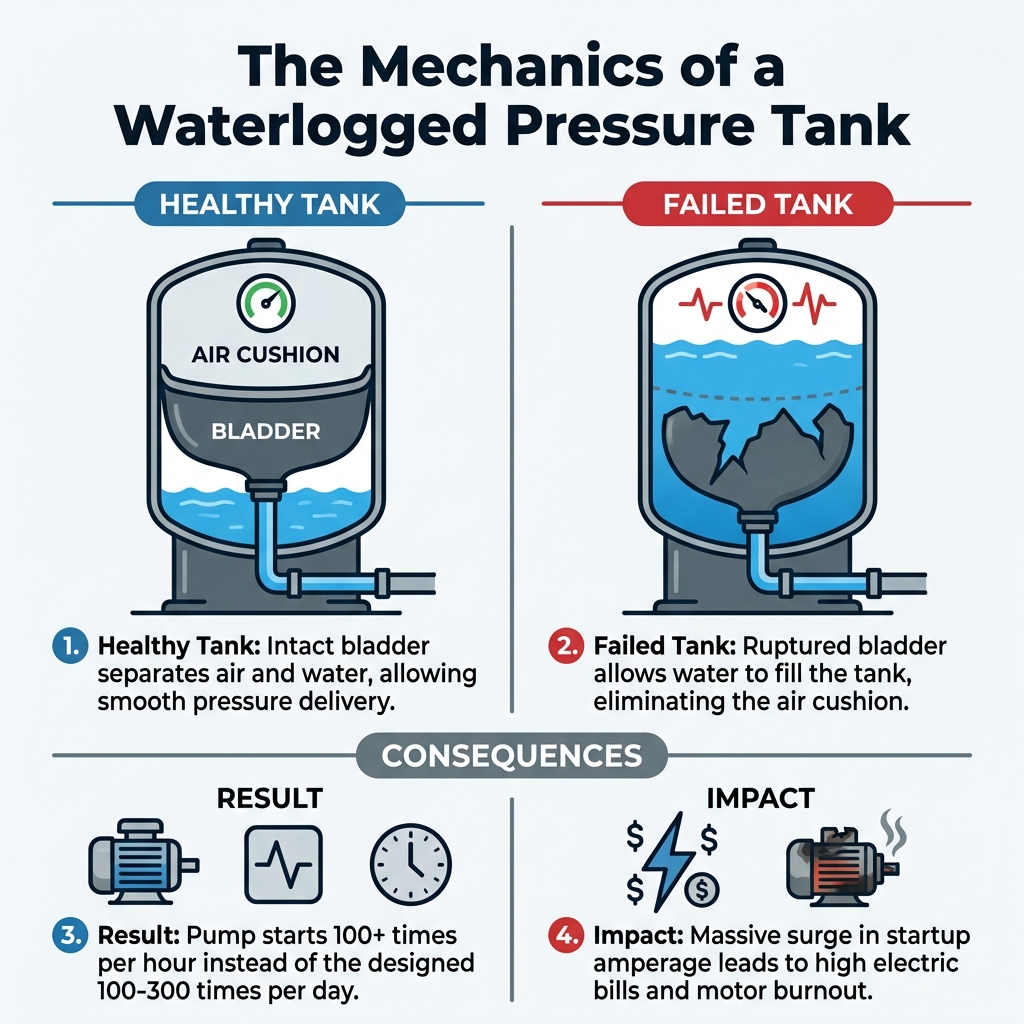
The Cause: Well pump motors draw significantly more amperage during the initial startup phase than they do while running steadily. When a pump short cycles, it forces the heavy-duty motor to endure hundreds of high-amperage surges in a very short window of time. These repeated electrical spikes are what drive up your monthly energy costs so dramatically. A standard residential well pump motor is typically designed to handle a maximum of 100 to 300 starts per day. When short cycling occurs, your system can easily exceed this daily limit in just a few hours.
The Solution: Stopping the cycle early is the best way to protect your wallet and your equipment. For homeowners in Jacksonville IL and surrounding rural properties, recognizing this abnormal electrical draw is the first step toward getting the right help. Reaching out for professional residential plumbing repair ensures that the root cause of the electrical surge is diagnosed accurately before the motor sustains permanent damage.
The Math Behind the Surge
To put the energy cost into perspective, consider how the pump operates under distress. Every time the pressure switch engages, the motor requires a massive jolt of electricity to overcome inertia and start spinning. If your pump turns on for three seconds, shuts off for five seconds, and turns on again, you are paying for that massive startup surge dozens of times per hour. Over the course of a billing cycle, that rapid repetition directly translates into the shockingly high electric bill you are holding.
What Does 'Short Cycling' Actually Mean for Your Well System?
To understand why short cycling is so destructive, it helps to know how a healthy system is supposed to operate. In a properly functioning well system, the pump draws water from the ground and fills a large pressure tank inside your home. This tank contains a cushion of compressed air. As water fills the tank, it compresses that air, creating the steady water pressure you experience at your faucets. Because of this stored pressure, you can wash your hands or flush a toilet without the well pump needing to turn on at all.
Short cycling occurs when that operational balance is destroyed. Instead of filling a holding tank and resting, the pump turns on immediately upon any water demand—even just a dripping faucet—and shuts off seconds later. You can usually hear this as a rapid, constant clicking of the pressure switch located near the base of the tank. Recognizing this operational flaw early is crucial for diagnosing the root cause before the end of late summer (August), when water usage is typically at its peak.
Comparing Normal Operation to a Short-Cycling System
• Healthy System — Pump Activity: Runs for a few minutes to fill the tank, then rests for a long period. — Pressure Switch Sound: A single "click" when turning on, and another "click" minutes later. — Water Pressure at Faucet: Steady, consistent water flow with no sudden drops.
• Short-Cycling System — Pump Activity: Turns on and off every few seconds during water use. — Pressure Switch Sound: Rapid, continuous clicking (like a turn signal). — Water Pressure at Faucet: Sputtering, surging, or rapidly fluctuating flow.
If your system aligns with the short-cycling symptoms above, you need to act quickly. Consulting a professional for troubleshooting well pump failures is the safest way to pinpoint the exact failure point.
The Primary Culprit: A Waterlogged Pressure Tank and Ruptured Bladder
While there are a few different issues that can cause a well pump to behave erratically, the most common culprit by far is a waterlogged pressure tank caused by a ruptured internal bladder. Modern pressure tanks are built with a heavy-duty rubber bladder inside them. This bladder acts as a physical barrier, separating the actual well water from the cushion of compressed air at the top of the tank.
When this rubber bladder ruptures—often due to age, sediment friction, or constant expansion and contraction—the tank becomes "waterlogged." This means the water escapes the bladder and fills the entire steel tank, completely eliminating the compressed air cushion. This creates a severe mechanical problem because water, unlike air, cannot be compressed.
Without an air cushion to absorb and maintain pressure, opening a faucet causes an immediate and total pressure drop in the plumbing lines. This forces the pressure switch to trip the pump instantly. Once you close the faucet, the pressure in the lines spikes instantly because there is no air cushion to absorb the incoming water, shutting the pump off just as fast. For homeowners in Jacksonville IL and surrounding rural properties, a waterlogged tank is the leading reason behind those rapid, destructive pump cycles.
The Anatomy of a Failing Pressure Tank
• The Steel Shell: The outer housing of the tank, which can begin to sweat or rust heavily when completely filled with cold well water.
• The Rubber Bladder: The internal balloon-like structure that holds the water. Once torn, it cannot be patched.
• The Air Valve (Schrader Valve): Located at the top of the tank, used to check the air pre-charge. If water comes out of this valve when pressed, the bladder is definitively ruptured.
• The Pressure Switch: The small mechanical box near the base that reads the pressure and sends electricity to the pump. It is the source of the rapid clicking sound.

How Late-Summer Water Demand Accelerates Pump Failure
The timing of a well pump failure is rarely a coincidence. Peak irrigation and heavy outdoor water use place immense, continuous demand on rural plumbing systems. When a waterlogged tank attempts to keep up with heavy irrigation—like running a sprinkler system or filling a livestock trough—the short cycling becomes almost continuous. The pump is forced to restart every few seconds for hours on end, generating massive amounts of friction and heat inside the motor housing.
Furthermore, regional climate factors play a massive role in system stress. In Central Illinois, seasonal water table fluctuations and late-summer dry spells put extra strain on already failing pressure tanks. As the water table drops during a dry late summer (August), the pump has to work harder and push water from a deeper level to reach the surface. This alters the pump's recovery time. When you combine a lowered water table with a ruptured pressure tank bladder, you create a perfect storm for rapid equipment degradation.
The combination of high seasonal demand, environmental stress, and mechanical failure means that a compromised system will deteriorate much faster in August than it would in the mild days of spring. Having a trusted provider for septic and rural plumbing services is essential to ensure your system can handle the heavy demands of the season without failing.
The Danger of Ignoring the Clicking Sound: Complete Motor Burnout
Ignoring the constant clicking of a short-cycling pump is a dangerous gamble. The heat generated by constant electrical surges will eventually melt the internal wiring of the pump motor. What begins as a relatively straightforward pressure tank replacement above ground can quickly escalate into a complete, catastrophic well pump failure deep underground.
Replacing a burnt-out submersible pump requires heavy equipment to pull the entire well line up to the surface. This results in a much more complex, invasive, and disruptive service call. Prompt professional intervention is the only way to stop the cycle before irreversible damage occurs to the pump itself. We know firsthand how quickly plumbing issues can spiral out of control. For example, one customer reached out to us during winter with unspecified plumbing issues that were rapidly escalating. We had someone over within an hour to help resolve the issues professionally and quickly. While that was a winter emergency, a well pump on the verge of burnout requires that exact same level of urgent, professional response.
The Cascade of System Failure
1. Bladder Rupture: The internal rubber bladder tears, allowing water to displace the air cushion inside the pressure tank.
2. Short Cycling Begins: The pressure switch detects instant pressure drops and spikes, turning the pump on and off rapidly.
3. Electrical Surge: The constant restarting draws massive amounts of amperage, causing a severe spike in your electric bill.
4. Heat Accumulation: The rapid starts generate extreme heat inside the submersible pump motor, degrading the internal insulation.
5. Complete Burnout: The motor wiring melts, the pump seizes, and the home completely loses access to running water.
For homeowners in Jacksonville IL and surrounding rural properties, stopping this cascade at step two is critical. If your system is already showing signs of distress, reaching out for emergency plumbing assistance can save your well pump from total destruction.
Why DIY Air Charging Is Not a Permanent Fix
The Problem: When faced with a waterlogged tank, some homeowners attempt to manually add air to the system through the Schrader valve located at the top of the tank, hoping to restore the lost air cushion themselves.
The Cause: While adding air might temporarily stop the short cycling for a day or two, it is a fleeting fix. If the internal rubber bladder is torn, there is nothing to keep the newly added air separated from the water. The compressed air will simply dissolve into the water supply and escape through your indoor faucets, often causing a sputtering mess at the kitchen sink. A ruptured bladder cannot be patched, glued, or repaired; the entire pressure tank assembly must be professionally replaced.
The Solution: Relying on temporary DIY fixes leaves your pump vulnerable to sudden burnout when the air cushion inevitably fails again—which usually happens right in the middle of a heavy water usage day in late summer (August). This is where local expertise matters. Working with a team that has specific, deep knowledge of rural well setups in the Jacksonville area ensures that the mechanics of your specific system are handled correctly. Generalist city plumbers often lack the daily hands-on experience with rural pressure tanks and submersible pumps. A dedicated local professional will accurately diagnose the torn bladder, properly size a replacement tank for your household's water demand, and calibrate the new pressure switch to ensure smooth, efficient operation.
Protect Your Well System Before Complete Burnout
Recognizing the early warning signs of a waterlogged pressure tank is the key to preventing extensive well system damage. When you hear that constant clicking and see an unusual spike in your electricity usage, your system is crying out for help. A clear understanding of your plumbing's mechanics empowers you to make informed decisions about repairs before a manageable issue turns into a total lack of water.
Consulting with a local professional ensures your rural plumbing system operates efficiently and reliably, no matter how heavy the seasonal demand gets. Take action to protect your equipment and lower your energy costs before a minor tank issue becomes a major pump replacement. For homeowners in Jacksonville IL and surrounding rural properties, relying on expert professional plumbing services is the smartest way to keep the water flowing safely and consistently.
Frequently Asked Questions
Why is my well pump running constantly and driving up my electric bill?
Your well pump is likely short cycling, meaning it is turning on and off rapidly due to a loss of pressure. Well pump motors require a massive surge of electricity to start up. When the pump starts dozens of times an hour instead of a few times a day, that constant electrical draw causes a severe spike in your monthly energy bill.
How do you fix a waterlogged pressure tank?
A waterlogged pressure tank usually indicates a ruptured internal bladder, which cannot be patched or repaired. The only permanent fix is to have a professional plumber replace the entire pressure tank assembly. Attempting to manually add air is only a temporary band-aid, as the air will quickly escape into the water lines through the torn bladder.
Why is my well pump turning on and off every few seconds?
This rapid on-and-off action is caused by a lack of compressed air in your pressure tank. Without an air cushion to absorb the incoming water and maintain steady pressure, the system experiences instant pressure drops and spikes. The pressure switch reacts to these sudden changes by rapidly turning the pump on and shutting it off.
How do I know if my well pressure tank is bad?
The most common signs of a bad pressure tank include rapid clicking from the pressure switch, fluctuating water pressure at your faucets, and an unusually high electric bill. You can also carefully press the pin on the air valve (Schrader valve) at the top of the tank; if water spits out instead of air, the internal bladder has failed completely.
What happens if you ignore a short cycling well pump?
Ignoring a short cycling pump will eventually lead to complete motor burnout. The extreme heat generated by constant electrical surges will melt the internal wiring of the submersible pump. Once the pump motor fails, you will completely lose water access and require a much more invasive and complex replacement process.
Can a failing pressure switch cause high electricity usage?
Yes, if a failing pressure switch is causing the pump to run erratically or short cycle, it will drastically increase your electricity usage. However, it is important to have a professional diagnose the system, as a rapidly clicking switch is often just a symptom of a much larger issue, such as a waterlogged pressure tank.
By understanding why your well pump is short cycling and driving up your electric bill, you can take proactive steps to safeguard your rural plumbing system. Don't wait for the pump to burn out entirely—professional intervention is the key to restoring your system's efficiency and protecting your home's water supply.


