



Why Did the Water Pressure in My Upstairs Bathroom Suddenly Drop?
You step into the shower after a long day, expecting a strong, refreshing spray, but instead, you are greeted by a weak, sputtering trickle. Here at HRI Plumbing, we know that diagnosing sudden water pressure drops in your upstairs bathrooms is a common and incredibly frustrating experience for homeowners, especially when the rest of the house seems to be functioning normally. Before you assume the worst, our team wants you to understand that water pressure issues on the second floor are often the first symptom of a variety of different plumbing conditions, ranging from minor clogs to systemic part failures.
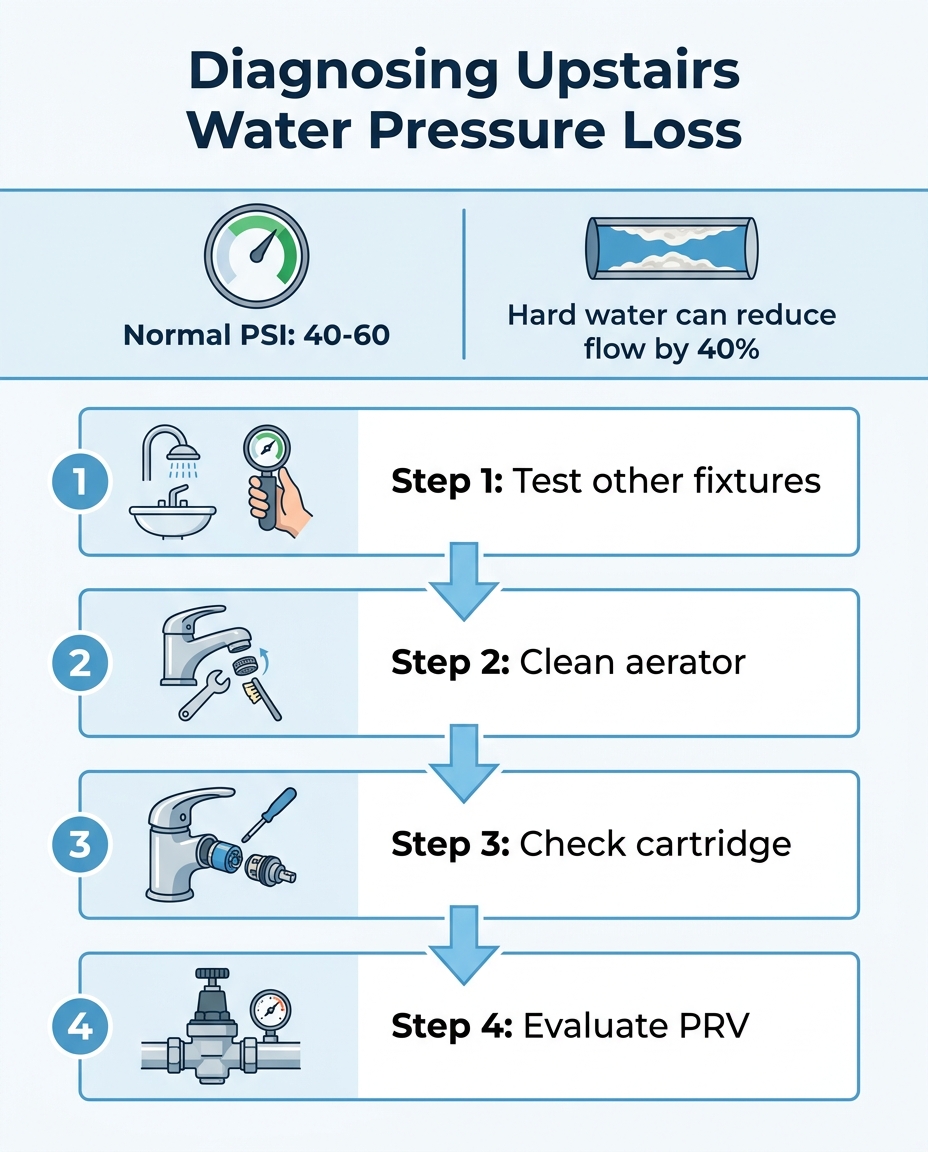
During late-summer August, municipal water systems frequently experience significant pressure fluctuations due to high community demand. Everyone is watering their lawns, filling pools to beat the end-of-season heat, and running appliances, which can cause the baseline pressure delivered to your home to dip. When the city's supply pressure drops, your upstairs bathrooms are always the first to show the signs because water has to fight gravity to reach the second floor. Normal residential water pressure should typically register between 40 and 60 PSI (pounds per square inch). If the pressure drops below that threshold, the water volume simply cannot push upward with enough force to provide a comfortable shower.
The primary decision point you face right now is determining whether this is an isolated, localized clog that you can clean out yourself, or a systemic whole-house failure that requires a professional diagnosis. If you are dealing with persistent flow issues that basic troubleshooting cannot resolve, reaching out for residential plumbing services is the safest way to pinpoint the exact cause and restore your home's comfort.
The Difference Between Isolated and Systemic Pressure Loss
The problem: You know the shower pressure is terrible, but you do not know if the issue is confined to that specific bathroom or if your entire plumbing system is struggling to maintain flow.
The cause: Water pressure drops generally fall into two distinct categories: isolated (affecting only one fixture or room) and systemic (affecting the entire property). Because water supply lines branch off from a main trunk line, a blockage at the very end of a branch will only affect that specific endpoint. Conversely, a restriction at the main entry point of the home will throttle the water supply before it ever has a chance to split off to your various rooms.
The solution: To figure out what you are dealing with, you need to perform what plumbers call "isolation testing." This is a simple process of testing other areas of your home to establish the scope of the problem. Start by turning on the sink faucet in the exact same upstairs bathroom where the shower is struggling. Does it have full pressure? If so, the problem is highly localized to just the showerhead or shower valve. Next, walk downstairs and test a ground-floor fixture, such as the kitchen sink or a main-level half bath. Compare the flow rates. If the downstairs fixtures are blasting water normally, but the entire upstairs is weak, you likely have an issue with the pipe branch feeding the second floor. However, if every single faucet in the house is barely trickling, the root cause is systemic, pointing to an issue with your main water line, the municipal supply, or your pressure reducing valve.
Understanding this distinction is vital for Jacksonville IL area homes, as it dictates your next steps. Here is a quick breakdown of what to look for:
• Only one upstairs shower is weak — Scope of the Problem: Highly Localized — Likely Culprit: Clogged showerhead or fouled shower cartridge
• Whole upstairs bathroom is weak, downstairs is fine — Scope of the Problem: Branch Line Issue — Likely Culprit: Hidden leak, partially closed valve, or pipe corrosion
• Every faucet in the house has low pressure — Scope of the Problem: Systemic Failure — Likely Culprit: Failing PRV, main line leak, or municipal supply drop
If your isolation testing reveals that the entire house is suffering from a severe lack of water flow, it is time to bring in a professional plumber in Jacksonville to evaluate your main supply components safely.
Culprit #1: Hard Water Scale in Aerators and Shower Cartridges
If your testing proves that the pressure loss is isolated to a single upstairs bathroom—or even just a single shower—the most common culprit is mineral buildup. Central Illinois water is classified as hard to very hard, often exceeding 120 to 180 mg/L of calcium carbonate. Our plumbers regularly see firsthand how this heavy mineral content wreaks havoc on the delicate internal components of your plumbing fixtures over time.
How scaling restricts water flow: As hard water flows through your pipes and exits your fixtures, it leaves behind microscopic deposits of calcium and magnesium. Over months and years, these deposits accumulate into a hard, chalky substance known as scale. This scale can restrict water flow through showerheads and faucet aerators by up to 40%. Because aerators are designed with tiny mesh screens to introduce air into the water stream, they act as the perfect trap for hard water sediment and debris.
The role of the shower cartridge: Beyond the showerhead itself, the shower cartridge is a frequent victim of mineral buildup. The cartridge is the internal valve mechanism located behind your shower handle. It is responsible for mixing hot and cold water to your desired temperature. Because it relies on small, precise openings to blend the water, even a minor amount of calcification or sediment can severely choke off the water pressure before it ever reaches the showerhead.
Visual signs of trouble: You can often spot hard water issues before you even take things apart. Look for white, crusty buildup around the nozzles of your showerhead or around the rim of your sink faucet. If you see this chalky residue on the outside, there is a very high probability that the internal components are heavily coated as well. Understanding how water hardness impacts your fixtures is the first step in preventing these sudden pressure drops.
The good news is that an isolated hard water clog is usually a straightforward cleaning or replacement issue rather than a massive plumbing failure. A recent late-summer service call our team handled highlights this perfectly: a local homeowner requested same-day service right before the back-to-school transition because their bathroom sink had slowed to a useless trickle. Our technician arrived, disassembled the fixture, and took the time to explain how severe mineral scaling was blocking the flow. Once the aerator and internal components were cleaned and replaced, full pressure was restored immediately.
Culprit #2: Failing Pressure Reducing Valves (PRV)
When you experience sudden water pressure drops in upstairs bathrooms alongside a noticeable decrease in flow throughout the entire house, the leading suspect shifts from a localized fixture clog to a systemic component failure. The most common point of failure for whole-house pressure loss is the Pressure Reducing Valve (PRV).
What is a PRV? A Pressure Reducing Valve is a bell-shaped brass fitting typically installed on your main water line shortly after it enters the home. Municipal water is often pumped through city mains at very high pressures—sometimes exceeding 100 PSI—to ensure it reaches all neighborhoods and fire hydrants. If water entered your home's pipes at that pressure, it would blow out your appliance hoses, ruin your water heater, and cause your pipes to bang violently. The PRV's job is to step that aggressive municipal pressure down to a safe, manageable 40 to 60 PSI for residential use.
Symptoms of a failing PRV: Like any mechanical device with internal springs and rubber diaphragms, a PRV will eventually wear out. Age, constant tension, and sediment buildup can cause the internal mechanisms to fail. When a PRV fails, it usually does so in one of two ways: it gets stuck wide open (causing dangerously high pressure) or it gets stuck in a "closed" or highly restricted position. When it fails in the restricted position, the water pressure entering your home drops dramatically. Because water loses roughly 0.43 PSI for every foot of vertical climb, your upstairs bathrooms will show the symptoms of a failing PRV long before the ground-floor kitchen sink does.
Professional replacement is mandatory: We always warn our customers that replacing or adjusting a failing Pressure Reducing Valve is a complex job that requires a licensed professional. The PRV is tied directly to your home's main water supply, and improper handling can lead to severe flooding, pipe ruptures, or municipal code violations. A licensed plumber has the expertise to safely isolate the main line, remove the heavy brass fitting, and calibrate the new valve to the exact specifications your home requires.
Culprit #3: Hidden Leaks and Aging Pipe Infrastructure
If your fixtures are perfectly clean and your PRV is functioning correctly, yet your upstairs bathroom still lacks pressure, you may be dealing with secondary systemic issues. Water pressure relies on a closed, pressurized system. If that system is compromised, the volume of water reaching the second floor will plummet.
Hidden leaks diverting water: A hidden leak inside your walls, ceiling, or concrete slab foundation acts like an open faucet that you cannot see. When water is constantly escaping through a breach in the pipe, it diverts the available water volume before it can travel upstairs. This drop in systemic pressure is often accompanied by other warning signs, such as unexplained damp spots on drywall, the sound of running water when all fixtures are off, or a sudden, shocking spike in your monthly water bill. If you suspect a hidden breach is robbing your home of pressure, professional leak detection and repair is essential to prevent catastrophic water damage.
Partially closed shut-off valves: Sometimes, the cause of low pressure is entirely accidental. The shut-off valves located under your sinks or behind your toilets can easily be bumped by a mop, a stored bottle of cleaning supplies, or a curious pet. If a valve is partially closed, it restricts the flow of water to that specific fixture, perfectly mimicking a severe pressure drop. Always check these valves first to ensure they are turned completely to the open position.
When Repiping Becomes Necessary
In older homes, cleaning fixtures and checking valves will not solve the problem if the pipe infrastructure itself is failing. Homes built several decades ago were often plumbed with galvanized steel pipes. Over time, galvanized steel reacts with the minerals and oxygen in the water, causing the pipes to rust and corrode from the inside out.
This internal corrosion creates a thick, uneven buildup of rust scale that slowly chokes off the diameter of the pipe. What was once a three-quarter-inch pipe might be reduced to the width of a drinking straw. When internal corrosion reaches this severe stage, it cannot be cleaned or flushed out. Upgrading the aging infrastructure through professional repiping is the only way to restore full water volume and pressure to the upper levels of your home.
A Homeowner's 4-Step Diagnostic Checklist
Before you call for help, there are several safe, non-invasive steps you can take to investigate the problem. Following this diagnostic checklist will help you determine the scope of the issue and provide valuable information to your plumber if a service call is necessary.
1. Test other fixtures on multiple levels: Turn on the cold and hot water at the bathroom sink, the kitchen sink, and a downstairs bathroom. Note which fixtures have strong pressure and which are weak. This isolates whether the issue is localized to one room or systemic across the whole house.
2. Unscrew and clean the aerator or showerhead: If the pressure loss is isolated to a single fixture, carefully unscrew the aerator at the tip of the faucet or twist off the showerhead. Soak the component in white vinegar for a few hours to dissolve visible hard water scale, rinse it thoroughly, and reattach it to see if flow improves.
3. Check the shower cartridge for signs of trouble: Perform a visual inspection of the shower handle area. If you notice heavy mineral crust around the handle, or if the handle is incredibly stiff and difficult to turn, the internal cartridge is likely fouled with sediment. Do not attempt to force a stuck cartridge, as you can break the valve body inside the wall.
4. Evaluate whole-house PRV symptoms and check for leaks: If the entire house has low pressure, listen near your main water line for a high-pitched whistling or humming sound, which can indicate a struggling PRV. Additionally, check your water meter to see if the dial is spinning while all fixtures in the house are turned off, which points to a hidden leak.
If you have completed these steps and the pressure remains dangerously low, it may be time to evaluate whether your home requires broader solutions, such as home repiping services, to overcome aging infrastructure.

When to Call a Professional for Water Pressure Diagnostics
While cleaning a calcified showerhead is a great weekend project, there is a strict limit to safe DIY plumbing investigation. Attempting to dismantle a stuck shower cartridge without the proper puller tool can easily crack the brass housing inside your wall, turning a minor repair into a major drywall and plumbing reconstruction project. Similarly, misdiagnosing a PRV failure and attempting to adjust the main water pressure yourself can result in blown appliance seals or burst pipes.
This is where our expert diagnostic approach at HRI Plumbing makes a significant difference. By accurately pinpointing whether the issue is a simple fixture fix or a complex whole-house PRV or leak issue, our technicians save homeowners time and prevent unnecessary repair costs. A professional plumber relies on specialized tools, rather than guesswork, to find the root cause.
What a professional diagnostic visit looks like: When a licensed technician arrives, they will typically attach a specialized pressure gauge to an exterior hose bib or a dedicated testing port. This allows them to measure the static pressure (when no water is running) and the dynamic pressure (when water is flowing). By monitoring how the pressure drops and recovers, they can immediately determine if the PRV is failing, if the municipal supply is inadequate, or if the main line is restricted.
Proper diagnostics ensure you are not paying to replace a whole-house valve when all you really needed was a new shower cartridge. One of our local customers experienced the value of this firsthand earlier this August when they faced an urgent, unspecified flow issue. Our technician arrived in less than 30 minutes, attached the proper gauges, and determined the exact cause of the problem in under five minutes, completely eliminating the stress of the unknown.
Frequently Asked Questions About Upstairs Water Pressure
Why is water pressure low in only one bathroom?
If water pressure is low in only one bathroom, the issue is highly localized to those specific fixtures or the branch line feeding that room. The most common cause is hard water mineral scale clogging the faucet aerators or the showerhead nozzles. It can also be caused by a fouled shower cartridge or a partially closed shut-off valve under the sink. Cleaning the fixtures usually restores normal flow.
How do I fix low water pressure in my upstairs shower?
To fix low water pressure in your upstairs shower, start by removing the showerhead and soaking it in white vinegar to dissolve any calcium buildup. If cleaning the showerhead does not work, the issue is likely sediment trapped inside the shower mixing valve cartridge. Because replacing a shower cartridge requires turning off the water and using specialized tools, it is usually best handled by a professional to avoid damaging the valve body.
Can a bad PRV cause low water pressure upstairs?
Yes, a failing Pressure Reducing Valve (PRV) is a primary cause of whole-house low water pressure, and the symptoms are almost always noticed upstairs first. Because water loses pressure as it fights gravity to reach the second floor, a PRV that is stuck in a restricted position will cause upstairs showers to slow to a trickle while downstairs sinks may still seem somewhat functional. A bad PRV must be replaced by a licensed plumber.
Why did my water pressure drop suddenly?
A sudden drop in water pressure is usually caused by an acute event rather than gradual wear and tear. This can include a municipal water main break in your neighborhood, a sudden failure of your home's PRV, or a major hidden leak developing in your plumbing system. If the pressure drops suddenly and does not recover within a few hours, you should have a professional evaluate your main line.
How do late-summer municipal water demands affect my home's pressure?
During late-summer months, community water usage spikes dramatically as residents water lawns, fill pools, and run appliances simultaneously. This massive draw on the municipal supply can lower the baseline pressure delivered to your street. If your home already has minor internal restrictions—like mild pipe corrosion or a slightly clogged PRV—this seasonal municipal dip can make your upstairs water pressure noticeably worse.
Restore Your Upstairs Water Flow With Confidence
Experiencing a sudden drop in water pressure when you step into the shower is incredibly frustrating, but it does not always signal a plumbing disaster. For many Jacksonville IL area homes, the culprit is often as simple as hard water scale trapped in an aerator or a shower cartridge. Knowing how to test your fixtures and isolate the problem brings peace of mind, allowing you to distinguish between a weekend cleaning task and a systemic issue.
If you have checked your fixtures and the pressure remains stubbornly low, do not let the problem linger. Whether you are dealing with a failing PRV, hidden leaks, or aging pipes, reaching out for expert diagnostic help ensures the issue is resolved accurately and safely, restoring your home's comfort and your peace of mind.


