

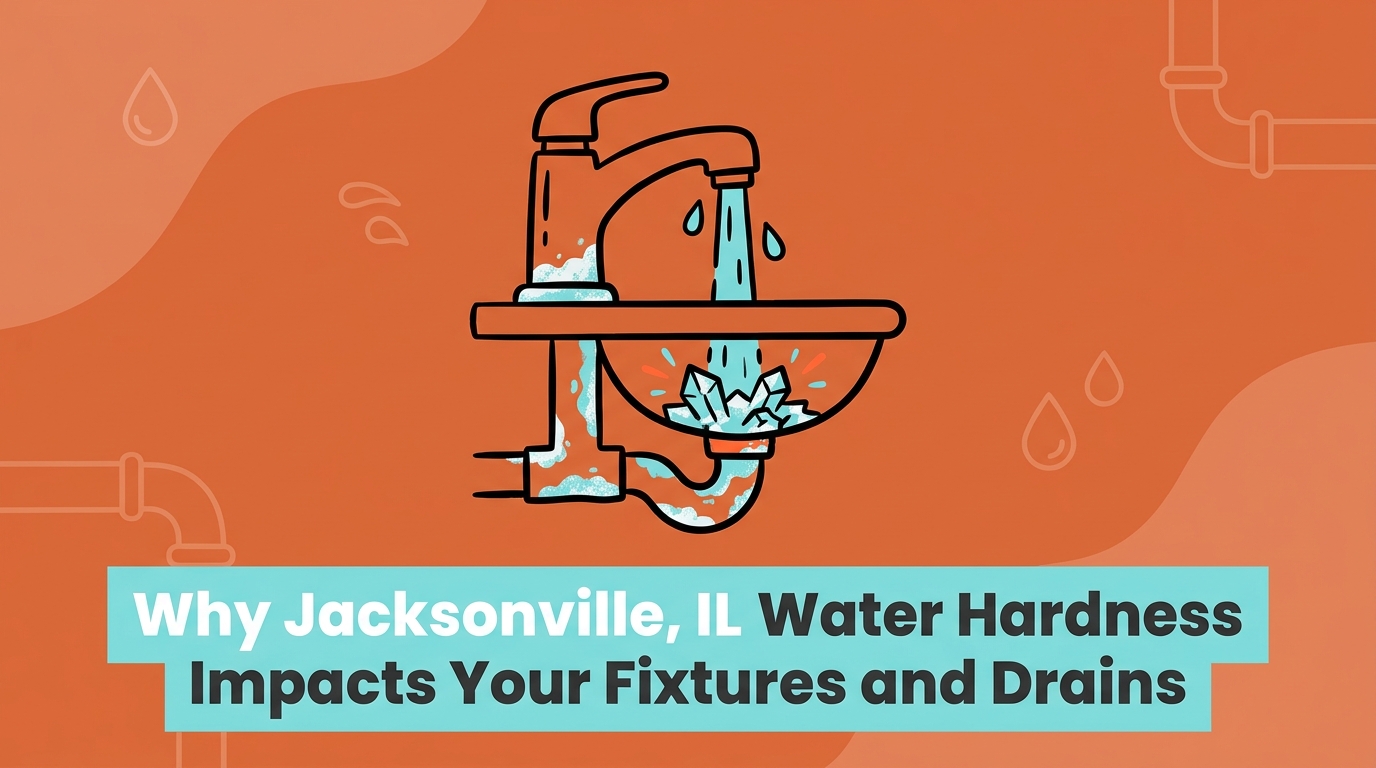


The Hidden Cost of Central Illinois Groundwater on Your Home
Hard water can reduce a water heater's efficiency by up to 48%. At HRI Plumbing, we have spent years diagnosing the fallout from this exact issue, which is just one striking reason why understanding how Jacksonville's water hardness impacts your fixtures and drains is so critical for local homeowners. When mineral-heavy water flows through your home's pipes day after day, it leaves behind a destructive trail of calcium and magnesium. These microscopic deposits might seem harmless at first, but our team consistently sees them act like liquid sandpaper on the internal components of residential plumbing systems.
This wear and tear becomes especially obvious during late summer. By the time August arrives, household water usage typically peaks due to lawn care, end-of-season cooling routines, and back-to-school preparations. The sheer volume of mineral-heavy water moving through your pipes accelerates the degradation of rubber seals, heating elements, and drain traps. If you find yourself constantly dealing with stiff faucet handles or crusty showerheads, you are not alone. In our experience, these are predictable local issues, not necessarily the result of cheap manufacturing or bad luck.
Many homeowners find themselves at a frustrating decision point: do you keep paying for temporary part replacements every few months, or do you address the root cause of the mineral content itself? Constantly swapping out ruined aerators and showerheads treats the symptom while ignoring the disease. Fortunately, comprehensive residential plumbing services are equipped to handle these specific regional challenges, offering long-term strategies that protect your entire home from premature breakdowns.
Decoding Morgan County's Municipal Water Profile
In our experience serving Morgan County, to truly protect your plumbing, you have to look below the surface. Central Illinois relies heavily on groundwater sources, making hard water a persistent geographic reality rather than a temporary seasonal climate factor. The local groundwater aquifers naturally absorb high levels of calcium and magnesium as the water filters through the region's dense limestone bedrock. By the time this water is treated and pumped to your neighborhood, it carries a heavy load of dissolved minerals.
This dissolved mineral content travels through the municipal water supply directly into homes across the Jacksonville IL municipal water service area. Unlike surface water from lakes or rivers, which can fluctuate in mineral content depending on rainfall, groundwater remains consistently hard. The limestone bedrock does not change, which means the calcium content in your tap water remains high 365 days a year.
Because this is an evergreen, year-round reality for the region, proactive plumbing protection is absolutely essential. The minerals are invisible when dissolved in cold water, but the moment that water sits in a pipe, evaporates on a surface, or gets heated in a tank, the minerals drop out of the liquid and form solid scale. Understanding this geological background explains why a fixture that might last ten years in a different state can fail in just three years here in Morgan County.
The Mechanics of Faucet Cartridge and Seal Failure
When a sink starts dripping, most people assume a washer just got old. However, our plumbers know firsthand that the exact mechanics of how local water hardness destroys faucet internals are much more aggressive. Modern single-handle faucets rely on an internal cartridge containing delicate rubber O-rings, plastic housing, and sometimes ceramic discs. These parts are engineered to fit together with watertight precision.
How Calcium Acts Like Sandpaper
As hard water flows through the faucet, microscopic amounts of water remain inside the cartridge when you turn it off. When this moisture evaporates, it leaves behind hard calcium scale. This jagged scale builds up directly on the internal plastic and metal components. The next time you twist the handle, that abrasive scale grinds against the soft rubber seals. Over hundreds of uses, the rubber gets shredded and the plastic gets scored.
This mechanical degradation connects directly to the frustrating symptoms you experience at the sink. You will likely notice:
• Stiff handles: The faucet becomes difficult to turn on or off because the internal parts are jammed with mineral deposits.
• Squeaky operation: A grinding or squeaking noise occurs as the handle moves, signaling that the lubricant has been washed away and replaced by abrasive scale.
• Constant dripping: The rubber seals are too damaged to hold back the water pressure, leading to a persistent leak.
• Crusty aerators: White, chalky buildup blocks the screen at the end of the spout, causing the water to spray sideways.
Our HRI Plumbing technicians see these urgent plumbing issues frequently throughout the year. Just recently, as families geared up for the back-to-school rush, we helped a local homeowner whose morning routine was derailed by a completely calcified and leaking bathroom faucet. Fast, professional diagnosis is vital. Our experts can quickly explain these sink issues, ensuring you understand the root cause rather than just swapping a part. If the damage is severe, our team can perform a proper clogged sink repair and replace the ruined components safely.
Why Water Heaters Struggle During Peak Late-Summer Usage
Nowhere is the destructive power of hard water more evident than inside your water heater. Heat acts as a catalyst for mineral precipitation. When cold groundwater enters the tank and the heating elements turn on, the sudden rise in temperature forces the dissolved calcium and magnesium to separate from the water. These minerals instantly cling to the hottest surfaces available: the heating elements themselves and the bottom of the tank.
The Thermodynamics of Mineral Scale
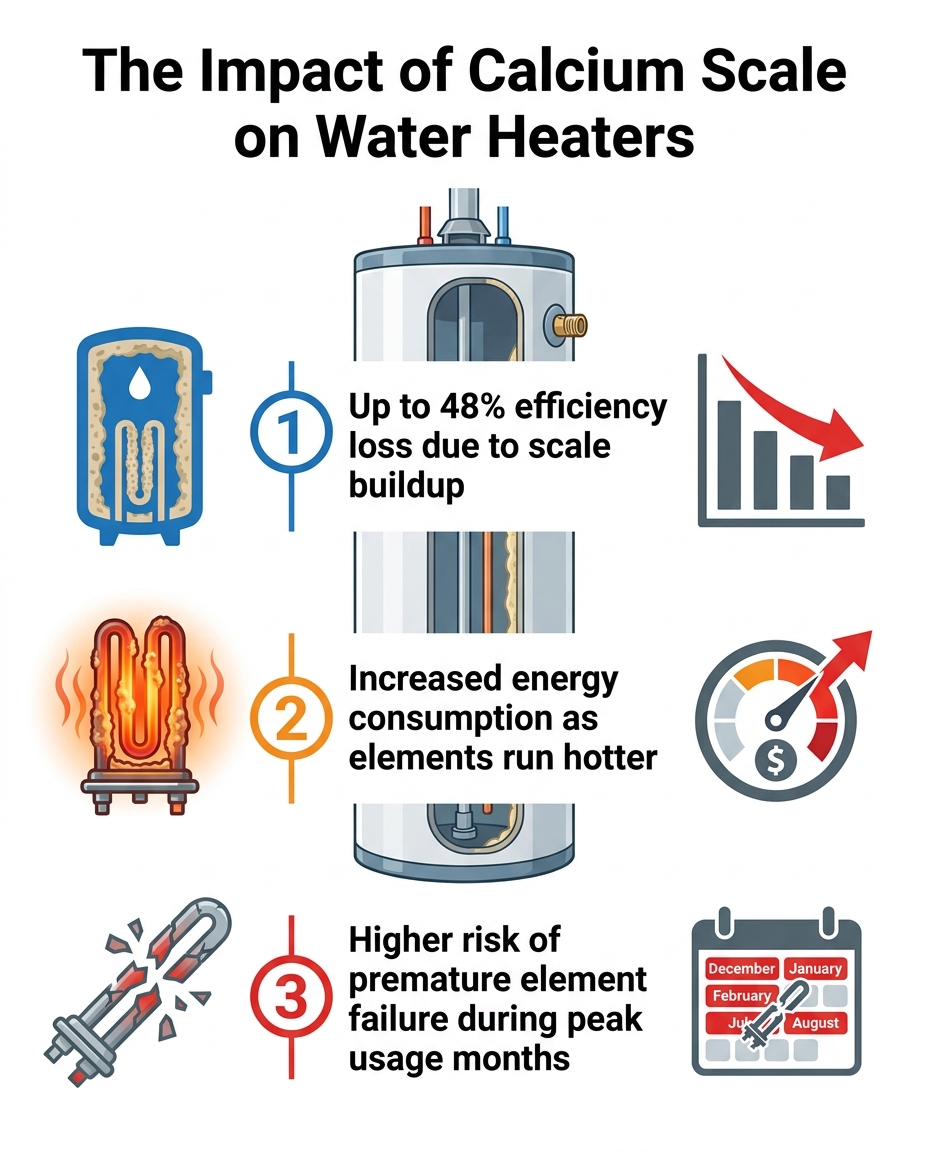
As the scale builds up, it forms a thick, rock-like crust over the metal heating elements. This crust acts as an incredibly effective insulator. Instead of heating the water directly, the element must first heat the thick layer of calcium. This forces the system to run much longer and much hotter just to reach your desired temperature, which directly causes the massive 48% efficiency drop mentioned earlier.
• Clean Element (New) — Energy Consumption: Normal / Baseline — Heating Speed: Fast (Direct transfer) — Risk of Failure: Low
• Moderate Scale Buildup — Energy Consumption: Up to 25% Higher — Heating Speed: Noticeably Slower — Risk of Failure: Medium (Overheating begins)
• Heavy Scale (Unmanaged) — Energy Consumption: Up to 48% Higher — Heating Speed: Very Slow (Struggles to recover) — Risk of Failure: High (Element burnout likely)
This inefficiency creates severe stress on the system, especially during late summer. By August, high household water volume—from extra showers after hot days, outdoor cleanup, and busy daily routines—forces the already compromised water heater to work overtime. The elements stay on longer, the internal temperatures spike, and the metal becomes brittle.
When a system is failing under pressure, rapid response is critical. Our team at HRI Plumbing often sees this scenario play out as summer winds down. We recently responded to a late-summer emergency where a family's water heater struggled to keep up with the demand of extra showers after a hot August day, resulting in a burnt-out element. That same urgent, informative approach is necessary when dealing with a failing water heater. Timely water heater repair and replacement is critical when scale has permanently damaged the tank or caused the elements to short out. Upgrading to a new, efficient unit may even qualify you for generally applicable energy rebates or tax credits—we always advise homeowners to verify current programs with their utility provider or tax professional.

Soap Scum, Restricted Flow, and Drain Complications
Hard water does not just destroy fixtures; it also wreaks havoc on your drainage system. Our drain cleaning specialists frequently encounter pipes where the minerals in the Jacksonville IL municipal water service area actively react with the ingredients in everyday soaps, shampoos, and detergents. Instead of creating a rich, cleansing lather, the calcium binds with the soap molecules to form a sticky, insoluble substance known as soap scum.
This thick scum coats the inside of your drains and pipes. Because it is sticky, it acts like a trap for hair, dirt, food particles, and grease. Over time, this mixture hardens, leading to stubborn, recurring clogs that seem to come out of nowhere. Simultaneously, the mineral scale slowly builds up on the inner walls of older pipes, restricting the internal diameter and significantly reducing overall water pressure throughout the home.
The Danger of Chemical Cleaners on Scaled Pipes
When faced with a slow drain, many homeowners reach for a bottle of liquid drain cleaner. However, this is one of the worst things you can do for mineral-bound clogs. Here is why we caution against chemicals:
• They cannot dissolve rock: Chemical cleaners are designed to dissolve organic matter (like hair and grease), but they sit harmlessly on top of mineral scale without breaking it down.
• They generate dangerous heat: These liquids rely on an exothermic chemical reaction. The intense heat they generate can easily warp, melt, or crack pipes that are already weakened by restricted flow and age.
• They leave the root cause behind: Even if the chemical pushes through a small hole in the blockage, the sticky soap scum and calcium walls remain intact, guaranteeing the clog will return.
Because chemical cleaners are ineffective against mineral-bound clogs, physical removal is the only safe option. Professional drain cleaning in Jacksonville utilizes specialized tools to safely clear the blockage without damaging the infrastructure. Knowing when to call a professional drain service can save you from a minor clog turning into a major pipe replacement.
Root Cause Solutions Over Constant Part Replacements
Replacing a ruined faucet cartridge, a clogged showerhead, or a burnt-out heater element will restore your water flow temporarily. However, at HRI Plumbing, we always advise our customers that this only resets the clock until the hard water inevitably destroys the new part. To truly protect your home, you must shift your focus from constant part replacements to root-cause solutions.
Before exploring solutions, a strong warning is necessary: never attempt DIY water heater element replacement. Because water heaters involve 240-volt electrical currents and highly pressurized hot water, working on them requires a licensed professional. Mistakes during element replacement can lead to severe electrical hazards, voided warranties, or catastrophic tank floods.
Professional Descaling and Conditioning
To combat the aggressive mineral profile of the Jacksonville IL municipal water service area, homeowners have two primary long-term strategies:
• Professional Descaling: A licensed technician can flush your water heater and descale your plumbing lines to remove existing buildup. This restores efficiency and extends the life of your current fixtures.
• Whole-Home Water Conditioning: Installing a water softener or conditioner neutralizes the calcium and magnesium before it ever reaches your fixtures. This prevents scale from forming, allows soap to lather properly, and protects your entire plumbing infrastructure from the moment the water enters the house.
Selecting the right mitigation strategy requires deep local expertise regarding Jacksonville's specific municipal water profile. A local professional with a proven track record of solving these exact mineral buildup issues can evaluate your home's usage and recommend a system tailored to your specific needs.
Frequently Asked Questions About Local Water Quality and Plumbing
How does hard water damage plumbing fixtures?
Hard water damages fixtures by leaving behind solid calcium and magnesium deposits when it evaporates. These microscopic, jagged mineral crystals act like sandpaper on the internal moving parts of your plumbing. Every time you turn a faucet handle, the scale grinds against the soft rubber seals and plastic housing, eventually shredding them and causing persistent leaks.
Why do my faucet cartridges keep failing?
Your faucet cartridges keep failing because the hard water in Central Illinois constantly deposits scale on the delicate internal O-rings and ceramic discs. When these components are coated in abrasive minerals, they lose their watertight seal and become stiff to operate. Replacing the cartridge only provides a temporary fix until the new part is also destroyed by the untreated water.
Does hard water affect water heater elements?
Yes, hard water severely affects water heater elements by forming a thick, rock-like crust of calcium directly on the metal heating components. This scale acts as an insulator, forcing the element to work harder and run hotter to heat the water inside the tank. Over time, this reduces the heater's efficiency by up to 48% and frequently causes the elements to burn out prematurely.
What are the signs of hard water in a house?
The most common signs of hard water include white, chalky buildup on showerheads, stiff or squeaky faucet handles, and water pressure that slowly decreases over time. You may also notice that soap does not lather well, leaving behind a sticky soap scum in sinks and tubs. Spotty glassware and dry, itchy skin after showering are also strong indicators of high mineral content.
Is Jacksonville, IL water considered hard?
Yes, the water in the Jacksonville IL municipal water service area is considered hard because it is sourced primarily from local groundwater aquifers. These aquifers sit in limestone bedrock, which naturally infuses the water with high levels of dissolved calcium and magnesium. This geological reality means the water remains consistently hard throughout the entire year.
Can mineral scale in pipes be reversed professionally?
Yes, professional descaling can remove existing mineral buildup from inside pipes and water heaters. Licensed plumbers use specialized, safe descaling solutions and high-pressure flushing techniques to break down the calcium without damaging the plumbing infrastructure. However, to prevent the scale from returning, a whole-home water conditioning system is usually recommended.
Protect Your Jacksonville Plumbing from Mineral Damage
Understanding your local water profile is the crucial first step to protecting your home's plumbing infrastructure. The heavy calcium and magnesium content in Central Illinois groundwater is a relentless force, but it does not have to dictate the lifespan of your fixtures. Whether you are dealing with late-summer water heater struggles in August or a stubbornly stiff faucet handle during the back-to-school rush, our team at HRI Plumbing can help you regain control.
Stop paying for endless part replacements and start addressing the root cause of the mineral buildup. Schedule a professional inspection with our experts today to evaluate the condition of your fixtures, flush your water heater, and discuss long-term water conditioning solutions that will keep your home running smoothly for years to come.


