




The Silent Threat Lurking at the Bottom of Your Sump Basin
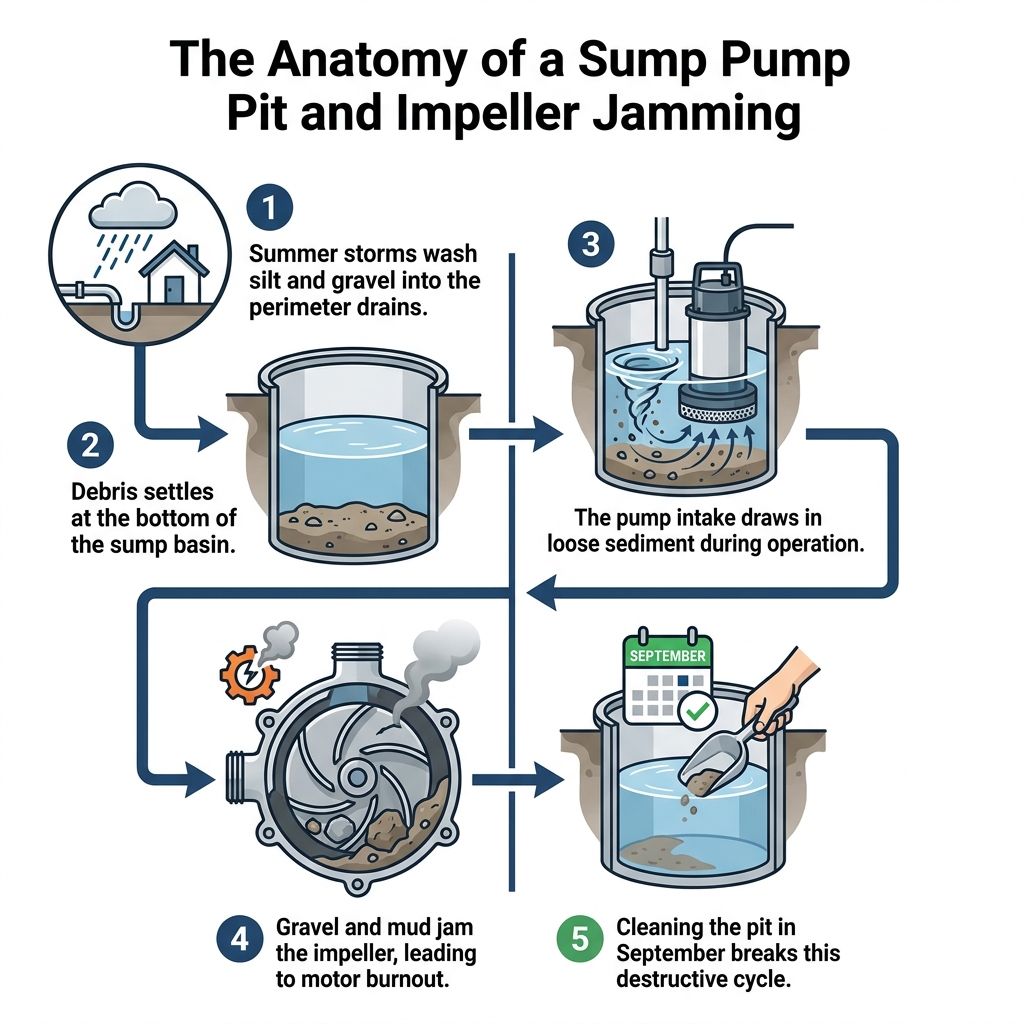
You might think of your basement drainage system as a simple holding tank, but cleaning out your sump pump pit to prevent premature wear is the single most important maintenance task standing between a dry home and a flooded floor. A sump pump pit is not just a static bucket sitting in the corner of your foundation; it is a highly active mechanical environment. Every time it rains, water flows through your perimeter drains and empties into this basin, bringing unwanted passengers along with it. Over the summer months, silt, gravel, and organic debris wash into this space and settle heavily at the bottom, creating a hidden hazard that goes completely unnoticed until the system fails.
For homeowners focused on thorough plumbing services and seasonal maintenance, addressing this accumulation early is your best defense against unexpected breakdowns.
The concrete problem you face is the steady buildup of this abrasive material directly beneath your pump's intake. As we move into the season of September fall rain prep, the decision point becomes clear: you must clear out this accumulation before the next major heavy rain hits. Proactive cleaning is vastly superior to waiting for an unexpected pump failure in the middle of a midnight downpour. By treating the basin as a vital component of your home's infrastructure rather than a forgotten hole in the ground, you protect the expensive machinery tasked with keeping your property dry.
How Summer Storms Turn Sump Pits into Silt Traps
The problem of a dirty sump basin begins long before the water ever reaches your basement. Heavy rainfall saturates the ground around your foundation, creating immense hydrostatic pressure. The cause of the rapid debris buildup lies in how your home manages this pressure. Due to Jacksonville IL soil types and the severe summer storms native to the region, rapid groundwater accumulation occurs constantly. This fast-moving water pushes through the soil, washing loose dirt, sand, and small gravel straight into your home's perimeter drain system.
Once inside the drain tiles, this sediment travels rapidly until it empties directly into the sump basin. Summer storms are notoriously aggressive, dumping massive amounts of water in very short periods, which increases the velocity of the water and allows it to carry heavier debris. A dirty pit is a completely normal consequence of a working drainage system. It proves that your perimeter drains are doing their job by capturing groundwater. However, leaving that sediment sitting in the basin is where the risk begins, often leading to the need for sudden sump pump repair and replacement if the motor burns out.
The Role of Perimeter Drains in Debris Transport
Your perimeter drains act as the veins of your basement's water management system, while the sump pit acts as the heart. Because the drains are buried in the earth, they inevitably capture loose soil alongside the water. When this mixture empties into the basin, the water slows down. The basin effectively acts as a settling tank where the heaviest materials—gravel, thick mud, and sand—drop to the bottom while the water rises.
• Fine Silt & Mud — Source: Surrounding topsoil washed in during heavy rain — Impact on the Sump System: Creates a thick sludge that coats the intake screen and reduces water flow.
• Pea Gravel — Source: Perimeter drain backfill or degrading foundation materials — Impact on the Sump System: Highly dangerous; can easily lodge inside the impeller blades and lock the motor.
• Iron Bacteria — Source: Naturally occurring bacteria in local groundwater — Impact on the Sump System: Forms a rust-colored, gelatinous slime that clogs weep holes and jams float switches.
For many Jacksonville IL area basements, this settling process happens continuously throughout the rainy season. The solution is not to stop the water from entering the pit, but to actively manage the debris that gets left behind before it reaches a critical depth.
The Hidden Danger to Your Pump's Impeller
To understand why a dirty pit is so dangerous, you have to look at the mechanical reality of how a sump pump operates. At the base of the unit sits the intake screen, and just inside that screen is the impeller. The impeller is a fan-like component that spins at incredibly high speeds, using centrifugal force to push water up and out of the discharge pipe. As water is drawn into the intake, the suction is powerful enough to pull in loose silt, sand, and small gravel resting at the bottom of the basin.
When abrasive debris enters the impeller chamber, it creates immediate mechanical stress. Silt acts like liquid sandpaper, wearing down the edges of the impeller blades over time and reducing the pump's efficiency. Worse, a single piece of gravel can become wedged between the spinning impeller and the stationary housing. When this happens, the impeller jams completely. If you find yourself diagnosing a jammed sump pump impeller, the root cause is almost always an uncleaned basin.
From Sludge to Motor Burnout
Sump pumps are durable machines that typically last 7 to 10 years under normal operating conditions. However, sediment buildup cuts this lifespan significantly. When an impeller jams, the motor does not automatically shut off. The float switch is still telling the pump that the pit is full of water, so the motor continues trying to spin the stuck blades.
This creates a massive electrical strain. The motor draws excess amperage, overheats rapidly, and eventually burns out completely. During a heavy downpour, this sequence of events can destroy a pump in a matter of hours. By treating pit maintenance as a mandatory part of your September fall rain prep, you remove the very debris that causes this catastrophic failure.

Visual and Auditory Signs Your Sump Pit Needs Attention
You do not have to wait for a mechanical failure to know your sump basin is in trouble. The system provides several clear warnings that debris accumulation has reached a critical level. By routinely checking the pit in Jacksonville IL area basements, you can identify these symptoms early.
• A thick layer of mud or visible gravel: When the water level is low, shine a flashlight into the basin. If you cannot see the hard plastic or concrete bottom, and instead see a thick layer of sludge or loose rocks, the pit requires immediate cleaning.
• Unusual grinding or humming noises: A healthy pump operates with a smooth, consistent hum. If you hear loud grinding, rattling, or a strained electrical buzzing, the motor is struggling against sediment or a partially jammed impeller.
• Sluggish water evacuation: If you notice the water level taking significantly longer to drop during a rainstorm, the intake screen is likely choked with mud, restricting the flow of water into the pump.
• Foul, stagnant odors: A healthy pit cycles water regularly. If you smell a swampy, rotten egg odor coming from the basement corner, it indicates that a thick layer of biological sludge and stagnant water has settled at the bottom.
The quick fix: Make it a habit to visually inspect the basin once a month during the rainy season. Catching these signs early allows you to address the buildup before the motor sustains permanent damage.
Why Early Fall is the Ideal Time for Proactive Pit Cleaning
Timing is everything when it comes to home maintenance. September serves as a crucial transition month for your property's water management system. Throughout the summer, short, violent thunderstorms wash high volumes of heavy sediment into your drains. As the weather shifts toward autumn, the rain patterns change to prolonged, soaking storms that demand continuous operation from your sump pump.
The strategic advantage of clearing out summer storm sediment before heavy fall rains begin cannot be overstated. You are essentially resetting the system. If you enter the busy fall pumping season with a basin already half-full of gravel, you are setting the stage for a nightmare scenario: a pump failing during a massive overnight downpour.
Embracing this proactive, preventative care is what saves homeowners from emergency basement flooding and the steep cost of premature pump replacements. Making pit cleaning a standard part of your September fall rain prep ensures that when the pump is called upon to run for days at a time, it has a clean, clear environment to draw water from safely.
Safe Debris Removal vs. Professional Maintenance
While keeping the pit clean is essential, it is equally important to understand the line between safe homeowner maintenance and tasks that require a licensed professional. The problem arises when homeowners attempt to dismantle complex plumbing components just to clean out some mud. The cause of many accidental basement floods is a well-meaning homeowner altering the float switch mechanism or improperly reseating the pump during a DIY cleaning. The solution is strictly adhering to safe, non-invasive debris removal.
Homeowners can safely scoop out loose debris from the bottom of the pit using a heavy-duty wet/dry vacuum or a small, long-handled plastic trowel. Crucially, you must unplug the pump from its power source before reaching into the basin or inserting any tools. Once the power is disconnected, carefully vacuum out the sludge and gravel resting at the bottom. Never pull the pump out of the pit by its power cord, and never attempt to unscrew the intake housing to clean the internal blades.
When to Call a Licensed Expert
Professional maintenance goes far beyond simply scooping out mud. If you notice any of the following conditions in Jacksonville IL area basements, it is time to schedule professional drain cleaning and inspection:
• Suspected impeller jams: If the pump hums but does not move water, the impeller is likely locked. Disassembling the pump to clear the jam requires professional expertise to ensure watertight seals are maintained.
• Heavily impacted perimeter drains: If the mud in the pit is accompanied by slow-draining perimeter tiles, the entire underground drainage system may need professional hydro-jetting.
• Float switch calibration: If the basin is clean but the pump turns on and off erratically, the switch mechanism needs professional testing and adjustment.
Licensed plumbers will also test the weep hole, check the check valve for proper operation, and ensure the exterior discharge line is free of obstructions—steps that guarantee the entire system functions as a cohesive unit.
Long-Term Basement Protection Through System Health
A clean sump basin is the absolute foundation of a healthy, reliable basement waterproofing system. Every component of your drainage setup relies on the assumption that the water entering the pump is free of destructive, heavy debris. By preventing abrasive silt and gravel from entering the intake, you directly protect the motor from overheating, which is the key to extending the pump's expected 7 to 10-year lifespan.
Making pit inspection a standard part of your seasonal home care routine pays massive dividends over time. It shifts your approach from reacting to emergencies to actively managing the health of your home. For homeowners tackling their September fall rain prep, this small task provides outsized peace of mind. If you are unsure about the condition of your system, reaching out to Jacksonville plumbing experts for a thorough seasonal inspection ensures everything is calibrated correctly.
Remember that the ultimate goal is a dry, secure basement, regardless of how severe the weather gets outside. The machinery can only do its job if you provide it with a clean environment to operate within.
Protect Your Basement Before the Next Heavy Rain
Maintaining a clear sump basin gives you the mechanical reassurance that your home is prepared for whatever the changing seasons bring. Removing the silt and gravel deposited by summer storms directly prevents the impeller jams and motor burnouts that lead to flooded basements.
If you are uncomfortable cleaning the pit yourself, or if you suspect your pump has already ingested harmful debris from Jacksonville IL area basements, exploring professional maintenance options is the safest next step. A licensed technician can clear the basin, test the mechanical components, and verify that your home is fully protected. Take the time to evaluate your system today, and ensure your basement remains dry through every heavy downpour this fall.
Frequently Asked Questions
What happens if a sump pump pit is dirty?
A dirty sump pump pit allows abrasive sediment to be sucked into the pump's intake. This debris wears down the internal components and can eventually jam the spinning impeller. When the impeller locks up, the motor overheats and burns out, leaving your basement vulnerable to flooding during the next rainstorm.
Can mud and silt ruin a sump pump?
Yes, mud and silt are highly destructive to a sump pump over time. As the thick sludge is pulled through the system, it acts like liquid sandpaper on the impeller blades and coats the intake screen. This forces the motor to work significantly harder to move water, leading to premature electrical failure.
How do you safely get sludge out of a sump pump basin?
The safest method is to first unplug the pump from the electrical outlet to eliminate any shock hazard. Then, use a heavy-duty wet/dry shop vacuum to suction the sludge and loose gravel directly from the bottom of the basin. Avoid moving the pump itself, as bumping it can knock the float switch out of alignment.
How often should a sump pump pit be cleaned?
You should visually inspect the pit every few months, but a thorough cleaning should be performed at least once a year. Early fall is widely considered the best time for this task, as it removes the heavy sediment deposited by summer storms right before the prolonged rains of autumn begin.
Does a dirty sump pit cause bad basement odors?
Yes, a dirty basin is a common source of foul basement smells. When organic debris, dirt, and stagnant water sit at the bottom of the pit for extended periods, bacteria begin to grow. This biological breakdown produces a distinct swampy or rotten egg odor that permeates the surrounding basement area.
Why is gravel suddenly accumulating in my sump basin?
Gravel usually washes into the basin from the surrounding perimeter drain tiles during periods of heavy, rapid rainfall. If you notice a sudden, large increase in gravel, it may indicate that the protective fabric around your underground drain pipes is degrading, allowing the backfill stone to wash into the system.


