



Losing Hot Water During the Early Fall Transition
The September and early fall transition is officially here, and you are likely stepping into the shower only to realize exactly why your gas water heater pilot light keeps blowing out. The mornings are getting crisp, the house is cooling down, and discovering that your hot water supply has vanished overnight is incredibly frustrating. While a pilot light going out is one of the most common autumn service calls our team at HRI Plumbing receives, it forces a critical decision for homeowners: recognizing when a blown-out flame is a simple seasonal draft versus a failing internal component.
Setting the boundary early is essential for your home's safety. Knowing exactly when to stop trying to force the system to light can prevent hazardous situations in your utility room. Whether you need comprehensive plumbing services to diagnose the root cause or professional water heater repair and replacement, understanding what is happening inside your tank is the first step to restoring your hot water safely.
The Thermocouple: Your Water Heater's Built-In Safety Guard
When our technicians diagnose why a pilot light refuses to stay lit, the first thing we look at is the small, copper-looking rod sitting right next to the flame. This component is called the thermocouple. In standard gas water heaters with standing pilot lights, the thermocouple is the most important safety sensor in the entire system. It acts as the gatekeeper between the gas supply and the burner chamber.
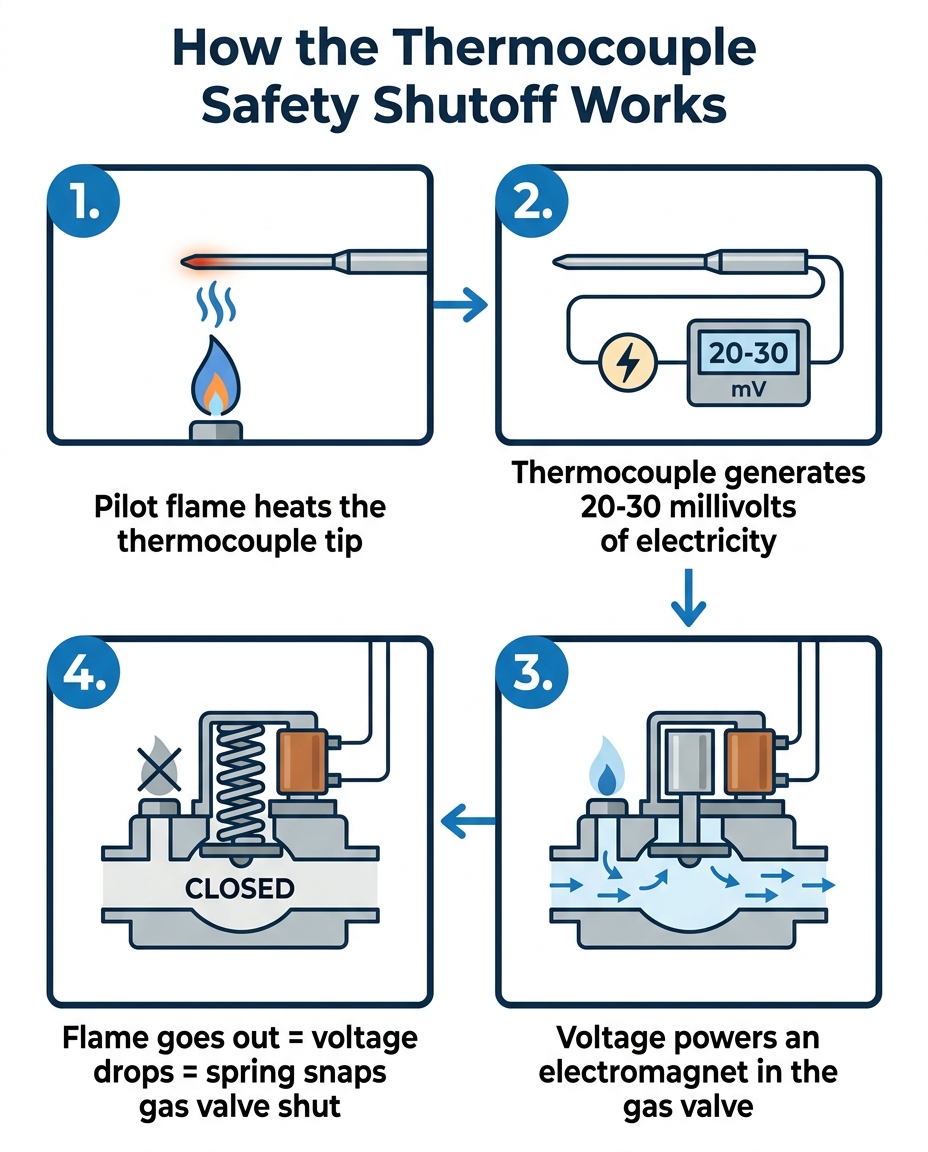
The science behind this little rod is fascinating but simple. The thermocouple is made of two different types of metal joined together at the tip. When the pilot flame heats that specific junction, it creates a highly reliable thermoelectric effect. A functioning thermocouple generates a very small electrical current—typically between 20 and 30 millivolts—when heated by the pilot flame. That tiny electrical charge travels up the copper wire to the main gas control valve on the outside of the tank.
As long as the gas valve receives that steady 20 to 30 millivolts, it knows there is an active flame ready to ignite the main burner. It uses that electricity to power a small electromagnet that holds the gas valve open. The moment the flame goes out, the temperature drops, the millivolts disappear, and the electromagnet loses its power.
How the Gas Valve Responds to Flame Loss
When the voltage drops instantly due to a lost flame, the physical reaction inside the gas valve is immediate. An internal, heavy-duty spring snaps the valve completely shut. This precise mechanical safety feature cuts off the flow of gas to both the pilot tube and the main burner.
Reframing the frustration: It is entirely normal to feel annoyed when you have to take a cold shower because the pilot went out. However, as we always remind our customers, when the system shuts down and refuses to relight, it is actually a massive success in safety engineering. The thermocouple is actively preventing unburned gas from filling your basement or utility closet. The system is doing exactly what it was designed to do to protect your home.

How Summer Dust Leads to Fall Pilot Light Failures
You might wonder why this problem seems to happen just as the seasons change. The answer usually lies in what your water heater was doing over the summer. During the hot, humid summer months, your household's demand for hot water typically drops. The incoming city water is warmer, and you take shorter, cooler showers. Because the main burner fires up less frequently, the pilot assembly sits relatively undisturbed in the humid air.
As the shift from humid summer conditions to cooler autumn weather occurs in Jacksonville, IL, our plumbers frequently uncover a hidden issue during pre-heating-season tune-ups: dust, lint, and airborne debris have slowly accumulated on the pilot assembly. When the heating season begins and the water heater starts working harder, this layer of summer dust either burns off poorly—creating soot—or physically clogs the tiny opening of the pilot tube.
The impact of a dirty sensor:
• The lazy flame: A clogged pilot tube produces a weak, yellow, "lazy" flame instead of a sharp, hot, blue one. This weak flame cannot properly engulf the thermocouple tip.
• The insulating blanket: If soot and dust coat the thermocouple itself, it acts as an insulator. The flame might be hot, but the heat cannot penetrate the soot to reach the metal.
• The false shutoff: Because a dirty thermocouple cannot accurately read the flame's heat, the millivolts drop, leading to a false safety shutoff even if a small flame is present.
A strict warning regarding maintenance: Because accessing the pilot assembly requires opening the sealed combustion chamber and handling active gas connections, cleaning the thermocouple is never a DIY project. Scrubbing the sensor with sandpaper or trying to clear the pilot tube with a needle can permanently damage the components or compromise the gas seal. This requires a licensed professional. However, you can proactively protect your system in other ways, such as scheduling a professional to flush sediment from your water heater to ensure the tank operates efficiently.
Drafts and Airflow Changes in Utility Spaces
Not every blown-out pilot light we inspect is the result of a failing part. In our experience working in older basements and utility closets, the culprit is often the environment immediately surrounding the water heater. Shifting weather patterns and cooler nights naturally introduce new drafts into Jacksonville, IL area homes. As the temperature drops outside, the air pressure inside your home changes, which can drastically alter how air moves through your lower levels.
A healthy, strong pilot flame can usually withstand minor seasonal drafts. However, a weakened pilot flame—perhaps due to that dirty tube we just discussed—is highly susceptible to these new airflow changes. A sudden gust of wind down the utility chimney, or a strong draft coming from a newly opened basement window, is often enough to snuff out a weak flame.
What you should check:
• Look for obviously open windows or missing panes in the basement.
• Check to see if a nearby exterior door is lacking proper weatherstripping.
• Notice if the pilot blows out specifically on very windy days or stormy nights.
While you should look for obvious drafts, you must never attempt to modify the water heater's venting or block the air intake vents on the unit itself. Gas water heaters require a specific volume of fresh combustion air to operate safely and prevent carbon monoxide buildup. If you suspect that your utility space has an airflow issue, local Jacksonville plumbers can assess the area to ensure it has appropriate, safe ventilation without compromising the pilot flame.
• Timing of blowout — Likely Draft Issue: Only on windy days or stormy nights — Likely Mechanical Issue: Randomly, or immediately after relighting
• Flame appearance before blowout — Likely Draft Issue: Strong, sharp, and blue — Likely Mechanical Issue: Weak, flickering, yellow, or orange
• Relighting success — Likely Draft Issue: Stays lit easily once the button is released — Likely Mechanical Issue: Goes out the exact second you let go of the button
When the Gas Valve Itself is Failing
If the thermocouple is clean, the pilot flame is strong, and there are no drafts in the room, but the pilot still will not stay lit, the problem usually moves up the line to the main gas control valve. This is the large box on the outside of the tank where you set the water temperature.
As we discussed earlier, the thermocouple sends its millivolts to an electromagnet inside this valve. Over years of constant use in standard gas water heaters, our team typically sees the copper coil inside that electromagnet degrade, short out, or simply wear down. When this happens, the electromagnet loses its magnetic pull. Even if the thermocouple is sending the perfect amount of electricity, the defective valve cannot physically hold the internal spring open.
Why this is a strict professional repair:
Replacing a gas valve is entirely different from swapping out a minor part. It requires disconnecting the main gas supply line from the water heater, removing the entire control mechanism, installing a new unit, and perfectly resealing the gas threads. Any mistake during this process creates an immediate, severe gas leak risk. Because it involves the main fuel lines, gas valve diagnostics and replacements are strictly professional-level repairs. If your system requires this level of intervention, you may also need a professional to evaluate the connections, similar to what is required during new gas line installation.
The Danger of Repeatedly Forcing a Relight
When you are staring at a cold water heater, the most common homeowner reaction is to press the pilot button down, light the flame, hold it for the recommended minute, and watch it go out when released. Out of frustration, many people will immediately press the button down again and hold it for three, five, or even ten minutes, hoping to force the system to cooperate.
The risk of overriding the safety mechanism: Holding that button down manually overrides the spring-loaded safety valve. While you are holding it, gas is flowing. If the pilot flame is unstable, or if the main burner tries to kick on while you are tampering with the valve, you can allow unburned gas to accumulate in the utility space. This creates a highly hazardous environment.
The golden rule of relighting: We always advise our customers to set a clear boundary for themselves. Follow the manufacturer's relight instructions printed on the side of the tank exactly. If the pilot goes out immediately after releasing the button following a proper relight attempt, stop trying. Do not tape the button down. Do not hold it for twenty minutes. Turn the gas valve to the "OFF" position and call a professional.
Working with our dedicated local team means you get prompt and reliable diagnostic expertise. At HRI Plumbing, we ensure that Jacksonville families are never left guessing about their safety, preventing exposure to gas hazards while quickly getting the hot water flowing again.
Frequently Asked Questions About Water Heater Pilot Lights
Why won't my water heater pilot light stay lit when I release the button?
The thermocouple is likely failing to send the necessary millivolt signal to the gas valve, causing the safety mechanism to shut off the gas supply. When you hold the button down, you are manually bypassing this safety spring. The moment you let go, the lack of electrical signal tells the valve that no flame is present, so it snaps shut to prevent a potential gas leak.
How do I know if my thermocouple is bad?
If the pilot flame is strong, completely blue, and visibly engulfs the upper third of the thermocouple tip, but the flame still goes out the exact moment you release the gas control knob, the thermocouple is usually at fault. A visual inspection might also show heavy soot buildup, severe corrosion, or a physical bend in the copper rod, all of which indicate it is time for a professional replacement.
Is it dangerous if the pilot light goes out on a water heater?
No, because the thermocouple acts as a highly reliable fail-safe to shut off the gas valve the moment the flame disappears. The real danger does not come from the light going out; it comes from homeowners repeatedly trying to force it to light when the safety mechanism is actively engaging. As long as you leave the system alone once the safety engages, you are safe.
Will a dirty pilot light keep going out?
Yes, dirt and soot can insulate the thermocouple sensor or weaken the pilot flame, preventing it from generating enough heat to keep the gas valve open. A dirty pilot orifice creates a weak, yellow flame that gets easily blown out by minor drafts, and it fails to generate the 20 to 30 millivolts required to hold the electromagnet open.
How does a water heater thermocouple work?
It uses two dissimilar metals joined at the tip that create a small electrical voltage when heated by the pilot flame. This thermoelectric effect generates enough power to run a small electromagnet inside the main gas control valve. That electromagnet holds the spring-loaded gas valve open as long as the flame is burning hot.
How many times should I try to relight my water heater before calling a plumber?
You should only attempt to relight the water heater once or twice following the exact instructions printed on the tank's label. If you hold the button for the required 60 seconds and the flame dies the second you release it, the safety system is locking you out on purpose. Stop immediately, turn the gas dial to "OFF," and call a licensed professional.
Restore Your Hot Water Safely This Fall
Losing your hot water during the September and early fall transition is a major disruption to your daily routine, but it is important to remember that your water heater is likely shutting down to protect you. That frustrating click of the gas valve shutting off means your built-in safety mechanisms are doing exactly what they were engineered to do.
When you reach the point where the pilot refuses to hold a flame, it is time to respect the boundaries of your system. Stop attempting to force a relight, and let an expert diagnose the underlying mechanical or airflow issue. Schedule a professional inspection with our team today to secure your water heater repair and replacement needs, ensuring your family enjoys safe, consistent hot water long before the freezing winter temperatures arrive.


