



Sudden Pressure Drops: Identifying the Root Cause
Dealing with municipal water pressure fluctuations in Jacksonville can turn a normal morning routine into a frustrating ordeal. You turn on the shower or start the washing machine, and instead of a robust, steady stream of water, you are met with a weak, sputtering trickle. Experiencing a sudden drop in water pressure can cause immediate concern for any homeowner, often leading to fears of catastrophic pipe failures or flooded basements.
If you are tired of unpredictable water flow, our team at HRI Plumbing has spent years helping local residents navigate these exact issues. Our comprehensive plumbing services can help stabilize your home's system and restore your peace of mind.
Many residents automatically assume their interior plumbing is failing the moment the tap runs dry. However, the root cause of these sudden changes frequently originates entirely outside the home. The municipal water grid is a massive, interconnected system that requires constant maintenance and adjustment. Particularly during early fall, municipal activities can temporarily disrupt normal water flow to residential neighborhoods across the city.
When you notice a sudden change at the faucet, the most critical decision you face as a homeowner is determining whether to simply wait out a temporary city event or if your home requires a permanent, protective upgrade like a whole-home pressure regulator. Understanding the common symptoms of municipal pressure drops can help you avoid unnecessary panic:
• Sputtering faucets: Air trapped in the municipal lines often causes taps to cough and spit water sporadically.
• Appliance error codes: Modern washing machines and dishwashers will frequently pause their cycles and display error codes if the incoming water pressure drops below their minimum operating threshold.
• Total loss of flow: In severe cases, such as a major main break down the street, your home may temporarily lose water pressure entirely until city crews isolate the damaged zone.
Before you assume the worst about your home's plumbing, it is essential to look at the broader context of what might be happening beneath the streets of your neighborhood.
Understanding Jacksonville's Municipal Water Infrastructure
To make sense of why your tap is suddenly barely running, you have to look at the larger picture. Municipal water systems are complex networks of underground pipes, pumps, and storage tanks that require routine maintenance, which directly impacts household water pressure across Jacksonville IL municipal water service areas.
One of the most common causes of temporary, localized pressure drops is routine water tower maintenance. When a local tower is temporarily taken offline for cleaning or structural inspection, the surrounding grid relies on backup pumps that may not deliver the exact same pressure you are used to. Similarly, we often receive a surge of calls during early fall municipal hydrant flushing, which is a standard procedure designed to clear out mineral sediment and ensure water quality. When city crews open fire hydrants to flush the mains, millions of gallons of water are rapidly diverted, causing a noticeable, temporary drop in pressure for the surrounding blocks.
However, planned maintenance is not the only factor. Central Illinois weather plays a massive, often destructive role in municipal infrastructure. The harsh winter freezes and intense summer dry spells cause the ground to expand, contract, and shift dramatically. This relentless ground shifting frequently leads to municipal water main breaks. Rigid underground pipes can only withstand so much soil movement before they crack or snap entirely.
When a main break occurs in the municipal grid, entire neighborhoods may experience a sudden, severe loss of water pressure. The pressure will not return to normal until city crews locate the break, excavate the street, and isolate the damaged section with heavy-duty valves. During these emergency repairs, homeowners simply have to wait for the municipal system to stabilize.
City Issue vs. Home Plumbing Failure: A Diagnostic Guide
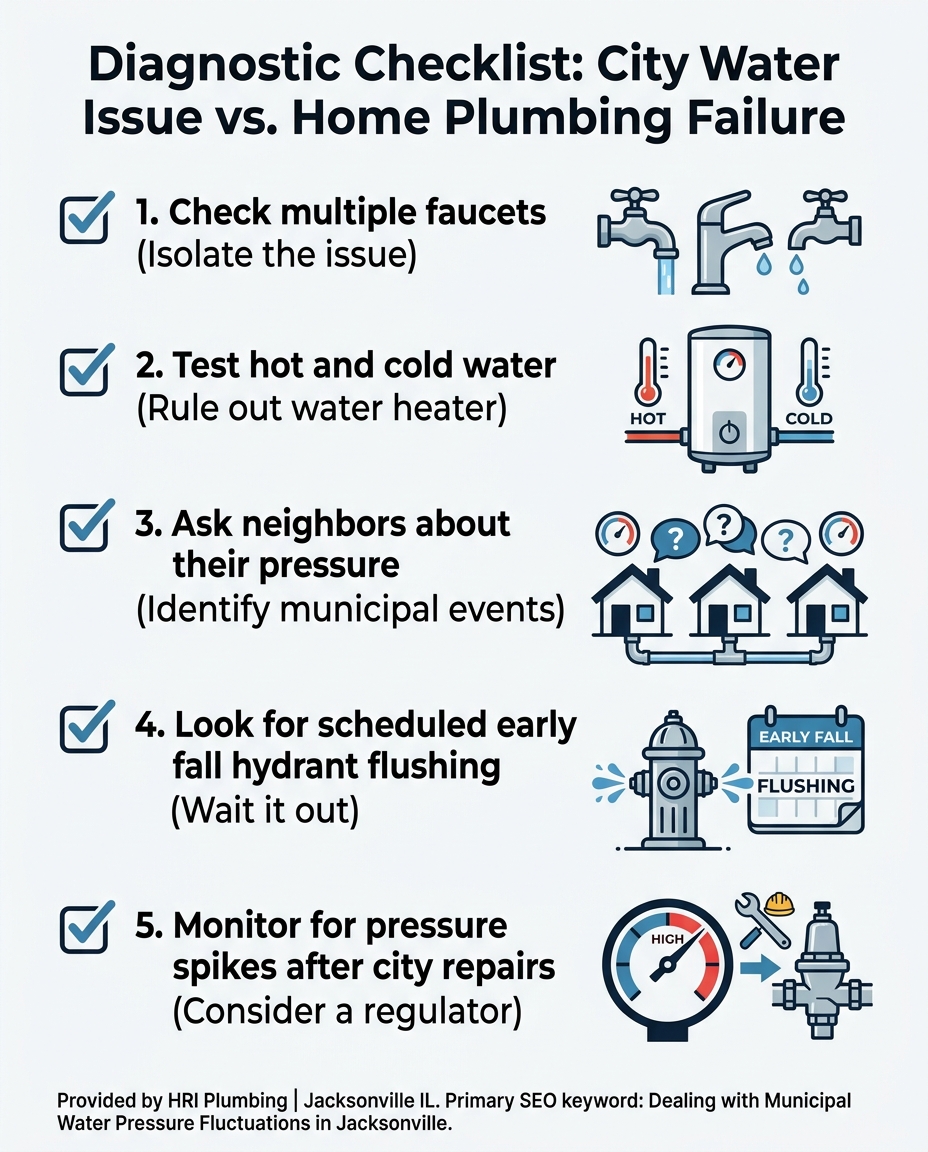
When the water pressure drops, you need to know exactly what you are dealing with. Is it a city-wide event, or is a pipe failing somewhere inside your walls? By following a systematic approach, you can differentiate between a temporary municipal event and a serious home plumbing failure across Jacksonville IL municipal water service areas.
Step 1: Check multiple fixtures throughout the house. If only your kitchen sink has low pressure, but the bathroom shower and laundry room are running perfectly, the issue is isolated. This usually points to a clogged aerator or a failing cartridge in that specific faucet, rather than a city-wide pressure drop.
Step 2: Verify if both hot and cold water are affected. Turn on the cold tap, then the hot tap. If the cold water pressure is strong but the hot water is weak, the problem is almost certainly isolated to your water heater. Sediment buildup, a failing shutoff valve on the heater, or a deteriorating dip tube can restrict hot water flow while leaving the cold water unaffected.
Step 3: Check with your neighbors. Walk next door or check your neighborhood social media group. If your neighbors are experiencing the exact same pressure drop at the exact same time, it strongly indicates a municipal event, such as a main break or hydrant flushing.
Step 4: Monitor your water meter. If your neighbors have normal pressure, make sure all water-using appliances in your home are turned off, then check your water meter. If the dial is still spinning, you have a hidden residential leak drawing water away from your fixtures.
Recognizing Hidden Residential Leaks
A sudden loss of pressure that is not tied to a municipal event or a clogged fixture can indicate a severe hidden leak. These leaks steal water volume before it ever reaches your taps. Slab leaks, which occur in the pipes buried under your home's concrete foundation, often present as a sudden pressure drop and require immediate professional diagnosis.
Our team at HRI Plumbing saw this firsthand when a local homeowner discovered this the hard way last fall after noticing a severe pressure drop in their bathrooms. Rather than a municipal issue, our technicians identified a bad leak underneath the home on a slab foundation. We walked them through their options, helped them make the correct decision for their property, and installed all new plumbing, an exhaust fan, and new toilet fittings. The major plumbing problem was fixed seamlessly within the discussed time frame, saving the foundation from further water damage.
Promptly identifying a slab leak prevents catastrophic water damage to the home's foundation. If you suspect your low pressure is caused by a hidden break, scheduling professional leak detection is the safest way to pinpoint the issue without unnecessary property damage.

The Hidden Danger of Municipal Water Main Breaks
While a sudden drop in pressure during a main break is highly inconvenient, the real danger to your home's plumbing actually occurs after the repair is finished. The restoration of municipal service is often more hazardous to residential pipes than the initial loss of water.
When city crews shut down a massive water main to repair a break, the empty pipes fill with air. Once the repair is complete and the massive municipal valves are reopened, water rushes back into the neighborhood grid at high velocity, pushing that trapped air ahead of it. This creates a severe "water hammer" effect. The air compresses and then releases violently, causing massive pressure spikes as the water slams into the closed valves and fixtures inside your home.
In our years of repairing local plumbing, we have seen firsthand how these sudden spikes can easily overwhelm residential systems. The intense burst of pressure is known to blow out the delicate rubber seals inside faucets, damage the internal components of washing machines and dishwashers, and cause existing weak spots in older pipes to rupture into full-blown leaks. If a toilet fill valve is subjected to a massive pressure spike, it can crack, leading to a continuously running toilet or a flooded bathroom.
Homes located closest to the repaired municipal line are at the highest risk for these damaging pressure surges. If a main break happens on your street during early fall, you need to be highly vigilant when the water is turned back on. Opening your faucets slightly to allow trapped air to bleed out can help, but it is not a foolproof defense against the sheer force of a municipal pressure surge.
What is a Whole-Home Water Pressure Regulator?
To protect against the unpredictable nature of municipal water grids, modern plumbing systems rely on a specific, highly effective device. A whole-home water pressure regulator, commonly known as a Pressure Reducing Valve (PRV), acts as a shock absorber for your home's entire plumbing system.
This bell-shaped brass valve is typically installed on the main water line just after it enters your home, before the water splits off to your water heater and various fixtures. It takes highly pressurized, unpredictable municipal water and mechanically reduces it to a safe, consistent flow for residential use. Inside the valve, a heavy-duty spring and a flexible diaphragm work together to restrict the incoming water. If a massive pressure spike surges down your street after a main break, the PRV absorbs the blow, ensuring the water pressure entering your actual living space remains perfectly stable.
According to Morgan County plumbing codes, standard residential water pressure should typically measure between 40 and 80 psi (pounds per square inch). Anything below 40 psi will result in weak showers and struggling appliances, while anything above 80 psi puts massive, unnecessary strain on your pipes, drastically shortening their lifespan and voiding the warranties on many modern water heaters and appliances.
We strongly advise our customers that installing or replacing a PRV is not a weekend do-it-yourself project. It requires a licensed residential plumber in Jacksonville to ensure the valve is spliced into the main line correctly, calibrated to the exact right pressure setting, and meets all local safety codes across Jacksonville IL municipal water service areas.
When to Wait It Out vs. When to Upgrade Your System
Not every change in water pressure requires a major plumbing intervention. Knowing when to exercise patience and when to call a professional can save you a significant amount of stress. Here is a clear decision matrix for when a homeowner should take action.
If the pressure drop aligns with scheduled early fall hydrant flushing, or if you see city crews actively working on a main break down the street, the best course of action is simply to wait until the flushing or repairs are complete. These events are temporary by nature, and your pressure will return to normal once the municipal grid stabilizes.
However, if your water pressure fluctuates wildly on a regular basis, or if it consistently runs too high during off-peak hours (like the middle of the night when neighborhood water usage is low), a pressure regulator is absolutely necessary. High pressure is a silent destroyer of plumbing systems, and ignoring it will inevitably lead to costly leaks.
• Sudden, neighborhood-wide pressure drop — Likely Cause: Municipal main break or early fall hydrant flushing — Recommended Action: Wait for city crews to complete repairs or flushing.
• Pressure is consistently strong, causing pipes to bang — Likely Cause: Missing or failed Pressure Reducing Valve (PRV) — Recommended Action: Install or replace the whole-home regulator.
• Pressure drops only in one specific bathroom — Likely Cause: Clogged aerator or localized pipe issue — Recommended Action: Clean the fixture or consult a professional.
• Sudden pressure drop while water meter continues to spin — Likely Cause: Hidden residential leak (e.g., slab leak) — Recommended Action: Schedule emergency leak detection immediately.
It is also important to note that homes built before modern pressure regulations were strictly enforced may not have a PRV installed at all and should be evaluated by an expert. Conversely, if your home already has a regulator but you notice that pressure drops suddenly in specific areas, such as when someone flushes a toilet while you are showering upstairs, the internal spring of the valve itself may be failing. For more specific guidance on localized issues, you can read our guide on diagnosing sudden water pressure drops in your upstairs bathrooms.
Protecting Your Pipes Long-Term
Water pressure is not just about comfort in the shower; it is about the structural integrity of your home. Constant exposure to municipal pressure fluctuations accelerates the wear and tear on all residential pipes, regardless of their material.
When our plumbers inspect older homes across Jacksonville, we frequently find that aging copper or galvanized steel pipes are particularly vulnerable to the stress of pressure spikes. High-velocity water flow slowly erodes the interior walls of copper piping, eventually leading to tiny, devastating pinhole leaks that can spray water inside your walls for weeks before being discovered. Galvanized pipes, common in historic homes across Jacksonville IL municipal water service areas, tend to corrode from the inside out. When subjected to severe pressure spikes, the weakened, rusted joints can easily blow apart.
Signs that pressure fluctuations have damaged your pipes:
• Unexplained water spots: Brown or yellow stains on ceilings or drywall indicate a slow, persistent leak behind the walls.
• Musty odors: A constant damp smell in basements or utility closets often points to a weeping pipe joint.
• Flaking pipe exteriors: Visible corrosion, green patina on copper, or rust flakes on exposed basement pipes suggest the material is failing under stress.
In cases where years of municipal spikes have already caused extensive, irreversible damage to the home's water lines, partial or full pipe replacement may be the safest long-term solution. Upgrading your system with home repiping services ensures that your home is outfitted with modern, durable materials capable of handling the demands of today's water grids.
Ultimately, the best defense is a good offense. A properly functioning, professionally installed pressure regulator extends the lifespan of all downstream plumbing and water-connected appliances, serving as an invisible shield against the unpredictable forces of the city water supply.
Secure Your Home's Plumbing Against Unpredictable Pressure
Differentiating between a temporary municipal event and a serious home plumbing issue saves you time, prevents unnecessary panic, and protects your property from severe water damage. Whether your neighborhood is undergoing routine maintenance or experiencing a massive main break, knowing how your home's plumbing reacts is the first step in keeping it safe.
Whether you need to rule out a hidden slab leak, replace an aging water heater, or install a new, code-compliant pressure regulator, professional guidance ensures your home is protected from the curb to the tap. Do not leave your pipes at the mercy of the municipal grid. Consult with a local expert to evaluate your home's water pressure and secure your plumbing system today.
Frequently Asked Questions
How do I check if my low water pressure is a city issue?
The easiest way to identify a city issue is to check with your immediate neighbors. If their homes are experiencing the exact same sudden drop in water pressure, the problem is almost certainly a municipal event like a main break or hydrant flushing. If your neighbors have normal pressure, the issue is isolated to your home's plumbing system, and you should check multiple fixtures to see if the problem is localized or house-wide.
What does a water pressure regulator do?
A water pressure regulator, or Pressure Reducing Valve (PRV), acts as a shock absorber for your home's plumbing. It takes the highly pressurized, often fluctuating water from the municipal main line and reduces it to a safe, steady flow (usually between 40 and 80 psi) before it enters your fixtures. This protects your pipes, appliance seals, and water heater from damaging pressure spikes.
Can a city water main break damage my plumbing?
Yes, the aftermath of a city water main break can be highly damaging to residential plumbing. When city crews repair the main and turn the water back on, trapped air is forced through the lines at high speeds, creating a "water hammer" effect. These massive pressure spikes can blow out faucet seals, damage washing machine intake valves, and cause weak pipe joints to rupture.
Why did my water pressure suddenly drop?
A sudden drop in water pressure can be caused by several factors, ranging from a clogged aerator on a single faucet to a massive municipal main break down the street. If the drop affects the entire house instantly, it is usually due to city water tower maintenance, neighborhood line flushing, or a severe hidden leak on your property, such as a slab leak.
Who is responsible for water pressure issues in Morgan County?
The responsibility is split at the water meter. The municipality is responsible for maintaining the main lines, water towers, and delivering water to the meter at the edge of your property. However, any pressure issues caused by failing pipes, broken regulators, or hidden leaks on your side of the meter—inside your home or yard—are the complete responsibility of the homeowner to repair.
Do I need a water pressure regulator for my house in Jacksonville?
If your incoming municipal water pressure regularly exceeds 80 psi, or if you live in an area prone to severe pressure spikes after city maintenance, a regulator is highly recommended and often required by modern plumbing codes. A licensed plumber can test your resting water pressure to determine if a PRV is necessary to protect your home's pipes and appliances from long-term damage.


