



The Reality of Root-Damaged Sewer Lines
At HRI Plumbing, we frequently encounter a widespread myth that fixing an underground pipe automatically means your entire yard is destined to become a muddy, excavated construction zone. While major pipe repairs are certainly a significant event for any property, modern plumbing technology has changed how these problems are solved. If you are facing structural pipe issues, evaluating your options for Replacing Damaged Sewer Lines: Traditional Trenching vs. Trenchless Repair is a critical step in protecting your home.
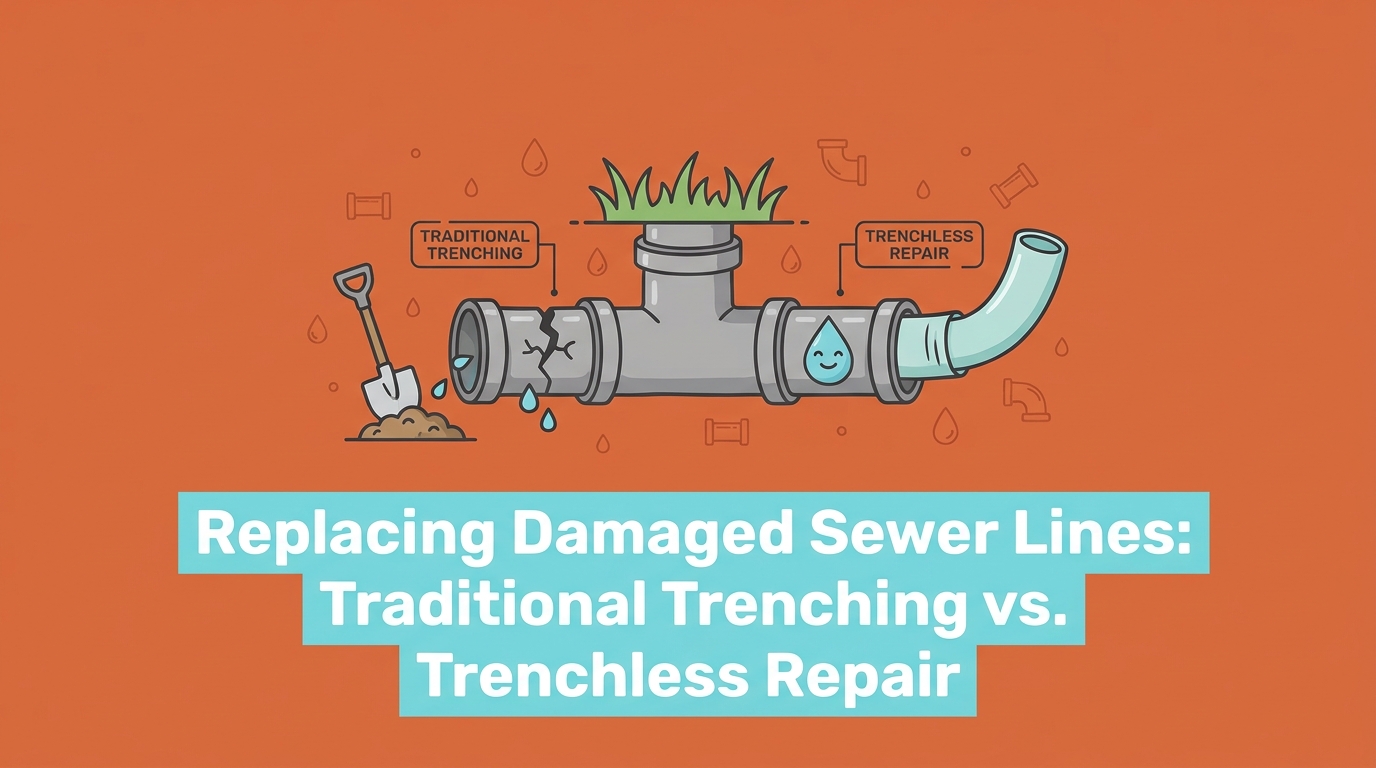
The central decision you have to make involves weighing two very different approaches. On one hand, you have the landscape disruption of digging a traditional trench to physically remove and replace the broken pipe. On the other hand, you have the specialized technical requirements of trenchless epoxy lining, which aims to fix the pipe from the inside out. Both methods have distinct advantages, but neither is a universal magic bullet for every situation.
Making this decision requires urgency, particularly as the seasons change. Homeowners who delay their evaluations often find themselves racing against the September pre-winter ground freeze, which can drastically complicate the repair process and limit available options. To accurately evaluate the extent of the structural damage and determine the most viable path forward, securing professional plumbing services is absolutely essential. An expert assessment from our team will lay out the facts, helping you navigate the complexities of sewer line repair and replacement before the harsh winter weather arrives.
How Mature Tree Roots Compromise Aging Sewer Systems
To understand which repair method is right for your home, you first need to understand exactly what is happening underground. Older homes, particularly those built before the 1980s, were frequently constructed using clay sewer pipes. While clay was a standard material for decades, it is highly susceptible to shifting soil, ground settling, and the natural degradation that occurs over half a century of constant use.
The Natural Process of Root Intrusion
The most common enemy of these aging clay pipes is the surrounding vegetation. Tree roots are naturally programmed to seek out sources of moisture, oxygen, and nutrients. When an aging clay pipe develops a microscopic hairline crack—often caused by normal soil movement—it releases a tiny amount of water vapor into the surrounding dirt. The root systems detect this vapor and grow directly toward the source. Once they reach the pipe, the roots force their way into the tiny cracks, expanding as they grow and eventually shattering the clay entirely.
In our years serving the community, our team has seen this become a particularly severe issue for Jacksonville IL properties with mature tree roots, where historic neighborhoods feature massive, established tree canopies. The root structures of these older trees are extensive and powerful, easily crushing weakened underground infrastructure.
Blockages vs. Structural Damage
It is important to clarify the difference between a simple, temporary blockage and permanent structural damage. If a pipe is structurally intact but clogged with grease, debris, or a minor buildup of organic matter, standard drain cleaning in Jacksonville is usually sufficient to clear the line and restore flow. However, once tree roots have physically breached and cracked the pipe, the structural integrity is compromised. Cleaning the drain will only provide temporary relief before the roots grow back or the pipe collapses entirely, mandating a full replacement.
This vulnerability is not limited exclusively to clay. Older properties also face unique challenges when replacing cast iron pipes in historic homes. Cast iron corrodes and scales from the inside out over decades, eventually developing jagged edges that catch debris and thin walls that crack under pressure, requiring the same careful evaluation as root-damaged clay.
Traditional Trenching: Process, Impact, and Timelines
For decades, traditional trenching was the only way to replace a failing underground pipe. Today, it remains a highly reliable, proven method, though it comes with significant physical impacts to the property. Understanding the realities of this process helps set accurate expectations for the project.
The Mechanics of Excavation
Traditional trenching involves using heavy earth-moving equipment—such as backhoes and mini-excavators—to dig a physical trench along the exact path of the damaged sewer line. The crew excavates the soil to expose the compromised pipe, removes the broken sections entirely, and installs a brand-new, modern PVC or ABS pipe in its place. Because the trench is completely open, technicians have unrestricted access to the entire system.
The Reality of Landscape Disruption
The primary drawback of this method is the immediate and often severe destruction of the property's surface. Depending on where the sewer line runs, trenching may require tearing up manicured lawns, destroying carefully planned hardscaping, breaking through concrete driveways, or removing patios. Furthermore, the use of heavy machinery can lead to the compaction of soil around mature trees, which can stress or damage the surrounding vegetation. For Jacksonville IL properties with mature tree roots, digging a trench often means cutting through the very root systems that caused the problem in the first place.
Speed, Reliability, and Proper Grading
Despite the visual chaos of an excavated yard, traditional trenching offers unmatched reliability. The primary benefit is that it allows for a complete, visually verifiable installation of brand-new pipes. Technicians can ensure the new line has the perfect downward slope (grading) for optimal gravity flow, and they can properly bed the pipe in gravel to prevent future sagging.
The fast turnaround: While the yard disruption is significant, the actual plumbing work is often highly efficient. For example, our team recently responded to a local homeowner whose sewer began backing up into the house, requiring a large portion of the line to be replaced. Our HRI Plumbing technicians had to dig up the yard to access the system—and even addressed a nicked water line during the process—but our experienced crew completed the entire replacement in less than a day, restoring full function to the home promptly.
Trenchless Epoxy Repair: Saving Your Landscaping
As an alternative to traditional digging, trenchless epoxy lining—often referred to as cured-in-place pipe (CIPP) lining—has become an increasingly popular solution for homeowners looking to preserve their property's surface. This method repairs the pipe from the inside out, avoiding the need for heavy excavation equipment.
The Mechanics of the "Pipe Within a Pipe"
Trenchless epoxy lining utilizes existing access points, such as a cleanout, to reach the damaged sewer line. The process begins with hydro-jetting to thoroughly clean the inside of the old pipe, removing all roots, scale, and debris. Once the host pipe is prepped, technicians insert a flexible, felt-like liner saturated with a specialized industrial epoxy resin. A bladder inside the liner is inflated, pressing the epoxy tightly against the inner walls of the old pipe. After the epoxy cures and hardens, the bladder is removed, leaving behind a smooth, structural "pipe within a pipe."
Long-Term Protection Against Root Intrusion
One of the most significant advantages of epoxy lining is its inherent resistance to future root attacks. Traditional pipes have joints every few feet, and those joints are the most common entry points for roots. A trenchless epoxy liner is completely seamless from end to end. Because there are no joints or microscopic gaps in the cured resin, tree roots have nowhere to enter. This makes the trenchless method highly effective for Jacksonville IL properties with mature tree roots, providing long-term peace of mind against recurring botanical invasions.
Preserving the Property Surface
The most celebrated benefit of trenchless repair is the preservation of your landscaping. Because the work is done entirely underground through small access points, it spares concrete driveways, custom patios, expensive retaining walls, and historic trees from excavation damage. Your yard remains largely untouched.
The technical trade-off: It is important to note that trenchless repair comes with higher upfront technical requirements. The process requires specialized diagnostic cameras, precise resin mixing, and sophisticated inversion equipment. It demands a highly trained crew to execute correctly, as the curing process must be closely monitored to ensure the new structural wall forms perfectly.
The Hard Truth: When Trenchless Repair Simply Won't Work
While preserving your lawn and driveway sounds ideal, trenchless epoxy lining is not a universal magic bullet. A transparent, educational cost-benefit analysis is crucial because pushing a trenchless solution on a structurally compromised pipe will only lead to future failures. At HRI Plumbing, our goal is to ensure you understand when trenchless is inappropriate rather than aggressively upselling it just because it sounds appealing.
Structural Conditions That Mandate Trenching
Trenchless lining requires a "host pipe" to hold the shape of the epoxy while it cures. If the original pipe is too severely damaged, the epoxy has nothing to mold against, making the trenchless method physically impossible. Traditional trenching becomes unavoidable in several specific scenarios:
• Completely collapsed pipes: If the weight of the soil has completely crushed the clay or cast iron, the pathway is blocked. A liner cannot be pushed through a collapsed section of pipe.
• Severe bellies (sags): Over time, ground settling can cause a pipe to sink in the middle, creating a "belly" where wastewater pools instead of draining. Epoxy lining follows the exact shape of the host pipe; it will simply create a newly lined belly that continues to pool water. Only traditional trenching can correct the physical slope and grading of the line.
• Massive joint offsets: If shifting soil has caused two sections of pipe to disconnect and shift completely out of alignment, a liner cannot bridge the massive gap while maintaining structural integrity.
• Total system failure: In cases where the entire plumbing infrastructure is degraded beyond repair, piecemeal fixes will fail. Comprehensive repiping services or full traditional replacements are the only structurally sound options.
In our routine inspections of Jacksonville IL properties with mature tree roots, we often find that roots have caused such catastrophic crushing damage to the clay pipes that the host pipe is no longer viable. In these cases, accepting the landscape disruption of traditional trenching is the only way to restore the home's sanitation system reliably.
The Climate Factor: Navigating Freeze-Thaw Cycles
When evaluating your options, the condition of your pipe is only half the equation; the time of year is equally critical. The regional climate plays a massive role in the viability, cost, and timeline of sewer line replacements.
The Stress of Shifting Soil
Working year-round in the area, our team knows firsthand how Central Illinois freeze-thaw cycles aggressively shift soil and crack aging infrastructure. During the winter, the moisture in the ground freezes and expands, putting immense pressure on underground pipes. When the ground thaws in the spring, the soil contracts and settles. This constant seasonal expansion and contraction forces older clay pipes to shift, bend, and eventually snap. If your pipes already have minor root damage in the fall, the stress of the upcoming winter freeze is highly likely to turn that minor damage into a total collapse.
The Urgent Fall Timeline
Because of these climate factors, the September pre-winter ground freeze timeline is critical for homeowners. Once the ground freezes solid in the late fall and winter, excavating the soil becomes exponentially more difficult. Digging through frozen earth requires heavier equipment, takes significantly longer, and causes much more aggressive disruption to the dormant landscaping.
We strongly advise homeowners that delaying a decision until winter can severely limit their options. If a pipe collapses in January, traditional trenching through frozen ground may be the only choice, and the project will be vastly more difficult than it would have been in early autumn. Proactive video inspections in early fall provide the best window for repair, ensuring that both trenchless and traditional methods remain viable options on the table.
Side-by-Side Comparison: Weighing Your Options
To make the best decision for your home, it helps to view the pros and cons of both methods objectively. The following comparison breaks down the key factors you must consider before the September pre-winter ground freeze sets in.
• Landscape Impact — Traditional Trenching: High destruction. Requires digging up lawns, driveways, and hardscaping. — Trenchless Epoxy Lining: Minimal disruption. Uses existing access points to preserve the surface.
• Technical Viability — Traditional Trenching: Works on all pipes, including fully collapsed lines and severe sags. — Trenchless Epoxy Lining: Requires an intact host pipe; cannot fix collapsed lines or correct grading.
• Root Resistance — Traditional Trenching: Vulnerable at the new pipe joints if not sealed and bedded perfectly. — Trenchless Epoxy Lining: Highly resistant. The seamless epoxy barrier prevents future root intrusion.
• Weather Sensitivity — Traditional Trenching: Severely impacted by frozen ground; winter digging is highly difficult. — Trenchless Epoxy Lining: Less impacted by surface freezes, as the work happens entirely underground.


Making the Right Choice for Your Property's Future
Ultimately, the right choice between traditional trenching and trenchless epoxy repair depends entirely on the specific condition of your underground pipes and the layout of your property's landscaping. If your host pipe is structurally sound, trenchless technology offers an incredible way to save your driveway and historic trees. If the line has collapsed or lost its proper grading, traditional trenching remains the most reliable way to restore your home's sanitation system.
The most important takeaway is to act proactively. Reaching a decision before the September pre-winter ground freeze ensures that you keep all of your options on the table and avoid the complications of emergency winter excavations. Do not rely on guesswork to determine which method you need. We encourage you to seek an objective, camera-guided evaluation of your sewer line today. Reach out to the HRI Plumbing team to schedule a professional inspection and get a clear, honest assessment of your property's plumbing needs.
Frequently Asked Questions
What are the disadvantages of trenchless sewer repair?
The primary disadvantage of trenchless sewer repair is that it cannot fix pipes that have completely collapsed or lost their downward slope. Because the epoxy liner molds to the existing pipe, it will simply recreate any severe sags or bellies that are already present. Additionally, the process requires highly specialized equipment and trained technicians, meaning it cannot be performed by every standard plumbing crew.
Is trenchless pipe lining right for root damage?
Yes, trenchless pipe lining is highly effective for root damage, provided the roots have not completely crushed the pipe. The hydro-jetting process clears the existing roots, and the seamless epoxy liner creates a solid structural barrier that prevents roots from re-entering the system. Because there are no joints in a trenchless liner, roots have nowhere to penetrate in the future.
How does cold weather affect sewer line replacement?
Cold weather severely impacts traditional sewer line replacement because frozen ground is incredibly difficult to excavate. Digging through a hard winter freeze requires heavier machinery, takes much more time, and causes greater disruption to the surrounding dormant landscape. Trenchless repair is slightly less affected by surface freezes, but extreme cold can still impact how the epoxy resin cures underground.
Can all sewer lines be repaired without trenching?
No, not all sewer lines can be repaired without trenching. If a pipe has suffered a massive joint offset, has completely caved in under the weight of the soil, or has a severe belly where water pools, trenchless lining is physically impossible. In those specific scenarios, traditional trenching is the only structurally sound way to remove the broken section and restore proper gravity flow.
How long does traditional sewer trenching usually take?
While the timeline varies based on the length and depth of the pipe, experienced professionals can often complete large portions of a traditional sewer replacement in less than a day. The excavation itself is usually rapid with the right heavy equipment. However, restoring the landscaping, repaving driveways, or fixing hardscaping after the trench is filled in will add additional time to the overall property recovery.
Will epoxy pipe lining prevent future tree root intrusion?
Yes, epoxy pipe lining is one of the most effective ways to prevent future tree root intrusion. Traditional pipes are most vulnerable at their connection joints, where microscopic gaps allow moisture to escape and attract roots. An epoxy liner cures into a single, seamless pipe from end to end, eliminating the joints and creating a smooth, impenetrable barrier against root growth.


