



The Late-Summer Threat Beneath Historic Jacksonville Lawns
If you are navigating cast iron pipe replacements in historic Jacksonville homes, you already know the unique stress of balancing modern plumbing functionality with the preservation of your century-old property. At HRI Plumbing, our team frequently sees these issues start with a slow drain, but before you know it, a sudden sewer backup threatens your lower level right as you are gearing up for the back-to-school transition. In our experience, the primary anxiety for homeowners isn't just fixing the pipes—it is the fear of heavy machinery destroying the beautiful, mature landscaping that gives your neighborhood its historic charm.
When you are facing these stressful late-summer breakdowns, securing reliable plumbing services is the first step toward protecting your home. Our professional technicians can accurately diagnose the underground damage and execute a seamless sewer line repair and replacement with minimal disruption to your daily life and your yard.
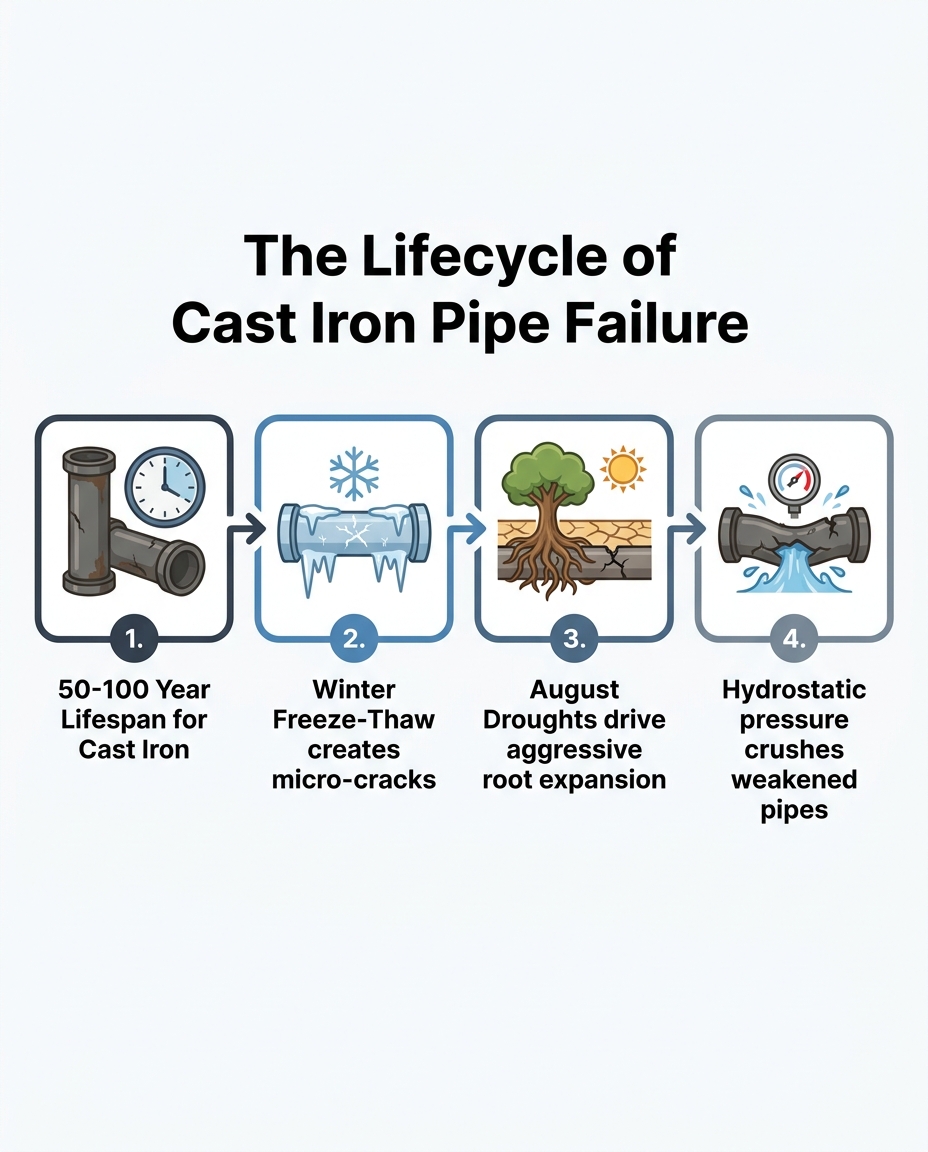
Most historic homes in the area were built with cast iron plumbing systems. While cast iron was the gold standard for durability a century ago, these pipes were only designed to last 50 to 100 years. Today, they are reaching the end of their structural lifespan. The metal is corroding from the inside out, thinning the pipe walls and creating vulnerabilities. This decay is bad enough on its own, but the situation rapidly escalates during late-summer dry conditions driving root intrusion. As August heat bakes the soil, thirsty tree roots seek out any available moisture, and the condensation or minor leaks from your aging cast iron pipes become an irresistible target. We see this exact scenario play out across Central Illinois every late summer.
Homeowners in older neighborhoods often face sudden, severe sewer backups right as the summer peaks. The combination of failing infrastructure and aggressive vegetation creates a perfect storm beneath your lawn. Fortunately, our plumbing teams use advanced diagnostic tools like high-definition sewer cameras to pinpoint the exact location of the failure. By identifying the problem without digging blindly, our experts can formulate a replacement plan that respects your property's heritage while completely resolving the underlying plumbing crisis.
How Central Illinois Weather Accelerates Cast Iron Decay
The lifespan of cast iron is significantly impacted by regional weather patterns over decades. While these pipes might last longer in mild, stable climates, we always remind our customers that Central Illinois presents a uniquely harsh environment for underground metal infrastructure. The constant environmental stress slowly degrades the structural integrity of the pipe, setting the stage for catastrophic failure.
The Freeze-Thaw Vulnerability
During our harsh winters, the ground freezes and thaws repeatedly. This process, known as frost heave, causes the soil surrounding your pipes to shift, expand, and contract. Over decades, this relentless ground movement exerts uneven pressure on the rigid cast iron. Because old cast iron is brittle rather than flexible, this shifting weakens the belly of the pipe. Eventually, micro-fissures and hairline cracks develop along the bottom and joints of the sewer line. Once compromised, these tiny openings allow raw sewage and moisture to seep into the surrounding yard, creating an invisible environmental hazard right below your grass.
The August Drought Trigger
The damage caused in the winter often remains hidden until the late summer. During August droughts, the lack of natural rainfall causes the soil to dry out and shrink. Vegetation becomes desperate for water, driving root systems deeper into the ground. These roots easily detect the moisture and nutrient-rich environment leaking from the micro-fissures created during the winter. What started as a microscopic winter crack is suddenly forced open by aggressive, thirsty roots, transforming a minor vulnerability into a major sewer blockage.

The Battle Between Mature Trees and Aging Sewer Lines
Historic properties feature massive, established trees whose root systems stretch far beyond their visible canopies. The beautiful oaks and elms that line historic Jacksonville IL properties have root structures that can extend two to three times the width of their branches. When these expansive root systems encounter a leaking cast iron pipe, the resulting battle is one the pipe will always lose.
Roots exert tremendous hydrostatic pressure as they grow. Once a tiny root tip enters a fissure in the cast iron, it feeds on the continuous supply of water and nutrients inside the sewer line. The root rapidly expands, acting like a wedge that easily crushes the already weakened metal. As the root mass grows, it forms a dense net that catches toilet paper, grease, and waste, eventually causing a complete blockage.
When drains begin to slow down, homeowners often attempt quick fixes to restore flow. Plunging, using consumer-grade drain snakes, or pouring liquid drain clearers down the sink might offer temporary relief, but we strongly caution against this because these methods completely ignore the structural collapse happening in the yard. In fact, relying on harsh chemicals to clear these roots is incredibly dangerous for older systems. The acidic nature of these products accelerates the decay of the remaining metal, eating away at the cast iron and turning a partial crack into a fully collapsed pipe. If you want to understand more about this risk, it helps to learn why chemical cleaners are dangerous for older plumbing.
• Chemical Drain Cleaners — Impact on Cast Iron Pipes: Corrodes weakened metal, creates chemical heat that warps joints. — Long-Term Result: Accelerates pipe collapse; roots return quickly.
• Mechanical Cabling (Augering) — Impact on Cast Iron Pipes: Cuts roots temporarily but can scrape and damage brittle pipe walls. — Long-Term Result: Restores flow temporarily; roots regrow thicker within months.
• Professional Replacement — Impact on Cast Iron Pipes: Removes the compromised cast iron and replaces it with root-proof materials. — Long-Term Result: Permanent solution; protects home from future backups.
Warning Signs Your Cast Iron System is Failing
Because your sewer line is buried underground, cast iron failure is rarely visible until a major backup occurs. However, our team points out that the system usually provides subtle clues that structural issues are developing. Helping you identify these symptoms early can prevent catastrophic property damage. Keep an eye out for these specific warning signs in your historic home:
• Frequent, unexplained backups in lower-level drains: If the drains in your basement or ground floor are constantly backing up, the main sewer line is likely restricted. Because water seeks the lowest point, ground-level fixtures are always the first to overflow.
• Unusually lush patches of grass: If you notice bright green, rapidly growing patches of grass in your yard during dry August weeks, it is a strong indicator that raw sewage is leaking into the soil and acting as a high-nitrogen fertilizer.
• Gurgling sounds from toilets: When you run the washing machine or take a shower and hear your toilet gurgling, it means air is trapped in the plumbing system due to a blockage in the main line.
• Persistent foul odors: Sewer gas escaping from cracked pipes can seep through the soil or foundation. If you notice a persistent rotten egg smell indoors or near the exterior foundation, your cast iron is likely compromised.
• Slow draining across multiple fixtures: A single slow sink is usually a localized clog. If your tub, toilet, and kitchen sink are all draining sluggishly at the same time, the main cast iron line is failing.
Strategic Trenching: Protecting Century-Old Landscaping
Replacing a sewer line does not have to mean clear-cutting your historic property's landscaping. The primary fear we hear from homeowners in older neighborhoods is that a plumbing crew will roll in with heavy machinery and destroy gardens, walkways, and century-old trees that have been carefully maintained for generations. Fortunately, modern plumbing practices have evolved significantly to address these exact concerns.
Specialized excavation planning routes trenches carefully around the critical root zones of mature oaks and elms. By using our specialized local expertise in historic home plumbing systems and careful trenching techniques that respect and preserve 100-year-old neighborhood landscaping, our professionals can map out the safest path for the new pipe. This strategic approach ensures the structural stability of the large trees while still allowing access to the failed sewer line.
One local homeowner reached out to us at HRI Plumbing during an August heatwave when their sewer began backing up into the house, and the city also required a water line replacement due to outdated galvanization. The situation seemed overwhelming, but our plumbing team arrived, carefully dug the required areas of the yard, replaced a large portion of the sewer line along with the water line, and had the entire job completed in less than a day. By minimizing the time the yard was disturbed and managing the site carefully, we preserved the property's aesthetic and resolved the massive headache swiftly.
Modern equipment and careful site management ensure that the historic aesthetic of the property is preserved after the dig. We use precise excavation tools that limit the width and depth of the trench to exactly what is needed, rather than tearing up the entire lawn. Once the new pipe is laid, the soil is carefully backfilled and compacted to prevent future settling, leaving your historic yard ready to recover quickly.
Modern Materials for Historic Home Upgrades
Once our team removes the failing cast iron, it is replaced with durable, root-resistant modern piping, typically high-grade PVC (polyvinyl chloride) or ABS (acrylonitrile butadiene styrene). These modern plastics represent a massive upgrade over century-old metal, offering superior performance and longevity specifically designed to combat the issues that destroyed your original system.
These modern materials feature seamless or tightly glued joints that completely eliminate the entry points roots exploit. Unlike old cast iron, which relied on lead and oakum joints that degrade over time, modern PVC joints are chemically welded together. This creates a continuous, watertight seal that even the most aggressive August tree roots cannot penetrate.
Additionally, the interior walls of new plastic pipes are incredibly smooth. Cast iron is naturally porous and develops heavy scale buildup over decades. This rough interior catches debris, leading to frequent clogs. The smooth interior of modern piping ensures waste flows freely, drastically reducing the chances of everyday blockages.
In some historic homes, upgrading the exterior sewer line also reveals the need for interior modernization. Once the main line is flowing perfectly, the increased water pressure and flow dynamics can expose weaknesses in the aging indoor supply lines. In these cases, a complete plumbing overhaul, including whole-home repiping, may be necessary to fully modernize the system and protect the historic structure from hidden indoor leaks.
Navigating Local Requirements and Permitting
Major excavations require strict adherence to local municipal codes and utility marking procedures. You cannot simply start digging in a historic neighborhood. Before a single shovel hits the dirt, our professional plumbing teams coordinate with J.U.L.I.E. (Joint Utility Locating Information for Excavators) to mark all underground gas, electric, and communication lines. This critical safety step prevents dangerous utility strikes during the trenching process.
Historic districts may have additional guidelines regarding property modifications, street access, and sidewalk disruption. Municipalities often require specific permits for sewer replacements to ensure the new connection to the city main meets modern environmental and sanitary standards. Navigating this red tape can be overwhelming for a homeowner.
Working with experienced Jacksonville plumbers like our crew at HRI Plumbing ensures all permits are pulled correctly and inspections are passed seamlessly. We handle the bureaucratic heavy lifting, scheduling municipal inspectors to review the open trench and sign off on the work before it is buried. Proper documentation of the replacement not only guarantees the safety of the installation but also protects the property's historical value and satisfies future real estate disclosures if you ever decide to sell the home.
Frequently Asked Questions About Cast Iron Pipe Replacement
Why do tree roots invade cast iron pipes?
Tree roots invade cast iron pipes because they are naturally drawn to moisture, oxygen, and nutrients. As older pipes shift and develop micro-cracks, they leak warm, nutrient-rich water into the soil. During dry spells, thirsty roots actively seek out these leaks, penetrating the small cracks and expanding until they crush the weakened metal.
How long do cast iron sewer pipes last in older homes?
Cast iron sewer pipes typically last between 50 and 100 years, depending on soil conditions and usage. Most historic homes built before the 1970s are currently operating on borrowed time. In the historic Jacksonville homes we service, if the property still has its original cast iron plumbing, our camera inspections almost always reveal severe scaling, thinning walls, and brittle joints.
Can cast iron sewer pipes be lined or repaired instead of replaced?
In some cases, minimally degraded cast iron can be lined, but severe structural failure requires full replacement. If the pipe has already collapsed, lost its structural integrity, or been crushed by massive tree roots, a liner cannot be installed. A professional camera inspection is required to determine if the pipe is a candidate for repair or if strategic excavation is necessary.
How do you replace sewer lines without ruining the yard?
Sewer lines are replaced safely using strategic trenching methods and careful site mapping. Our professionals identify the exact location of the pipe and the critical root zones of large trees, excavating only what is absolutely necessary. By keeping the trench footprint small and carefully managing the backfill process, the impact on mature landscaping is kept to a minimum.
Are late-summer sewer backups normal for historic homes?
Late-summer sewer backups are unfortunately common in older properties due to seasonal drought conditions. When August heat dries out the soil, tree roots become highly aggressive in their search for water, often breaching vulnerable cast iron pipes. Regular maintenance and professional inspections before the dry season can help mitigate these sudden emergencies.
Preserve Your Historic Property with Expert Sewer Solutions
Don't let a late-summer sewer backup ruin your historic property's landscaping or threaten your home's foundation. If you are experiencing slow drains, foul odors, or sudden blockages, an expert evaluation from HRI Plumbing can determine the exact condition of your aging cast iron pipes. Schedule a consultation today to discuss safe, landscape-preserving replacement options that respect your property and provide lasting peace of mind.


