



Why Your Kitchen Sink Smells Like Summer Cookout Leftovers
September is here, but eliminating lingering odors from your garbage disposal after summer cookouts remains a daily, frustrating battle for many homeowners. At HRI Plumbing, our team fields calls every early fall from residents who run the tap, grind a handful of ice, and maybe even squirt extra lemon-scented dish soap down the drain, yet that foul, rotting smell refuses to leave their kitchens. The problem we typically see is that basic rinsing only addresses the visible surface of the sink basin. The heavy rotation of late-summer barbecues leaves behind thick grease, fibrous vegetable scraps, and hidden food particles that stick like glue to the internal components of your sink's plumbing.
When you are dealing with persistent sink smells, the decision point comes down to safely deep-cleaning the hidden disposal mechanisms rather than simply masking the odor with temporary air fresheners or scented sprays. Finding the right plumbing services or knowing exactly when it is time to schedule a professional garbage disposal repair is crucial for keeping your kitchen hygienic as we transition into early fall.
How Late Summer Heat Accelerates Garbage Disposal Odors
The dark, damp environment inside a grinding chamber already provides a perfect breeding ground for bacteria on a normal day. When you factor in the specific type of food waste generated during late-summer gatherings, the conditions for foul smells multiply rapidly. Fibrous summer vegetables like corn husks, celery strings, and watermelon rinds, along with heavy grease from grilled meats, easily stick to the internal impellers and walls of the unit instead of flushing away cleanly.
In Jacksonville IL area homes, our plumbers know firsthand how the regional climate plays a surprisingly large role in how quickly these odors develop. The late summer heat and humidity in Central Illinois accelerate the biological breakdown of food waste stuck inside the disposal. Higher ambient temperatures speed up the decomposition process, making the resulting odors much more noticeable and pungent by the time September rolls around.
Understanding the Cookout Waste Impact:
To see why summer waste causes such stubborn smells, it helps to look at how different materials behave inside the warm, humid environment of your grinding chamber.
• Cooked meat scraps and hamburger grease — How It Behaves in the Disposal: Coats the chamber walls and hardens as it cools, trapping other incoming debris. — Odor Risk Level: High (Rancid, sour smell)
• Fibrous vegetables (corn husks, onion skins) — How It Behaves in the Disposal: Wraps tightly around the grinding impellers, avoiding being flushed away by water. — Odor Risk Level: High (Rotting vegetation smell)
• Soft fruits and bread crusts — How It Behaves in the Disposal: Grinds easily and flushes down the drain line with adequate water flow. — Odor Risk Level: Low (Flushes cleanly)
When sticky, fibrous debris remains trapped in a warm, humid sink environment, odor-causing bacteria multiply exponentially. This is the exact reason why a faint, barely noticeable scent in August can transform into an overwhelming stench by early fall.
The Hidden Trap: Why Food Rots Under the Splash Guard
Most homeowners focus their cleaning efforts on the visible metal bottom of the sink or the deep interior of the grinding chamber itself. However, when our technicians inspect smelly sinks, we find that the most common culprit for persistent odors sits just out of sight, right at the opening of the drain.
Anatomy of a Smelly Splash Guard
The rubber baffle, commonly known as the splash guard, sits at the very top of the disposal unit. Its primary job is to prevent food particles and dirty water from shooting back up into the sink basin while the blades are spinning at high speeds. Because of its functional design, it is also a massive magnet for rotting food.
• Underside grooves that trap organic matter: The bottom of the splash guard features deep folds, flaps, and crevices. When you push leftover burgers or oily marinades down the drain, grease and small food particles splash upward and cling to these hidden rubber grooves.
• Lack of direct water flow during normal operation: Normal water flow from your kitchen faucet drops straight down through the center hole of the baffle. It rarely washes the underside of the rubber flaps. Because the water bypasses this specific area, the trapped organic matter sits undisturbed, rotting over days and weeks.
• Deterioration of rubber over time: As the rubber baffle ages and is exposed to various food acids, it becomes stiff, brittle, and porous. These micro-cracks make the rubber even harder to clean and provide microscopic pockets for odor-causing bacteria to take hold permanently.
This hidden buildup under the splash guard is the primary source of the rotting food smell that plagues so many kitchens after a season of heavy use. If you only pour cleaners straight down the center hole, you completely miss the thick layer of slime coating the underside of this guard, leaving the root cause of the odor entirely untouched.
Why Harsh Chemical Cleaners Make Disposal Problems Worse
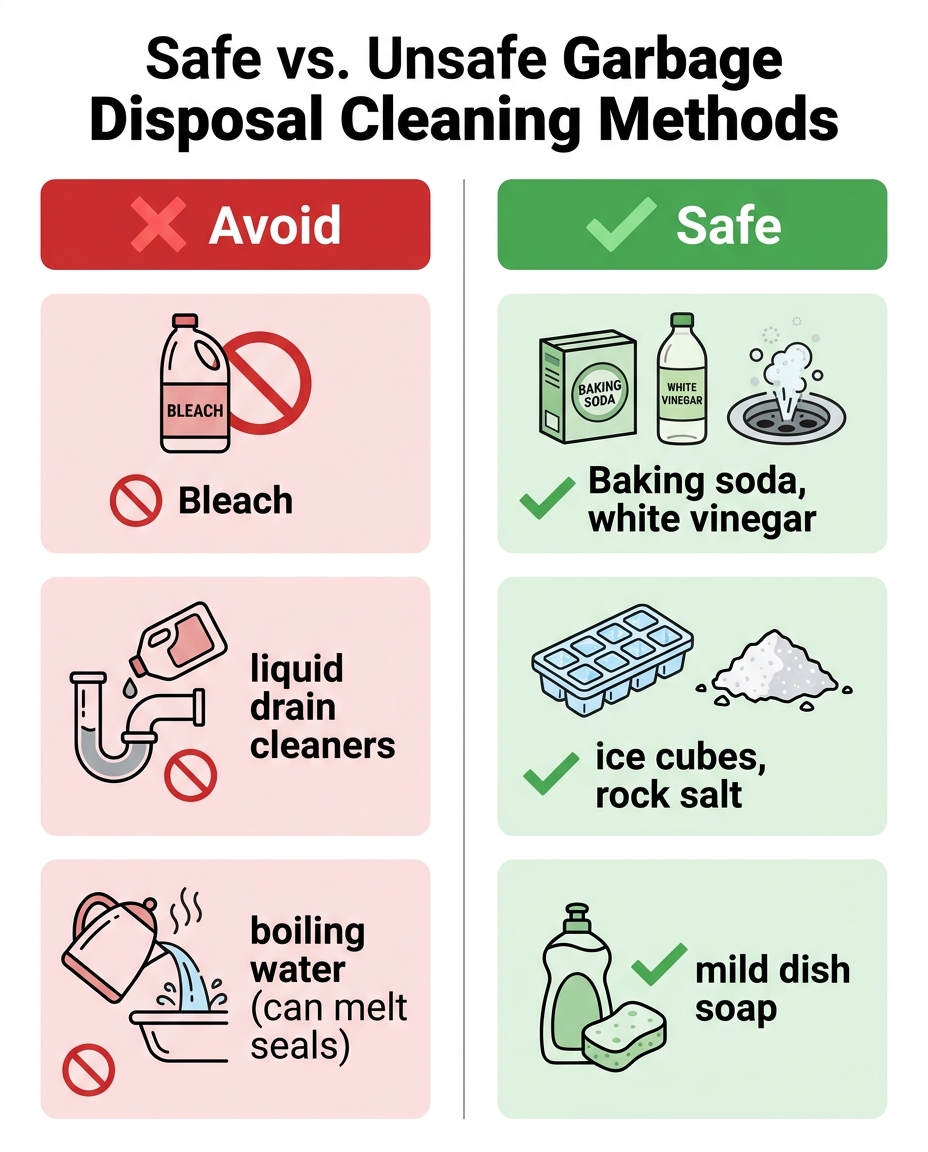
When faced with a terrible smell coming from the sink, the immediate reaction for many people is to reach for the strongest chemical stored under the counter. Pouring bleach or heavy-duty liquid drain cleaner into the disposal is a very common DIY approach, but it is also highly destructive to your home's plumbing system.
The false promise of chemical masking:
Bleach and commercial chemical cleaners often just mask the smell temporarily. They might kill some surface bacteria on contact, but they do not possess the mechanical force required to remove the physical layer of rotting food and grease stuck under the splash guard or wrapped around the impellers. As soon as the chemical scent fades away, the rotting food smell returns because the source material is still sitting right there in the drain.
Corrosion and severe plumbing damage:
Harsh chemicals are highly corrosive to the metal components inside the grinding chamber. Exposing the metal impellers, the grinding ring, and the internal seals to bleach can cause rapid rusting and degradation. Over time, this chemical exposure weakens the unit, leading to unexpected leaks beneath the sink or complete motor failure. Furthermore, these caustic liquids sit in your P-trap and can slowly eat away at older plumbing pipes, turning a simple odor issue into a major water leak.
Our team at HRI Plumbing strongly advises against using these corrosive products. Understanding when to call a professional drain service vs. using chemical cleaners is vital for protecting your home's infrastructure. In our years of repairing damaged pipes, we always recommend safe, mechanical, and natural cleaning methods over pouring toxic liquids into your kitchen sink.

Safe, Plumber-Approved Steps to Deep-Clean the Splash Guard
To truly eliminate the odors left behind by summer cookouts, you have to physically remove the slime and food particles trapped under the rubber baffle. This process requires a bit of manual scrubbing, but it is completely safe for your plumbing when done correctly.
1. Disconnect the power completely: Safety always comes first. Before your hands or any tools get anywhere near the drain opening, ensure the disposal is completely disconnected from power. Unplug the unit from the wall outlet under the sink, or flip the dedicated breaker at your main electrical panel. Test the wall switch to confirm the unit will absolutely not turn on.
2. Prepare a safe cleaning solution: Skip the harsh chemicals entirely. Instead, use a dedicated kitchen sponge or an old toothbrush dipped in warm, soapy water. For tougher, baked-on grease buildup, create a thick paste using baking soda and a small amount of water. Baking soda acts as a mild, safe abrasive that neutralizes odors without scratching or degrading the rubber.
3. Scrub the underside of the flaps: Lift each flap of the rubber baffle upward one by one. You will likely see a thick, dark layer of slime and grease clinging to the bottom. Use your toothbrush or sponge to scrub the underside thoroughly. Work your way around the entire circumference of the splash guard until all the hidden organic matter is dislodged. You can use a small flashlight to inspect your work and ensure no hidden pockets of grease remain.
4. Rinse thoroughly with hot water: Once you have scrubbed away the buildup and wiped the area clean, turn the power back on. Run hot water down the drain and turn on the disposal for a few seconds to wash away the dislodged debris and flush the system completely.
Performing this deep clean once a month, especially during the transition into early fall, will prevent the majority of foul sink odors from taking root in your kitchen.
Natural Methods to Deodorize the Grinding Chamber
Once the splash guard is clean, you can focus your attention on the internal grinding components. Because you cannot safely reach your hand inside the chamber, you must use methods that naturally scour the walls and impellers without risking damage to the unit.
1. The ice and rock salt method: Fill the disposal with a few cups of standard ice cubes and pour in a half-cup of coarse rock salt. Turn on the cold water tap and run the unit. The hard, abrasive action of the ice and salt safely scours the metal blades and grinding ring, knocking loose stubborn, fibrous food bits that survived the summer. As the ice melts, it flushes the debris away harmlessly down the drain.
2. The baking soda and vinegar reaction: Pour half a cup of baking soda directly into the drain opening, followed immediately by a cup of white vinegar. Let the bubbling mixture sit for ten to fifteen minutes. The chemical reaction creates a safe, expanding foam that reaches high up onto the chamber walls, helping to dislodge remaining grease and microscopic particles. Flush the drain with warm water afterward to clear the foam.
3. Using citrus peels for a fresh scent: Lemon, lime, or orange peels contain natural citric oils that provide a clean, fresh scent while helping to cut through mild grease. However, they must be used carefully to avoid causing a jam. Cut the peels into very small pieces and feed them into the drain slowly while the unit is running. Dropping large halves of a lemon into the chamber can easily jam the impellers and trigger the unit's reset switch.
4. Always flush with cold water during operation: Whether you are grinding food after dinner or running a cleaning cycle, always run cold water during and after the process. Cold water keeps fats and greases in a solid state, allowing the impellers to chop them up and flush them down the drain line. Hot water melts grease, which can then coat the pipes further down the line, solidify as it cools, and cause deep clogs.
When a Smelly Disposal is Actually a Deeper Drain Clog
Sometimes, you can scrub the splash guard until it looks brand new, run ice and salt through the chamber, and the foul odor still refuses to leave your kitchen. If odors persist after thoroughly cleaning the accessible components, the issue likely lies deeper in the kitchen sink drain lines.
Signs you are dealing with a deep clog:
A smelly disposal is often just the first symptom of a much larger drainage problem. If you notice water draining slowly from the sink basin, hear hollow gurgling sounds coming from the drain when the dishwasher runs, or detect an odor that smells more like raw sewage than rotting food, you have a blockage further down the pipe. Over the summer, heavy grease and un-ground food particles can travel past the disposal unit and settle in the P-trap or the main branch line of your home.
When DIY cleaning isn't enough, professional, reliable plumbing experts can safely diagnose and resolve deep-seated kitchen drain and disposal issues. Attempting to snake the drain blindly with a wire hanger or a rented mechanical auger can permanently damage your pipes or simply push the compacted clog deeper into the plumbing system.
One typical pattern our HRI Plumbing crew sees in the fall involves homeowners dealing with general plumbing needs that seem simple on the surface but require expert attention to fully resolve. For instance, when one of our technicians visits a Jacksonville home to address a stubborn sink plumbing issue, we take the time to thoroughly explain the situation, outline the transparent options, and ensure the homeowner receives helpful, straightforward service without any guesswork.
Resolving these deep-seated blockages often requires specialized kitchen sink drain services to clear the line completely and protect the long-term health of your entire plumbing system.
Frequently Asked Questions About Garbage Disposal Odors
How do I clean the rubber splash guard on my garbage disposal?
The safest way to clean the rubber splash guard is to disconnect the power, lift the rubber flaps, and scrub the underside with an old toothbrush and warm, soapy water. The underside of the splash guard features deep grooves that trap grease and rotting food particles, which normal water flow cannot reach. For tough, sticky buildup, you can use a paste made of baking soda and water to gently scour the rubber without damaging it. Always ensure the power is completely off before placing your hands near the drain opening.
Why does my garbage disposal smell worse in the late summer?
Garbage disposals smell worse in late summer because the combination of high ambient heat and humidity creates an ideal breeding ground for bacteria inside the dark, damp grinding chamber. Additionally, summer cookouts introduce heavy grease and fibrous vegetable scraps, like corn husks, which easily stick to the impellers. As these trapped food particles sit in the warm environment, they decompose much faster, leading to a pungent, rotting odor by the time early fall arrives.
Are chemical drain cleaners safe for garbage disposals?
No, chemical drain cleaners and pure bleach are not safe for garbage disposals or your surrounding plumbing pipes. These harsh, caustic chemicals can quickly corrode the metal impellers and degrade the rubber seals inside the grinding chamber, leading to leaks and premature motor failure. Furthermore, chemical cleaners often only mask the odor temporarily without actually removing the physical food buildup that is causing the smell in the first place.
Why does my garbage disposal smell like rotting food?
Your garbage disposal smells like rotting food because organic matter is physically trapped inside the unit and actively decomposing. The most common hiding spots for this debris are the underside of the rubber splash guard and the internal grinding ring, where grease and fibrous scraps cling to the metal. If you only run water down the center of the drain, this hidden buildup remains untouched and continues to rot over time.
How do I get rid of a lingering smell in my sink?
To eliminate a lingering smell in your sink, you must manually clean the underside of the rubber splash guard and then deodorize the internal grinding chamber using natural methods. Scrubbing the rubber baffle with a toothbrush removes the primary source of the slime, while grinding ice cubes and rock salt helps scour the internal metal impellers. Following up with a baking soda and vinegar flush will help neutralize any remaining odors safely.
Can fibrous summer vegetables permanently damage my disposal blades?
Yes, fibrous summer vegetables like corn husks, artichoke leaves, and celery strings can cause significant issues for your disposal if processed in large quantities. The tough, stringy fibers do not grind easily; instead, they wrap tightly around the impellers, which can jam the motor and cause the unit to overheat. Over time, recurring jams and the strain on the motor can lead to permanent mechanical failure, requiring a full replacement of the unit.
Restore a Fresh-Smelling Kitchen Before Fall Arrives
Eliminating lingering odors from your garbage disposal after summer cookouts comes down to clear, safe, and non-corrosive cleaning of the splash guard and grinding chamber. Once you remove the hidden biological buildup, your kitchen will smell fresh and welcoming again. However, if you are dealing with persistent smells, slow drains, or unusual gurgling that DIY methods cannot fix, it is time to seek professional help to prevent larger plumbing emergencies. Reach out to our team at HRI Plumbing to schedule an inspection and professional drain cleaning today to ensure your sink handles the upcoming holiday season flawlessly.


