



The Frustrating Nuisance of a Hissing Bathroom Fixture
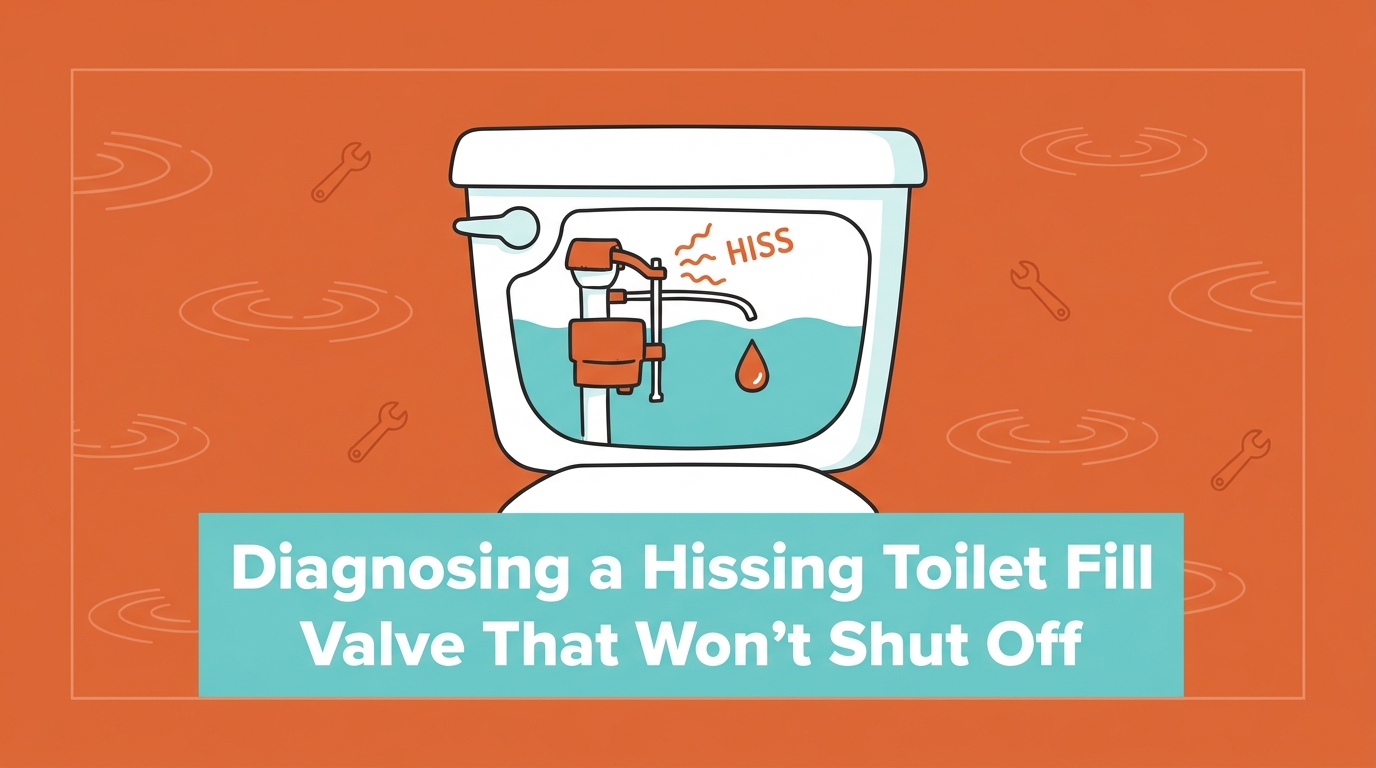
That constant, high-pitched noise coming from your bathroom isn't going to fix itself. Diagnosing a hissing toilet fill valve that won't shut off is a common challenge for homeowners, especially when jiggling the handle no longer stops the sound. A continuous hissing sound from the bathroom is more than just an auditory annoyance; it is a clear indicator of an internal water leak. The noise occurs when water continuously forces its way past a compromised barrier inside the tank, fighting against a seal that can no longer hold it back.
As our team at HRI Plumbing helps Jacksonville homeowners check items off their early fall home maintenance checklists, we always recommend tackling this plumbing nuisance now to prevent the issue from escalating into a costly winter surprise. Understanding the root cause is the first step toward a permanent solution. If you need professional plumbing services to assess the situation, or if you are ready to explore your options for toilet repair and installation, our local experts can guide you toward the right fix.
The Hidden Costs of Ignoring the Noise
In our years of serving Central Illinois, we've found that many homeowners assume that if water isn't pooling on the bathroom floor, a hissing toilet is just a harmless quirk of an aging fixture. This misconception leads to massive water waste. The hissing sound is the audible evidence of pressurized water escaping its designated boundaries. When the internal mechanisms fail to communicate properly, the tank never registers as "full," and the incoming water supply never completely shuts down. By taking the time to understand what is happening inside the tank, you empower yourself to make informed decisions about your home's plumbing health before a minor annoyance turns into a major utility expense.
Anatomy of the Standard Internal Float Cup Fill Valve
To understand why your toilet is hissing, you first need to understand how the internal components are designed to work. The fill valve is essentially the engine of the toilet tank. Its primary job is to refill the bowl and the tank with fresh water after every single flush, and just as importantly, to stop that flow of water at the precise moment the tank reaches its optimal capacity.
Most modern residential toilets use a specific type of mechanism to manage this process. A standard internal float cup fill valve uses a buoyant, O-shaped cup that travels vertically along a central plastic shank to measure water levels. Here is how the normal cycle is supposed to operate:
1. The Flush: When you press the handle, the flapper lifts, and the water empties into the bowl. The float cup drops to the bottom of the shank.
2. The Trigger: As the cup drops, it pulls down on a linkage arm connected to the top cap of the fill valve, opening the internal water supply line.
3. The Refill: Fresh water rushes into the tank. As the water level rises, the buoyant float cup rises along with it.
4. The Shut-Off: When the cup reaches the designated height, it pushes up on the linkage arm. This triggers an internal rubber seal inside the top cap to clamp down firmly over the water inlet, shutting off the water supply completely.
The Mechanics of the Hiss
The hissing sound specifically occurs when this internal seal fails to close completely. Think of what happens when you place your thumb over the end of a running garden hose. By restricting the flow of water without completely stopping it, you increase the velocity of the water squeezing through the narrow gap. This creates turbulence and a pressurized spray.
Inside your toilet tank, the exact same physics apply. When the rubber seal degrades, it cannot clamp down fully. High-pressure water from your home's supply line continuously squeezes through a tiny, compromised gap in the valve cap. A healthy, properly functioning fill valve provides a silent, definitive shut-off. A failing valve produces a continuous, pressurized spray that vibrates the plastic components, creating the distinct hissing noise you hear echoing down the hallway.
How Local Water Quality Accelerates Rubber Seal Degradation
Water supply characteristics play a massive role in the lifespan of internal plumbing components. The water flowing into your home is not just pure H2O; it carries dissolved minerals picked up from the earth. In Jacksonville IL and surrounding Central Illinois communities, hard water is a highly prevalent issue that directly impacts the longevity of your plumbing fixtures.
Hard water contains high concentrations of dissolved calcium and magnesium. While these minerals are completely safe for human consumption, our HRI Plumbing technicians see firsthand how incredibly destructive they are to the flexible components inside a toilet tank. As water constantly flows through the fill valve, these minerals begin to calcify on the rubber seals and the plastic shank. Central Illinois hard water deposits act as a slow, persistent abrasive on these internal tank components.
Over time, this mineral buildup fundamentally changes the chemical structure of the rubber. What starts as a soft, pliable gasket that easily molds itself over the water inlet slowly hardens into a brittle, inflexible disc. The rubber begins to crack, warp, and lose its watertight seal.
• Healthy Rubber Seal — Physical Characteristics: Soft, pliable, smooth surface — Impact on Fill Valve Performance: Creates a silent, watertight barrier; shuts off instantly.
• Early Stage Calcification — Physical Characteristics: Slight chalky film, slight stiffness — Impact on Fill Valve Performance: Slower shut-off; occasional brief hissing after a flush.
• Advanced Hard Water Damage — Physical Characteristics: Brittle, cracked, heavy white mineral crust — Impact on Fill Valve Performance: Cannot close completely; constant hissing; continuous water waste.
Because this degradation happens gradually, you might not notice the problem until the hissing becomes constant. Consulting a knowledgeable plumber in Jacksonville, IL ensures that these regional water quality factors are considered during diagnosis, rather than just treating the symptom.
Visual Diagnostic Steps: Finding the Source of the Leak
Homeowners can perform a careful visual audit of the tank to pinpoint the failure without dismantling any pressurized components. It is crucial to remember that taking apart a fill valve while the water supply is active can lead to severe indoor flooding. The goal here is strictly visual diagnosis to understand what is failing.
Follow these steps to safely inspect a standard internal float cup fill valve:
1. Remove the tank lid safely: Carefully lift the heavy porcelain lid and place it flat on a towel on the floor to prevent cracking.
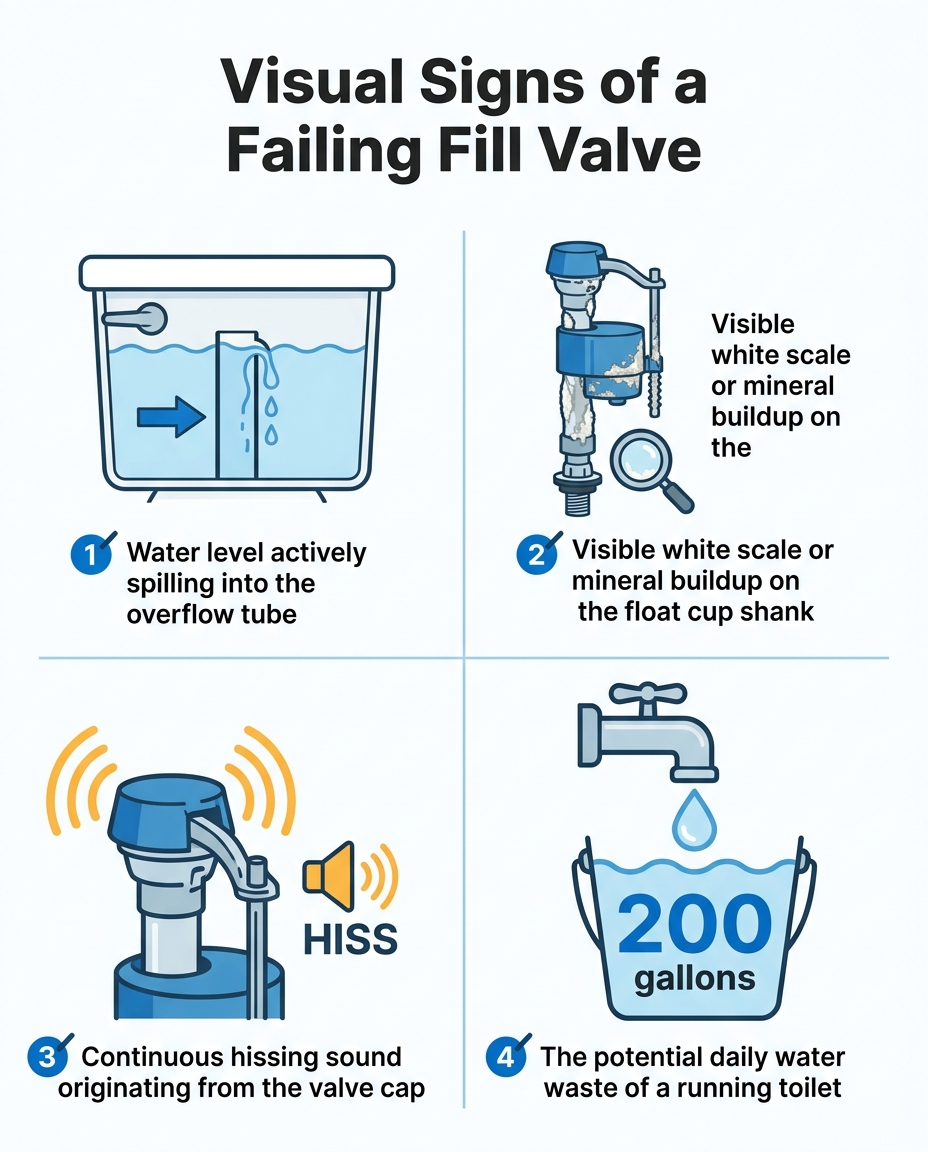
2. Check the water level relative to the overflow tube: Look at the tall, open plastic pipe in the center of the tank (the overflow tube). If water is actively spilling over the top and down into this tube, the fill valve is failing to shut off the water supply.
3. Inspect the float cup for obstructions: Look at the buoyant cup on the fill valve shank. Is it rubbing against the side of the tank? Is there heavy white mineral scale preventing it from sliding smoothly up the shank?
4. Listen closely to the top cap: Lean in and listen to where the hiss is originating. If the sound is coming directly from the top cap of the fill valve assembly, the internal seal is compromised.
Sometimes, a rapid professional diagnosis is the safest route to pinpoint the exact failure point. Recently, as homeowners began their pre-heating-season preparations, our HRI Plumbing team responded to a call for a constantly running fixture. One of our technicians arrived rapidly and determined the issue within minutes, identifying a heavily calcified fill valve that was bypassing the shut-off completely. This kind of fast, accurate assessment prevents you from wasting time on the wrong repairs. For example, many homeowners mistakenly assume the flapper is at fault, but understanding why replacing your toilet flapper might not stop a phantom flush is a key part of narrowing down the true source of the hiss.

Debris Clog vs. Permanent Seal Failure
When you identify that the hiss is coming from the top of the fill valve, you are typically dealing with one of two root causes: a temporary piece of debris lodged in the mechanism, or permanent material degradation of the rubber seal itself.
The Problem of Temporary Debris
If municipal water line work recently occurred in your neighborhood, or if fire hydrants were recently flushed, sediment and rust can be stirred up in the city mains. These tiny particles travel through your home's pipes and end up in the toilet tank. A single grain of sand or a flake of rust can lodge itself underneath the delicate rubber seal inside the valve cap, preventing it from closing flat. In these cases, the valve itself is still healthy, but it is being obstructed.
The Reality of Permanent Degradation
However, if the rubber seal has calcified, warped, and cracked due to years of exposure to hard water, the damage is completely irreversible. You cannot scrape the calcium off a brittle rubber seal and expect it to work again; the material has lost its essential elasticity. What might seem like a simple adjustment can often turn out to be a more severe degradation requiring a full assembly replacement.
We see this pattern frequently. Just this early fall, a customer reached out to our team about a plumbing problem that turned out to be worse than initially thought. They assumed a quick turn of a screwdriver would quiet the hiss, but the internal valve components were completely degraded by mineral buildup. Our technician patiently explained the extent of the issue and why a completely new fill valve assembly was the only reliable fix. Relying on trusted local expertise ensures that hidden leaks are diagnosed accurately, preventing unnecessary water waste and saving you from repeated DIY frustrations.
The Compounding Impact of Continuous Water Waste
A hissing toilet is incredibly deceptive. Because the water is safely contained within the tank and the bowl, and because it drains cleanly away into the sewer system, it doesn't feel like a plumbing emergency. There is no puddle on the floor to create a sense of panic. However, a hissing fixture is actively consuming water 24 hours a day, 7 days a week.
According to the EPA WaterSense program, a continuously running or hissing toilet can waste up to 200 gallons of water per day. To put that into perspective, that is the equivalent of dumping 40 five-gallon buckets of clean, treated drinking water straight down the drain every single day. The compounding effects of this silent waste are significant:
• Strained Well Systems: For homes operating on private wells, a continuous leak forces the well pump to cycle on and off constantly, accelerating mechanical wear and tear on expensive pump equipment.
• Inflated Utility Bills: For homes on municipal water, this continuous flow registers on the water meter round the clock, leading to shockingly high monthly utility bills.
• Septic System Overload: Sending an extra 200 gallons of clean water into a septic system daily can disrupt the bacterial balance and artificially flood the drain field.
Prompt leak detection repair stops the financial drain immediately. Addressing a hissing fill valve isn't just about restoring quiet to your bathroom; it is a critical step in conserving treated water resources and protecting your home's broader plumbing infrastructure from unnecessary strain.
Frequently Asked Questions About Hissing Toilets
Why is my toilet hissing but not leaking onto the floor?
The hissing sound is caused by an internal leak where water is escaping past the fill valve seal directly into the toilet tank. Because the tank is designed to hold water, and the overflow tube directs excess water safely into the bowl and down the drain, the leak remains entirely contained within the plumbing system. You will not see water on the floor unless the tank itself is cracked or the external supply line is compromised.
How do I know if my fill valve seal is bad?
You can usually tell the seal is bad if you hear a continuous hissing sound coming from the top cap of the fill valve, or if water is constantly spilling into the open overflow tube in the center of the tank. If you lift the float cup manually to its highest position and the water still does not shut off completely, the internal rubber seal has failed and can no longer hold back the incoming water pressure.
Does hard water damage toilet valves?
Yes, hard water is one of the leading causes of premature toilet valve failure. The high concentrations of calcium and magnesium in hard water calcify on the flexible rubber seals and plastic moving parts inside the tank. Over time, this mineral buildup causes the soft rubber to become brittle, warp, and crack, destroying its ability to create a watertight seal.
Can a hissing toilet increase my water bill?
A hissing toilet will absolutely cause a significant spike in your monthly water bill. Even a minor, continuous hiss means water is constantly flowing through your meter 24 hours a day. Depending on the severity of the internal leak, a failing fill valve can waste hundreds of gallons of water every single day, leading to unexpectedly high utility costs.
Is it safe to ignore a hissing toilet for a few weeks?
While a hissing toilet rarely poses an immediate risk of flooding your home, ignoring it is not recommended due to the massive amount of water being wasted. Letting it run for a few weeks will heavily inflate your next water bill and put unnecessary strain on your well pump or septic system. It is best to have the internal components diagnosed and replaced promptly to stop the financial drain.
Securing a Professional Diagnosis for Your Plumbing
Proper diagnosis of a hissing fill valve prevents inflated utility bills and ensures the long-term reliability of your bathroom fixtures. While visual inspections are incredibly helpful for understanding the scope of the problem, replacing internal pressurized tank components requires precision. Attempting to dismantle a fill valve without the proper experience can lead to cracked porcelain tanks or catastrophic indoor flooding if the main supply line is damaged in the process.
If you are tired of listening to that constant hiss and want to stop wasting hundreds of gallons of water, it is time to bring in professional help. Reach out to our team at HRI Plumbing to explore your toilet repair and installation options. By securing a clear, mechanical breakdown of why the part failed and relying on our professional replacement, you can restore complete quiet to your bathroom and trust that your plumbing is operating exactly as it should.


