




Navigating Fall Yard Prep Around Your Water Heater Exhaust
Here in Jacksonville, as our team at HRI Plumbing helps homeowners prepare for the cooler months, we always remind them that if your weekend plans involve trimming back overgrown summer bushes and clearing debris, understanding exterior clearance requirements for direct vent water heaters needs to be at the top of your autumn to-do list. During the peak growing season, shrubs, vines, and ornamental grasses can easily encroach on your home's exterior walls. By the time the September fall foliage drop begins, your water heater's exhaust vent might be completely hidden behind a wall of vegetation. While lush landscaping boosts your curb appeal, it can create a serious mechanical hazard for your gas appliances.
Many homeowners treat the plastic or metal pipes sticking out of their siding as an eyesore to be covered up. However, direct vent exhaust caps are critical safety components that require specific amounts of breathing room to function correctly. When you are standing in your yard with pruning shears in hand, the main decision you face is knowing exactly how far back to trim vegetation to maintain safe operation without ruining your garden's aesthetic. Cutting back a few stray branches is not enough; you need to establish a permanent, clear zone around the termination cap.
Ignoring these exterior clearances can lead to sudden system shutdowns, poor heating performance, and significant safety risks inside your home. Maintaining the proper space around your vents is one of the easiest ways to prevent unexpected needs for water heater repair and replacement during the colder months. While you should always rely on professional plumbing services for the mechanical setup, testing, and maintenance of the water heater itself, keeping the exterior landscaping in check is entirely up to you.
As you prepare your property for the changing seasons, taking a few extra minutes to inspect and clear the area around your exhaust vent ensures your system will run efficiently and safely all winter long. The rules are straightforward once you understand the mechanics behind them, and applying them to your weekend yard work is a simple but vital part of homeownership.
The Mechanics of Exhaust Gas Recirculation
The underlying problem: To understand why strict clearance rules exist, you have to look at how a direct vent system breathes. Unlike older atmospheric water heaters that draw combustion air from inside your basement and vent vertically through the roof, direct vent models handle everything horizontally through the wall. They use a specialized concentric pipe—essentially a pipe within a pipe. The outer ring pulls in fresh outdoor air for combustion, while the inner pipe pushes the toxic exhaust gases outside. This closed-loop system is highly efficient, but it relies on a clear, unobstructed path at the exterior wall.
The mechanical cause: When a bush, a dense pile of leaves, or a piece of patio furniture blocks that exterior cap, it disrupts the entire airflow cycle. The exhaust gases are pushed out of the inner pipe, but instead of dissipating safely into the open air, they hit the physical obstruction and bounce right back toward the house. Because the fresh air intake is located on the exact same pipe assembly, it ends up sucking those expelled exhaust gases back into the water heater. This phenomenon is known as exhaust gas recirculation.
The dangerous result: When a water heater breathes its own exhaust instead of fresh oxygen, the combustion process breaks down. The burner begins producing high levels of soot and, more importantly, carbon monoxide. If the recirculation continues, the system can overheat, stall, or potentially force dangerous gases back into your living space. This is a severe safety hazard that defeats the entire purpose of a sealed combustion system.
The practical solution: Maintaining a wide-open physical space around the vent allows exhaust plumes to disperse instantly into the atmosphere, ensuring the intake only draws in clean, fresh oxygen. This is a big part of how direct vent water heaters solve exhaust issues in older homes. As long as their exterior caps remain completely unobstructed, they provide a much safer and more reliable source of hot water than traditional drafting systems. Understanding this mechanical relationship transforms a simple landscaping chore into a vital household safety measure.
Translating Plumbing Codes to Your Landscaping Checklist
When our HRI Plumbing technicians look at the variety of Jacksonville IL residential exteriors, a pattern we see often is beautiful but overgrown landscaping encroaching on vital utility vents. Some homes feature raised garden beds, others have dense foundation plantings, and some have wide wrap-around porches. Regardless of your home's layout, the National Fuel Gas Code (NFPA 54) and local building regulations dictate exact measurements that must be maintained around your water heater vent. These are not just suggestions; they are the same strict safety standards required during gas line installation and appliance setups.
To make your weekend yard work effective, you need to translate these technical codes into a practical landscaping checklist. Here are the core clearance requirements you must follow:
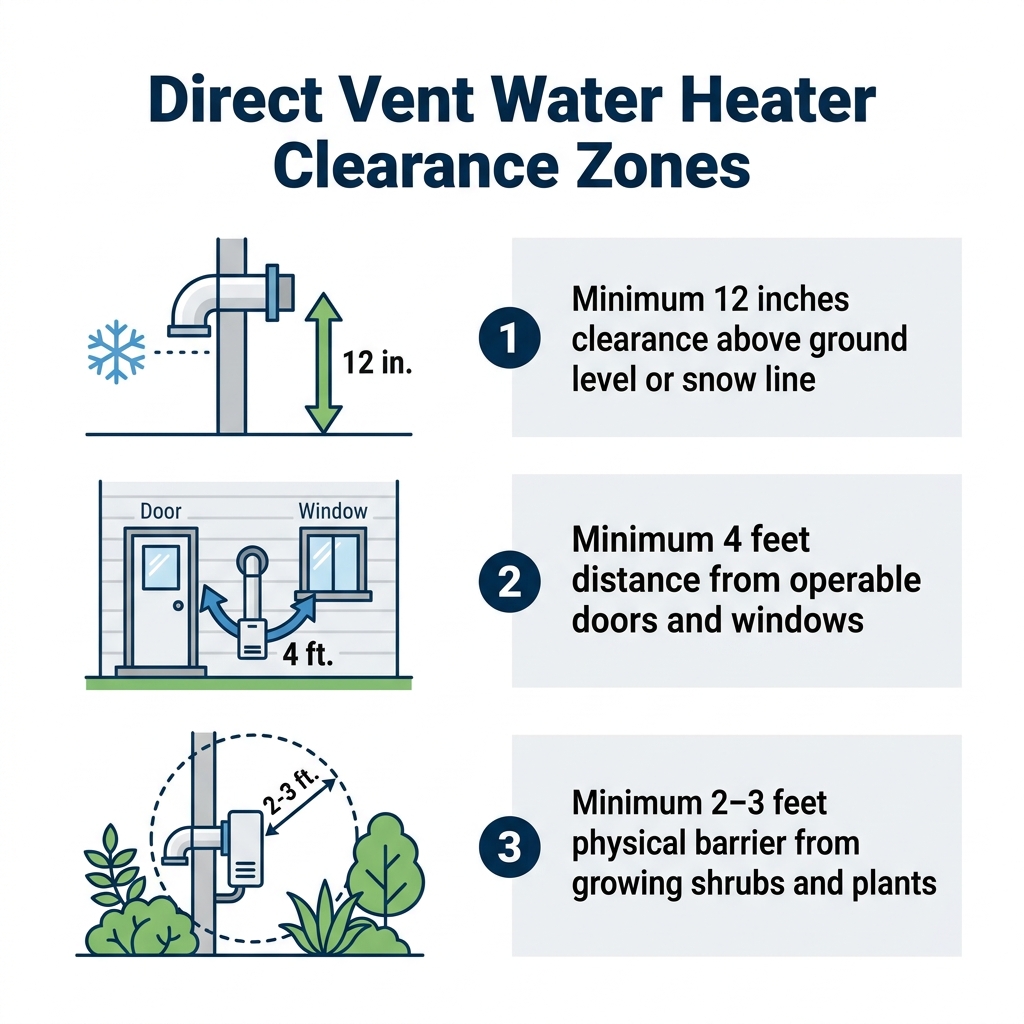
• Clearance above grade: The bottom of the vent termination cap must be a minimum of 12 inches above the finished ground level. Keep in mind that "grade" includes the top layer of your mulch, decorative stone, or landscaping fabric.
• Clearance from operable openings: Vents generally must be kept at least 4 feet below or to the side of any operable windows, doors, or gravity air inlets. This prevents exhaust from drifting back into the house on a breezy day.
• Clearance from soffits and overhangs: There must be adequate vertical space (often 2 to 3 feet, depending on the manufacturer) between the vent and any unventilated soffit or deck overhang to prevent moisture and gas from pooling underneath the structure.
• Clearance from inside corners: Vents located in an "L" shaped inside corner of the house need extra horizontal clearance, as wind can easily trap exhaust gases in tight architectural pockets.
Understanding Grade vs. Obstructions
• Mulch and Soil Beds — Required Clearance: 12 inches below the vent — Safety Reason: Prevents ground moisture and dirt from entering the intake ring.
• Operable Windows — Required Clearance: 4 feet away (horizontal/vertical) — Safety Reason: Stops carbon monoxide from drifting into living spaces.
• Solid Fences — Required Clearance: Varies (typically 2-3 feet) — Safety Reason: Prevents exhaust gases from banking off the fence and recirculating.
• Gas Meters — Required Clearance: 3 feet horizontal distance — Safety Reason: Prevents corrosion of the meter and reduces fire hazards.
Safe Distances for Shrubs and Vegetation
Plants are dynamic obstructions. A small boxwood planted in May can easily grow large enough to block a low-wall vent by September. When planning your garden beds or doing your autumn pruning, you must maintain a minimum 2 to 3-foot physical barrier between the vent cap and any growing plants. This means the tips of the branches—not just the trunk—must stay at least three feet away.
Furthermore, you must account for future plant growth when landscaping near the exhaust zone. If you are planting new shrubs this fall, check the mature width on the plant tag. Position the root ball far enough away so that even at its maximum size, the plant will never cross into that 3-foot safety bubble. For existing, fast-growing plants like hydrangeas or ornamental grasses, we recommend pruning them aggressively multiple times a year, or considering relocating them entirely to ensure your water heater can breathe.

Seasonal Obstructions: Leaves, Snowdrifts, and Patio Furniture
Clearances are not just about permanent landscaping like trees and shrubs. The changing seasons bring temporary obstructions that are just as dangerous to your water heater's performance. In our specific Central Illinois climate, heavy autumn leaf drops followed by winter snow accumulations pose a direct, recurring threat to low-wall exterior direct vent caps. You have to remain vigilant throughout the year, adjusting your yard maintenance to handle whatever the weather brings.
Autumn Leaf Accumulation: When the trees start shedding, wind patterns often blow leaves directly against the foundation of your house. Because direct vent caps are typically installed low on the exterior wall, a deep pile of wet, matted leaves can easily cover the intake ring in a matter of days. Our team typically sees a spike in no-hot-water calls right after the first major fall windstorm, and often the culprit is just a pile of wet leaves suffocating the intake ring. Make sure you rake leaves completely away from the wall where the vent is located. Do not blow leaves into piles near the side of the house, and check the vent cap after heavy autumn windstorms to ensure a stray plastic bag or clump of debris has not plastered itself against the screen.
Winter Storage Hazards: Early fall is also the time when most homeowners pack up their outdoor living spaces. It is incredibly common to see patio furniture, stacked lawn chairs, portable grills, and cords of firewood shoved against the side of the house for winter storage. Never stack these items within three feet of your water heater vent. A tarp covering a stack of firewood can easily deflect exhaust gases back into the intake, causing the exact same recirculation issues as a dense bush.
Snow Accumulation: As the season turns colder, winter weather completely changes the clearance landscape. That required 12-inch gap above the ground is actually meant to account for the "anticipated snow line." If a heavy snowstorm rolls through and deposits an 18-inch snowdrift against your foundation, your vent is completely buried. Snow blocking the intake will immediately shut down the water heater. Add a vent inspection to your routine post-storm cleanup checklist. When you go out to shovel the driveway, take a few extra minutes to carefully clear a wide path around the vent cap, ensuring it has plenty of room to pull in fresh air.
Warning Signs of a Blocked Exhaust Vent
The everyday problem: Even with careful landscaping and diligent yard work, a sudden storm or unexpected debris can block your exterior vent. When this happens, your water heater will struggle to function, leaving you with lukewarm water or no hot water at all just when you need it most. Knowing how to recognize the symptoms of a blocked vent can save you from a cold shower and protect your home from potential safety hazards.
The mechanical cause: Modern direct vent water heaters are equipped with highly sensitive safety mechanisms designed to prevent carbon monoxide poisoning. Inside the unit, a pressure switch constantly monitors the flow of air through the venting system. If leaves, snow, or overgrown bushes restrict the airflow at the exterior cap, the pressure inside the pipe drops. The switch detects this change instantly. To protect the household, the control board will trigger a safety lockout sequence, shutting off the gas valve and extinguishing the burner.
The warning signs: A pattern we see often is homeowners assuming their unit is completely broken, when in reality, the system's safety sensors have simply triggered a lockout due to a blocked airway. If your vent is compromised, you will likely notice one or more of the following symptoms:
• Sudden system shutdowns: The water heater turns itself off entirely and refuses to run a full heating cycle.
• Pilot light failures: The flame continuously goes out shortly after being lit, starved of the oxygen it needs to burn.
• Modern error codes: If your unit has a digital display, it may flash a specific error code indicating an "ignition failure," "pressure switch fault," or "blocked airway."
• Soot buildup: Black, powdery soot forming around the exterior vent cap or on the siding above it indicates poor combustion due to restricted airflow.
The strict safety solution: If you experience these warning signs, go outside and inspect the vent. Your only job as a homeowner is to clear away exterior vegetation, snow, or debris. If you remove the overgrown bush or rake away the leaves and the system still will not stay lit, you must stop immediately. Any physical alteration, relocation, replacement, or repair of the vent pipe itself requires a licensed professional. Never attempt to remove the vent cap, cut the PVC pipe, or bypass the internal safety switches. Doing so violates building codes and puts your home at severe risk of carbon monoxide exposure.
The Role of Professional Installation in Code Compliance
While maintaining the landscaping around your vent is your responsibility, the initial placement and safety of that vent rely entirely on proper installation. Proper exterior clearances are established on day one, before the system ever fires up. When a new direct vent water heater is installed, the technician must calculate the exact location for the core hole through your wall, ensuring it meets every single spatial requirement dictated by the manufacturer and local building codes.
These codes are not arbitrary hoops to jump through. Local building codes are designed specifically to prevent localized carbon monoxide hazards, protect the structural integrity of your siding, and ensure the appliance operates at its peak efficiency. A vent placed too close to an inside corner will trap gases; a vent placed too close to the ground will suck in dirt and snow. As a local team, HRI Plumbing places a heavy emphasis on strict adherence to Illinois plumbing and building codes, ensuring safe, compliant installations that protect the household from these exact scenarios. Doing the job right the first time is a mark of professional integrity.
If you live in an older home or recently purchased a property, you might not know if your current venting setup is actually up to code. Landscaping grades change over time as previous owners add layers of mulch or topsoil, slowly shrinking that vital 12-inch gap. A professional inspection can verify if an older installation still meets current safety standards. If your vent is currently sitting dangerously close to the ground or too close to a window, a licensed plumber can assess the situation and recommend the safest way to bring the system back into compliance. Ensuring your system meets these strict standards gives you true peace of mind as you head into the colder months.
Frequently Asked Questions
How much clearance does a direct vent water heater need?
A direct vent water heater typically requires a minimum clearance of 12 inches above the finished grade or anticipated snow line. Additionally, the exhaust cap must be kept at least 4 feet away from any operable doors, windows, and gravity air inlets. Always maintain a 2 to 3-foot physical barrier between the vent and any growing vegetation or outdoor items.
Can bushes or shrubs block my water heater vent?
Yes, overgrown bushes and shrubs are one of the most common causes of blocked exterior vents. When dense foliage covers the intake ring, it restricts fresh air and forces the system to pull in its own exhaust gases. You must regularly trim back all branches and vines so they remain at least three feet away from the termination cap.
Why are direct vent clearances important for safety?
Clearances are vital for preventing exhaust gas recirculation, a dangerous process where the water heater breathes in its own expelled gases. If the vent is blocked, the lack of oxygen leads to incomplete combustion, which produces high levels of carbon monoxide. Proper clearances ensure these toxic gases dissipate safely into the outdoor atmosphere.
Can a direct vent water heater terminate under a deck?
It depends on the specific building codes and the manufacturer's instructions, but it is generally discouraged unless specific conditions are met. If allowed, the deck must be completely open on at least two sides to prevent gases from pooling, and there must be adequate vertical clearance between the vent and the deck joists.
What happens if snow covers my direct vent exhaust cap?
If snow drifts completely cover the exhaust cap, the water heater's internal pressure switch will detect the lack of airflow and immediately shut the system down. This safety lockout prevents carbon monoxide from backing up into your home. You must carefully shovel the snow away from the vent to restore airflow before the system can safely operate again.
As you finish up your fall yard prep, remember that a few minutes of careful trimming around your exterior vents can save you from major headaches this winter. By following these clear, code-based guidelines and understanding exactly how much physical space must be kept clear, you protect your system from sudden shutdowns and keep your family safe from carbon monoxide hazards. If you discover that your venting requires physical repairs or adjustments to meet local codes, reach out for professional water heater repair and replacement services to get the job done right.


