



How to Decide Between Water Heater Repair and Replacement
How to decide between water heater repair and replacement depends on the unit's age, the severity of the issue, and the cost of repairs relative to a new unit. Here is a quick breakdown:
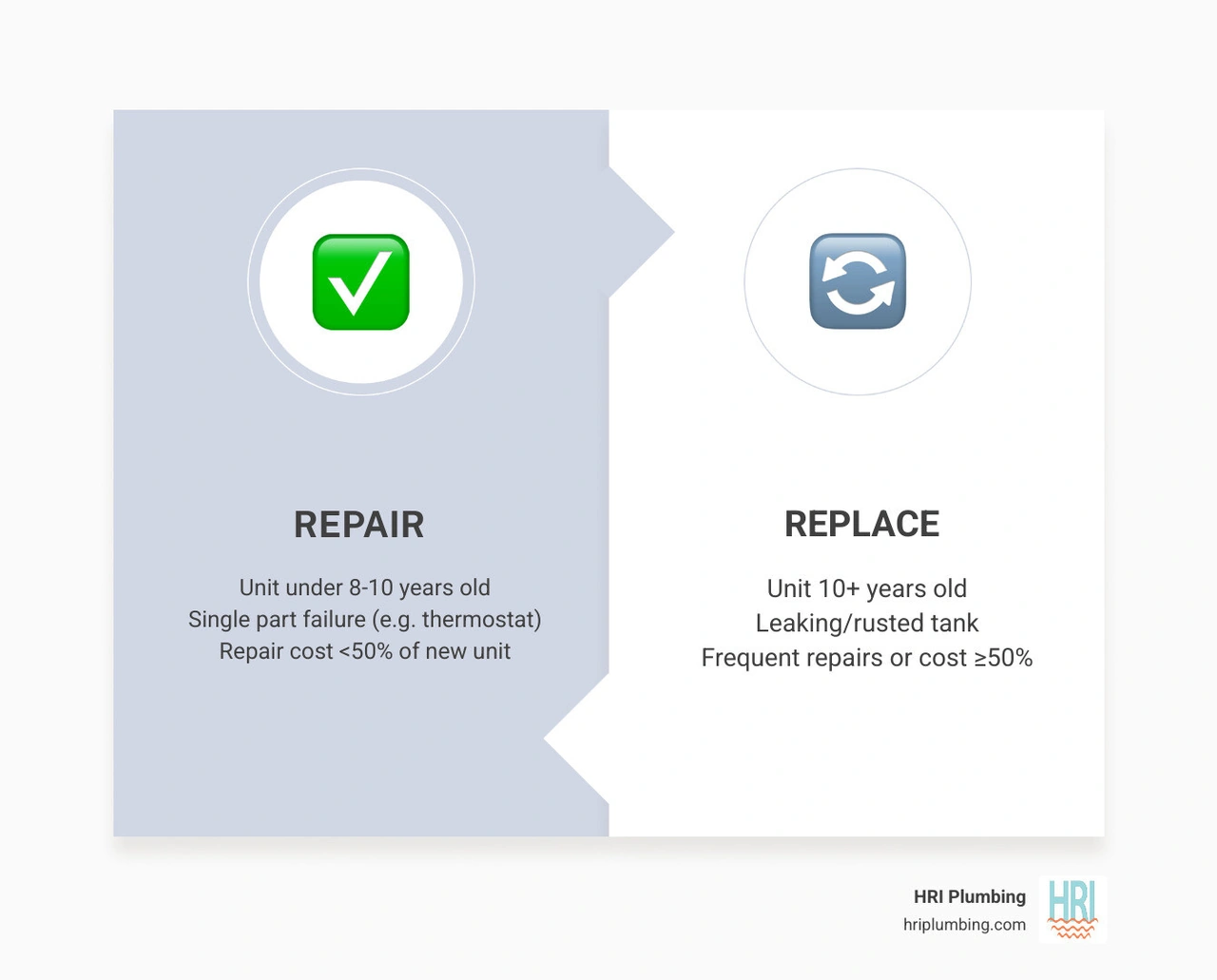
- Repair if the unit is under 8-10 years old, the problem involves a single replaceable part (like a thermostat), and costs are well below half the price of a new unit.
- Replace if the unit is over 10 years old, has a leaking tank, requires frequent repairs, or repair costs exceed 50% of replacement.
- Replace immediately if you see water pooling at the base, rust-colored water, or smell gas/rotten eggs.
Water heaters often fail at the worst times, leaving homeowners in Jacksonville, IL, and across central Illinois to choose between a quick fix or a larger investment. Jacksonville sees roughly 15 to 20 plumbing emergencies monthly, with water heater failures being a primary cause. This guide helps you make that decision with confidence.
When facing a malfunction, look at the "big picture." Like an old car, a water heater eventually reaches a point where repairs cost more than the unit's remaining value. In April 2026, more homeowners are opting for proactive upgrades to avoid catastrophic failures. A professional inspection can determine if a performance decline is a simple component failure or the end of the tank's functional life.
Comparison Table: Repair vs. Replacement Factors
| Factor | Lean Toward Repair | Lean Toward Replacement |
|---|---|---|
| Unit Age | Under 8 years old | 10-12+ years old |
| Problem Type | Thermostat, heating element, or valve | Leaking tank, internal rust, or cracked tank |
| Frequency | First time the unit has failed | Third repair in the last two years |
| Water Quality | Clear and odorless | Rusty, metallic taste, or "rotten egg" smell |
| Efficiency | Monthly bills are stable | Utility bills are rising for no reason |
| Cost Rule | Repair is < 50% of new unit cost | Repair is > 50% of new unit cost |

Evaluating Unit Age and Lifespan
Age is a reliable indicator of value. Traditional tank heaters last 8 to 12 years. By age ten, internal corrosion and declining efficiency usually make replacement the smarter choice. Check the manufacturer's label for the serial number to determine age; the first four digits often indicate the month and year.
Tankless water heaters have a longer lifespan, often reaching 20 years because they don't store water and avoid tank corrosion. For more on longevity, see our guide on How Long Does a Water Heater Last.
Common Signs Used to Decide Between Water Heater Repair and Replacement
- Fluctuating Temperatures: Failing heating elements or broken dip tubes cause temperature swings. In older units, this often indicates heavy sediment buildup.
- Strange Noises: Popping or rumbling sounds are caused by boiling water trapped under sediment. While flushing can help, heavy buildup often leads to structural cracks.
- Rusty Water: Rust in hot water suggests the tank or anode rod is corroding. If the rod is gone, the tank will soon fail.
- Slow Recovery Time: If it takes hours to reheat water, the unit is no longer performing at capacity.
In the capital area, Tankless Water Heater Repair Springfield IL services can often resolve these issues if the heat exchanger is intact. You can also read about Common Water Heater Issues That Require Repair.
Using the 50% Rule
If repair costs exceed 50% of a new unit's price, replace it. A repair only fixes one part and doesn't reset the lifespan of the remaining components. If you are searching for Water Heater Leaking Jacksonville IL, the diagnosis is usually replacement, as tank leaks are irreparable. Frequent breakdowns suggest a "death spiral," making Water Heater Replacement Jacksonville IL the more economical choice.
Benefits of High-Efficiency Upgrades
Modern models are up to 30% more efficient than those from a decade ago. New tanks offer better insulation to reduce standby heat loss, while tankless options eliminate it entirely. Heat pump technology is another efficient alternative for Springfield or Rushville homes. When asking, "Should I Repair or Replace My Water Heater," consider the long-term energy savings.
Maintenance Strategies for Longevity
Extend your unit's life with these steps:
- The Anode Rod: Replace this sacrificial rod every 3 years to prevent tank corrosion.
- Annual Tank Flushing: Removing sediment prevents overheating and tank cracking.
- Water Pressure Regulation: Keep pressure below 80 psi to protect tank seams.
When to Call a Professional
Water heaters involve high-voltage electricity and gas lines, making DIY repairs dangerous. At HRI Plumbing, we provide expert diagnosis for homeowners in Jacksonville, Springfield, and Rushville. Whether you need a Water Heater Repair Jacksonville IL or want to consult our Ultimate Water Heater Replacement Guide Jacksonville IL, we are here to help 24/7.
Conclusion: Reliable Solutions for Central Illinois Homeowners
Deciding whether to sink money into an old unit or invest in a new one is a major homeownership milestone. By using the age of the unit, the 50% rule, and the severity of the symptoms as your guide, you can make a choice that protects both your comfort and your wallet.
Whether you are in Jacksonville, Springfield, or Rushville, HRI Plumbing is here to provide honest, high-quality solutions. We pride ourselves on integrity—if a simple repair will give you three more years of reliable service, we’ll tell you. If your tank is a ticking time bomb, we’ll help you find an affordable, high-efficiency replacement that fits your household's needs.
Don't let a failing water heater disrupt your life. From same-day repairs to comprehensive maintenance plans, we have the expertise to keep your water hot and your home dry. For all your needs regarding Water Heater Repair & Replacement, give us a call today. We are ready to help you get back to your routine with the peace of mind you deserve.


