


Why Knowing When to Replace Your Water Heater Can Save You From a Costly Surprise
Knowing how to know when to replace your water heater could be the difference between a planned upgrade and a flooded utility room. Most homeowners in Jacksonville, Springfield, and Rushville, IL don't think about their water heater until something goes wrong — and by then, the damage is already done.
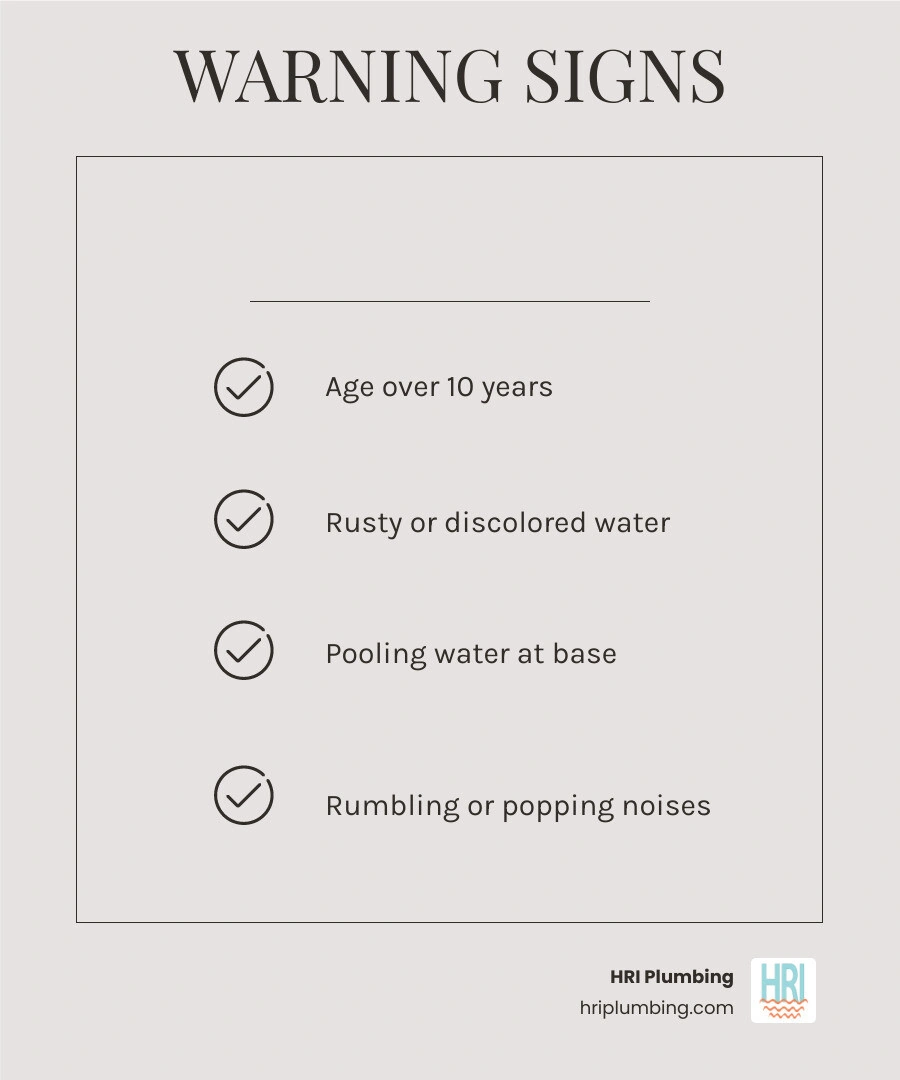
Here are the most common signs it's time to replace your water heater:
- Age over 10 years — ENERGY STAR recommends replacing storage tank water heaters once they pass the 10-year mark
- Rusty or discolored hot water — a sign of internal tank corrosion
- Pooling water or moisture at the base — usually indicates a cracked tank that cannot be repaired
- Rumbling, popping, or banging noises — caused by hardened sediment buildup forcing the unit to work harder
- Running out of hot water faster than before — a sign of declining capacity or a failing heating element
- Frequent repairs — if you've called a plumber more than twice in a year, replacement is likely the smarter investment
- Rising energy bills — an aging unit loses efficiency and drives up monthly costs
Most tank water heaters last between 8 and 12 years. Once yours approaches or passes that window, the risk of sudden failure goes up significantly — and an unexpected breakdown rarely happens at a convenient time.
The sections below walk you through each of these warning signs in detail, plus a clear framework for deciding whether to repair or replace.
How to Know When to Replace Your Water Heater

Determining how to know when to replace your water heater requires a mix of detective work and technical knowledge. While some signs are obvious—like a sudden flood in your basement—others are subtle performance declines that occur over several months. In Central Illinois, where we often deal with varying water mineral content, keeping a close eye on your unit is essential for home comfort.
Proactive planning is always better than reacting to an emergency. When a water heater fails, it often leaves you without hot water for days while you scramble to find a replacement. By identifying warning signs early, you can choose a new, high-efficiency model on your own terms.
How to Know When to Replace Your Water Heater Based on Its Age
The first step in any assessment is checking the "birth certificate" of your appliance. Understanding how long a water heater lasts is the foundation of home maintenance.
To find the age, look for the manufacturer's label on the side of the tank. You’ll see a serial number that looks like a jumble of letters and numbers. Most manufacturers use a code where the first letter represents the month (A for January, B for February, etc.) and the first two numbers represent the year. For example, a serial number starting with "D22" was likely manufactured in April 2022.
As of May 2026, if your unit was manufactured before 2016, it is officially in the "danger zone." ENERGY STAR and industry experts generally recommend the 10-year rule: once a storage tank heater hits a decade of service, it is significantly more likely to fail. While tankless water heaters can last up to 20 years, conventional tanks typically begin a steep decline in performance after 8 to 12 years.
Identifying Physical Signs of Tank Failure
Sometimes the age doesn't tell the whole story, but the physical condition of the tank does. Recognizing signs your water heater is going out can prevent thousands of dollars in water damage.
Keep a lookout for these red flags:
- Rusty Water: If you notice "tea-colored" or rusty water coming only from your hot water taps, it’s a strong indicator that the internal lining of your tank is corroding.
- Moisture or Pooling: Check the base of the unit regularly. Any moisture, dampness, or small puddles usually indicate a fracture in the tank. Because tanks are pressurized, a small leak can turn into a catastrophic burst without warning.
- Visible Corrosion: Look for white, crusty mineral buildup or orange rust around the pipes and fittings. This suggests the signs that it's time to replace your water heater are already manifesting physically.
Why Is My Water Heater Making Unusual Noises?
If your utility room sounds like it’s hosting a percussion concert, you likely have sediment buildup and potential water heater issues. In areas like Springfield where hard water is common, minerals like calcium and magnesium settle at the bottom of the tank.
Over time, this sediment hardens into a thick crust. When the burner or heating element kicks on, it has to heat through that layer of "rock" before it can heat the water. This causes the water heater to make unusual sounds like popping, rumbling, or banging. Not only is this noisy, but it also causes the tank to overheat and the metal to fatigue, eventually leading to cracks and leaks.
Should I Repair or Replace My Aging Water Heater?
Deciding whether to fix your current unit or start fresh is a common dilemma. We often use the "50% Rule": if a single repair costs more than half the price of a new unit—and the system is over 8 years old—replacement is almost always the better investment.
| Factor | Consider Repair | Consider Replacement |
|---|---|---|
| Age | Under 8 years | Over 10 years |
| Repair Cost | Less than 35% of new unit | More than 50% of new unit |
| Frequency | First time issue | 2+ repairs in the last year |
| Performance | Consistent hot water | Running out of water quickly |
| Tank Condition | Dry and rust-free | Leaking or visible corrosion |
Deciding Between Professional Repair and a Full System Upgrade
Not every problem requires a brand-new tank. There are several common water heater issues that require repair rather than a full replacement. For instance, if your water heater is not heating at all, it might just be a failed heating element or a tripped thermostat.
Other repairable components include:
- The Anode Rod: This "sacrificial" rod attracts corrosive elements to protect the tank. Replacing it every 3–5 years can double your tank's life.
- T&P Valve: A dripping Temperature and Pressure relief valve is a safety concern but is usually an easy fix for a professional.
- Pilot Light/Thermocouple: If you have a gas unit and the water heater is not producing hot water, a simple thermocouple replacement might be all you need.
However, if the tank itself is leaking or the bottom is filled with solidified sediment, repairs are merely a "band-aid" on a terminal problem.
How to Know When to Replace Your Water Heater for Energy Efficiency
Sometimes, the reason for replacement isn't that the unit is broken, but that it's obsolete. There are many modern options for replacing an aging or obsolete water heater that can save you significant money on your monthly utility bills.
- Tankless Water Heaters: These units heat water on demand, meaning you never "run out" and you aren't paying to keep 50 gallons of water hot all night while you sleep. They can last up to 20 years.
- Heat Pump Water Heaters: These ENERGY STAR certified units are incredibly efficient. A household of four can save more than $330 per year on electric bills, often paying for the upgrade through energy savings in less than three years.
- Federal Tax Credits: Many high-efficiency upgrades currently qualify for federal tax credits (up to $2,000 for eligible heat pumps), making the switch even more affordable.
Finding Reliable Water Heater Services in Rushville and Central Illinois
When you are trying to figure out the should I repair or replace my water heater math, you don't have to do it alone. At HRI Plumbing, we provide honest assessments for families across Jacksonville, Springfield, and Rushville.
Our expert technicians specialize in both residential and commercial systems, offering 24/7 support for those middle-of-the-night emergencies. We believe in integrity, which means we won't push for a replacement if a simple repair will safely extend your unit's life. However, if your tank is a ticking time bomb, we will help you find a reliable, high-efficiency solution that fits your household's demand.
If you’ve noticed any of the warning signs mentioned above—the noises, the rust, or the mounting repair bills—it’s time for a professional look. Don't wait for the "icy grip" of a cold shower to force your hand. Contact us today for expert water heater repair and replacement and ensure your home stays comfortable and dry for years to come.


