


Identifying the Source of Foul Odors in Your Home
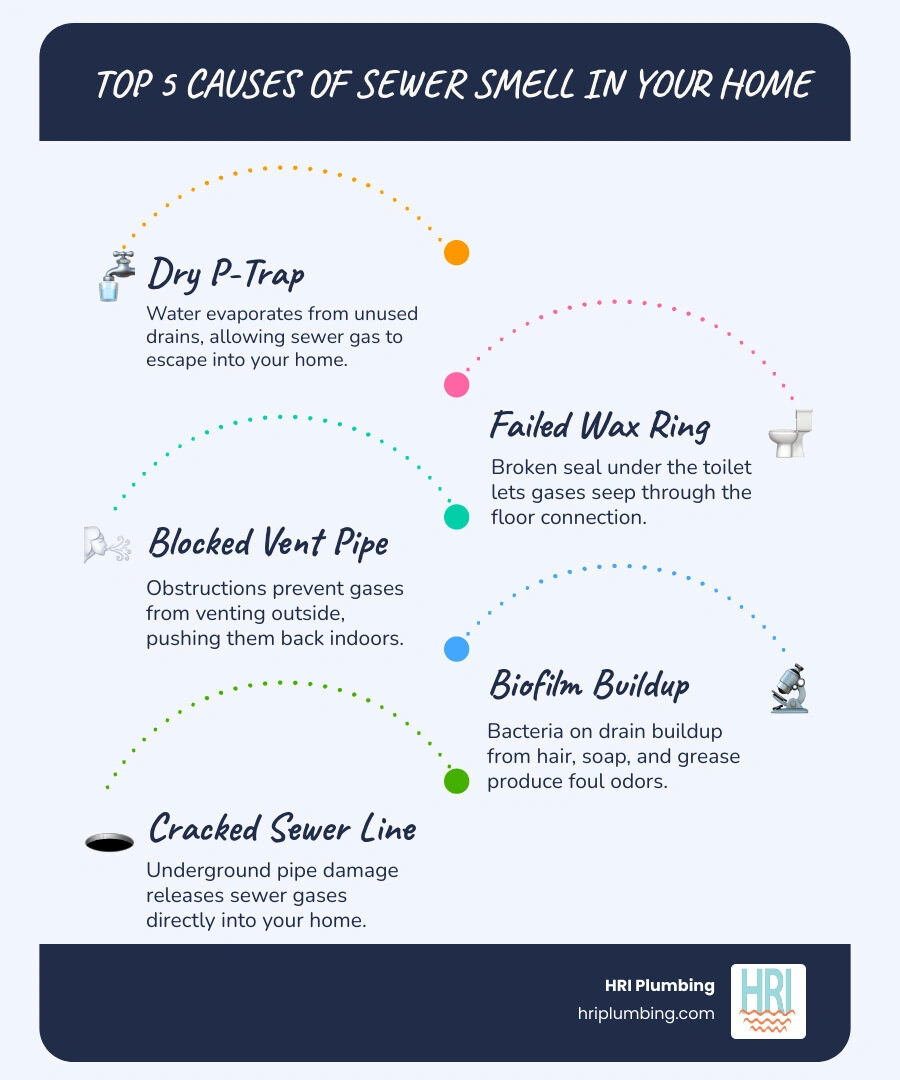
What causes sewer smell in your home is almost always a plumbing system failure — and it's never something to ignore. That rotten egg odor isn't just unpleasant. It's a warning sign that sewer gas is getting into your living space.
The most common causes of sewer smell in a home include:
- Dry P-trap — water in the trap has evaporated, letting gas through
- Failed toilet wax ring — the seal between toilet and floor is broken
- Clogged or blocked vent pipe — gases can't escape upward and push back inside
- Biofilm buildup in drains — bacteria growing on hair, soap, and grease
- Cracked sewer line — underground pipe damage releasing gas
- Bacteria in the water heater — causes sulfur smell from hot water only
- Clogged sink overflow — grime and mold trapped in the overflow channel
Sewer gas is a mix of hydrogen sulfide, methane, and ammonia. Humans can detect hydrogen sulfide at concentrations as low as 0.5 parts per million (PPM) — that's the rotten egg smell most people recognize. Beyond the odor, methane is highly flammable, and prolonged exposure to sewer gas can cause headaches, nausea, dizziness, and in severe cases, loss of consciousness. This isn't a problem you can mask with an air freshener and forget about.
Whether you're in Jacksonville, Springfield, or Rushville, IL, pinpointing the source quickly matters. The sections below walk you through every major cause — and what to do about each one.
A true sewer gas smell usually has a rotten egg odor because of hydrogen sulfide. Sometimes it smells musty, sour, or just plain foul instead. If the smell comes and goes, that does not mean the problem went away. It often means pressure, water use, weather, or a drying trap is changing how gases move through your plumbing system.
Sewer gas exposure can cause:
- Headaches
- Nausea
- Dizziness
- Eye, nose, or throat irritation
- Weakness or fatigue
- Loss of coordination in severe exposure
If anyone in the home feels ill, or if the odor is strong and widespread, get fresh air and call for professional help right away.
What Causes Sewer Smell in Your Home?
If you are wondering what causes sewer smell in your home, start with the simplest explanation first: something that should be blocking sewer gas is no longer doing its job.
The plumbing system relies on two main defenses:
- Traps that hold water and block gas
- Vent pipes that move sewer gases safely outdoors
When either one fails, odors can escape indoors.
One of the most common issues is a dry P-trap. A P-trap is the curved pipe under sinks, showers, tubs, and floor drains. It holds a small amount of water that acts like a barrier. If a drain is rarely used, that water can evaporate. This is especially common in guest bathrooms, basement floor drains, laundry rooms, and older homes with fixtures that sit unused for weeks.
The fix is often simple:
- Run water for 30 to 60 seconds in the drain
- For floor drains that dry out often, add a little mineral oil after the water to slow evaporation
- If the trap keeps drying quickly, have it checked for leaks or venting issues
For more background on common odor sources, see Source Of Sewage Odors and Avoid Having Foul Smelling Drains In Your Home.
Common Fixture Issues That Cause Sewer Smell in Your Home
Many sewer odors start at individual fixtures rather than the main sewer line.
A failed toilet wax ring is a big one. The wax ring seals the base of the toilet to the drain pipe below. When it breaks down, shifts, or gets compressed unevenly, sewer gas can leak around the toilet even if you do not see water on the floor. A common clue is a toilet that rocks when you sit on it or a smell strongest at the base.
Other fixture-related causes include:
- Biofilm in sink, shower, or tub drains
- Grime in sink overflow channels
- Minor leaks around drain connections
- Siphoned traps caused by venting problems
Biofilm deserves special mention. It is the slimy buildup made of soap scum, hair, skin cells, grease, and bacteria. It can smell a lot like sewage and often gets worse when warm water runs.
Here is a quick way to compare the two:
| Issue | Typical smell | Where it shows up | Common clue |
|---|---|---|---|
| Biofilm buildup | Funky, sour, swampy | One sink or shower | Smell worsens when water runs |
| Sewer gas | Rotten eggs, sewage | Bathroom, basement, multiple areas | Strongest near drain, toilet, or floor drain |
A clogged sink overflow can also create a nasty odor. That little hole near the top of many bathroom sinks traps grime easily. Cleaning it with warm water and a small bottle brush can help.
If the smell keeps returning or seems hidden inside the line, a professional inspection may be the next step. Learn more about Sewer Camera Inspection Jacksonville Il.
Structural Problems and What Causes Sewer Smell in Your Home
When the smell is persistent, widespread, or comes back after DIY cleaning, we start thinking beyond the fixture.
Blocked or damaged vent pipes are a major cause. Plumbing vents run up through the roof and release sewer gases outside while balancing air pressure in the system. If a vent is blocked by leaves, debris, or even a bird nest, gases may get pushed back through indoor drains instead. You might also hear gurgling when sinks, tubs, or toilets drain.
Structural sewer line issues can also cause odors, including:
- Cracked drain or sewer pipes
- Loose pipe joints
- Tree root intrusion
- Main line clogs
- Pipe damage behind walls or under floors
Some warning signs of a bigger sewer problem include:
- Multiple drains smelling bad
- Slow drains throughout the house
- Gurgling toilets or sinks
- Wet spots in the yard
- Extra-green patches of grass over the sewer route
If those signs sound familiar, check out Signs That You Might Need A Sewer Line Repair and Sewer Repair Springfield Il.
Water Heater and Supply Line Contamination
Not every sulfur smell is a sewer line problem. If the odor only appears when you run hot water, the water heater may be the culprit.
Two common causes are:
- Bacteria reacting inside the tank
- The anode rod interacting with minerals in the water
This can create a sulfur or rotten egg smell that seems like sewer gas but is really tied to the hot water supply. A quick test is simple:
- Run cold water only and smell it
- Run hot water only and compare
If the smell is only in the hot water, the issue may be inside the water heater. Flushing the tank or addressing the anode rod can help. In some cases, temporarily raising the water heater temperature can reduce bacteria growth, but this should be done carefully to avoid scalding risks.
If the odor appears in both hot and cold water, the source may be elsewhere in the plumbing or sewer system. You can also review Spot Early Signs Sewer Line Issues and Sewer Repair Rushville Il.
Professional Solutions for Persistent Sewage Odors
When the smell keeps coming back, guessing stops being helpful. That is when professional diagnosis matters.
At HRI Plumbing, we help homeowners in Jacksonville, Springfield, and Rushville track down sewer odor problems at the source. Sometimes the solution is as simple as a trap refill or toilet reset. Other times, it takes advanced testing to find a hidden leak, vent failure, or damaged sewer line.
Persistent sewer odors are a good reason to call us if:
- DIY steps did not work
- The smell is in more than one room
- There are slow drains or backups
- The toilet rocks or leaks at the base
- You suspect a vent or sewer line issue
- Someone in the home is feeling sick from the odor
For local inspection help, visit Sewer Camera Inspection Rushville Il.
How Experts Diagnose Hidden Plumbing Leaks
Professional plumbers do more than sniff dramatically and point at the nearest sink.
We use tools that help identify exactly where sewer gas is escaping:
- Sewer camera inspection to see inside drain and sewer lines
- Smoke testing to reveal leaks in drain, waste, and vent piping
- Pressure and flow checks to spot venting or blockage problems
- Hydro jetting when heavy buildup is causing odor and drainage issues
Camera inspections are especially useful because they show cracks, root intrusion, offsets, sludge buildup, or collapsed sections without unnecessary digging. If the issue is underground, this helps us target the repair instead of playing backyard roulette.
In some cases, trenchless pipe lining may be an option for repairing damaged sewer lines, and some systems are backed by long-term warranties up to 50 years.
Learn more about Sewer Camera Inspection Springfield Il.
DIY Fixes and When to Call a Plumber
There are a few simple things most homeowners can try safely before calling.
DIY steps that often help:
- Run water in unused sinks, tubs, showers, and floor drains
- Add a little mineral oil to rarely used floor drains
- Clean drains with hot water, baking soda, and vinegar
- Remove visible hair and sludge from stoppers
- Clean sink overflow openings
- Check whether the odor is strongest at one fixture
Call a plumber if:
- The odor returns quickly
- Multiple fixtures smell
- You hear gurgling drains
- Water backs up or drains slowly
- The toilet moves at the base
- You suspect a cracked pipe or vent problem
A dry trap is a DIY fix. A hidden sewer leak inside a wall is not the weekend project anyone asked for.
If the problem appears more serious, see Sewer Repair Jacksonville Il.
Eliminating Lingering Odors and Future Prevention
Even after the source is fixed, the smell can hang around for a bit. Sewer odors can absorb into porous materials, especially in bathrooms, basements, and laundry rooms.
To clear lingering odors:
- Open windows and improve ventilation
- Wash nearby surfaces with a mild cleaner
- Clean rugs, bath mats, and fabrics that absorbed odor
- Place bowls of baking soda or activated charcoal nearby
- Replace any water-damaged materials if needed
To help prevent sewer smells from coming back:
- Run water regularly in unused drains
- Schedule routine drain cleaning
- Fix rocking toilets promptly
- Keep an eye on slow drains and gurgling sounds
- Have recurring odor issues professionally inspected before they grow
For homeowners in Springfield and nearby areas, professional inspections and maintenance can catch problems early. Visit Sewer Camera Inspection Springfield Il to learn more.
If your house smells like a sewer, trust your nose. Plumbing systems are supposed to keep those odors out, not invite them in like an unwanted houseguest. When the smell does not make sense, we are here to help homeowners in Jacksonville, Springfield, and Rushville find the source, fix it correctly, and keep the air in your home a lot more pleasant.


