



The Hidden Threat to Your Home's Flood Defenses — Check Valve Failures: The Hidden Reason Your Sump Pump Stops Pumping
Your sump pump is running nonstop, but the water level in the pit barely drops, which brings us to a critical topic: check valve failures: the hidden reason your sump pump stops pumping. When August late-summer heavy rains saturate the ground, a compromised drainage system can quickly become overwhelmed. In our years of servicing local homes, the team at HRI Plumbing has found that the concrete problem homeowners face isn't always a dead motor—it is often a tiny mechanical failure that forces the pump to endlessly re-pump the exact same water, leading directly to premature motor burnout. The most important decision point is recognizing this short-cycling behavior before a flood actually occurs in your lower level. Because this issue is mechanical rather than electrical, you do not necessarily need to buy a brand-new pump right away. Instead, you need professional intervention to correct the water flow. For homeowners needing professional plumbing services, catching this mechanical flaw early is the absolute best way to keep your basement dry.
Understanding the Mechanics: What Does a Sump Pump Check Valve Do?
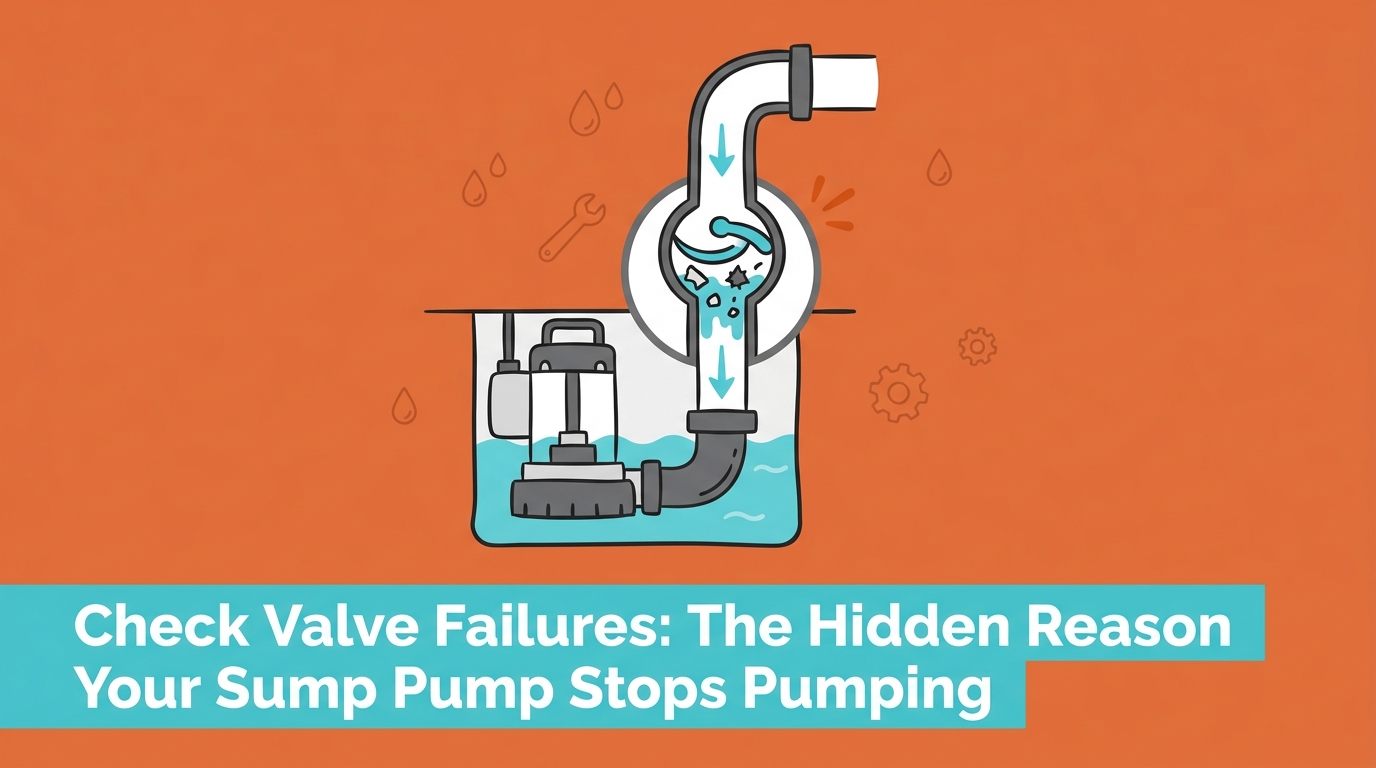
To understand why things go wrong, we first have to look at what this component actually does. A check valve is essentially a one-way mechanical gate installed directly on your sump pump's discharge pipe. When your pump turns on, the motor generates intense upward water pressure. This pressure pushes the flap inside the valve open, allowing groundwater to flow up the pipe and safely out of your house.
What happens when the pump shuts off? Gravity takes over instantly. The moment the upward pressure stops, gravity forces that heavy column of water back down the vertical pipe. The check valve flap slams shut, catching the water and preventing it from flowing backward into the pit. This simple, elegant mechanism is the only thing standing between the discharged water and your home's foundation.
In many Jacksonville IL area basements, our team routinely finds that this simple valve is the unsung hero of the entire waterproofing system. Without it, the pump would have to work twice as hard to achieve the exact same result, leading to a much shorter lifespan for the equipment.
The One-Way Street for Groundwater
Let's break down the physical operation. The flapper mechanism operates entirely on pressure differentials. When the water pressure from below exceeds the weight of the water resting above, the flap swings upward on a hinge. When the pump stops, the weight of the resting water forces the flap tightly against its rubber seal.
You will typically find this valve located on the vertical section of the PVC discharge line, usually a few feet above the sump pit cover. Because it endures constant mechanical stress and water pressure, it is prone to wear and tear over time. A pattern we see often is that when it begins to fail, it sets off a destructive chain reaction that frequently ends with a frantic call to our office for sump pump repair and replacement.
The Physics of Short-Cycling: When the Valve Fails
So, what exactly happens when this one-way street becomes a two-way street? Over time, the internal flap of a check valve can break, get stuck open with debris, or simply lose its watertight rubber seal. When this happens, the physics of water displacement work entirely against your home's drainage system.
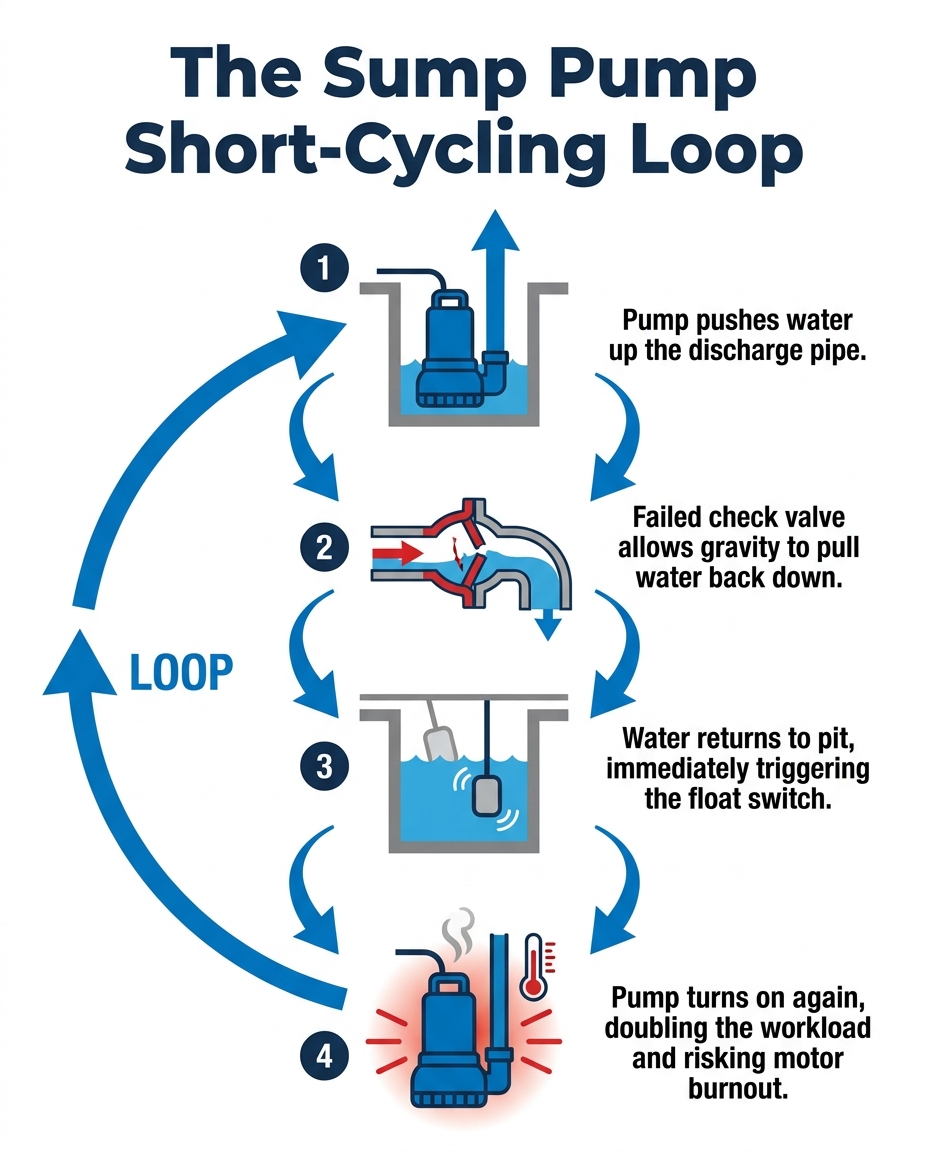
The moment your pump shuts off, gravity immediately pulls the entire column of water in the vertical discharge pipe back down into the pit. Depending on the height of your basement ceiling and the length of the pipe, this can be several gallons of water crashing back down at once. This returning water rapidly raises the level in the pit, which immediately trips the float switch, turning the pump right back on.
This creates a vicious, damaging loop known as "short-cycling." The pump pushes the water up, the valve fails to hold it, the water falls back down, and the pump kicks on again. Your system is now expending massive amounts of electrical energy just to move the exact same gallons of water up and down the pipe. During August late-summer heavy rains, when groundwater is already rushing into the pit from your perimeter drain tiles, this added backwash creates an impossible workload. We often see pumps running continuously in these conditions, making zero forward progress in removing water from the home.
• Pump activates and pushes water out — Failed Valve (Short-Cycling): Pump activates and pushes water out
• Pump shuts off, valve snaps shut — Failed Valve (Short-Cycling): Pump shuts off, valve remains open
• Water stays safely in the discharge pipe — Failed Valve (Short-Cycling): Water crashes back down into the pit
• Pump rests until new groundwater enters — Failed Valve (Short-Cycling): Float switch trips immediately
• Motor cools down between cycles — Failed Valve (Short-Cycling): Motor overheats from continuous running

Tell-Tale Signs Your Check Valve is Compromised
Recognizing a compromised check valve early is the best way to protect your home. Because the valve is often housed in opaque PVC pipe, you cannot simply look inside to see if the flap is broken. Instead, you must rely on auditory, visual, and operational clues. Our plumbing technicians frequently see homeowners misdiagnose these symptoms as a failing float switch or a dying motor, but the root cause is frequently the valve itself.
1. Monitor the pump's running frequency: If your pump is cycling on and off every few seconds, even when the rain outside has slowed down to a trickle, you likely have a backflow issue causing short-cycling.
2. Watch the water level drop and refill: Take the cover off your sump pit and observe a full cycle. If you see the water level drop while the pump runs, only to rapidly refill from the bottom of the discharge pipe rather than the perimeter drain tiles, the valve is failing to hold the water.
3. Pay attention to the shut-off sound: A healthy check valve makes a very distinct "thud" or "clunk" when the pump shuts off and the heavy column of water forces the flap closed. If that sound is suddenly absent, the flap is likely stuck open or broken off entirely.
4. Check for continuous running without drainage: If your system seems stuck in an endless loop, you might be dealing with a frustrating scenario where your sump pump runs but doesn't drain. The water is simply bouncing up and down the pipe without ever leaving the house.
Listening to Your Sump Pit
In many Jacksonville IL area basements, the sump pit is tucked away in an unfinished corner or a noisy mechanical room. We always advise familiarizing yourself with its normal operating sounds before a storm hits. Identifying normal operation sounds versus the sound of rushing backwash is a highly valuable diagnostic skill. If you hear a loud rushing or splashing sound immediately after the pump motor cuts out, that is the sound of discharged water falling back into the pit. Furthermore, the rapid clicking of the float switch engaging, disengaging, and engaging again within seconds is a major red flag that requires immediate attention.
The Hidden Cost: Premature Motor Burnout
Ignoring a failed check valve carries a steep penalty, and the true cost goes far beyond a little extra noise in the basement. The most severe consequence of a backflow problem is premature motor burnout.
Standard residential sump pump motors are tough, resilient pieces of equipment. Under normal cycling conditions, they are designed to last anywhere from seven to ten years. However, they are engineered with the strict assumption that they will have time to rest and cool down between pumping cycles. When short-cycling forces the motor to run twice as often—or continuously—it generates excessive internal heat.
This thermal overload is highly destructive. As the motor runs without adequate rest, the internal temperature spikes dangerously high. Eventually, this excessive heat melts the internal copper windings or destroys the sealed bearings that allow the impeller to spin freely. Once the windings melt or the bearings seize, the motor is completely dead and cannot be repaired.
The painful irony of this situation—and something our team hates to see happen to local families—is that a relatively small, inexpensive mechanical failure—the plastic check valve—ends up destroying the most expensive and important component of your waterproofing system. When August late-summer heavy rains roll through, a motor weakened by weeks of short-cycling will inevitably fail exactly when you need it most, leaving your basement completely defenseless against rising groundwater.
Why Peak Storm Season Exposes Valve Vulnerabilities
A partially failing check valve can be a deceptive problem. During light spring drizzles or periods of slow snowmelt, the groundwater seepage into your pit is minimal. Your pump might short-cycle occasionally, but because the overall volume of water is low, the motor still gets enough rest between cycles to avoid burning out. The mechanical flaw remains hidden.
However, intense, high-volume water events aggressively expose this vulnerability. Central Illinois is notorious for dramatic weather shifts, and August late-summer heavy rains create the perfect storm for short-cycling failures, especially as families are busy with the back-to-school transition. When the ground is completely saturated and water is pouring into your drain tiles at maximum capacity, your pump has to run frequently just to keep up with the new water entering the system.
If the check valve is also dumping gallons of old water back into the pit after every single cycle, the system simply cannot keep pace. The compounding danger of a pump burning out during a severe downpour cannot be overstated. A failure at this precise moment almost guarantees significant water damage to your home. This is why we heavily emphasize the urgency of having your system inspected before peak storm seasons hit. Waiting until the water is rising over the pit cover often means you will need emergency plumbing services to pump out a flooded lower level, a situation our crew responds to all too often.
The Importance of Professional Diagnostics and Repair
When your sump pump starts acting erratically, your first instinct might be to run to the hardware store for replacement parts. However, distinguishing between a bad check valve, a clogged discharge line, and a dying motor requires specialized knowledge and diagnostic tools.
We strongly warn against DIY replacement of sump pump components. Installing a check valve backward—a surprisingly common mistake—completely blocks the discharge line, causing the pump to deadhead and the basement to flood immediately. Failing to properly secure and cement the PVC couplings under high pressure can lead to the pipe blowing apart, spraying discharged water all over your mechanical room and electrical outlets.
A professional inspection goes far beyond just looking at the pipe. When a licensed Jacksonville plumber evaluates your system, they perform a comprehensive series of tests:
• Discharge Rate Testing: Verifying that water is moving efficiently out of the house at the correct volume.
• Amp Draw Analysis: Using a multimeter to check the motor's electrical draw; a high amp draw indicates the motor is struggling and close to burning out due to thermal overload.
• Float Switch Calibration: Ensuring the switch engages and disengages at the precise water levels required for your specific pit depth.
• Vibration and Alignment Checks: Confirming the pump is seated correctly so the float switch doesn't pin against the side of the basin.
At HRI Plumbing, our expert, prompt diagnostics are designed to identify hidden issues exactly like this. By pinpointing a failing valve early, we can often save your existing pump. In our years working in countless Jacksonville IL area basements, catching this mechanical flaw before the motor seizes has saved homeowners from the immense stress and expense of premature motor burnouts and extensive water damage restoration.
Frequently Asked Questions About Sump Pump Check Valves
What happens when a check valve fails on a sump pump?
When a check valve fails, the water that was just pumped out of the pit falls right back down the discharge pipe. This rapid return of water immediately raises the pit level and triggers the float switch again. The pump is forced to run continuously, which can quickly lead to motor burnout.
Why is my sump pump running constantly?
A constantly running pump usually indicates that water is flowing back into the pit as fast as it is being pumped out. This is a classic symptom of a broken check valve flap. During August late-summer heavy rains, this continuous running can cause the motor to overheat and fail entirely.
How do I know if my sump pump check valve is bad?
The most obvious sign is the pump turning on and off rapidly in a cycle known as short-cycling. You may also notice the absence of a distinct "clunk" sound when the pump shuts off. Visually, you might see the water level drop and then immediately rush back in from the discharge pipe rather than the perimeter drains.
Can a sump pump work without a check valve?
While a sump pump will technically turn on and push water without a check valve, it cannot work efficiently or sustainably. Without the valve to prevent backflow, the pump will endlessly re-pump the same column of water. This excessive workload will destroy the motor in a fraction of its normal lifespan.
Why does water flow back into my sump pit?
Water flows back into the pit because gravity pulls the water sitting in the vertical discharge pipe downward once the pump's upward pressure stops. The check valve is specifically designed to block this downward flow. If water is returning, that mechanical block has failed, broken, or become jammed with debris.
How often should a sump pump check valve be inspected by a professional?
A professional should inspect your entire sump pump system, including the check valve, at least once a year. Annual maintenance ensures the flap is moving freely, the rubber seals are intact, and the motor isn't drawing excessive amperage. Pre-season checks are the best way to prevent unexpected flooding during heavy storms.
Protect Your Basement Before the Next Downpour
There is immense peace of mind in knowing your home's flood defense system is reliable and ready for whatever the weather brings. Check valve failures: the hidden reason your sump pump stops pumping, are entirely preventable with proactive care and attention. If you notice your pump running constantly, short-cycling, or missing its usual shut-off clunk, do not wait for the motor to burn out. In Jacksonville IL area basements, early professional intervention from our team at HRI Plumbing is the key to maintaining a dry, safe home. Reach out for a comprehensive professional diagnostic to ensure your system is fully prepared before the next major storm rolls in.


