

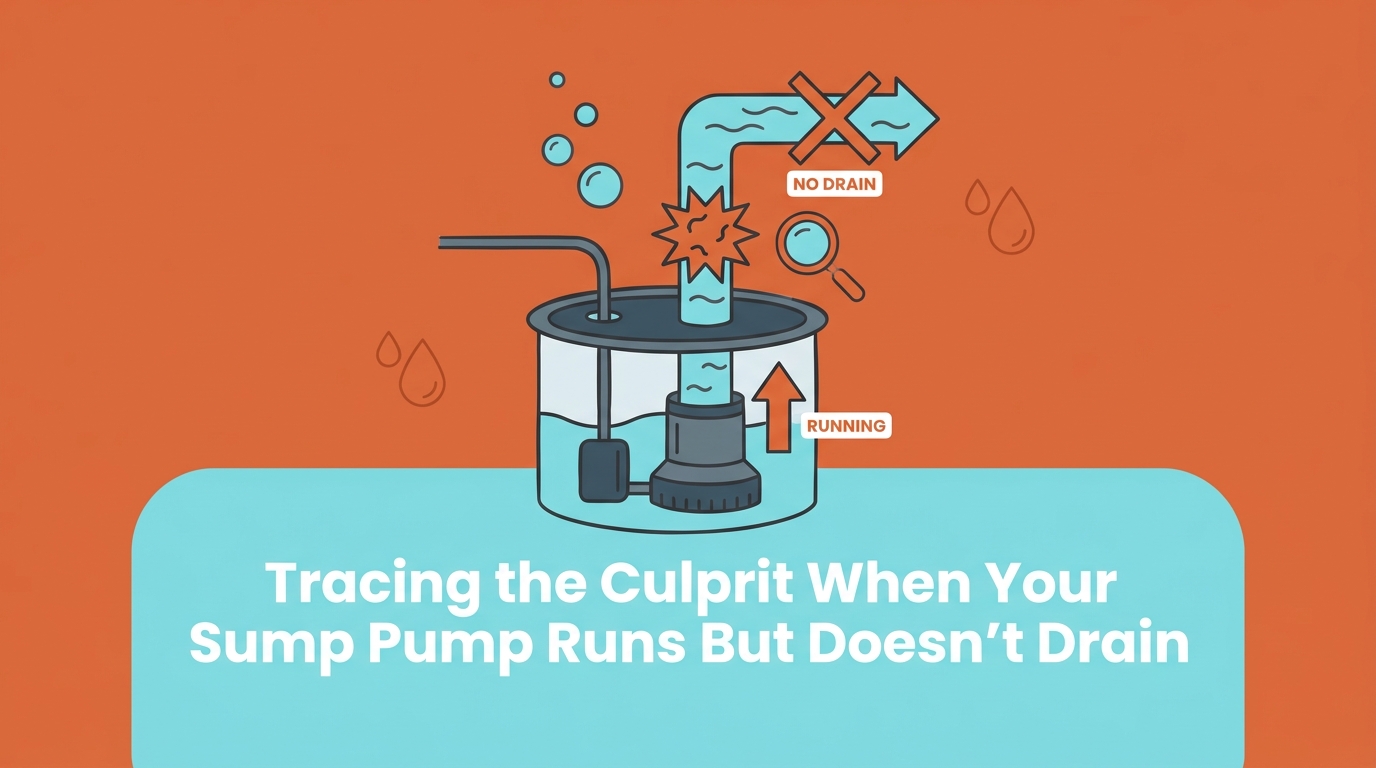


The Deceptive Hum: When Your Sump Pump Runs but Water Stays High
When heavy rain starts falling, hearing your motor kick on usually brings a sense of relief, but tracing the culprit when your sump pump runs but doesn't drain becomes a race against time as the pit water level refuses to drop. The continuous humming creates a dangerous false sense of security. You assume the system is actively protecting your home from rising groundwater, yet the water creeps higher and higher toward your basement floor. This mechanical disconnect means that while the electrical components are successfully receiving power, the physical movement of water has completely stalled.
For immediate help protecting your home, the experts at HRI Plumbing provide professional plumbing services to keep your system operating flawlessly.
During intense August late-summer thunderstorms, this false sense of security can lead to catastrophic flooding in a matter of minutes. Homeowners often wait to take action, assuming the pump is simply working hard to keep up with the deluge. However, electrical function does not guarantee mechanical water movement. The motor spinning is only half the battle; the system must physically capture and push heavy water up a vertical pipe and out of the house. Understanding this critical distinction is the very first step in diagnosing whether your check valve, impeller, or weep hole assembly requires professional intervention before an overflow occurs.
The Difference Between Electrical and Mechanical Failure
When a pump sits completely silent as water rises, the diagnosis is usually straightforward: a blown fuse, a tripped breaker, a dead outlet, or a failed float switch. The power is simply not reaching the motor. But when the motor hums continuously, the electrical supply is perfectly fine. The failure is entirely mechanical. The internal components designed to push water are either blocked, jammed, or starved of the water they need to function. Recognizing this specific symptom tells you that resetting the breaker will not solve the problem.
Understanding the Mechanical Disconnect in Submersible Pumps
The problem: You hear the pump running constantly, but looking into the pit reveals that the water level is stagnant or still rising. The system is consuming electricity and generating heat, but performing zero actual work.
The cause: Submersible sump pumps with check valves rely on a precise sequence of mechanical actions. The motor turns a shaft, which spins an impeller. The impeller uses centrifugal force to pull water into the intake screen and force it up through the casing into the discharge pipe. If any step in this physical pathway is interrupted, the motor will spin freely without moving a single drop of water. This is rarely a sign of a completely dead motor. Instead, the issue almost always traces back to trapped air, blocked pathways, or jammed moving parts that break the chain of water movement.
The solution: Diagnosing the exact point of failure requires looking beyond the electrical cord. By understanding why your sump pump won't trigger during a rainstorm or why it runs without draining, our professionals can systematically check the intake, the casing, the weep hole, and the discharge line to restore the flow of water.

What is a Sump Pump Airlock and How Does It Form?
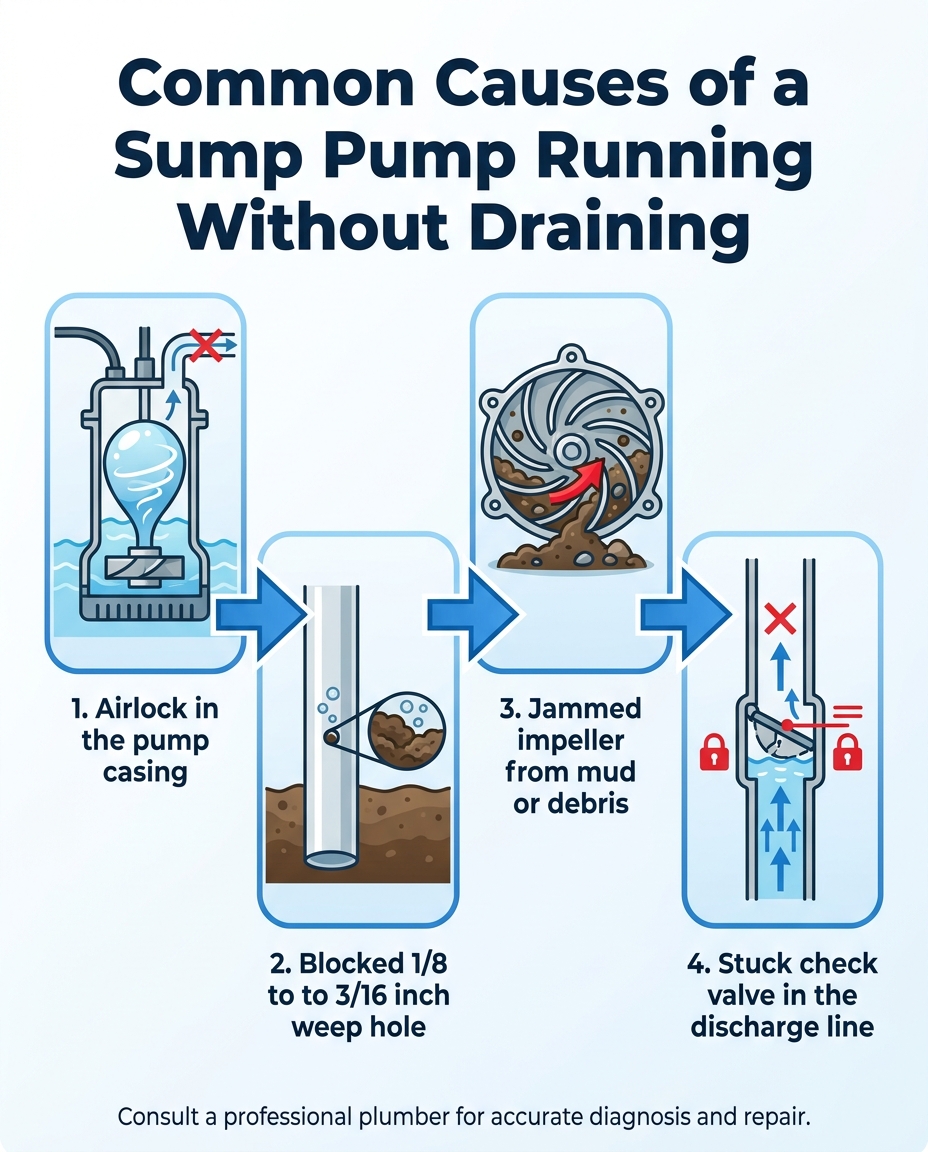
An airlock, frequently referred to in the plumbing industry as air binding, is one of the most common reasons a pump will run without draining. It occurs when a pocket of air becomes trapped inside the pump casing, right around the impeller. Because air is significantly lighter and less dense than water, the spinning impeller simply whips the trapped air around in a circle. Centrifugal pumps are designed to push heavy liquids; they lack the capability to compress and push a pocket of air against the heavy column of water resting in the discharge pipe above.
The physics of an airlock create a frustrating scenario. The motor operates at full speed, but the impeller spins uselessly in a pocket of air instead of biting into the water. Our plumbing technicians see this frequently in Jacksonville IL area basements, where high water tables and rapid rain events can quickly overwhelm a system. When the pit fills rapidly, the water can trap air inside the casing before it has a chance to naturally escape through the intake.
The Symptoms of Air Binding
Identifying an airlock requires paying close attention to the behavior of the water in the pit. While the motor hums continuously, you will notice specific signs that air is trapped inside the mechanism.
• Continuous motor humming with zero discharge: The motor sounds healthy and runs at a normal pitch, but absolutely no water exits the pipe outside your home.
• Slight water churning at the base: You may see the water in the pit vibrating or swirling slightly near the intake screen, but it never actually rises into the vertical pipe.
• Excessive heat buildup: Because the water is not flowing through the casing to cool the motor, the unit may become noticeably hot to the touch, which can eventually trigger a thermal overload switch.
The Vital Role of the Weep Hole in Your Discharge Pipe
The problem: Submersible sump pumps with check valves are highly susceptible to air binding if they do not have a dedicated way to vent trapped air out of the casing before the pump activates.
The cause: To prevent airlocks, manufacturers require the installation of a weep hole. This is a tiny hole—typically 1/8 to 3/16 of an inch in diameter—drilled into the PVC discharge pipe between the pump casing and the check valve. When the pit fills with water, this small opening allows trapped air to bleed out of the pipe, making room for water to reach the impeller. Over time, heavy sediment, iron bacteria, mud, or mineral buildup can easily clog this tiny opening. Once the weep hole is blocked, the air has nowhere to go, resulting in an immediate airlock the next time the pump tries to cycle.
The solution: Keeping the weep hole clear is a critical part of routine maintenance. When sediment builds up, professional drain cleaning and pit maintenance can remove the thick mud and mineral deposits that threaten to clog this tiny but essential relief valve.
Jammed Impellers: When Mud and Debris Stop the Flow
The impeller is the heart of the pump's mechanical operation. It consists of curved blades attached to the motor shaft, designed to create the centrifugal force necessary to drive water upward. Because the pump sits at the lowest point of your home, it is constantly exposed to whatever washes into the sump pit. Small rocks, thick clay, gravel, and general basement debris can easily bypass the intake screen and wedge themselves tightly against the impeller blades.
When intense, localized August late-summer thunderstorms hit the region, they often wash heavy mud and silt directly into the perimeter drain tiles, which then empty into your sump pit. This sudden influx of thick debris drastically increases the risk of a jammed impeller. The motor will still hum loudly as it struggles to turn the jammed shaft, but the physical blockage prevents any water movement. If left running in this state, the motor will quickly overheat and burn out, turning a simple jam into a complete system replacement.
Our HRI Plumbing team saw this firsthand when a Jacksonville homeowner's basement flooded after a massive late-summer storm. One of our technicians arrived within two hours, identified that heavy debris had severely jammed the impeller and compromised the system, and fixed the underlying mechanical issue to completely resolve the flooding before more damage occurred.
Stuck Check Valves and Discharge Blockages
Even if the pump casing is clear of air and the impeller is spinning freely, water still cannot leave the pit if the exit path is blocked. Submersible sump pumps with check valves rely on a one-way flapper mechanism installed in the vertical discharge pipe. This valve opens when the pump pushes water up, and snaps shut when the pump turns off. This prevents the heavy column of water in the pipe from crashing back down into the pit, which would cause the pump to short-cycle continuously.
Over time, the hinge on the check valve can corrode, or debris can jam the flapper in the fully closed position. When this happens, the pump turns on and tries to push water upward, but it hits a solid wall. The motor hums, the pipe may vibrate under the pressure, but the water level in the pit remains exactly the same.
• Motor hums, water swirls slightly, pipe is quiet — Likely Mechanical Cause: Airlock or clogged weep hole — Professional Action Required: Clear the relief hole and bleed trapped air from the casing
• Motor hums loudly, pump vibrates heavily, zero water movement — Likely Mechanical Cause: Jammed impeller — Professional Action Required: Dismantle the lower housing to extract rocks or heavy mud
• Motor runs smoothly, discharge pipe jolts or vibrates under pressure — Likely Mechanical Cause: Stuck check valve — Professional Action Required: Replace the faulty one-way valve assembly in the discharge line
Why DIY Sump Pump Mechanics Are a Risky Gamble
When panic sets in as water rises, it is tempting to grab a drill or a wrench and attempt a quick fix. However, DIY plumbing repairs on complex mechanical systems often lead to far worse outcomes. Drilling a new weep hole, for example, requires precise sizing and specific placement below the check valve and at a downward angle. Incorrect sizing or poor placement can spray high-pressure water across the basement, ruin the pump's efficiency, or completely void the manufacturer's warranty.
Furthermore, dismantling check valves or electrical components without proper training exposes you to significant risks. A misdiagnosed airlock or a poorly reassembled discharge pipe can lead to a burnt-out motor and catastrophic flooding. Jacksonville IL area basements require reliable, precision-tuned systems to handle the local water table.
During a sudden August downpour, one of our local customers faced a broken sump pump that was causing major issues. By calling our team for emergency plumbing in Jacksonville rather than attempting a DIY fix, they received a rapid response and an informative professional opinion on the issue, leaving them happy and looking forward to a reliable new sump pump installation. Relying on local expertise ensures that complex mechanical failures are diagnosed quickly and accurately before the storm worsens.
Knowing When to Call for Professional Sump Pump Diagnostics
A humming motor without water movement is an immediate red flag that your home is vulnerable. Whether the culprit is a stubborn airlock, a clogged weep hole, a jammed impeller, or a fused check valve, these mechanical disconnects require professional tools and knowledge to resolve safely. Tracing the culprit when your sump pump runs but doesn't drain is not something you want to attempt while the water is inches away from overflowing.
Resolving these issues promptly ensures that your system will actually protect your home rather than just making noise. If you hear that deceptive hum during the next round of August late-summer thunderstorms, do not wait for the water to spill over the edge. Seek an expert opinion and schedule professional sump pump repair and replacement to ensure your basement remains completely dry through the next major weather event.
Frequently Asked Questions
Why is my sump pump running but water is not going down?
This usually indicates a mechanical disconnect where the motor has power but cannot physically move water. The most common culprits are an airlock in the pump casing, a clogged weep hole, a jammed impeller, or a stuck check valve in the discharge pipe.
How do you fix an airlock in a sump pump?
Fixing an airlock requires bleeding the trapped air out of the pump casing so water can reach the impeller. A professional will typically clear the tiny weep hole in the discharge pipe or temporarily disconnect the line to allow the trapped air to escape, restoring normal suction.
What happens if a sump pump weep hole gets clogged?
When the weep hole gets clogged with mud or mineral deposits, trapped air cannot escape the system when the pit fills with water. This creates an airlock, causing the impeller to spin uselessly in a pocket of air while the water level in the pit continues to rise.
Can a sump pump motor run if the impeller is broken?
Yes, the motor can continue to run and hum even if the impeller is jammed by debris or completely broken off the shaft. The electrical components will still draw power, but without a functioning impeller, the system loses all ability to generate the centrifugal force needed to push water out.
Why does my sump pump hum but not pump water?
A humming sound confirms that electricity is reaching the motor, but a physical blockage is preventing water flow. This often means debris is wedged against the impeller blades, or a stuck check valve is acting like a closed door against the water pressure.
How do I know if my sump pump check valve is stuck closed?
If the check valve is stuck closed, the pump will run and you may feel the discharge pipe vibrating or jolting under pressure, but no water will exit the home. Because the flapper is jammed shut, the pump pushes against a solid barrier until it is professionally replaced.


