



Why Hair Clogs Happen and the Best Ways to Stop Them
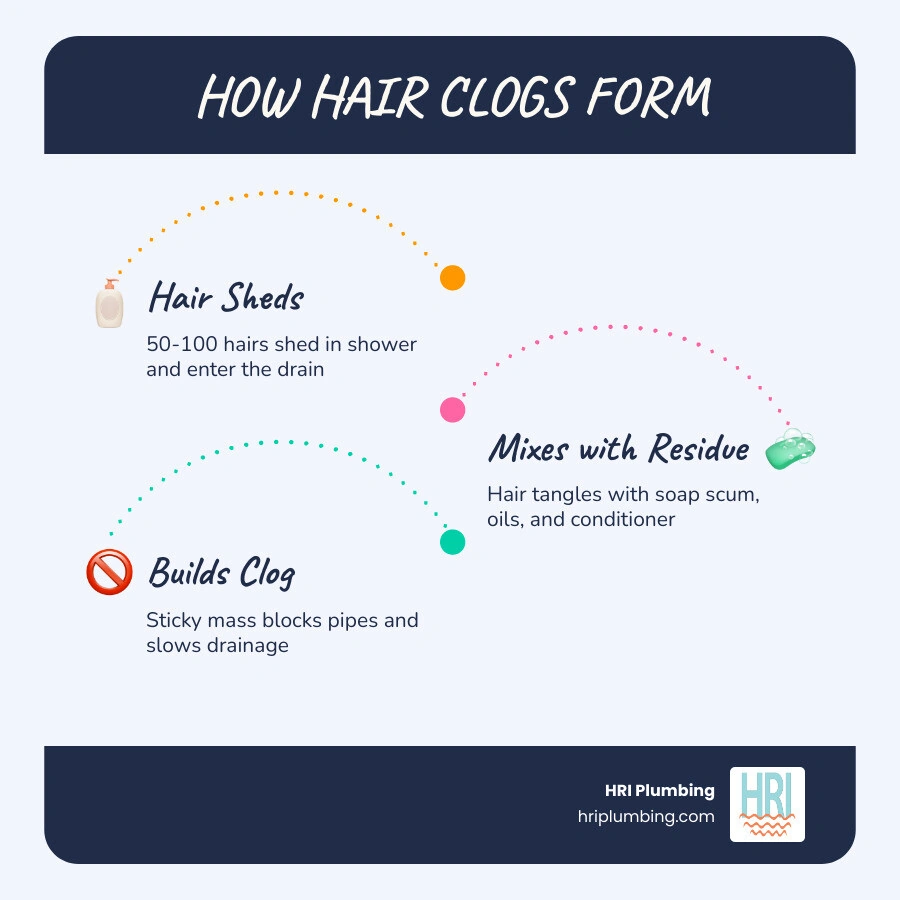
Knowing how to prevent hair clogs in shower drains can save you from standing ankle-deep in soapy water — a frustrating situation that's more common than you might think. Hair is responsible for more than 80% of shower drain clogs, and when it mixes with soap scum, body oils, and conditioner residue, it forms sticky masses that build up fast inside your pipes.
Here are the most effective ways to prevent hair clogs in your shower drain:
- Install a hair catcher or mesh drain cover and empty it after every shower
- Brush your hair before showering to remove loose strands before they reach the drain
- Run hot water for 30 seconds after each shower to flush residue through the pipes
- Clean your drain weekly by removing visible hair and rinsing the catcher
- Do a monthly baking soda and vinegar flush to break down early buildup
- Switch to lighter hair products if you use heavy conditioners or oils regularly
- Use enzyme-based drain cleaner monthly as a pipe-safe maintenance treatment
The average person sheds 50 to 100 hairs during a single shower. That's completely normal — but without the right habits in place, those hairs accumulate quickly and turn into a serious blockage. The good news is that most hair clogs are entirely preventable with a few simple daily routines and the right tools.
Related content about how to prevent hair clogs in shower drains:
Hair usually does not clog a shower drain by itself. The bigger problem is what it grabs onto. Loose strands tangle with soap scum, shampoo residue, skin oils, and heavy conditioner. If your home has hard water, mineral buildup can make pipe walls rougher and stickier, which gives that hair-and-gunk combo an even better place to collect.
Common signs your shower drain is starting to clog with hair include:
- Water draining slower than usual
- Hair collecting around the drain opening
- Gurgling sounds after the water shuts off
- Musty or unpleasant odors from the drain
- Water pooling around your feet during a shower

Is It Normal to Lose Hair in the Shower?
Yes. For most people, losing 50 to 100 hairs during a shower is normal. A lot of that shedding happens while washing, conditioning, and detangling because loose hairs that were already ready to fall finally let go.
A few common reasons for shower shedding include:
- The natural hair growth cycle, especially the telogen or resting phase
- Genetics
- Hormonal changes
- Stress
- Hair damage from heat styling or rough brushing
- Product buildup that weakens strands over time
If shedding suddenly becomes heavy, patchy, or much more than usual, that is more of a hair-health issue than a plumbing issue, and it may be worth discussing with a medical professional. But from a drain standpoint, normal shedding is still enough to cause clogs if it is not caught early.
To reduce the amount of loose hair heading toward the drain, we recommend:
- Gently brushing before showering with a wide-tooth comb
- Avoiding aggressive detangling on wet hair
- Using gentle shampoos and conditioners
- Applying heat protectant if you style with heat often
How to Prevent Hair Clogs in Shower Drains Every Day
Daily habits make the biggest difference. If you wait until the drain is slow, the clog has already started building.
Here is a simple routine that works well for most homes in Jacksonville, Springfield, and Rushville:
- Before showering:
- Brush or comb your hair gently
- Remove loose strands from brushes and throw them away
- During the shower:
- Use a drain cover or hair catcher every time
- Stick loose strands to the shower wall if needed, then throw them away after
- After the shower:
- Empty the catcher
- Run hot tap water for about 30 seconds
- Wipe away visible hair around the drain
A good maintenance rhythm looks like this:
- Daily:
- Empty the hair catcher
- Remove visible hair from the drain area
- Weekly:
- Rinse and scrub the catcher
- Flush the drain with hot tap water
- Monthly:
- Use baking soda and vinegar or an enzyme-based drain treatment
- Remove the cover and check for hair just below the opening
For more prevention tips, see what you should keep out of your drains.
Choosing the Right Drain Cover or Hair Catcher
The best hair catcher is the one that fits your drain properly and is easy enough to clean that you will actually keep using it.
Here is a quick comparison:
| Type | Best for | Pros | Watch for |
|---|---|---|---|
| Surface cover | Flat shower floors, square drains, tile showers | Easy to see and clean, catches hair before it enters drain | Must sit flat and secure well |
| In-drain catcher | Standard round drains | Hidden look, catches hair inside opening | Needs correct size and regular cleaning |
| Mesh strainer | Fine hair and frequent shedding | Good filtration, simple to use | Can clog faster if not emptied often |
| Silicone cover | Easy removal and flexible fit | Soft, simple to rinse clean | Some styles need flat tile and suction support |
| Stainless steel catcher | Heavy-use bathrooms | Durable, sturdy, often good flow | Make sure openings are not too large for fine hair |
When choosing one, look for:
- A secure fit for your drain size and shape
- Compatibility with any pop-up stopper or existing hardware
- Easy cleaning
- Good water flow without letting hair slip through
- A design that sits flat if your shower floor is tiled
In busy bathrooms or homes with long or curly hair, surface-style catchers can be especially helpful because they make cleanup obvious and fast.
How to Clear a Hair Clog Safely and When to Call a Plumber
If your drain is already slowing down, do not panic. Most hair clogs start close to the drain opening and can be cleared with simple tools. Start with the least aggressive method first.
Wear heavy-duty gloves, keep a trash bag nearby, and avoid reaching for harsh chemical drain cleaners right away. They often do not fully remove hair clumps and can be rough on pipes, seals, and noses.
If you want more background on repair options, read this shower drain repair guide.
Step-by-Step: How to Prevent Hair Clogs in Shower Drains by Cleaning Buildup Early
Cleaning early buildup is one of the best answers to how to prevent hair clogs in shower drains long term.
- Put on gloves.
- Remove the drain cover or stopper.
- Pull away any visible hair around the opening.
- Use tweezers, a plastic hair-removal tool, or a small hook to remove hair just below the surface.
- Throw the debris in the trash, not back down the drain.
- Pour about 1 cup of baking soda into the drain.
- Follow with 1 cup of white vinegar. A funnel helps prevent mess.
- Let it sit for 5 to 10 minutes.
- Flush with hot tap water. In many homes, hot tap water is a safer choice than boiling water, especially if you are unsure what pipe material you have.
- Clean the drain cover or catcher, dry it, and reinstall it.
If the clog is stubborn, use a small hand snake or plastic zip tool gently. Slow twisting is better than forcing it.
What Works Best for Unclogging Hair With Household Items and Simple Tools?
The most effective tools are usually the simplest ones:
- Plastic zip tool or hair-removal wand
- Tweezers or needle-nose pliers
- Cup plunger for flat shower drains
- Flashlight to inspect the opening
- Gloves
- Funnel for pouring baking soda and vinegar cleanly
- Small hand drain snake for deeper clogs
- Enzyme-based drain cleaner for maintenance
Household methods that can help include:
- Baking soda and vinegar for light organic buildup and odor control
- Hot tap water to help flush loosened residue
- Manual hair removal, which is often the most effective first step
A few cautions:
- Avoid harsh chemical cleaners as a first move
- Do not mix drain products
- Do not force a snake if it meets strong resistance
- Be careful with very hot or boiling water if your plumbing includes PVC
For deeper DIY guidance, see drain snaking basics and this Jacksonville drain cleaning guide.
When DIY Stops Working and It’s Time for Professional Help
Sometimes a "simple hair clog" is not simple anymore. If any of these signs show up, it is time to call for professional drain cleaning:
- The shower keeps clogging again within days
- Multiple drains in the home are slow
- You hear gurgling in nearby sinks or tubs
- Bad drain odors keep coming back
- Water backs up into another fixture
- You notice sewage smells
- Mold or mildew keeps returning around wet backup areas
- The clog does not improve after manual removal and snaking
These symptoms can point to a deeper blockage in the drain line or even a sewer issue, not just a little hair sitting under the cover.
If homeowners in Jacksonville, Springfield, or Rushville are dealing with recurring slow drains, we can help inspect the problem, clear the line safely, and recommend a maintenance plan that fits the home. You can also learn more about preventing foul drain odors, professional drain cleaning, or visit our main drain cleaning service page.
The bottom line: preventing hair clogs is much easier than wrestling a soggy hair monster out of the drain later. Catch the hair early, clean a little each week, and act fast when the drain starts slowing down. If DIY stops working, HRI Plumbing is here with reliable help, 24/7 support, and honest service for homes in Jacksonville, Springfield, and Rushville, IL.


