



When a Slight Wobble Signals a Major Hidden Leak
You sit down, and the porcelain shifts just a fraction of an inch—a subtle movement that makes spotting a failing toilet wax ring before it rots your bathroom subfloor an urgent priority for any homeowner. That faint rocking sensation is rarely just an annoyance; it is often the very first physical indicator that the watertight seal beneath your fixture has been broken. While the visible issue seems incredibly minor, the hidden reality is usually much more destructive. Every time the fixture is used, wastewater can slowly escape the drainage path, seeping directly into the porous wooden layers beneath your tile or linoleum.
Here at HRI Plumbing, we know that the critical decision point for homeowners in Jacksonville IL is recognizing these early symptoms before the structural damage becomes severe. A compromised seal does not fix itself, and delaying an inspection allows hidden moisture to accumulate in dark, unventilated spaces. Securing professional residential plumbing services at the first sign of instability can mean the difference between a straightforward seal replacement and a massive structural overhaul. By understanding what happens beneath the porcelain, you can protect your home from extensive water damage and dangerous mold growth.
The Hidden Mechanics of a Wax Ring Failure
To understand why a leak occurs, you have to look at the intersection where the fixture meets the home's drainage system. The wax ring is a thick, molded donut of petroleum wax or beeswax designed to create a perfectly watertight and airtight seal between the toilet horn (the bottom drain of the bowl) and the closet flange (the top of the drainpipe anchored to the floor). When properly compressed during installation, this wax molds to the exact shape of the gap, preventing both liquid wastewater and hazardous sewer gases from entering the living space.
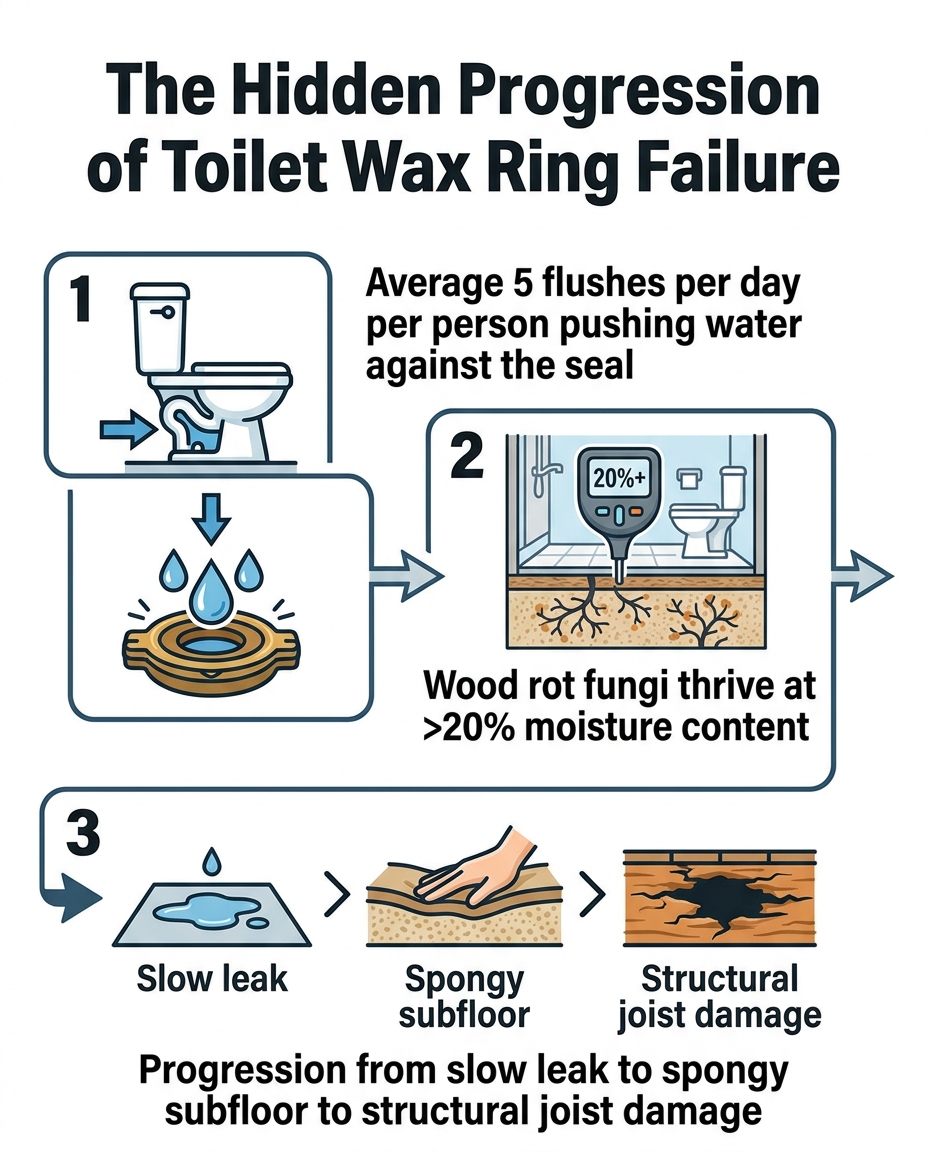
The physical degradation of this seal usually happens gradually. Our team often reminds families that, according to the EPA, an average toilet is flushed about five times per day per person. In a four-person household, that means a breached seal is subjected to a rush of wastewater twenty times a day. If the seal is broken, a small amount of that water escapes the primary drainage path during every single flush. While a loose flange bolt simply means the metal fastener has backed off, a compromised wax ring means the physical barrier keeping raw sewage out of your subfloor is entirely gone. When our HRI Plumbing professionals perform a toilet repair and installation, we can immediately tell the difference by assessing the flange integrity.
Why the Seal Breaks Down Over Time
• Structural settling: As homes age, wooden floor joists naturally expand, contract, and settle. This micro-movement can slowly pull the closet flange away from the porcelain horn, stretching and eventually tearing the wax seal.
• Loss of pliability: Over decades of use, the wax can dry out, harden, and lose its flexible, sticky qualities, making it prone to cracking under pressure.
• Improper initial seating: If the fixture was not dropped perfectly straight down during a previous installation, the wax may have been unevenly compressed, leaving a weak spot that eventually gives way to water pressure.
Early Warning Signs Your Wax Seal is Compromised
Because the seal is entirely hidden beneath the heavy porcelain bowl, you must rely on secondary symptoms to identify a breach. In our experience, catching these signs early is the most effective way to prevent catastrophic floor damage.
1. Persistent Sewer Gas Odors: One of the primary functions of the wax ring is to block sewer gases from rising out of the drainage pipe. If you notice a persistent musty, damp, or sulfur-like smell in the bathroom, the airtight seal has likely failed. During August, as families transition into the back-to-school season, late-summer humidity often masks these odors, causing homeowners to dismiss the smell as general seasonal mugginess. Do not ignore a bathroom that constantly smells damp.
2. The Wobbly Bowl: A toilet should be completely immobile. If you feel a rocking, shifting, or pivoting sensation when you sit down or stand up, the connection to the floor flange is compromised. This movement physically breaks the wax barrier.
3. Water Pooling Around the Base: If you see water seeping out from under the bottom edge of the porcelain, the leak has already saturated the area beneath the bowl. It is important to distinguish this from simple tank condensation (sweating), which drips down from above. If the floor is wet but the tank is dry, the wax ring is the culprit.
4. Phantom Flushing: While usually a tank issue, if you are busy diagnosing a phantom flushing toilet and notice the floor is also spongy, our technicians know you may have multiple failures compounding the water damage.
5. Ceiling Stains Below the Bathroom: If the bathroom is on a second floor, the most severe warning sign is a brown water stain spreading across the drywall ceiling of the room directly below. This indicates that wastewater has completely saturated the subfloor and is actively dripping through the joists.
How Hidden Wastewater Destroys Your Bathroom Subfloor
The true danger of a failing wax seal is not the puddle on the bathroom tile; it is the silent destruction occurring underneath. Modern bathrooms are built with layers: a finished floor (tile, linoleum, or luxury vinyl), a layer of underlayment, and a structural wooden subfloor supported by thick wooden joists. When wastewater escapes a broken wax ring, it gets trapped between the finished floor and the subfloor. Because this area receives no airflow or sunlight, the water simply sits, soaking deeply into the wood fibers.
According to FEMA moisture and mold guidelines, wood rot fungi thrive when the wood moisture content exceeds 20 percent. A slow, hidden plumbing leak easily pushes a bathroom subfloor past this critical threshold without the homeowner noticing immediately. Once the wood remains saturated, rot organisms begin consuming the cellulose. In one recent case our HRI Plumbing crew handled, a fast response was needed for an unspecified plumbing issue that caused sudden concern; our technician arrived quickly and determined the underlying issue within minutes, identifying a hidden leak before it could completely destroy the floor structure. We always stress that immediate hidden leak detection is essential to stop this progression.
The Progression of Wood Rot
• Initial dampness: The wood absorbs wastewater, activating dormant mold spores in the dark environment.
• Fiber softening: As fungi attack the cellulose, the wood begins to lose its rigidity. You may notice the floor feeling slightly "spongy" or soft right next to the toilet base.
• Structural failure: Left unchecked, the subfloor rots completely through. The closet flange loses its anchor point, making the toilet even more unstable, and eventually requiring the floor to be torn open to replace the main structural joists.

Why Late-Summer Weather Accelerates Subfloor Damage
Environmental factors play a massive role in how quickly a plumbing leak turns into a structural emergency. In our experience working throughout Central Illinois, the high summer humidity acts as an aggressive accelerator for mold growth and wood rot. Fungi require three things to destroy wood: a food source (the wooden subfloor), oxygen, and moisture. When you combine a continuous wastewater leak with warm, heavily humid ambient air, you create the perfect incubator for rapid degradation.
During August and early September, the air is already thick with moisture. This ambient humidity prevents any accidental drying that might occur in the cooler, drier winter months. Furthermore, the damp odors of a slow leak are easily masked by the muggy weather. We often see homeowners walk into their bathroom, smell something musty, and blame it on the late-summer heat rather than investigating the plumbing. This dangerous delay in detection allows the rot to spread significantly faster than it would during the winter.
• Late-Summer Humidity — Impact on Wax Ring Leaks: Masks musty sewer odors; prevents trapped moisture from evaporating. — Speed of Subfloor Rot: Highly accelerated due to optimal temperatures for fungal growth.
• Dry Winter Air — Impact on Wax Ring Leaks: Odors are more distinct; cold air holds less ambient moisture. — Speed of Subfloor Rot: Slower progression, though constant wastewater still causes eventual failure.
The Danger of DIY: Why Tightening Bolts Isn't the Answer
When a homeowner notices their toilet rocking, the most common psychological reaction is to reach for a wrench and simply tighten the closet bolts at the base. Our plumbers frequently see this dangerous mistake. Those bolts anchor the toilet to the floor flange, but they do not create the seal. If the bowl is wobbling, the wax ring has already been crushed, deformed, or torn. Tightening the bolts simply compresses a ruined piece of wax. It will not magically restore the watertight barrier, and overtightening the bolts carries a very high risk of cracking the fragile porcelain base, which destroys the entire fixture.
Furthermore, replacing a wax ring is not a recommended DIY project. It requires completely draining the system, safely lifting a heavy, awkward porcelain fixture in a tight space, and perfectly seating the new ring blindly. If the new wax is misaligned by even a fraction of an inch during the reset, the new seal will leak from day one, causing further hidden rot. We recently worked with a local homeowner dealing with a bad leak underneath their home on a slab who needed immediate guidance to stop the damage. Our HRI Plumbing technicians walked the customer through all their options and helped make a decision for repair, resulting in all new plumbing, proper ventilation, and toilet fittings installed perfectly. By focusing on proactive homeowner education, our professionals ensure that the flange is thoroughly inspected, repaired if necessary, and the new ring is seated flawlessly to prevent future disasters.
Protecting Your Home from Extensive Bathroom Repairs
The overarching theme of plumbing maintenance is that early intervention stops localized issues from becoming whole-room catastrophes. The process of having a professional replace a wax ring is straightforward, localized to the fixture itself, and highly effective. Contrast this with the invasive, disruptive reality of replacing rotted subfloor joists, which requires tearing out the toilet, the vanity, the tile, and the underlayment just to reach the structural wood.
Catching the issue early keeps the repair strictly focused on the plumbing fixture. If you notice a slight wobble or a faint musty smell in your Jacksonville IL home, our team can provide a professional assessment to quickly determine if the movement is due to a simple broken flange bracket or a full seal breach. Acting immediately on these early signs ensures that your subfloor remains dry, solid, and capable of supporting your bathroom fixtures for decades to come. Ignoring the signs almost guarantees that you will eventually be looking at extensive bathroom remodeling in Jacksonville just to repair the structural water damage.
Proactive Plumbing Solutions for a Secure Bathroom
A rocking toilet or a persistent musty smell is your home's way of asking for immediate help. Allowing a breached wax seal to continue leaking wastewater into your subfloor is a guaranteed path to severe wood rot, mold growth, and structural failure. Do not wait for water to pool on the floor or for brown stains to appear on the ceiling below.
Protect your home by seeking a professional plumbing assessment from HRI Plumbing the moment you notice any instability in your fixtures. A licensed expert can safely lift the unit, inspect the hidden flange, and restore the watertight barrier before the structural damage spreads. Take action today to secure your bathroom and ensure your subfloor remains completely dry and structurally sound.
Frequently Asked Questions
How do you know if your toilet wax ring is leaking?
The most common signs of a leaking wax ring include a persistent musty or sewer gas odor in the bathroom, a toilet that rocks or wobbles when you sit on it, and water pooling around the base of the porcelain. You might also notice the floor feeling soft or spongy near the fixture. If the bathroom is on a second story, a brown water stain on the ceiling below is a definitive sign of a hidden leak.
Can a bad wax ring cause a wobbly toilet?
A bad wax ring itself doesn't typically cause the wobble; rather, the wobble causes the bad wax ring. When a toilet becomes loose due to a broken flange or settling floors, the rocking motion breaks the airtight and watertight wax seal. Once that seal is broken, it cannot reform, meaning the wobble is both the cause of the failure and the primary symptom that the seal is ruined.
What happens when a toilet wax ring fails?
When the wax ring fails, it allows liquid wastewater and hazardous sewer gases to escape the drainage pipe. The water seeps outward beneath the finished flooring, soaking into the wooden subfloor and joists. Over time, this constant moisture exposure leads to severe wood rot, structural degradation, and aggressive mold growth in the dark spaces beneath your bathroom.
How long do toilet wax rings typically last?
Under ideal conditions, our team finds that a properly installed wax ring can last the lifetime of the toilet itself, often 20 to 30 years. However, their lifespan is drastically reduced if the floor settles, if the closet flange is damaged, or if the toilet becomes loose and starts rocking. The wax can also dry out and become brittle over decades, making it more susceptible to cracking.
Does a musty smell in the bathroom always mean a plumbing leak?
While a musty smell can sometimes be attributed to poor ventilation or damp towels, a persistent odor that smells vaguely like sulfur or sewage is a strong indicator of a plumbing issue. If the smell lingers near the base of the toilet regardless of how often you clean, it is highly likely that sewer gases are escaping past a compromised wax seal.
Can you replace a toilet wax ring without replacing the subfloor?
Yes, as long as the leak is caught early before the hidden wastewater has a chance to rot the wood. If the subfloor is still dry and structurally sound, our plumbers can simply clean the flange and install a new wax ring. However, if the leak has been ignored and the wood is spongy or crumbling, the damaged sections of the subfloor must be cut out and replaced to provide a secure anchor for the fixture.


