

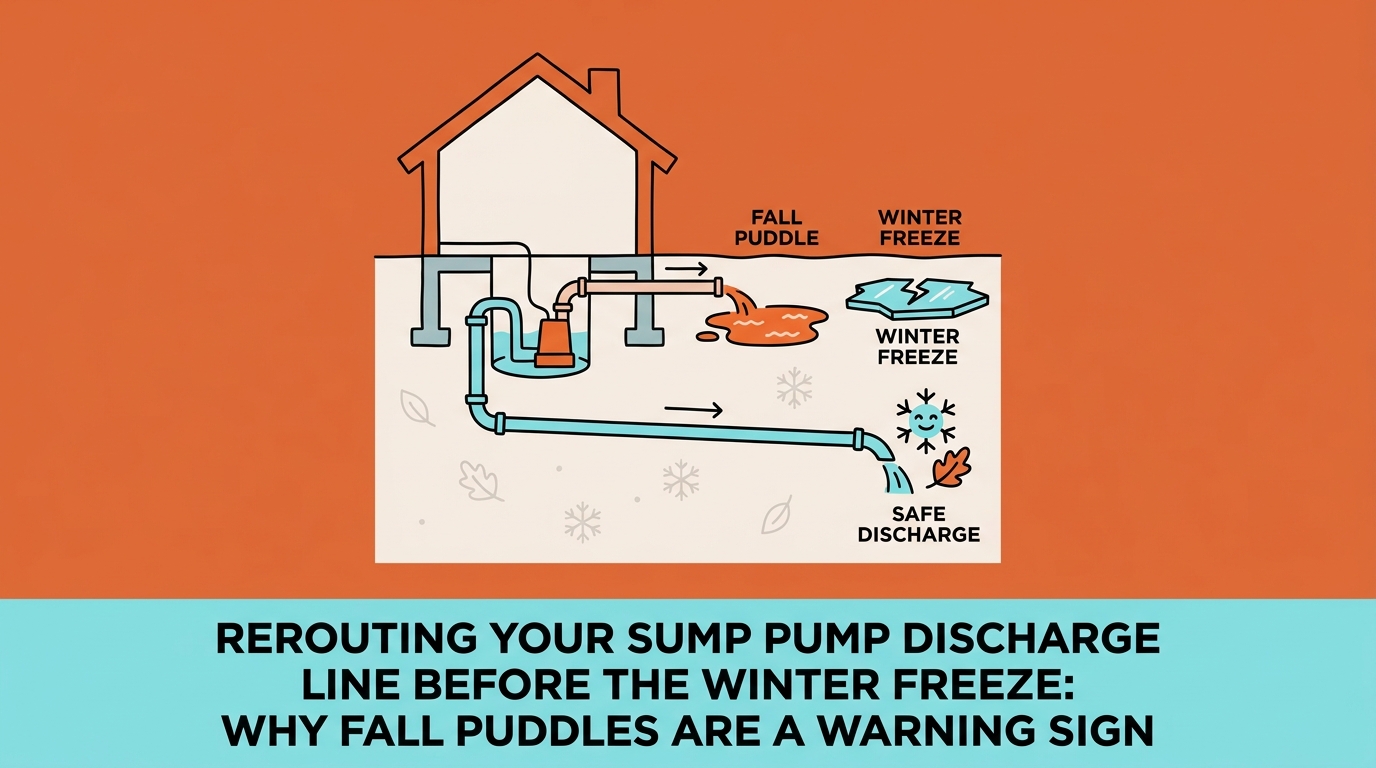


Why Autumn Yard Puddles Signal a Looming Winter Plumbing Disaster
With the September pre-heating-season rains arriving across the region, rerouting your sump pump discharge line before the winter freeze is one of the most critical preventative steps you can take to protect your foundation. As the heavy autumn downpours roll through, our team at HRI Plumbing frequently hears from homeowners who notice water pooling stubbornly near the exterior walls of their home. Most homeowners dismiss this standing water as a simple landscaping nuisance, perhaps blaming poor soil absorption or a misaligned gutter downspout. However, this pooling water is often a direct diagnostic warning sign of a poorly sloped sump pump discharge line that is failing to move water away from your foundation.
To understand why this is a pressing issue, you have to look at the timeline. Fall puddles mean that water is lingering where it shouldn't. When temperatures plummet in the coming months, that standing water will inevitably freeze solid. A frozen discharge line acts as a complete roadblock for your sump pump system. If you ignore these autumn puddles, you are essentially leaving a ticking time bomb in your yard that will detonate during the first major winter storm. Addressing the root cause now by securing comprehensive plumbing services ensures your system is properly evaluated and corrected before the ground freezes solid.
The Anatomy of a Fall Puddle
Not all yard puddles are created equal. When our technicians assess the moisture around your home during the September rains, we pay close attention to where the water is accumulating. If the pooling is localized directly beneath or around the exit point of your sump pump discharge pipe, you are looking at a system failure, not a weather anomaly. The water is exiting the pipe but lacking the necessary momentum and grading to disperse into the broader yard. Instead, it sits, saturates the soil, and often begins to seep right back down into the very foundation it was just pumped out of.
This recirculation cycle means your sump pump is working double-time, pumping the exact same water out over and over again. This not only shortens the lifespan of your equipment but also creates a massive reservoir of trapped water inside the buried portions of the pipe. Recognizing this specific pattern of pooling water is the first step in preventing a catastrophic winter backup.
The Hidden Mechanics: How Improper Slope Traps Water in Your Discharge Line
At its core, a sump pump discharge system relies heavily on a very simple force: gravity. While the pump itself provides the mechanical thrust to lift the water out of the basement pit and push it outside, gravity is entirely responsible for carrying that water away from the house once it exits the vertical pipe. If the horizontal underground piping lacks a continuous, downward slope, gravity cannot do its job. This is the primary mechanical failure that leads to trapped water, and a pattern we see often when diagnosing why your sump pump runs but doesn't drain efficiently.
When a discharge line is installed correctly, it features a steady pitch—typically a quarter-inch of drop for every foot of horizontal run. This ensures that the moment the pump shuts off, all remaining water inside the pipe flows smoothly down to the exit point in the yard, leaving the pipe completely empty. If the pipe is empty, there is absolutely nothing inside it to freeze. However, when dips, bellies, or flat spots exist in the line, they act like miniature underground reservoirs. The pump pushes water through, but when the cycle ends, a significant volume of water settles into these low spots and remains trapped.
The International Residential Code (IRC) provides strict guidelines for foundation drainage, generally recommending that discharged water be routed at least 10 to 20 feet away from the foundation walls. Achieving this distance requires a perfectly calculated slope. If the grading is insufficient, the water simply cannot travel the necessary distance, leading to the puddling and recirculation issues that plague so many homes we visit in the Jacksonville IL area.
What Causes a Discharge Line to Lose Its Slope?
Even a system that was installed perfectly decades ago can develop serious grading issues over time. The ground around a home is rarely static. In our years of servicing local plumbing systems, we've identified several common factors that compromise the integrity and pitch of your discharge line:
• Soil settling around the foundation over time: The backfill dirt used around a foundation during initial construction naturally compresses and sinks over the years. As the soil drops, it takes the buried discharge pipe down with it, creating a deep belly where water pools.
• Improper initial installation: Unfortunately, many lines are laid without the use of a transit or proper leveling tools, resulting in a pipe that looks flat to the naked eye but actually runs slightly uphill.
• Lawn maintenance and heavy equipment: Riding lawnmowers, landscaping machinery, or even heavy foot traffic can compress the earth above shallowly buried pipes, slowly crushing or bending the PVC out of alignment.
• Root intrusion and soil shifting: Large trees seeking water can push against buried lines, altering their slope or infiltrating the joints, causing partial blockages that trap standing water.
The Physics of Freezing Pipes: From Standing Water to Solid Ice
Understanding the transition from a fall puddle to a winter disaster requires looking at the fundamental physics of water. When water transitions from a liquid state to a solid state, it undergoes a unique chemical transformation: it expands by approximately 9%. This expansion is not a gentle process. It exerts immense, unrelenting outward pressure on whatever container is holding it. In the context of your plumbing, that container is a rigid PVC discharge pipe—something our team unfortunately sees shattered all too often during winter emergency calls.
When the trapped water in a poorly sloped pipe freezes, that 9% expansion pushes against the inner walls of the PVC. If the pipe is completely full of standing water, the ice has nowhere to go but outward, which frequently causes the pipe to crack, splinter, or shatter underground. Even if the pipe survives the initial expansion, you are now left with a solid block of ice completely obstructing the flow of water.
When the next winter rain or snowmelt triggers your sump pump to activate, the pump will forcefully push water up and out of the basement, only to slam into that impassable ice block. Because the water cannot exit the home, the immense pressure forces it to back up instantly. The water will overflow the sump pit, spilling directly across your basement floor.
Understanding the Central Illinois Frost Line
The vulnerability of your discharge line is heavily dependent on regional climate factors. Having served the Jacksonville IL area through countless severe winters, our team knows that the winter climate is notoriously harsh, and the frost depth—the depth to which groundwater in the soil is expected to freeze—can easily reach 24 to 36 inches during a severe, prolonged cold snap.
If your discharge line is routed above ground, or if it is buried too shallowly within that frost zone, any standing water inside will freeze rapidly. A sudden hard freeze can drop surface temperatures dramatically overnight, turning a sluggishly draining pipe into a solid block of ice in a matter of hours. This is why surface lines or lines buried only a few inches deep are exceptionally vulnerable in Central Illinois.
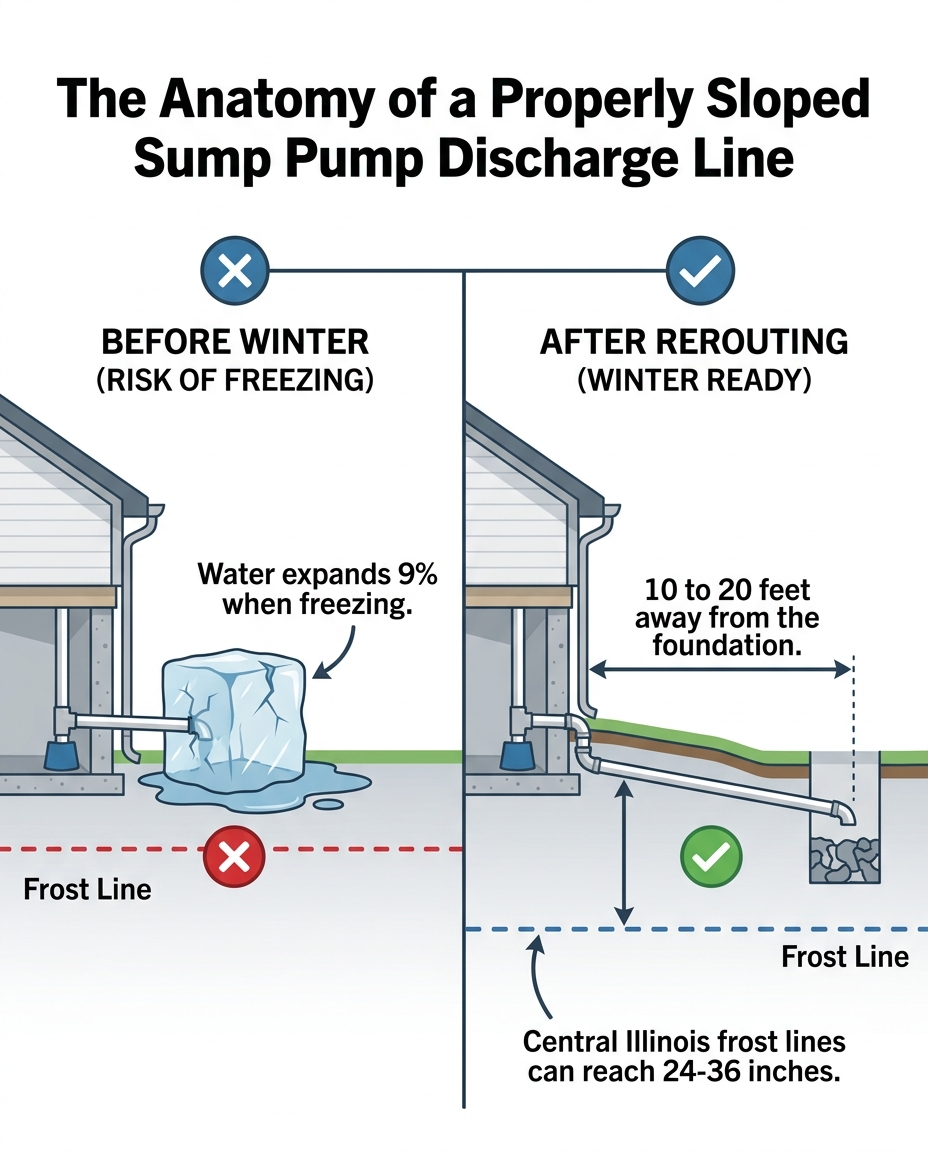

To illustrate the stark difference between a healthy system and a compromised one during the winter months, consider the structural differences outlined below:
• Properly Sloped Line — Water Flow Dynamics: Gravity empties the pipe completely after every single cycle. — Winter Freeze Risk Level: Extremely Low (No standing water present to freeze). — Impact on Sump Pump Motor: Normal operation; motor rests completely between cycles.
• Improperly Sloped Line (Belly/Dip) — Water Flow Dynamics: Water pools in low spots, remaining trapped underground. — Winter Freeze Risk Level: Extremely High (Trapped water freezes into a solid blockage). — Impact on Sump Pump Motor: Motor deadheads against ice, overheats, and burns out rapidly.
• Shallow/Surface Line — Water Flow Dynamics: Water moves slowly or pools near the exit point. — Winter Freeze Risk Level: High (Exposed to sudden surface temperature drops). — Impact on Sump Pump Motor: Motor runs continuously trying to push past slush and ice buildup.
Why Rerouting Your Discharge Line is a Job for Professionals
Given the severe consequences of a frozen line, it is incredibly tempting for homeowners to try and fix the slope themselves with a shovel and a weekend of free time. However, rerouting a discharge line is not a simple landscaping project; it is a precise plumbing operation that requires professional expertise. Calculating the exact pitch and slope required for proper drainage over a 20-foot run is complex. If you are off by even a fraction of an inch, you can inadvertently create a new belly in the pipe, leaving you with the exact same freezing risk you started with.
Furthermore, our professional Jacksonville plumbers utilize specialized tools, such as laser levels and transits, to ensure the trench is graded perfectly before a single piece of pipe is laid. We also understand the specific dynamics of local soil composition—something we've mastered over years of local trenching—and how to properly bed the pipe in gravel or sand to prevent future settling and shifting.
The Hidden Dangers of DIY Trenching
Beyond the mathematics of the slope, the physical act of trenching carries significant risks. The ground around your foundation is a maze of critical infrastructure. Attempting to dig a new trench without proper utility locates can result in striking buried electrical lines, gas mains, or municipal water supply lines. A professional team like ours always ensures that the site is properly surveyed and marked before excavation begins.
Additionally, professional installation guarantees compliance with local municipal discharge codes. Many municipalities have strict regulations regarding where sump pump water can be directed. Routing your discharge line into a sanitary sewer, across a public sidewalk, or into a neighbor's yard can result in steep fines. Professionals ensure that the water is routed far enough away to prevent recirculation, while remaining entirely compliant with local ordinances.
Preventative Action vs. Emergency Winter Plumbing Failures
There is a profound difference between scheduling a proactive repair in the mild weather of the September pre-heating-season and dealing with a catastrophic failure in the dead of winter. When a discharge line freezes and the basement floods, it creates a chaotic, high-stress scenario. You are suddenly dealing with water damage to your belongings, the potential for mold growth, and the immediate need for extensive cleanup, all while a winter storm rages outside.
Thawing a frozen underground line in January is an incredibly difficult and labor-intensive process. The ground is frozen solid, making excavation nearly impossible without heavy machinery. Our technicians often have to use specialized hydro-jetting equipment or steam machines to slowly melt the ice blockage from the inside out, which is a slow and meticulous process. If the pipe has ruptured due to ice expansion, the repair becomes even more complex, often requiring temporary above-ground bypass lines until the spring thaw allows for proper digging.
The True Cost of Waiting for a Freeze
By contrasting this nightmare scenario with proactive fall maintenance, the value of early intervention becomes clear. Scheduling an inspection during the critical fall window—before the first hard freeze hits—allows for a controlled, deliberate assessment of your system. The ground is still soft, making trenching and rerouting straightforward and efficient.
As experts deeply familiar with Central Illinois weather challenges, the team at HRI Plumbing knows firsthand how quickly a sudden freeze can overwhelm an unprepared home. While our crews are fully equipped to provide rapid emergency plumbing assistance when disaster strikes, our primary goal is always to help homeowners avoid the emergency altogether. Investing in professional rerouting now provides invaluable peace of mind, ensuring that when the winter storms inevitably arrive, your basement remains completely dry and secure.
Frequently Asked Questions About Sump Pump Discharge Lines and Winter Freezes
What happens if a sump pump discharge line freezes?
When a discharge line freezes, the water has nowhere to exit, causing the pump to run continuously until it burns out or the water overflows the pit, flooding the basement. The solid ice block acts as a complete seal, meaning any new water entering the sump pit is trapped inside the home. Furthermore, the expansion of the ice often causes the rigid PVC pipe to crack or shatter underground, necessitating a complete pipe replacement once the ground thaws. Addressing slope issues before winter is the only reliable way to prevent this scenario.
Does a sump pump discharge line need a slope?
Yes, a continuous downward slope is absolutely mandatory so gravity can completely empty the pipe after each pump cycle, leaving no standing water to freeze. Without this slope, water pools in the low spots of the pipe, creating underground reservoirs that are highly susceptible to freezing during a cold snap. A professional installation ensures a precise, continuous pitch—usually a quarter-inch drop per foot—so that the line drains rapidly and entirely every single time the motor shuts off.
How far should a sump pump discharge pipe be from the house?
Best practices and building codes generally recommend routing the water 10 to 20 feet away from the foundation to prevent the same water from seeping back into the basement. If the water is discharged too close to the home, it simply saturates the surrounding soil and drains right back into the foundation perimeter tiles, forcing the sump pump to work continuously. Extending the line ensures the water is dispersed into the broader yard where it can naturally absorb without threatening the home's structural integrity.
How do I keep my sump pump pipe from freezing?
The most effective method is ensuring a proper downward slope so the pipe remains empty between cycles, often requiring professional rerouting or the installation of specialized freeze guards. A freeze guard is a specialized fitting installed on the exterior of the home that allows water to escape if the buried portion of the line becomes blocked by ice. However, the root solution is always correcting the grade of the underground pipe so that water never has the opportunity to pool and freeze in the first place.
Why am I seeing puddles around my foundation in the fall?
Fall puddles often indicate that your discharge line lacks the proper slope, causing water to pool at the exit point rather than draining away smoothly into the yard. During heavy autumn rains, the sump pump moves a high volume of water, and if the line is compromised by a dip or belly, that water backs up and saturates the surface soil. When we inspect these issues, we frequently find that treating these puddles as a diagnostic warning sign allows you to correct the grading before winter temperatures turn that standing water into a destructive ice block.
Can a frozen discharge line damage my sump pump motor?
Yes, pushing against a solid ice blockage causes the motor to overwork, overheat, and potentially fail entirely, requiring a full replacement. Sump pumps are designed to move water freely; they are not designed to generate the extreme pressure required to push past a solid obstruction. When the motor "deadheads" against the ice, the internal components rapidly overheat, leading to a burnt-out motor and a completely defenseless basement during the next major thaw or rainstorm.
Secure Your Basement Before the First Hard Freeze
Those lingering fall puddles near your foundation are not just a sign of poor soil drainage; they are a clear, diagnostic warning that your sump pump discharge line is improperly sloped and holding water. When the harsh winter temperatures arrive in the Jacksonville IL area, that standing water will freeze solid, creating an impassable blockage that forces water directly back into your home. Ignoring this early warning sign during the September pre-heating-season almost guarantees a stressful, chaotic basement flood when you least expect it.
Professional rerouting is the safest, most reliable way to ensure your system has the precise gravity-fed slope needed to stay empty and freeze-free all winter long. Don't wait until the ground is frozen solid and your basement is actively taking on water. Take advantage of the fall preparation window to secure your home. Reach out to HRI Plumbing today to schedule an inspection and explore professional sump pump repair and replacement options, ensuring your foundation remains dry, safe, and fully protected against the coming winter freeze.


