


When a Sewer Emergency Strikes: What Springfield Homeowners Need to Know

Emergency sewer repair in springfield, il can't wait. When you're facing sewage backing up into your home, multiple clogged drains, or foul odors, you need help immediately. The good news is that licensed plumbers are available 24/7 in Springfield for same-day service to stop the damage and restore your plumbing.
Quick Action Guide for Sewer Emergencies:
- Call a 24/7 emergency plumber immediately - Don't wait for business hours.
- Stop using all water - This includes toilets, sinks, showers, and appliances.
- Shut off your main water valve if the backup is severe.
- Move people and pets away from contaminated areas.
- Document damage with photos for your insurance claim.
Sewer emergencies are messy, stressful, and potentially hazardous. Common causes include tree root intrusion, pipe corrosion, bellied pipes, and blockages from grease or foreign objects. The key is knowing how to act fast, find reliable help, and understand your responsibilities. This guide will walk you through every step.
For comprehensive plumbing solutions beyond emergencies, explore our complete plumbing services in Springfield. If you need immediate help, contact HRI Plumbing for same-day emergency service.
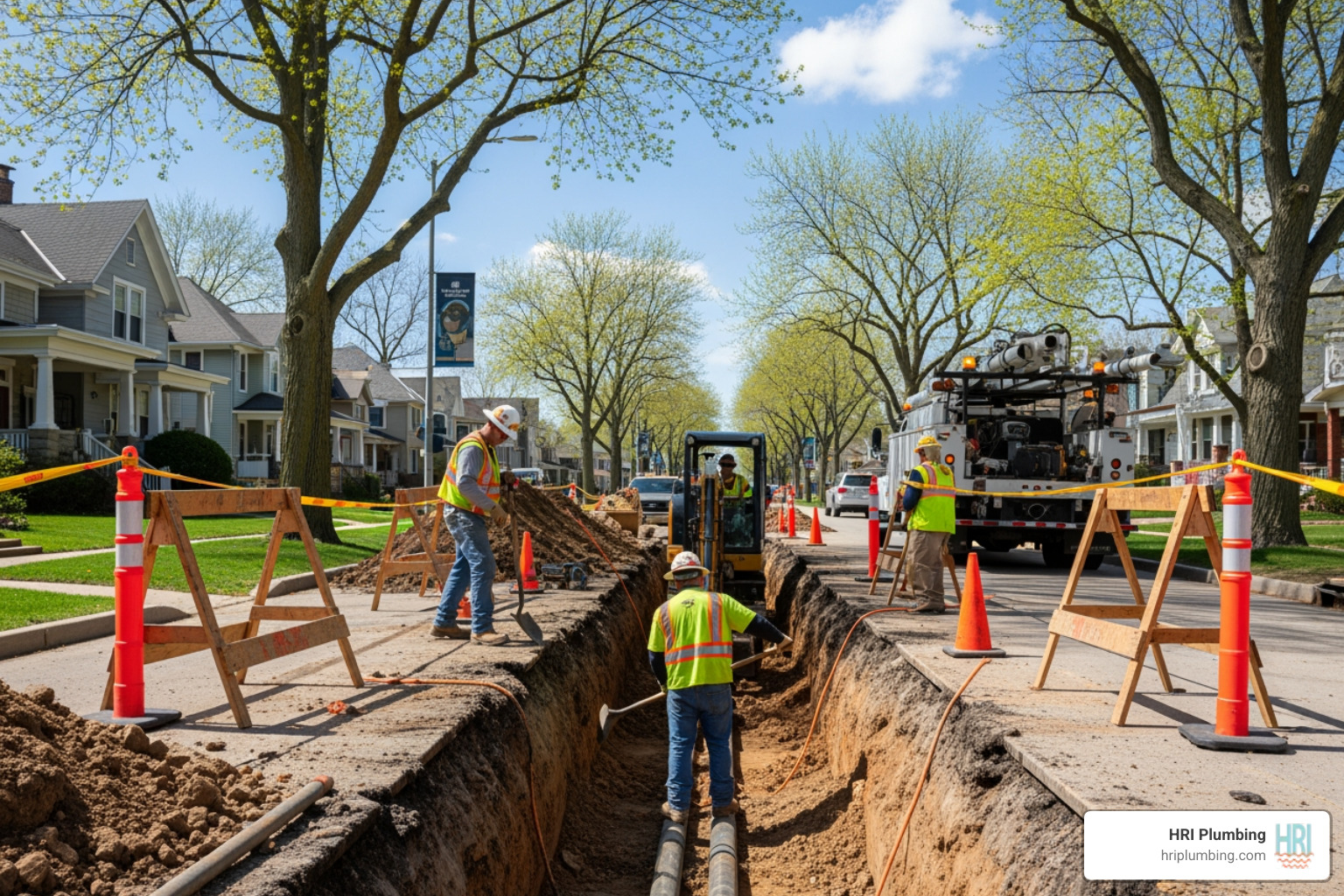
Your Step-by-Step Guide to Emergency Sewer Repair in Springfield, IL
What Constitutes a Sewer Emergency?
A sewer emergency is a critical plumbing situation that demands immediate professional attention to prevent property damage and health hazards. Here’s what to look out for:
- Sewage Backing Up: Raw sewage coming up through drains, toilets, or into your basement is a clear emergency. It signals a severe blockage or break in your main sewer line.
- Multiple Clogged Drains: If sinks, toilets, and showers are all clogged or draining slowly at once, the problem is likely in your main sewer line.
- Strong Sewer Gas Odor: A foul sewage smell inside your home is a serious red flag, indicating a possible break or vent pipe issue that could release harmful gases.
- Soggy Patches in Your Yard: Unusually wet, foul-smelling spots in your yard can point to a leaking or broken underground sewer pipe.
- Gurgling Noises: Gurgling sounds from drains or toilets often mean air is trapped in the sewer line, which can be a precursor to a backup.
Common culprits behind these emergencies for homeowners in Springfield, IL, Jacksonville, IL, and Rushville, IL include:
- Tree Root Intrusion: Roots seek water and can infiltrate sewer pipes through tiny cracks, growing into dense blockages.
- Pipe Corrosion: Older pipes can corrode, weaken, and become prone to cracking or collapse.
- Bellied Pipes: A section of pipe can sink due to shifting soil, creating a "belly" where waste collects and forms a blockage.
- Severe Blockages: Grease, "flushable" wipes, and other non-flushable items can accumulate and completely obstruct the sewer line.
- Broken or Collapsed Pipes: Ground shifting or heavy traffic can physically damage pipes, stopping wastewater flow.
Understanding these signs and causes is the first step. For more on pinpointing hidden issues, check out our resources on leak detection.
Immediate Steps to Take During a Sewer Backup
Taking decisive action can minimize damage and protect your family. Here’s what to do:
- Stop Using All Water: Don't flush toilets, run faucets, or use water-draining appliances. Adding more water will worsen the backup.
- Shut Off Your Main Water Valve: If sewage is actively flooding your home, turn off the main water supply to prevent further overflow.
- Avoid Chemical Drain Cleaners: These are ineffective for main line blockages and can corrode your pipes, making the problem worse.
- Move Valuables: If possible, move furniture, electronics, and other belongings out of the affected area to prevent damage.
- Ventilate the Area: Open windows to help dissipate harmful sewer gases and odors, but only if it's safe to enter the area.
- Document the Damage: Take photos and videos of the affected areas for your insurance claim.
- Keep People and Pets Away: Sewage contains harmful bacteria. Cordon off the area to prevent illness.
- Call a Professional Emergency Plumber: Your most important step is to call a qualified plumber. Main sewer line issues require specialized equipment and expertise and are not a DIY job.
For more helpful advice, refer to our emergency plumbing tips.
Finding a 24/7 Professional for emergency sewer repair in springfield, il
When facing a sewer emergency, you need a professional who offers 24/7 service. Here's what to look for:
- 24/7 Availability: A true emergency service is available 24/7/365 to answer your call and dispatch a technician. We offer this continuous support because emergencies don't wait for business hours.
- Same-Day Service: An emergency plumber should provide prompt, same-day service to diagnose the problem and prevent further damage.
- Licensed and Insured: Always hire a fully licensed and insured plumber. This protects you from liability and ensures the technician is qualified.
- Local Springfield Service: A local company means faster response times and familiarity with Springfield's specific sewer system and common local issues.
- Reputation and Experience: Look for a company with a proven track record of quality and reliability. Our team brings years of dedicated experience to every job, equipped with the latest technology and training.
We offer professional and trustworthy emergency plumbing services, ensuring that when you call us for an emergency sewer repair in Springfield, IL, you receive timely and quality service. For more information, visit our page on emergency plumbing in Springfield, IL or get tips on how to find a reliable plumber.
Understanding Common Emergency Repair Services
Once an emergency plumber arrives, they will use specialized services to resolve the issue. These may include:
- Video Camera Inspection: A waterproof camera is sent through the sewer line to pinpoint the exact location and cause of the problem.
- Hydro Jetting: This method uses high-pressure water to blast away severe clogs, grease, sludge, and tree roots. For more details, explore our drain cleaning services.
- Trenchless Pipe Relining (CIPP): A minimally invasive method where a resin-coated liner is inserted into the damaged pipe, creating a new pipe within the old one without major digging. Learn more about trenchless sewer lines.
- Pipe Bursting: Another trenchless technique where a new pipe is pulled through the old one, breaking it apart while simultaneously replacing it.
- Excavation and Traditional Pipe Replacement: When trenchless methods aren't an option, this involves digging a trench to access and replace the damaged section of the sewer line.
- Point Repairs: If damage is confined to a small area, only that specific segment of the pipe is replaced.
Our skilled team is equipped to handle all these services, providing swift and effective solutions for our Springfield, IL customers.
After the Emergency: Prevention and Next Steps
Once the immediate crisis of an emergency sewer repair in Springfield, IL is resolved, prevention is key to avoiding future disasters.
How to Prevent Future Sewer Disasters
Preventing sewer emergencies involves mindful habits and proactive maintenance. Here are our top recommendations:
- Be Mindful of What Goes Down Your Drains: Only flush human waste and toilet paper. Avoid flushing "flushable" wipes, paper towels, or feminine hygiene products. Never pour grease, fats, or oils down the drain, as they solidify and cause blockages.
- Perform Regular Maintenance: Periodically flush drains with hot water to clear minor buildup. For more significant issues, avoid harsh chemical cleaners that can corrode pipes.
- Schedule Annual Sewer Inspections: A professional camera inspection can detect problems like cracks or root intrusion early, before they become emergencies. This is especially important for older homes.
- Practice Mindful Landscaping: Know where your sewer lines are before planting trees or large shrubs. Plant species with less aggressive root systems away from your pipes.
- Address Minor Issues Promptly: Don't ignore slow drains or gurgling sounds. These are early warnings. Addressing them quickly can prevent a major backup, and our leak detection services can help uncover hidden issues.
Is It Your Problem or the City's? Understanding Responsibility for emergency sewer repair in springfield, il
A common point of confusion is who is responsible for the repair: you or the City of Springfield. The distinction determines who pays for the fix.
- Homeowner's Responsibility (Private Sewer Lateral): You are responsible for the sewer pipe that runs from your home to the city's main line. This is called the sewer lateral. Most backups in basements are caused by issues in this private lateral.
- City's Responsibility (Sewer Main): The City of Springfield maintains the main sewer line, which is typically under the street. If the blockage is in the city's main, it's their responsibility to fix.
What to Do If You Suspect a Sewer Problem
The City of Springfield advises residents to contact the City's Sewer Division first when experiencing a sewer problem.
- Weekdays (7 am-3 pm): 217.789.2244
- After-hours and weekends: 217.789.2246
A city crew will investigate the main sewer line. If they find the problem is in your private lateral, they will instruct you to call a plumber. The city does not repair private lines, which is where our expertise comes in.
If you notice non-emergency signs like slow drains or faint odors, it's wise to be proactive. Contacting a professional for a video camera inspection can identify issues in your private lateral before they become an emergency. The City of Springfield also offers reimbursement programs for certain private sewer repairs, so it's worth looking into available resources.
At HRI Plumbing, we're here to help you steer these situations. Whether it's an emergency or a developing issue, our team is ready to provide reliable solutions for your sewer line repair needs. For any sewer concerns in Springfield, IL, contact us for sewer line repair in Springfield, IL. Our 24/7 support and commitment to honesty mean we're always here when you need us most.


