



When Your Water Heater Fails: Understanding the Urgency
When your hot water suddenly stops, emergency water heater repair in Jacksonville, IL becomes a top priority. A failed water heater means cold showers, disrupted routines, and the risk of serious water damage. These emergencies don't follow a 9-to-5 schedule, and your repair solution shouldn't either.
If you have a water heater emergency, take these steps:
- Shut off the power: Turn off the gas supply or the electrical breaker to the unit.
- Stop the water: If you see a leak, close the main water valve.
- Call for help: Contact a 24/7 emergency plumber like HRI Plumbing.
- Clear the area: Move valuables away from any water.
- Document damage: Take photos for potential insurance claims.
For other plumbing needs, explore HRI Plumbing's full range of services.
Water heaters have a lifespan of 8-12 years, and failure can be sudden. A burst tank can release dozens of gallons of water in minutes. Warning signs like strange noises, rusty water, or fluctuating temperatures signal that your system needs attention. Ignoring them can lead to a costly disaster. Jacksonville residents can rely on skilled emergency plumbers to respond quickly, restore hot water, and protect their homes.
Your Step-by-Step Guide to Emergency Water Heater Repair in Jacksonville, IL
When a water heater fails, you need a fast solution. That's when it's time for emergency water heater repair in Jacksonville, IL. Let's walk through what defines an emergency and what you should do when one strikes.
Step 1: Recognizing the Signs You Need Emergency Repair
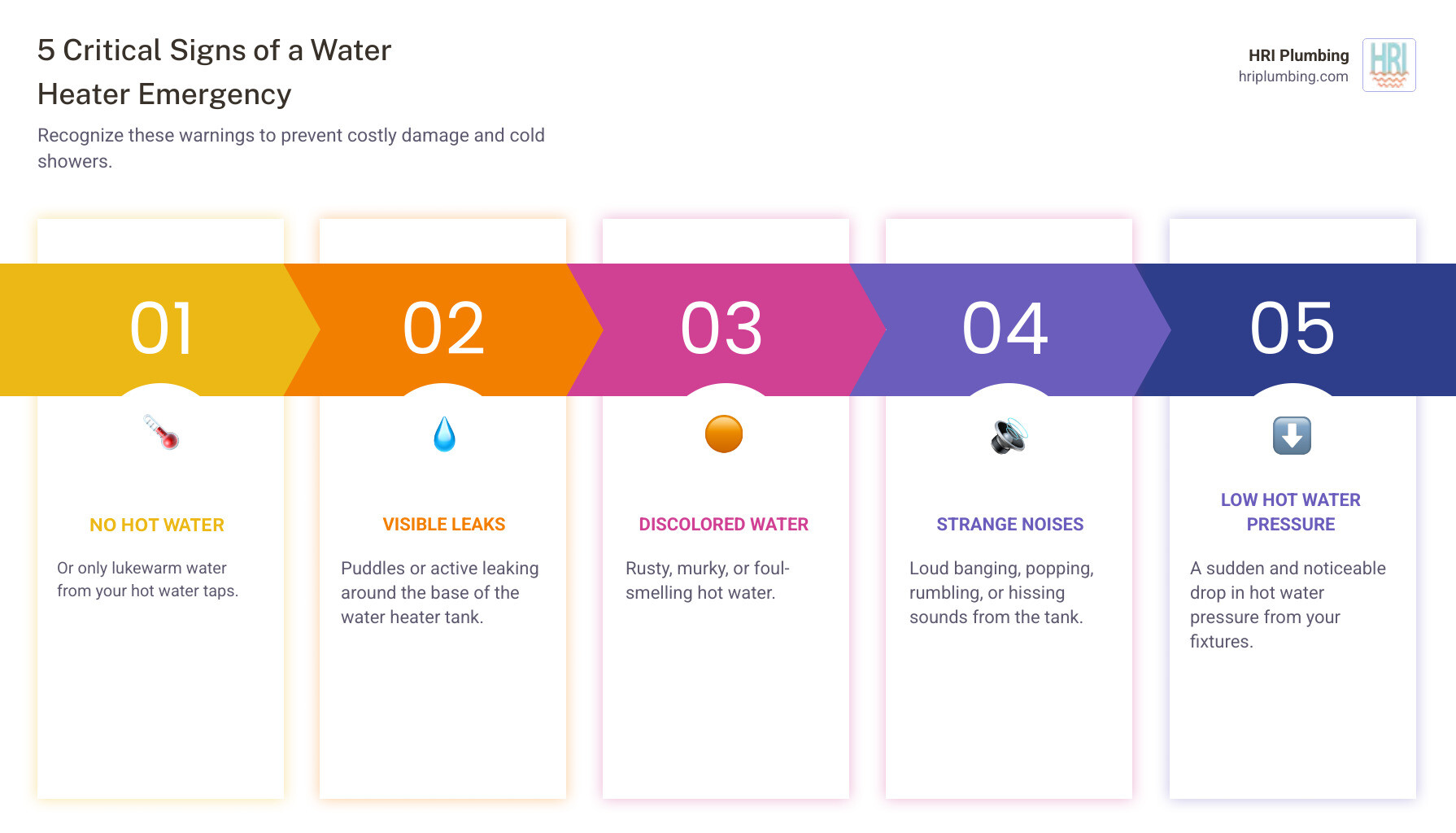
Spotting warning signs early can save you from a bigger mess. Some issues escalate quickly, so it's important to know what to look for. Here are common indicators that your water heater needs urgent attention:
- No Hot Water: The most obvious sign. A complete lack of hot water is an emergency for most households and could be due to a faulty heating element, pilot light issue, or tripped breaker. For more details, see our guide on water heater not heating.
- Lukewarm Water: If your water isn't hot enough or runs out quickly, the unit is struggling. This often points to a failing heating element, thermostat problems, or sediment buildup.
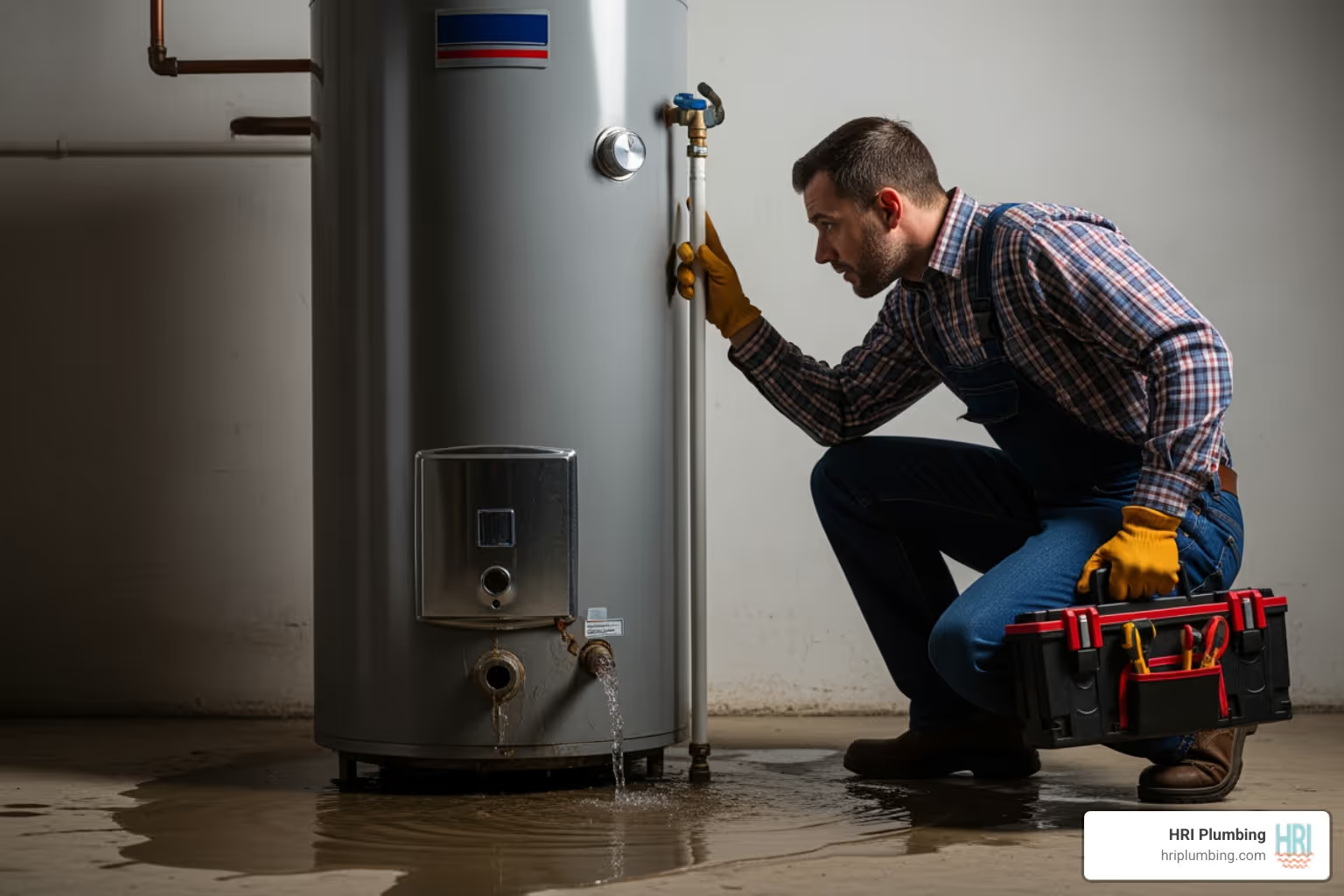
- Puddles or Leaks: Any water around your unit is a red flag. Leaks can cause serious water damage and require immediate professional help. Learn what to do if your water heater is leaking in Jacksonville, IL.
- Discolored or Smelly Water: Rusty or foul-smelling hot water indicates internal corrosion or bacterial growth, which affects water quality and signals a problem with the tank's integrity.
- Strange Noises: Loud banging, popping, or hissing sounds suggest a problem, often caused by sediment buildup that reduces efficiency and can damage the tank. If your water heater is making unusual sounds, it needs professional attention.
- Low Hot Water Pressure: A sudden drop in hot water pressure can indicate a blockage in the lines or sediment buildup inside the water heater.
- Advanced Age: A traditional water heater over 7-10 years old is more prone to failure. If an older unit shows any of these signs, it may be time for a replacement. Our post on signs water heater needs repair or replacement can help you decide.
Step 2: Take Immediate Safety Actions
Once you identify a water heater emergency, prioritize safety and minimize damage. Quick action can prevent a minor issue from becoming a costly disaster.
Here’s what to do immediately:
- Shut Off the Water Supply: If you see a leak, turn off the main water valve to your home. This stops water from flowing into the heater and prevents further flooding. The valve is typically in the basement or near your water meter.
- Turn Off the Power:
- Electric Heaters: Flip the circuit breaker for the water heater to the "OFF" position at your electrical panel.
- Gas Heaters: Turn the gas shutoff valve on the line leading to the heater to the "OFF" position. This prevents gas leaks and fire hazards.
- Clear the Area: Move furniture, electronics, and other valuables away from the water heater to protect them from water damage and create a safe workspace for technicians.
- Contain Water: Use towels, buckets, or a wet/dry vacuum to manage any standing water and mitigate damage while you wait for help.
Taking these steps can significantly reduce the impact of a water heater emergency. For any urgent plumbing issues, we provide comprehensive emergency plumbing in Jacksonville, IL services.
Step 3: Finding a Reliable Plumber for Emergency Water Heater Repair in Jacksonville, IL
When you have a water heater crisis, you need a reliable professional fast. Finding the right plumber for emergency water heater repair in Jacksonville, IL is key to a quick resolution.
Here’s what to look for in an emergency plumber:
- 24/7 Availability: Emergencies happen at all hours. We offer 24/7 services, including nights, weekends, and holidays, to ensure we're there when you need us most.
- Licensed and Insured: A licensed and insured plumber protects you from liability. Our team consists of highly trained and certified professionals.
- Local Jacksonville Expertise: A local plumber understands Jacksonville's specific plumbing challenges and regulations, leading to faster, smarter solutions. Our Jacksonville emergency plumber guide offers more tips on finding local help.
- Fast Response Times: In an emergency, speed is critical. We prioritize emergency calls to dispatch a technician to your home as quickly as possible.
- Stocked Service Vehicles: Our trucks are mobile workshops, stocked with common parts and tools. This allows our technicians to diagnose and fix most issues in a single visit, saving you time and hassle.
We are committed to providing honest, customer-focused service to restore your peace of mind.
Step 4: What to Expect During the Repair Process
When our plumber arrives for an emergency water heater repair in Jacksonville, IL, you can expect a clear and efficient process.
Here’s what typically happens:
- Professional Diagnosis: Our technician will inspect your water heater to pinpoint the exact cause of the problem, explaining the issue in an easy-to-understand way.
- Repair vs. Replacement Options: We will discuss the best course of action. A simple repair may be sufficient, but for older units, replacement might be a more cost-effective long-term solution. We'll outline all options to help you decide. Our article, should I repair or replace my water heater, offers more guidance.
- Common Emergency Repairs: We are equipped to handle numerous common issues on the spot, including:
- Thermostat and heating element replacement.
- Pilot light and ignition system repair for gas heaters.
- Sealing minor leaks from fittings or relief valves.
- Replacing faulty temperature and pressure relief (TPR) valves.
- Upfront Communication: Before starting work, we provide clear communication on the recommended repairs and the process. We stand behind our work with a 1-year parts and labor warranty and offer financing options.
- Efficient Repair and Testing: After you approve the plan, our plumber will complete the repair. We then test the system thoroughly to ensure it's working safely and correctly before cleaning up the work area.
Our goal is to fix the immediate problem and ensure the long-term reliability of your system.
Preventing Future Crises and Understanding Your System
While we're always here for your emergency water heater repair in Jacksonville, IL needs, prevention is the best strategy. Proactively caring for your water heater can save you stress, money, and potential property damage.
Proactive Maintenance to Avoid Emergencies
Regular maintenance helps your water heater run smoothly and prevents major breakdowns, potentially extending its 8 to 12-year lifespan.
Key preventative measures include:
- Annual Inspection: A qualified plumber can spot minor issues before they escalate and ensure all components are working correctly.
- Tank Flushing: For tank-style heaters, flushing removes sediment that can reduce efficiency, cause noise, and lead to corrosion. Learn more about sediment buildup and potential water heater issues.
- Anode Rod Check: This "sacrificial rod" corrodes to protect your tank. Inspecting and replacing it every 3-5 years is crucial for preventing tank failure.
- TPR Valve Test: The temperature and pressure relief (TPR) valve is a key safety feature. It should be tested annually to ensure it functions properly.
- Insulation: Insulating your tank and hot water pipes improves efficiency and helps prevent pipes from freezing and bursting in cold Illinois winters.
These proactive steps are part of our comprehensive maintenance services, designed to keep your plumbing system in top shape and prevent emergencies.
Emergency Repair vs. Routine Maintenance
Understanding the difference between emergency water heater repair in Jacksonville, IL and routine maintenance is key to managing your home's systems.
Emergency Repair: The Reactive Solution
- What it is: An urgent response to critical failures like a burst tank or no hot water.
- When it's needed: Immediately, often outside of business hours, to prevent property damage.
- Goal: Stop the crisis, mitigate damage, and restore hot water quickly.
Routine Maintenance: The Proactive Approach
- What it is: Scheduled, preventative care performed at your convenience.
- When it's needed: Annually, to keep the system running efficiently.
- Goal: Prevent emergencies, extend the unit's lifespan, improve efficiency, and provide peace of mind.
While emergency repair reacts to a crisis, routine maintenance helps prevent one. We offer both services to keep your plumbing system reliable.
For more information on our water heater repair services in Jacksonville, IL, please visit our dedicated page: More info about water heater repair services. We are committed to providing honest, customer-focused solutions.


