



Managing Heavy Water Use in Summer and Your Septic System
Heavy water use in summer and your septic system is a combination that can quickly lead to backups, soggy drain fields, and costly repairs if you're not careful. In short, summer pushes septic systems harder than any other season — and most homeowners don't realize it until something goes wrong.
Here's a quick look at why summer is so hard on septic systems and what you can do about it:
| Summer Factor | Impact on Septic System | Quick Action |
|---|---|---|
| Extra showers, laundry, guests | Water volume spikes far above normal daily use | Spread water use throughout the day |
| Heavy rainfall and storms | Soil becomes saturated, drain field can't absorb effluent | Divert runoff away from drain field |
| High heat | Accelerates bacterial activity, risking biological imbalance | Schedule regular pumping and inspection |
| Drought and dry soil | Compacted soil absorbs wastewater more slowly | Reduce water use during dry spells |
| Pool maintenance and lawn watering | Adds hundreds of gallons of extra water near or into the system | Direct drainage away from septic area |
| Running toilets or leaky faucets | A single running toilet can waste over 200 gallons per day | Fix leaks immediately |
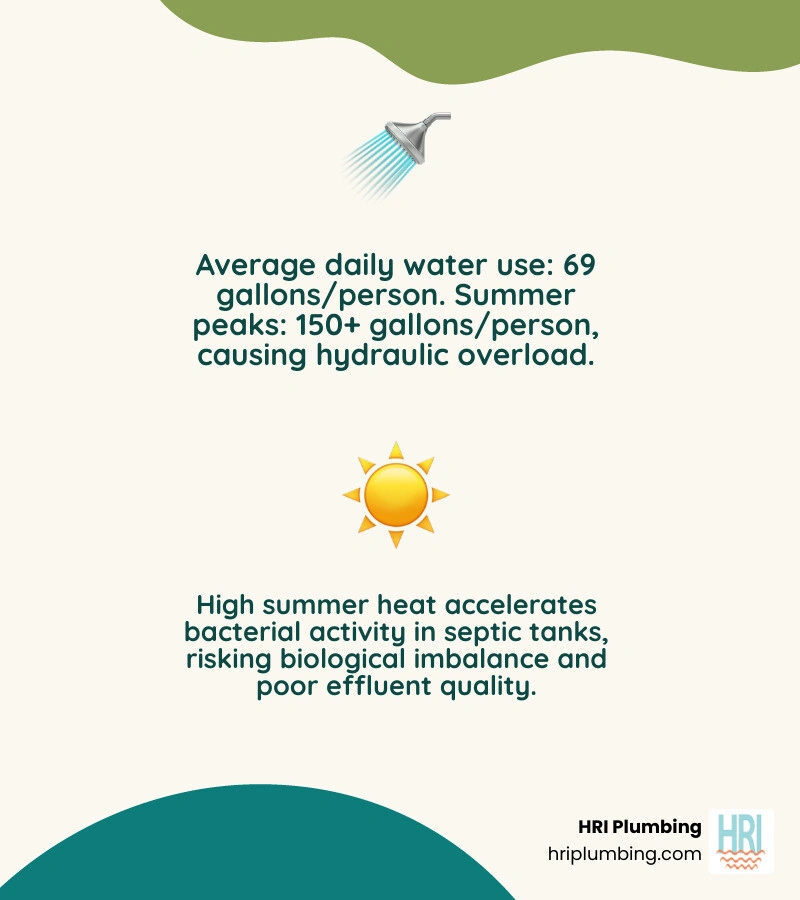
The average person uses about 69 gallons of water per day under normal conditions. But in summer, that number climbs fast. Add guests, beach towel laundry, lawn watering, and backyard cookouts, and a typical family of four can push well past what their septic system is designed to handle. For reference, most systems in Illinois are sized for around 150 gallons per bedroom per day — and summer peaks can blow right past that threshold.
The result? Hydraulic overload. That's when more wastewater enters the drain field than the soil can absorb and treat. It can wash solids out of the tank, clog drain field pipes, and in serious cases, cause sewage to back up into your home or pool on your lawn.
The good news is that with the right habits and a little preparation, you can protect your system all season long. This guide walks you through exactly how to do that.
When we talk about Septic Services, we often focus on the mechanics of the tank, but the real "engine" of your system is the soil in your drain field. In May 2026, as we head into the peak of the warm season, understanding the relationship between your water habits and that soil is vital for every homeowner in Springfield, Jacksonville, and Rushville.
How Summer Heat and Storms Impact Bacterial Efficiency
Your septic tank isn't just a holding container; it’s a living biological ecosystem. It relies on naturally occurring bacteria to break down solids into sludge. However, the extreme heat of an Illinois summer can actually overwork these bacteria. High temperatures accelerate bacterial activity, which sounds like a good thing, but it can lead to a biological imbalance where the waste breakdown process happens too quickly or unevenly, potentially causing odors or affecting effluent quality.
Environmental factors outside the tank are just as critical. Summer storms and heavy rainfall can quickly oversaturate your drain field. When the ground is "full" of rainwater, it cannot absorb the wastewater leaving your tank. This leads to standing water in your yard or, worse, wastewater pushing back into your home's pipes.
Conversely, drought conditions pose their own risks. When the soil in Jacksonville or Springfield becomes extremely dry and hard, it can compact. Compacted soil has less "pore space," meaning it absorbs liquid much more slowly than healthy, moist soil. To add to the stress, thirsty tree roots are more active in the summer. They will seek out any moisture they can find—and the nutrient-rich water in your septic lines is a prime target. Root intrusion can lead to cracked pipes and total system blockages. If you suspect a weather-related issue, seeking Septic Tank Repair Jacksonville Il early can prevent a total system collapse.

Common Mistakes: Pools, Lawns, and Heavy Water Use in Summer and Your Septic System
Many of the activities we love in the summer are the exact things that put our septic systems in jeopardy. One of the most common mistakes is pool maintenance. If you backwash your pool filter or drain pool water directly onto your drain field, you are dumping hundreds of gallons of water—often laden with chlorine—into the system. Chlorine can kill the beneficial bacteria in your tank, while the sheer volume causes instant hydraulic overload.
Lawn irrigation is another silent culprit. We all want a lush green lawn, but over-watering the area directly over your septic system is a recipe for disaster. If the sprinklers are constantly saturating the drain field, the soil won't have the capacity to process your household wastewater.
Even your indoor appliances play a role. Many homes use water softeners. A timer-based water softener regeneration cycle can add 100 to 300 gallons of water per week to your system. In the peak of summer, this extra load can be the "tipping point" that causes a failure. We recommend demand-initiated regeneration (DIR) models, which only run when necessary, or scheduling cycles for the middle of the night when no one is showering or running the dishwasher. If you’re building new or upgrading, professional Septic Tank Installation Rochester Il can ensure your system is properly sized for these modern loads.
Practical Tips for Heavy Water Use in Summer and Your Septic System
You don't have to stop hosting summer BBQs to save your septic system. You just need to be strategic. Water conservation is your best friend during the "dog days" of summer.
- Stagger Your Laundry: Instead of doing five loads on Sunday, do one load a day. This gives the drain field time to "rest" and absorb the liquid between loads.
- Upgrade Your Fixtures: Installing low-flow showerheads and faucet aerators can reduce your total wastewater load by 10% to 20%. It’s a small change that makes a huge difference when guests are staying over.
- Educate Your Guests: Gently remind visitors to follow the "Three Ps" rule: only pee, poop, and toilet paper should go down the drain. No "flushable" wipes, feminine products, or paper towels.
- Use Lint Catchers: Washing machine fibers are a major cause of drain field clogging. A simple, inexpensive lint catcher on your washing machine discharge hose can save you thousands in repairs.
For homeowners in the Springfield area, staying ahead of these issues is easier with a professional Septic Inspection Chatham Il to ensure your filters are clean and your baffles are intact before the heavy summer use begins.
Recognizing Signs of Septic Stress and Odors
How do you know if the heavy water use in summer and your septic system are clashing? Your home will usually give you a few warning signs.
First, keep an eye on your drains. If the kitchen sink or the bathtub is draining more slowly than usual, it’s a sign that the system is struggling to push water out into the soil. Second, use your nose. High heat intensifies odors. If you smell a "rotten egg" or musty scent near the tank or in your yard, the tank might be full, or a vent pipe could be blocked.
Look at your lawn, too. While it sounds counterintuitive, a patch of grass that is exceptionally lush, green, and tall over the drain field is a red flag. It often means the soil is oversaturated with effluent, and the plants are over-fertilizing on the waste. Finally, check for leaks. A single running toilet can waste 200 gallons a day—that’s enough to saturate a drain field all on its own. For a deeper dive into what to look for, check out our Septic Tank Pumping Signs Guide.
The Importance of Pre-Summer Inspections and Pumping
The best way to handle summer stress is to prevent it. We generally recommend that septic tanks be pumped every 3 to 5 years, but for larger families or homes that host frequent summer guests, a 3-year schedule is much safer.
A professional inspection does more than just empty the tank. We check the sludge levels, inspect the tank's structural integrity, and ensure the effluent filter is doing its job. Pumping before the summer heat hits ensures you have the maximum capacity available for those extra showers and laundry loads.
Whether you need a Septic Inspection Sherman Il or routine maintenance in Jacksonville, getting a pro on-site is the only way to catch "invisible" issues like sludge carryover before they turn into a midnight emergency.
Conclusion: Long-Term Protection for Your Illinois Home
Your septic system is one of the most expensive and important parts of your home's infrastructure. Ignoring it during the high-demand summer months can lead to a shortened system lifespan and repairs that can reach into the five-figure range. By practicing water conservation, redirecting runoff, and keeping up with regular maintenance, you ensure your system remains a "silent partner" in your home's comfort rather than a source of stress.
At HRI Plumbing, we take pride in serving our neighbors in Springfield, Jacksonville, and Rushville with honesty and integrity. We understand the unique soil conditions and weather patterns of Central Illinois, and we're here to help you navigate them. From routine pumping to emergency repairs, our team offers 24/7 support to keep your home running smoothly all summer long.
Don't wait for the yard to get soggy or the drains to stop. Contact us today for comprehensive Septic Services and enjoy your summer with total peace of mind!


