



What That Sewer Smell in Your Home Is Telling You
If you're trying to figure out how to get rid of sewer smell in your home, here are the most common fixes to try right now:
- Run water in unused drains — Pour water down floor drains, guest bathroom sinks, and tubs to refill dry P-traps
- Add mineral oil to infrequently used drains — This slows evaporation and keeps the trap sealed longer
- Check the base of your toilet — A rocking toilet usually means a failed wax ring that lets sewer gas in
- Use baking soda and vinegar — Pour 1 cup of each down smelly drains, wait 15 minutes, then flush with hot water
- Inspect your vent stack — A blocked roof vent can cause sewer gas to back up into your home
- Call a plumber — If the smell persists after these steps, there may be a cracked sewer line or deeper plumbing issue
That rotten egg odor drifting through your home is not just unpleasant — it is a warning sign. Sewer gas is a mix of hydrogen sulfide, methane, ammonia, and other compounds produced when organic waste breaks down underground. At low levels, it causes headaches, nausea, and dizziness. At higher concentrations, it can be genuinely dangerous to your family's health.
The good news? Most sewer smells in central Illinois homes trace back to a small number of fixable causes — and many of them you can resolve yourself in under an hour. The ones you cannot fix yourself are exactly what the team at HRI Plumbing handles every day in Jacksonville, Springfield, and Rushville, IL.
How to Get Rid of Sewer Smell in Your Home
Finding a foul, swampy, or rotten egg odor in your kitchen, bathroom, or basement can be incredibly frustrating. When you are dealing with these odors, the first step is always to locate the source. Because sewer gas is highly volatile and can travel through small structural gaps, the smell may seem to come and go depending on wind direction, barometric pressure, or how often you run your plumbing fixtures.
To effectively eliminate the issue, you must systematically check the most common entry points. In our years of serving homeowners, we have found that most sewer smells can be traced to a few specific components of your drainage, waste, and vent (DWV) system. If you are wondering where to start, reading our guide on What Causes Sewer Smell in Your Home will give you a great head start on identifying the exact culprit.
What Causes Sewer Gas Smell in Your House?
Before you can fix the problem, you need to understand what is failing inside your plumbing system. Sewer gas is normally kept safely outside of your living spaces by a series of physical barriers and pressure-balancing vents. When one of these barriers fails, the gas escapes into your home.
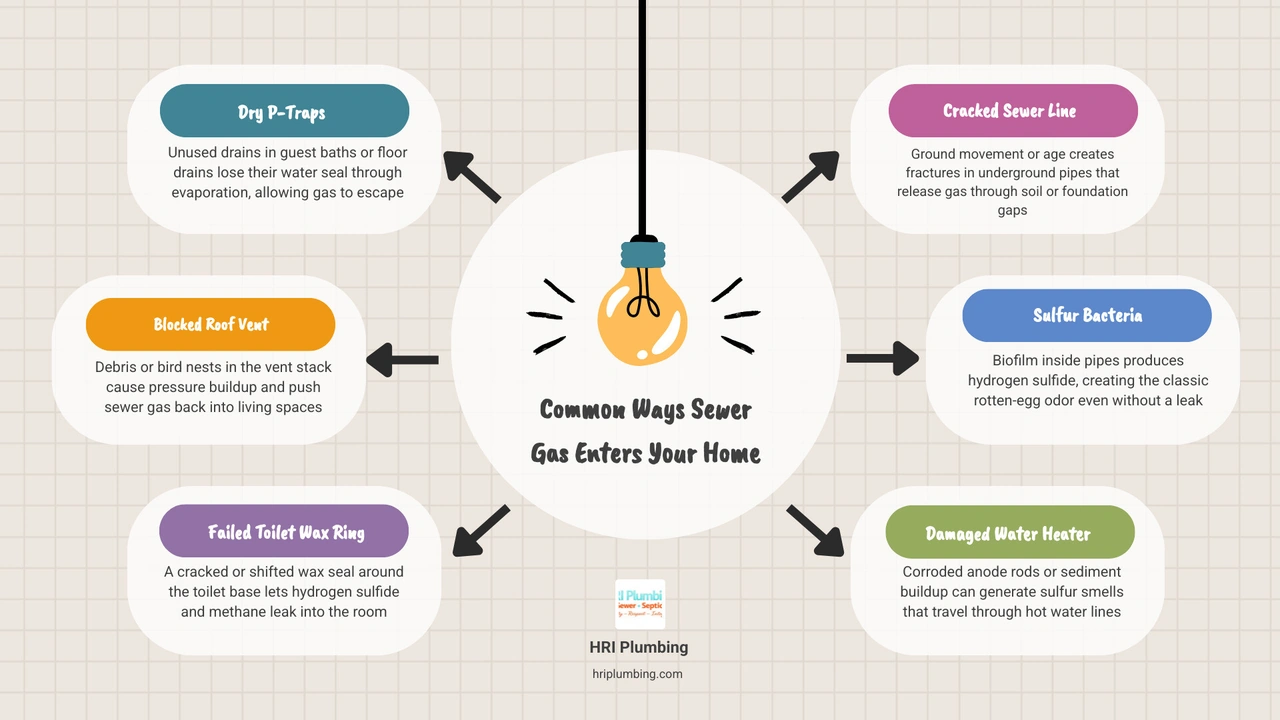
The most common causes of sewer odors include:
- Dry P-Traps: This is the single most common cause of sewer gas leaks. When a drain is not used for several weeks, the water seal inside the trap evaporates, leaving an open path for sewer gases to rise directly into your room.
- Failed Toilet Wax Seals: The wax ring beneath your toilet creates an airtight and watertight seal between the toilet base and the sewer flange. If the toilet rocks when you sit on it, or if the flange was installed too low during a remodel, the wax ring can compress or break, allowing sewer gas to seep out from under the toilet.
- Blocked Plumbing Vent Stacks: Your plumbing vents channel sewer gases up and out through your roof while keeping air pressure balanced. If birds build a nest in the vent, or if leaves and ice block the pipe, sewer gases have nowhere to go but back down into your home.
- Biofilm and Organic Buildup: Over time, soap scum, hair, and organic waste cling to the inside of drain pipes and sink overflow holes. This creates a dark, damp breeding ground for bacteria, which produces a musty, sewage-like smell even if your plumbing system is structurally sound.
- Sulfur Bacteria in Water Heaters: If the rotten egg smell only occurs when you run hot water, the culprit is likely sulfur bacteria reacting with the sacrificial magnesium or aluminum anode rod inside your water heater.
- Damaged Sewer Lines: Cracks in underground cast iron or clay pipes—often caused by shifting soil or tree root intrusion—can let sewer gases rise through your foundation or yard. If you suspect this is happening, look out for the Signs You Have a Sewer Line Problem to catch structural damage before it leads to a messy backup.
How to Get Rid of Sewer Smell in Your Home: Troubleshooting Dry P-Traps
The absolute first thing you should check when a room smells like sewage is the P-trap. A P-trap is the U-shaped section of pipe located beneath sinks, tubs, showers, and floor drains. Its entire purpose is to hold a small amount of standing water (usually about two inches) which acts as a physical barrier to block sewer gases from traveling up the pipe.
Under normal household conditions, it takes about 2 to 4 weeks for a P-trap to dry out completely. However, in dry climates, heavily air-conditioned spaces, or during cold Illinois winters when home heating systems dry out indoor air, evaporation can happen in as little as 1 to 2 weeks. This is incredibly common in basement floor drains, guest bathroom showers, and laundry room utility sinks that rarely get used.
To fix a dry P-trap, simply run water down the drain for 30 seconds to re-prime the trap. For basement floor drains, pour a gallon of clean water directly into the grate.
Pro Tip: If you have a guest bathroom or a floor drain that you rarely use, pour two tablespoons of mineral oil or cooking oil down the drain after priming it with water. The oil floats on top of the water, creating a barrier that drastically slows down evaporation, keeping your trap sealed for months. If you are dealing with older drains that constantly dry out, read our resource on Sewer Repair Jacksonville IL Complete for long-term solutions.
How to Get Rid of Sewer Smell in Your Home: Cleaning and Deodorizing Drains
If your P-traps are full of water but a foul odor is still coming from your sink or shower, you are likely dealing with a buildup of biofilm and decomposing organic matter inside the drain assembly.
To clean and deodorize your drains naturally, follow these simple steps:
- Clean the Drain Cover and Strainer: Remove the drain stopper or grate and scrub away any trapped hair, soap scum, and debris using a stiff brush and dish soap.
- Flush with Boiling Water: Carefully pour a kettle of boiling water down the drain to help loosen grease and soap scum clinging to the pipe walls.
- Apply Baking Soda and Vinegar: Pour 1/2 cup of baking soda down the drain, followed immediately by 1 cup of white vinegar. Cover the drain with a plug or rag to force the fizzing action down into the pipe. Let it sit for 15 to 30 minutes.
- Flush Again: Wash everything down with another gallon of hot water.
- Use Enzymatic Cleaners: For stubborn organic odors, use an enzyme-based drain cleaner overnight. Unlike harsh chemical bleaches—which do not break down biofilm and can actually corrode your pipes—enzymatic cleaners use natural bacteria to safely digest organic waste.
Do not forget to clean your sink's overflow drain as well. This small opening near the top of the sink bowl often collects splashing soap and water, turning into a hidden breeding ground for mold and bacteria. Pour a mixture of baking soda and vinegar directly into the overflow hole and flush it with hot water to keep it fresh. For more advanced cleaning strategies, check out our guide on Professional Sewer Cleanout Methods.
When to Call a Professional for Sewer Line Repair
While many sewer odors can be resolved with a quick DIY flush or a new toilet wax ring, some smells indicate a much larger problem deep within your home's main waste lines.
You should contact us for professional help immediately if you experience any of the following warning signs:
- Persistent Odors: The sewage smell remains even after you have refilled all P-traps, cleaned the drains, and checked the toilet seals.
- Gurgling Sounds: Your toilets bubble or your sink drains make a gurgling noise when you run the washing machine or empty a bathtub. This indicates a severe pressure imbalance caused by a blocked vent stack or a main sewer line blockage.
- Multiple Slow Drains: If sinks, showers, and toilets across different rooms are all draining slowly at the same time, the blockage is in your main sewer line, not an individual fixture.
- Soggy Spots in the Yard: Unusually lush, green, or soggy patches of grass in your yard—especially if they smell like sewage—point directly to a cracked or collapsed underground sewer line.
When you call a professional plumber, they will use advanced diagnostic tools to pinpoint the exact location of the issue. A professional sewer camera inspection is the gold standard for diagnosing underground pipe issues, offering over 90% accuracy in finding cracks, tree roots, or sagging pipes without tearing up your yard.
Depending on what we find, we can perform targeted repairs to restore your system. For residents in the area, we offer expert Sewer Line Repair Jacksonville IL to fix damaged pipes quickly. If the pipe is severely deteriorated, we can walk you through the process of Sewer Line Replacement Springfield IL. In many cases, we can even repair your pipes without digging up your beautiful landscaping by utilizing modern, minimally invasive Trenchless Sewer Line Repair Jacksonville IL technology.
Resolve Persistent Sewer Odors with Professional Help
At HRI Plumbing, we understand that a sewer smell in your home is more than just an inconvenience—it can disrupt your daily peace of mind and impact your family's health. Serving Jacksonville, Springfield, and Rushville, IL, our team of highly trained, licensed technicians is dedicated to providing fast, reliable plumbing and septic solutions with complete honesty and integrity.
Whether you need a routine drain cleaning or are facing an unexpected plumbing emergency, we are here for you. We offer flexible scheduling, affordable rates, and 24/7 support for those urgent situations that simply cannot wait. If an odor suddenly intensifies after a heavy rain storm or a backup occurs in the middle of the night, you can read our Guide to Emergency Sewer Repair Jacksonville IL or our Emergency Sewer Repair Springfield IL Guide to understand your immediate next steps.
Do not let mysterious sewer smells linger in your home. To learn more about how we inspect buried sewer lines using high-definition video technology, read our comprehensive Sewer Camera Inspection Guide 2026. Ready to get rid of that stubborn odor once and for all? Schedule a Sewer Camera Inspection with HRI Plumbing today, and let us bring fresh, clean air back to your home.


