



What's the Real Difference Between a Municipal Sewer and a Septic System?
When it comes to a municipal sewer vs septic system comparison, the core difference comes down to where your wastewater goes and who's responsible for managing it. Municipal sewer systems send waste through underground pipes to a centralized treatment facility maintained by your local utility. Septic systems treat wastewater entirely on your property using a buried tank and a drain field. Both systems work — but they come with very different costs, responsibilities, and trade-offs depending on where you live.
Here's a quick side-by-side look at how they compare:
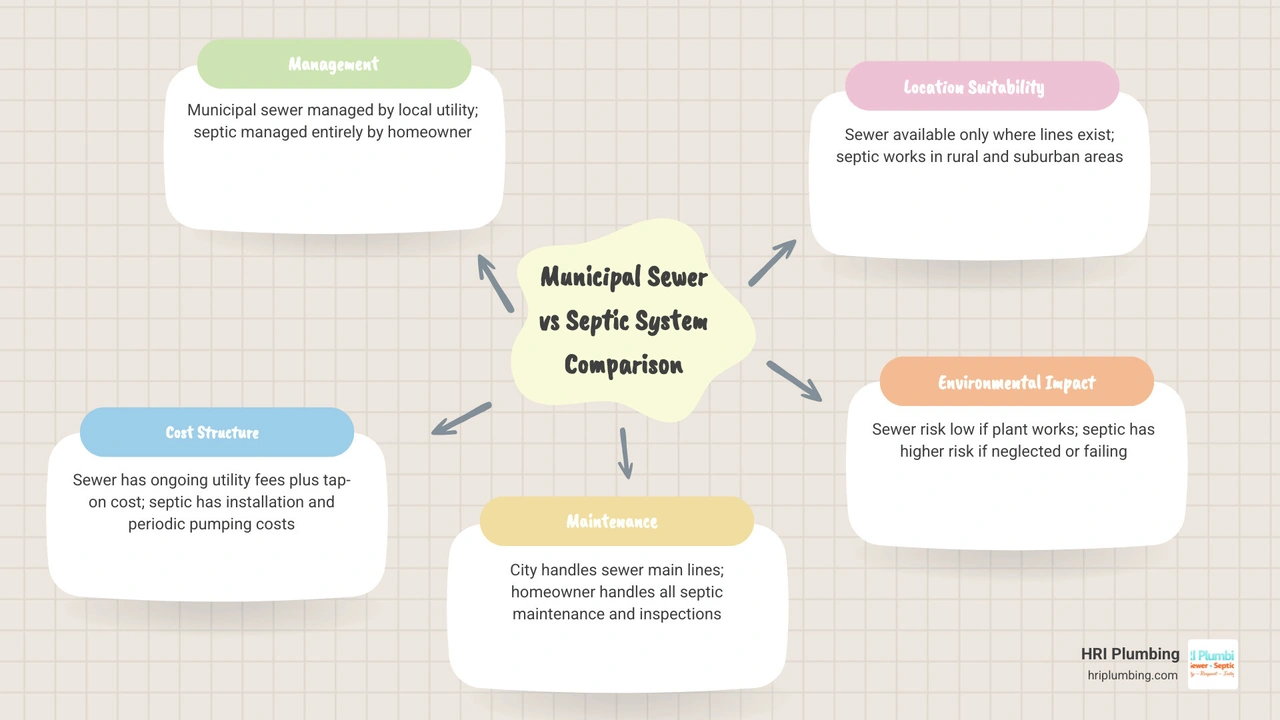
| Feature | Municipal Sewer | Septic System |
|---|---|---|
| Who manages it | Local municipality | Homeowner |
| Monthly bill | Yes, ongoing utility fee | No monthly bill |
| Upfront connection cost | Yes, tap-on/connection fee | Yes, installation cost |
| Maintenance responsibility | City handles main lines; homeowner handles lateral | Homeowner handles everything |
| Works in rural areas | Only where lines exist | Yes, common in rural and suburban areas |
| Property value impact | Generally higher in suburban markets | Can reduce value if system is aging or failing |
| Environmental risk | Low if plant is functioning | Higher risk if system is neglected or failing |
| Forced connection possible | Yes, if sewer line is nearby | N/A |
For homeowners in central Illinois — including Springfield, Jacksonville, and Rushville — understanding which system your property uses (and what that means for your wallet and your maintenance schedule) is genuinely important. About 23% of North Carolina households use septic systems, and similar patterns hold across rural and semi-rural Midwest communities where municipal sewer lines simply don't reach every property.
Whether you just bought a home and aren't sure which system you're on, or you're weighing the costs of a future connection, this guide breaks it all down clearly.
A Comprehensive Municipal Sewer vs Septic System Comparison

Managing household wastewater is a necessity, but the infrastructure behind it varies greatly. To make an informed decision for your private property, you need to understand how these systems process waste, who keeps them running, and how they impact the local environment.
Understanding the Basics: Municipal Sewer vs Septic System Comparison
A septic system is an independent, on-site wastewater treatment setup. When you flush a toilet or wash dishes, gravity flow carries the wastewater into a buried, watertight septic tank. Inside the tank, natural bacterial processes go to work. Heavy solids sink to the bottom as sludge, while lighter oils and grease float to the top as scum. The liquid in the middle, known as effluent, flows out of the tank into a series of perforated pipes buried in your yard, called the drain field. The soil then naturally filters and purifies this water before it returns to the local water table. To learn more about this process, read our guide on How Does a Septic System Work?
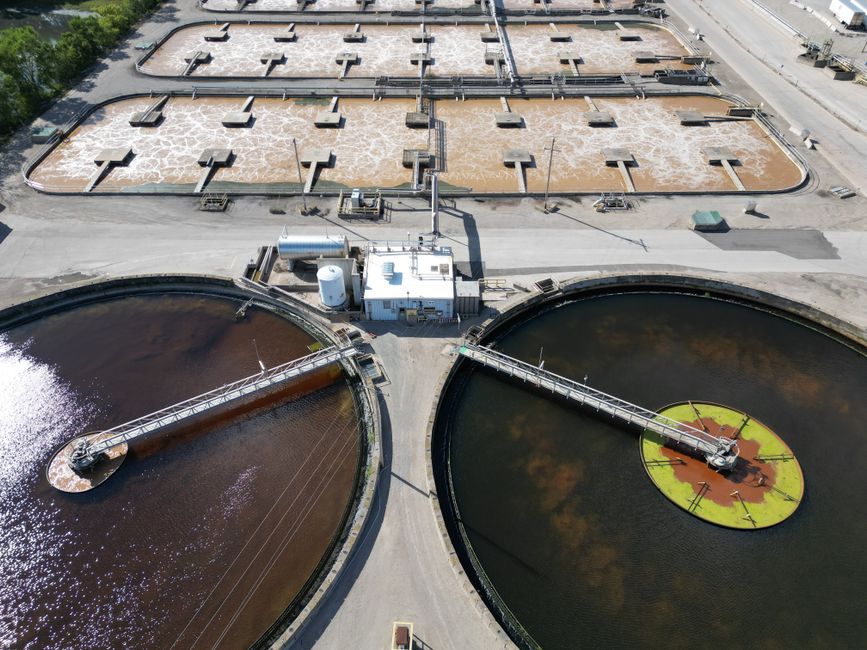
In contrast, a municipal sewer system relies on a vast public network of underground sanitary sewers. Instead of staying on your property, your wastewater travels through a private lateral line that connects directly to the city’s main line. From there, the municipality uses massive pumps and gravity networks to transport the waste to a centralized treatment plant. Here, advanced technological processes clean millions of gallons of sewage daily before releasing the purified water back into local waterways.
Maintenance Responsibilities: Homeowner vs. Municipality
One of the biggest differences in this comparison is who handles the dirty work when something goes wrong.
With a municipal sewer, the local utility company is responsible for maintaining, repairing, and upgrading the main sewer lines and the centralized treatment facility. However, many homeowners do not realize that they are still responsible for the sewer lateral line — the pipe running from the house to the municipal main line. If tree roots invade this pipe or it collapses under your front yard, you must cover the repairs. You can learn how to spot these issues early by reading about the Signs You Have a Sewer Line Problem.
With a septic system, you essentially become your own utility company. You are entirely responsible for the system's upkeep. This includes:
- Scheduling periodic pumping to clear out accumulated sludge.
- Conducting regular system inspections to ensure components are working.
- Practicing diligent preventative care, such as keeping heavy vehicles off your drain field and watching what you put down your drains.
Neglecting these duties can lead to catastrophic backups. For a full breakdown of how to care for your private setup, refer to our Septic System Maintenance Guide.
Environmental Impact and Groundwater Protection
Both systems have unique environmental footprints. A well-maintained septic system is highly sustainable. It relies on natural soil filtration and biological processes to treat waste on-site, which helps with groundwater recharge. Instead of sending water miles away to a treatment plant, it returns clean water directly to your local aquifer.
However, septic systems carry environmental risks if they fail. If a tank leaks or a drain field becomes oversaturated, untreated sewage can rise to the surface or seep into groundwater, raising nitrogen levels and contaminating local wells. This is a particular concern in areas with high water tables or heavy clay soils, which are common in parts of central Illinois.
Municipal sewer systems are highly regulated under federal and state environmental protection laws, making them incredibly reliable for public health. Because waste is treated at a centralized plant, there is very little risk of localized groundwater contamination in your backyard. However, municipal systems are not perfect. During heavy storms, combined sewer systems can experience overflows, releasing untreated wastewater into rivers and lakes.
Making the Right Choice for Your Illinois Home
Deciding between septic and sewer often depends on your property location, soil permeability, and local ordinances. If you are building a new home or considering an upgrade in Springfield, Jacksonville, or Rushville, you must weigh these factors carefully.
| Comparison Factor | Municipal Sewer | Septic System |
|---|---|---|
| Best Suited For | High-density urban and suburban neighborhoods | Rural areas and large suburban lots |
| Upfront Financial Outlay | Tap-on fees and lateral line excavation | Permits, percolation tests, tank, and drain field installation |
| Recurring Costs | Monthly utility bills based on water usage | Occasional pumping and inspection fees |
| Lifespan | Lateral lines last decades; city mains maintained indefinitely | Tanks last decades; drain fields need replacement eventually |
| Landscaping Limitations | Avoid planting trees directly over the lateral line | No trees, heavy structures, or pavement over the drain field |
Long-Term Value: Municipal Sewer vs Septic System Comparison
How does your wastewater setup affect your home's resale value? In suburban markets where municipal sewers are the standard, buyers often prefer the simplicity of a city connection. Homes connected to public sewer systems can appraise higher and attract more buyers because there is no worry of future on-site system failures.
In rural areas, septic systems are expected and do not hurt property values. However, an aging or unmaintained septic system can become a major liability during a home sale. Home buyers frequently request specialized septic inspections, and a failing drain field can lead to intense negotiations or delayed closings. If you are facing septic issues, it is helpful to review the Cost Considerations for Septic Repair vs. New System to plan your next steps.
Mandatory Sewer Connections and Regulatory Requirements
In many Illinois municipalities, you do not always get to choose. Local health departments and zoning codes often dictate your wastewater setup. Many cities have mandatory connection triggers, which require you to decommission your septic tank and connect to the public sewer if a city line becomes available near your property.
Common mandatory connection triggers include:
- Distance Thresholds: If a public sewer main is installed within a certain distance of your property line (often 100 to 200 feet), you may be legally required to connect.
- System Failure: If your existing septic system fails and a municipal line is nearby, local health departments will often deny repair permits and mandate a sewer connection instead.
- Property Renovations: Substantial home additions or zoning changes may trigger a mandatory connection review.
Decommissioning an old septic system involves pumping out the remaining waste, breaking or filling the tank with sand or gravel, and running a new lateral line to the street.
Professional Plumbing Support in Central Illinois
Whether you are managing a private septic system or dealing with municipal sewer lateral issues, you do not have to handle it alone. At HRI Plumbing, we specialize in providing honest, reliable, and high-quality plumbing solutions for homeowners and businesses across Springfield, Jacksonville, and Rushville, Illinois.
We offer comprehensive maintenance plans, drain cleaning, sewer repairs, and professional inspections to keep your home's plumbing running smoothly. With our 24/7 support and dedication to integrity, we are always ready to help you navigate your wastewater needs.
If you need expert assistance with your home's wastewater system, contact us today to learn more about our HRI Plumbing Septic Services.


