



Why Knowing How to Extend the Life of Your Septic System Saves You Thousands
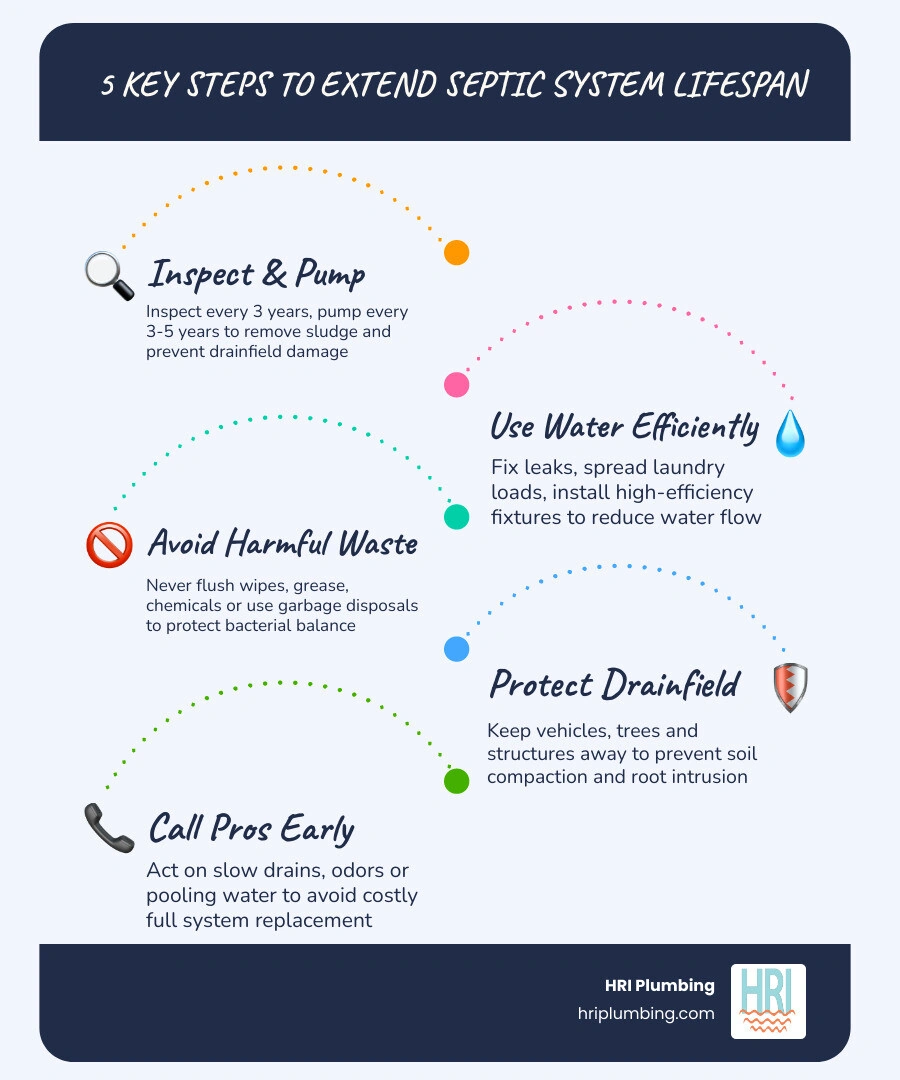
How to extend the life of your septic system comes down to a handful of consistent habits that most homeowners can start today:
- Inspect and pump regularly - Have your system inspected every 3 years and pumped every 3 to 5 years
- Use water efficiently - Spread out laundry loads, fix leaks fast, and install high-efficiency fixtures
- Watch what goes in - Never flush wipes, grease, or harsh chemicals
- Protect your drainfield - Keep vehicles, trees, and structures off the drainfield area
- Call a pro at the first sign of trouble - Slow drains, odors, and soggy ground are red flags
Here's why this matters: a well-maintained septic system can last 20 to 30 years. Concrete tanks, which are common across central Illinois, can last 40 years or more with proper care. Neglect it, and you could be looking at a full system replacement - a major, disruptive expense no homeowner wants.
Your septic system is more than a buried tank. It's a living, working treatment system made up of a pipe from your home, a septic tank, a drainfield, and the soil itself. Bacteria inside the tank break down waste naturally. That balance is fragile, and everyday household habits - what you flush, how much water you use, what cleaning products you reach for - can either support that ecosystem or silently destroy it.
For homeowners in Jacksonville, Springfield, and Rushville, IL, where many properties rely on private septic systems, understanding how to keep that system healthy isn't just smart - it's essential.
How to Extend the Life of Your Septic System Through Routine Care
Maintaining a septic system isn't something you do once and forget about. It is an ongoing commitment to the health of your home’s infrastructure. In April 2026, as we look at modern home maintenance, the fundamentals remain the same: solids must be removed before they escape the tank and ruin your drainfield.
The heart of your system is the septic tank. As wastewater enters, solids settle to the bottom (forming sludge) while oils and grease float to the top (forming the scum layer). The clear liquid in the middle, known as effluent, is what should exit to the drainfield. If the sludge or scum layers get too thick, those solids can be pushed out into your drainfield, clogging the soil and leading to a catastrophic failure.
To prevent this, most household tanks need to be pumped every three to five years. If you have a large family or use a garbage disposal, you might need it done more frequently. Regular Septic Services ensure that these layers are managed before they become a problem.
Scheduling Regular Inspections to Extend the Life of Your Septic System
While pumping is the "heavy lifting" of maintenance, inspections are the "preventative medicine." We recommend that the average household system be inspected at least every three years. During these visits, a professional checks for leaks and measures the sludge and scum layers to determine if a pump-out is truly necessary.
If your home uses an alternative septic system—one with electrical float switches, pumps, or mechanical components—you need to be even more vigilant. These systems should be inspected annually. A mechanical failure in a pump or a stuck switch can lead to a backup faster than you can say "plumbing emergency." Whether you need a Septic Inspection Rochester IL or a Septic Inspection Sherman IL, catching small mechanical issues early is a key part of how to extend the life of your septic system.
Managing Water Flow and Household Usage
Did you know the average individual uses about 70 gallons of water per day? For a family of four, that’s nearly 300 gallons hitting your septic tank every single day. Septic systems are designed to handle a specific flow, and "hydraulic overloading"—sending too much water into the tank too fast—is one of the leading causes of system failure.
When you dump massive amounts of water into the tank at once, it doesn't have time to settle. The turbulence stirs up the sludge and pushes it straight into your drainfield. Here are a few ways we recommend managing your flow:
- Fix Leaks Immediately: A single leaky toilet can add 200 gallons of water to your system every day. That’s like having three extra people living in your house!
- Upgrade to ENERGY STAR: Modern washing machines use about 50% less water than older models.
- Spread Out Laundry: Avoid "Laundry Day." Doing five loads of laundry on a Saturday can flood your system. Instead, do one load a day throughout the week.
- High-Efficiency Fixtures: Installing low-flow showerheads and faucet aerators can reduce water usage by up to 50% without sacrificing comfort.
For residents needing Septic Tank Plumbing Springfield IL, managing water flow is the easiest "DIY" way to protect your investment.
Protecting the Drainfield for Long-Term Functionality
The drainfield (or leach field) is the most expensive part of your septic system to replace. It consists of a series of perforated pipes buried in gravel-filled trenches. Its job is to slowly filter the effluent into the soil, where microbes finish the purification process.
To keep it working, you must protect the soil's ability to "breathe" and absorb water.
- No Heavy Traffic: Never drive or park vehicles on your drainfield. The weight compacts the soil and can crush the pipes.
- Landscaping Matters: Only plant turf grass over your drainfield. Trees and shrubs have aggressive roots that can seek out the moisture in your pipes and clog them entirely.
- Divert Rainwater: Ensure that roof drains, sump pumps, and surface runoff are directed away from the drainfield. A saturated drainfield cannot absorb wastewater from your home.
If you are planning a new build or an addition, proper Septic Tank Installation Chatham IL or Septic Tank Installation Rochester IL ensures that the drainfield is placed in the best possible soil with adequate room for long-term function.
Essential Habits for Maintaining a Healthy Septic Ecosystem
Your septic tank isn't just a box; it’s a living ecosystem of anaerobic bacteria. These "good" microbes are responsible for breaking down the organic matter you send down the drain. If you kill the bacteria, your system stops working.
To keep these microbes happy, you must be careful about what you pour down your drains. Harsh chemicals, like bleach or heavy-duty drain cleaners, can wipe out your bacterial colony in a single afternoon. Instead, opt for septic-safe cleaners and natural alternatives like vinegar and baking soda. If you need assistance with Septic Tank Plumbing Rushville IL, we can help you identify which products are safest for your specific setup.
What Not to Flush to Extend the Life of Your Septic System
The toilet is not a trash can. This is perhaps the most important rule for septic longevity. Only two things should ever go down your toilet: human waste and toilet paper.
Items that should never be flushed include:
- "Flushable" Wipes: These do not break down like toilet paper and are a leading cause of clogs.
- FOG (Fats, Oils, and Grease): These solidify in your pipes and the tank, creating a thick scum layer that bacteria can't digest.
- Feminine Hygiene Products: These are designed to absorb liquid and expand, which is a recipe for a blockage.
- Chemicals: Paint thinners, motor oil, and pesticides can contaminate groundwater and kill the tank's bacteria.
- Garbage Disposals: We generally recommend avoiding garbage disposals if you have a septic system. They can increase the amount of solids in your tank by up to 50%, requiring much more frequent pumping.
If you've noticed slow drains or gurgling sounds, check out our Septic Tank Pumping Signs Guide or contact us for Septic Tank Plumbing Jacksonville IL.
Recognizing Signs of System Distress in Jacksonville and Springfield
Even with the best care, systems can face issues. Knowing the warning signs can save you from a total backup into your home. Keep an eye out for:
- Lush, Spongy Grass: If the grass over your drainfield is much greener and faster-growing than the rest of the yard, it might be getting "extra" fertilizer from a failing system.
- Foul Odors: A strong "rotten egg" smell around the tank or drainfield is a sign that gases are escaping or the tank is overfull.
- Slow Drains: If all the drains in your house are slow, it’s likely a septic issue, not just a simple clog.
- Pooling Water: Muddy soil or standing water around the septic area during dry weather is a major red flag.
Ignoring these signs can lead to serious consequences. You can learn more about Signs You Need Septic Tank Plumbing and What Happens If You Don't Pump Your Septic Tank on our blog.
Professional Intervention and Proper Installation in Rushville
At HRI Plumbing, we believe in honesty and integrity. Whether you are in Jacksonville, Springfield, or Rushville, we provide reliable, high-quality solutions to keep your system flowing. From timely Septic Tank Repair Jacksonville IL to full Septic Tank Replacement Springfield IL, our expert technicians are available with 24/7 support for those emergencies that just can't wait.
Regular maintenance fees are a bargain compared to the cost of a full replacement. By following these steps and partnering with a professional, you can ensure your septic system remains a silent, efficient part of your home for decades to come. Ready to schedule your check-up? Explore our full range of Septic Services today and keep the good times flowing!


