




Why Ignoring Your Septic Tank Is One of the Costliest Mistakes a Homeowner Can Make
What happens if you dont pump your septic tank is something no homeowner wants to find out the hard way — but thousands do every year. Here's the short answer:
- Sludge builds up in the tank until there's no room left for incoming wastewater
- Solids escape into the drain field, clogging the soil permanently
- Sewage backs up into your home through sinks, tubs, and toilets
- Foul odors spread through your yard and inside your house
- Groundwater gets contaminated, putting your family's health at risk
- The drain field fails, often requiring a full system replacement
Over 21 million households across the U.S. rely on a septic system instead of a public sewer. Yet an estimated one in three septic owners is behind on pumping at any given time. The EPA recommends pumping every three to five years — not because it's a suggestion, but because skipping it sets off a chain reaction of damage that gets worse the longer you wait.
Think of it like skipping oil changes in your car. Everything seems fine until it suddenly isn't — and by then, you're not replacing a filter, you're replacing an engine.
For homeowners in central Illinois, where many properties depend on private septic systems, understanding this risk isn't just helpful. It's essential.
What Happens If You Dont Pump Your Septic Tank?
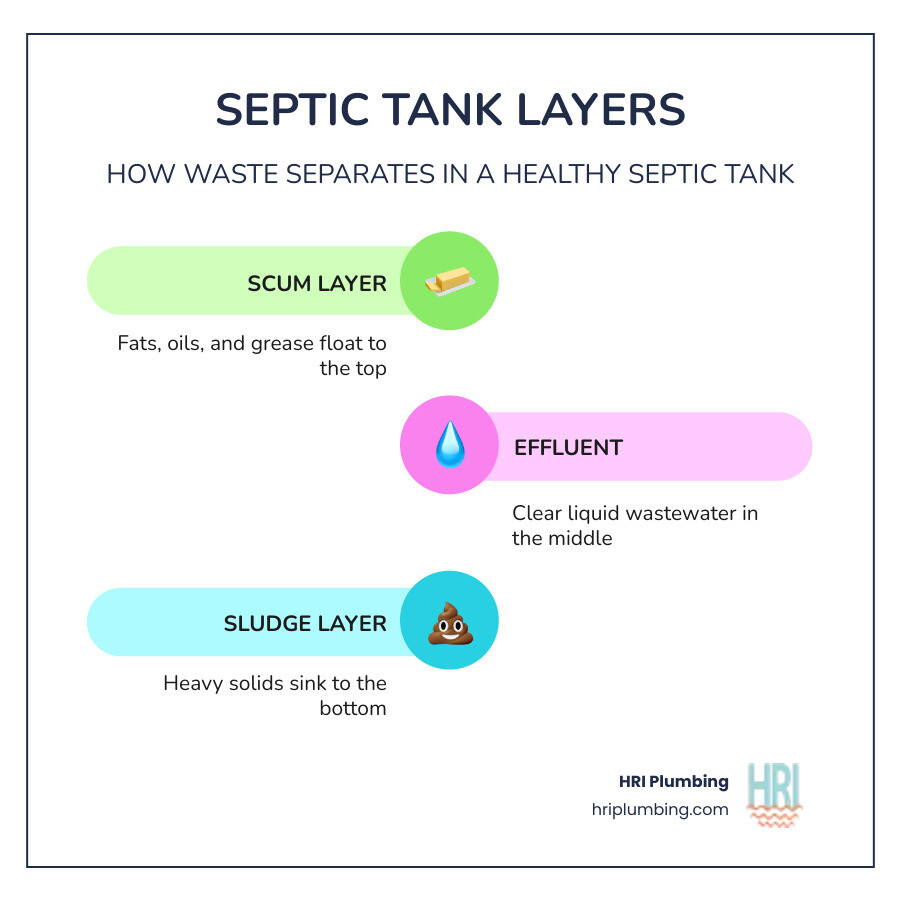
To understand the disaster that brews when maintenance is ignored, we first have to look at how the tank functions. A healthy septic tank is a living ecosystem. It separates waste into three distinct layers: the scum layer (fats, oils, and grease that float to the top), the effluent (the relatively clear liquid in the middle), and the sludge layer (the heavy solids that sink to the bottom).
Inside the tank, anaerobic bacteria work tirelessly to digest organic matter. However, they aren't miracle workers. While they can digest roughly 60 percent of the solids, they leave behind about 60 gallons of residual sludge per adult every single year.
What happens if you dont pump your septic tank is that this sludge layer grows higher and higher. As the "living room" for the water shrinks, the wastewater doesn't have enough time to settle. Instead of solids staying at the bottom, they get stirred up and pushed out of the tank.
This leads to biomat overgrowth. A biomat is a slimy layer of bacteria that forms in the soil of your drain field. A little bit is normal and helps treat the water. But when raw solids and grease escape the tank, they provide a "buffet" for these bacteria. The biomat grows so thick and fast that it acts like a waterproof tarp, preventing the soil from absorbing any more liquid. Once that soil is clogged, the system has officially failed.
Recognizing the Signs of What Happens If You Dont Pump Your Septic Tank
One of the trickiest things about septic neglect is that it’s "out of sight, out of mind"—until it’s very much in your sight (and nose). Because the damage happens underground, you might think your system is fine for years. However, there are signs it could be time to replace your septic system or, at the very least, get an emergency pump-out.
Common warning signs include:
- Slow Drains and Gurgling Toilets: If every drain in the house seems sluggish, or if you hear a "glug-glug" sound after flushing, your tank is likely overfull.
- Sewage Odors: If you catch a whiff of rotten eggs or raw sewage near the tank or even inside your home, the gases have nowhere else to go.
- Lush, Bright Green Grass: Is the grass over your septic tank looking a little too good? While it looks nice, it usually means the soil is saturated with nutrient-rich wastewater that hasn't been properly filtered.
- Standing Water: Finding swampy patches or puddles in your yard during dry weather is a major red flag that the drain field is no longer absorbing liquid.
If you notice these symptoms, it’s time to call for Septic Tank Plumbing Springfield IL before the situation escalates into a full-scale backup.
Understanding the Health Risks of What Happens If You Dont Pump Your Septic Tank
The consequences of a neglected septic system aren't just smelly and expensive; they are a genuine public health hazard. When a system fails, it releases untreated human waste into the environment.
This waste is packed with pathogens, including viruses, bacteria, and parasites. In rural areas like those surrounding Jacksonville and Rushville, many homes rely on private wells. A study in Wisconsin found that human fecal microbes were detected in 46 percent of sampled private wells, with failing septic systems identified as the primary culprit.
When nitrogen and phosphorus from untreated sewage leach into the groundwater, they can cause "blue baby syndrome" in infants and trigger toxic algae blooms in local ponds and streams. Regular maintenance, including a Septic Inspection Rochester IL, is the only way to ensure your family isn't drinking contaminated water.
Why Drain Field Failure is the Ultimate Risk
If you ignore the need to pump, the tank itself usually stays intact—after all, a concrete tank can last 50 years. The real victim is the drain field (also known as the leach field).
The drain field is the most expensive part of your system. It consists of a series of perforated pipes buried in gravel-filled trenches. Its job is to slowly release effluent into the soil for final purification. When you don't pump the tank, the sludge and scum layers eventually meet in the middle, and those solids flow directly into these pipes.
Once the soil pores are clogged with grease and solids, the damage is often permanent. You can't just "wash out" a drain field. In 95 percent of cases, failures are caused by this biomat overgrowth rather than broken pipes. When this happens, you may be looking at a Septic Tank Replacement Springfield IL, which can cost tens of thousands of dollars—a staggering price compared to the cost of a routine pump-out.
How to Prevent Septic System Failure
The good news is that septic failure is almost 100% preventable. By understanding the needs of your specific household and keeping a watchful eye on your habits, you can extend the life of your system by decades. Prevention is always cheaper, cleaner, and less stressful than a midnight sewage backup.
Establishing a Routine Pumping Schedule
How often should you pump? While the EPA recommends every three to five years, that is a general guideline. The true frequency depends on three factors:
- Household Size: More people means more waste. A family of four typically fills the "safe" 30 percent sludge threshold of a 1,000-gallon tank in just 1.5 years.
- Tank Size: Smaller tanks fill up faster and require more frequent attention.
- Water Usage: High water volume (like doing five loads of laundry in one day) stirs up the sludge and pushes it toward the drain field.
| Feature | Routine Maintenance | System Failure |
|---|---|---|
| Frequency | Every 3-5 Years | Sudden / Emergency |
| Cost | Minimal / Predictable | 20x to 50x higher |
| Yard Impact | None | Excavation & Replacement |
| Health Risk | Low | High (Contamination) |
We recommend scheduling Septic Services regularly to keep your system in top shape. If you’ve just moved into a new home in Sherman or Chatham and don't know the last time the tank was serviced, the best time to pump is right now.
Habits That Accelerate Sludge Buildup
What you put down your drains matters just as much as how often you pump. Your septic tank is not a trash can; it is a delicate biological reactor. To avoid premature failure, stay away from these "septic killers":
- Flushable Wipes: These are a myth. They do not break down like toilet paper and will quickly clog your baffles and pipes.
- Garbage Disposals: Using a disposal adds a massive amount of solid waste to your tank, often requiring you to pump twice as often.
- Grease and Oils: These solidify in the tank and are the primary cause of drain field soil clogging.
- Chemical Cleaners: Harsh drain openers and bleach can kill the "good" bacteria that digest your waste.
- Excessive Water: Spread out your laundry throughout the week to avoid "drowning" the tank.
For homes in Jacksonville, being mindful of these habits is the best way to support your Septic Tank Plumbing Jacksonville IL.
Professional Solutions for a Healthy Septic System
At HRI Plumbing, we believe in honesty, integrity, and proactive care. We’ve seen the "sewage swamps" that result from years of neglect, and we want to help you avoid them. Whether you are in Springfield, Jacksonville, or Rushville, we offer comprehensive solutions to keep your system running smoothly.
One of our most effective tools is the Sewer Camera Inspection Springfield IL. This allows us to see exactly what is happening inside your pipes and tank without digging up your yard. We can identify sludge levels, find hidden clogs, and check the structural integrity of your baffles.
Don't listen to the old myths that "some tanks never need pumping" or that you should "toss a dead chicken in the tank" to help it work. Science and regular maintenance are the only things that keep a septic system healthy.
If it’s been more than three years since your last service, or if you’re noticing gurgling drains and strange smells, don't wait. Contact us today for professional Septic Services. We’ll help you protect your home, your health, and your wallet from the avoidable disaster of a failed septic system.


