



Is Your Basement Layout Dictating Your Water Heater Upgrade?
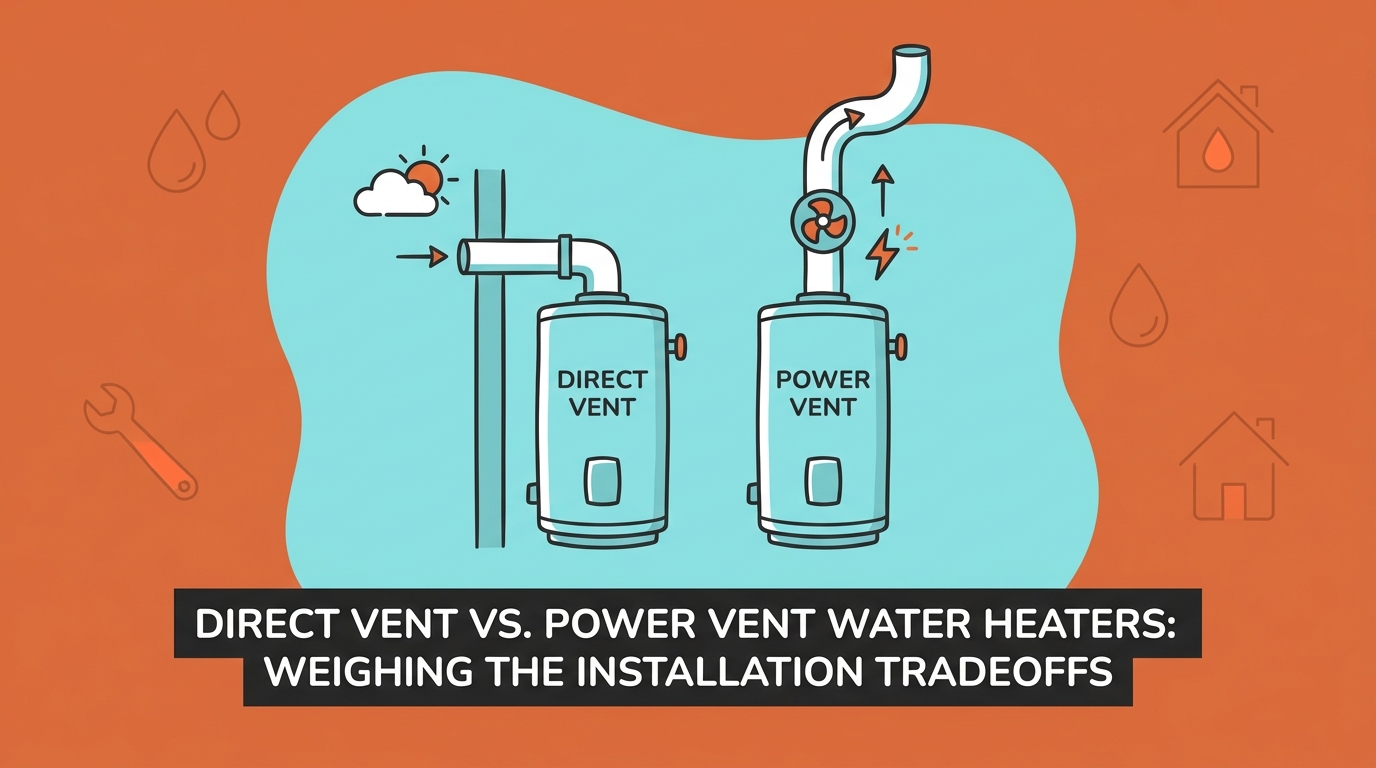
When you are staring at an aging system in your basement, exploring Direct Vent vs. Power Vent Water Heaters: Weighing the Installation Tradeoffs becomes a crucial first step, especially if your old masonry chimney is no longer up to code. It is a common frustration for homeowners. At HRI Plumbing, our team sees this scenario play out weekly across Jacksonville. You call a professional for a routine system replacement, only to discover that the existing atmospheric venting path is condemned or unsafe. Suddenly, you have a concrete problem on your hands: you must route the exhaust through a sidewall. This structural reality forces a major decision, requiring you to prioritize either the passive reliability of one system or the placement flexibility of another.
When facing these structural constraints, leaning on professional plumbing services for your water heater replacement ensures your home stays safe, efficient, and fully up to code.
The Masonry Chimney Dilemma
For decades, standard atmospheric water heaters relied on the natural upward draft of a central masonry chimney to carry harmful combustion gases out of the home. However, as building codes evolve and older chimneys begin to crumble, leak, or suffer from oversized flues that trap condensation, this traditional method often becomes obsolete. Once a chimney is deemed unsafe for venting, you cannot simply hook a new atmospheric heater up to it.
This scenario plays out frequently in Jacksonville IL older home basements. In our years of experience serving these classic Midwestern homes, we find that the existing layout almost always dictates the next steps. Because you can no longer vent vertically through the center of the house, you have to vent horizontally through an exterior wall. This is exactly where the direct vent and power vent technologies step in to solve the problem.
Timing Your Upgrade
Navigating this transition takes a bit of planning. As local experts, we always advise tackling late-summer upgrades before colder weather arrives. When you address condemned venting in August or September—just as the kids head back to school and the cooling season winds down—you avoid the rush of the first freeze and ensure your basement envelope is sealed tight before the winter winds hit. Proactive replacement gives you the time to carefully evaluate your layout and choose the venting system that aligns perfectly with your home's unique structural demands.
The Core Mechanical Difference: How Each Venting System Operates
While both systems solve the problem of a condemned chimney by allowing for sidewall venting, they operate using fundamentally different mechanical principles. Understanding these differences is critical because the presence or absence of electrical components will change the long-term maintenance profile of your new unit.
The Mechanics of Direct Venting
What is a direct vent water heater? At its core, a direct vent system relies on a specialized concentric pipe design—essentially a pipe within a pipe. The outer chamber pulls fresh combustion air in from the outdoors, while the inner chamber safely pushes hot exhaust gases outside.
This process happens passively, relying on thermal dynamics rather than mechanical force. Because the system draws its combustion air from outside, it does not consume the indoor ambient air in your basement. This closed-loop design makes it incredibly safe and highly efficient, particularly in tighter, well-sealed homes where indoor air quality is a priority.
The Mechanics of Power Venting
A power vent system takes a more forceful approach. Instead of relying on passive drafting and concentric pipes, this system utilizes a 110/120V electrical blower motor mounted directly on top of the tank. When the burner ignites, the blower motor kicks on, actively pushing the exhaust gases out of the home through PVC, CPVC, or ABS piping.
Because the blower motor generates significant pushing force, the exhaust gases can travel much further distances horizontally. However, this system typically draws its combustion air directly from the room it sits in, meaning your basement must have adequate ambient air available for the burner to operate safely.
The Long-Term Maintenance Profile
In many Jacksonville IL older home basements, the choice between these two systems comes down to mechanical complexity. A direct vent system has no blower motor, meaning there are fewer moving parts to wear out over the lifespan of the tank. A power vent system introduces a mechanical blower assembly, which adds a layer of complexity. Over a decade of operation, that blower motor will run thousands of times, introducing the potential for future mechanical maintenance that a passive system simply avoids.
Direct Vent Water Heaters: Passive Reliability and Exterior Wall Limits
If your primary goal is passive, low-maintenance reliability, a direct vent system is often the ideal choice. However, this system comes with strict placement limitations that your basement layout must be able to accommodate.
The Pros of Direct Venting
• No electricity required: Because the system drafts passively, it does not need to be plugged into a wall outlet. If a severe summer storm or winter blizzard knocks out your neighborhood's power, your direct vent water heater will continue to produce hot water without interruption.
• Preserves indoor air quality: The concentric pipe system pulls all necessary combustion air from the outside. It never competes with your furnace or dryer for the ambient air inside your basement.
• Silent operation: Without a mechanical blower motor running, these units operate just as quietly as traditional atmospheric heaters.
• Fewer moving parts: Solving exhaust issues with direct vent heaters is often the most reliable, low-maintenance route because there is no electrical fan assembly to fail down the road.
The Cons and Constraints
• Strict proximity requirements: The biggest drawback is placement. Because the system relies on passive drafting, the venting pipes cannot travel very far. The unit generally requires installation directly on, or very close to, an exterior wall.
• Larger wall penetrations: The concentric pipe design is wider than standard PVC exhaust piping, requiring a slightly larger hole to be cut through your foundation or siding.
• Layout limitations: If your current water heater is situated in the dead center of a large basement, relocating it to an exterior wall to accommodate a direct vent may require extensive rerouting of water and gas lines.
Power Vent Water Heaters: Placement Flexibility and Electrical Needs
When a basement layout simply will not allow for an exterior wall installation, power venting provides the ultimate flexibility. The mechanical blower motor solves complex routing issues, but it introduces new electrical and operational requirements.
The Pros of Power Venting
• Extreme placement flexibility: The primary benefit of a power vent system is its ability to push exhaust gases horizontally for significant distances. Depending on the manufacturer specifications and the number of elbows used, these runs can reach up to 40 to 100 feet.
• Solves landlocked utility rooms: If your water heater must remain in a landlocked interior utility room deep inside a Jacksonville IL older home basement, power venting is often the only viable solution to reach an exterior wall safely.
• Smaller vent piping: Because the exhaust is actively pushed, these systems typically use standard, narrower PVC or CPVC piping, requiring a smaller penetration through your home's exterior.
The Cons and Constraints
• Mandatory electrical requirements: A dedicated 110/120V receptacle is absolutely mandatory for the blower motor to operate. If your utility room lacks a nearby outlet, an electrician will need to install one before the water heater can be commissioned.
• Vulnerability to power outages: If the power goes out, the blower motor cannot run. As a built-in safety mechanism, the burner will not ignite without the blower, meaning you will not have hot water during an electrical outage.
• Noticeable operating noise: The electrical blower motor generates a noticeable humming or fan noise whenever the unit is heating water. If your utility room is located directly beneath a bedroom or home office, this noise level is an important factor to consider.
Head-to-Head Comparison: Weighing the Installation Tradeoffs
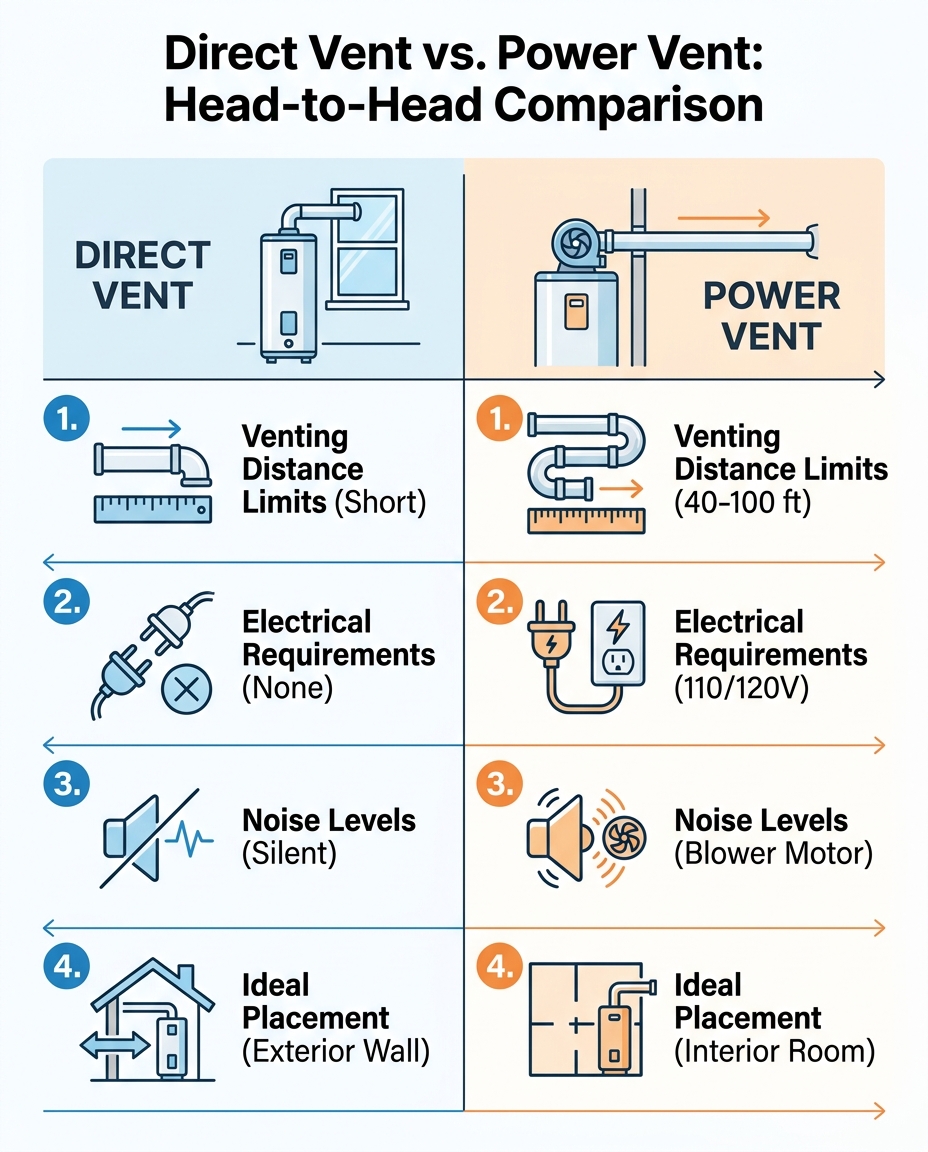
When you are staring down a condemned chimney and forced to choose a sidewall venting method, seeing the facts side-by-side helps clarify the decision. The table below breaks down the core differences so you can evaluate which system best fits the structural realities of your home.
• Venting Distance — Direct Vent System: Short runs only; must be on or near an exterior wall. — Power Vent System: Extended horizontal runs; up to 40-100 feet depending on specs.
• Electricity Required — Direct Vent System: None. Operates passively during power outages. — Power Vent System: Yes. Requires a dedicated 110/120V outlet to run the blower.
• Noise Level — Direct Vent System: Silent. Operates quietly like a standard atmospheric unit. — Power Vent System: Noticeable. Blower motor generates fan noise during heating cycles.
• Ideal Basement Placement — Direct Vent System: Perimeter utility rooms adjacent to the foundation wall. — Power Vent System: Landlocked interior rooms far from exterior walls.
• Maintenance Profile — Direct Vent System: Lower. No mechanical blower assembly to maintain. — Power Vent System: Moderate. Blower motor introduces moving parts.
Ultimately, neither system is universally "better" than the other. The right choice is entirely dependent on where your current plumbing infrastructure sits and how easily it can be adapted to meet modern safety codes.

Navigating Structural Realities When Upgrading
Grounding this technical comparison in the reality of upgrading older homes is essential. When you transition away from a traditional masonry chimney, you are not just swapping a tank; you are fundamentally altering how your home handles combustible gases. This process is strictly governed by local and international building codes.
Understanding Local Code Compliance
The International Residential Code (IRC), specifically Chapter 24, outlines strict venting requirements to prevent carbon monoxide buildup and ensure safe combustion. When an older masonry chimney no longer meets these updated standards, capping it off and routing new sidewall venting requires careful planning. Clearances from windows, doors, and air intakes must be meticulously measured to ensure exhaust gases safely dissipate outdoors rather than drifting back inside.
Leveraging HRI Plumbing's local expertise in navigating the structural realities, basement layouts, and venting codes of older homes in the Jacksonville and Springfield areas ensures this transition happens seamlessly. A local professional understands exactly how municipal inspectors interpret these codes, preventing costly installation delays.
Evaluating Your Gas Supply
Rerouting your venting often means physically relocating the water heater to accommodate the new pipe path. Moving the unit even a few feet requires evaluating the existing gas supply lines to ensure they meet the demands of the new equipment.
If you are shifting from a central chimney to an exterior wall for a direct vent installation, the existing gas piping may not reach, or it may not be sized correctly for the new run length. Proper gas line installation is a critical step when relocating a water heater. A licensed professional will calculate the required BTUs, measure the pipe run, and ensure the gas pressure remains consistent and safe for your new unit.
Preparing Your Basement Venting Before the Chill Sets In
While a failing water heater demands immediate attention regardless of the season, proactive homeowners benefit greatly from timing their upgrades strategically. If you know your masonry chimney is on its last legs, addressing the issue before the weather turns is the best course of action.
The Advantage of Proactive Replacement
Scheduling late-summer upgrades before colder weather hits gives you a distinct advantage. August and early September provide the perfect window to assess your basement layout without the pressure of a mid-winter emergency. When a tank bursts in January, you are often forced to make rushed decisions just to get the hot water flowing again. Proactive planning allows you to carefully weigh the tradeoffs between direct and power venting, ensuring you choose the system that best fits your long-term needs.
Sealing the Home Envelope
Central Illinois experiences notoriously cold winters, making reliable, draft-free, and safely sealed basement venting systems critical for home comfort during the colder months. An old, unused masonry chimney acts like an open window, allowing frigid drafts to sink into your basement and pull heated air out of your home.
Transitioning away from an open atmospheric chimney to a modern, properly sealed sidewall venting system improves your overall home envelope efficiency. Both direct vent and power vent systems utilize tightly sealed piping that prevents cold outdoor air from infiltrating your basement, keeping your lower levels warmer and reducing the strain on your furnace.
Evaluate Your Options with a Local Expert
Choosing between a direct vent and a power vent water heater is rarely a matter of personal preference; it is a matter of architectural necessity. The right choice depends entirely on the unique layout of your home, the location of your existing utilities, and the distance to the nearest exterior wall.
Because every Jacksonville IL older home basement presents its own set of structural quirks, weighing these installation tradeoffs requires a trained eye. We encourage you to schedule a professional assessment to evaluate your specific layout, measure your venting distances, and verify your electrical capabilities. Exploring professional water heater replacement options with a trusted local expert ensures your new system is safe, code-compliant, and built to provide reliable hot water for years to come.
Frequently Asked Questions
What is a direct vent water heater?
A direct vent water heater is a system that uses a concentric pipe design to pull fresh combustion air from the outdoors while simultaneously pushing exhaust gases outside. Because it does not use indoor ambient air, it operates passively without the need for an electrical blower motor. This makes it an incredibly safe and reliable option for homes that require exterior wall venting.
Does a power vent water heater need electricity?
Yes, a power vent water heater requires a dedicated 110/120V electrical outlet to operate. The electricity powers a blower motor mounted on top of the tank, which actively forces exhaust gases out of the home. Without power, the blower cannot run, and a built-in safety switch will prevent the burner from igniting.
Why choose a direct vent over a power vent?
Many homeowners choose a direct vent system to prioritize passive reliability and avoid mechanical complexity. Because a direct vent heater has no electrical blower motor, it operates silently, requires fewer long-term maintenance repairs, and continues to provide hot water even during a power outage.
How far can you run a power vent water heater horizontally?
A power vent water heater can typically push exhaust gases horizontally for distances ranging from 40 to 100 feet, depending on the specific manufacturer's specifications. The maximum allowable distance decreases slightly with every elbow or bend introduced into the PVC piping run, so careful calculation is required during installation.
Are power vent water heaters noisy during operation?
Yes, power vent water heaters generate a noticeable humming or fan noise whenever the blower motor is running. While the noise is generally comparable to a loud bathroom exhaust fan, it is an important factor to consider if your utility room is located directly adjacent to a bedroom or living space.
Can I vent a power vent water heater into an old masonry chimney?
No, you cannot vent a power vent water heater into an unlined or older masonry chimney. These systems use PVC, CPVC, or ABS piping that must be routed directly to the outdoors, typically through a sidewall penetration, to comply with modern safety and building codes.


