



Why Knowing the Signs You Have a Sewer Line Problem Can Save Your Home
Signs you have a sewer line problem include slow drains across multiple fixtures, gurgling toilets, sewage odors, water backing up into lower-level drains, lush or soggy patches in your yard, unexplained pest activity, and cracks forming near your foundation.
| Warning Sign | What It May Indicate |
|---|---|
| Multiple slow drains at once | Main sewer line blockage or damage |
| Gurgling toilets or drains | Trapped air from a partial blockage |
| Rotten egg or sewage odor | Crack in the sewer line releasing sewer gas |
| Water backing up in tub or shower | Sewage finding the path of least resistance |
| Lush or soggy yard patches | Leaking sewer pipe acting as underground fertilizer |
| Increased pest activity | Rodents or insects entering through pipe cracks |
| Cracks in foundation or slab | Soil erosion caused by a long-term underground leak |
Your sewer line is one of the most important — and most overlooked — parts of your home's plumbing. It runs underground from your house to the municipal main, quietly doing its job every single day. Most homeowners in Jacksonville, Springfield, and Rushville, IL never think about it until something goes seriously wrong.
That's exactly the problem.
Sewer line issues rarely announce themselves all at once. They start small — a drain that seems a little sluggish, a smell you can't quite place, a patch of grass that looks oddly green. It's easy to explain these things away. But these small clues are often your home trying to tell you something important.
Catching the warning signs early can mean the difference between a straightforward repair and a full emergency replacement. The U.S. EPA estimates between 23,000 and 75,000 sanitary sewer overflows happen every year in the United States alone — and many of them start with symptoms that went ignored.
The good news? Your sewer line usually gives you warning before it gives you a disaster.
Below, we'll walk through the most common signs of a sewer line problem, what causes them, and what you should do if you spot more than one.
Understanding Your Sewer Lateral and Aging Infrastructure
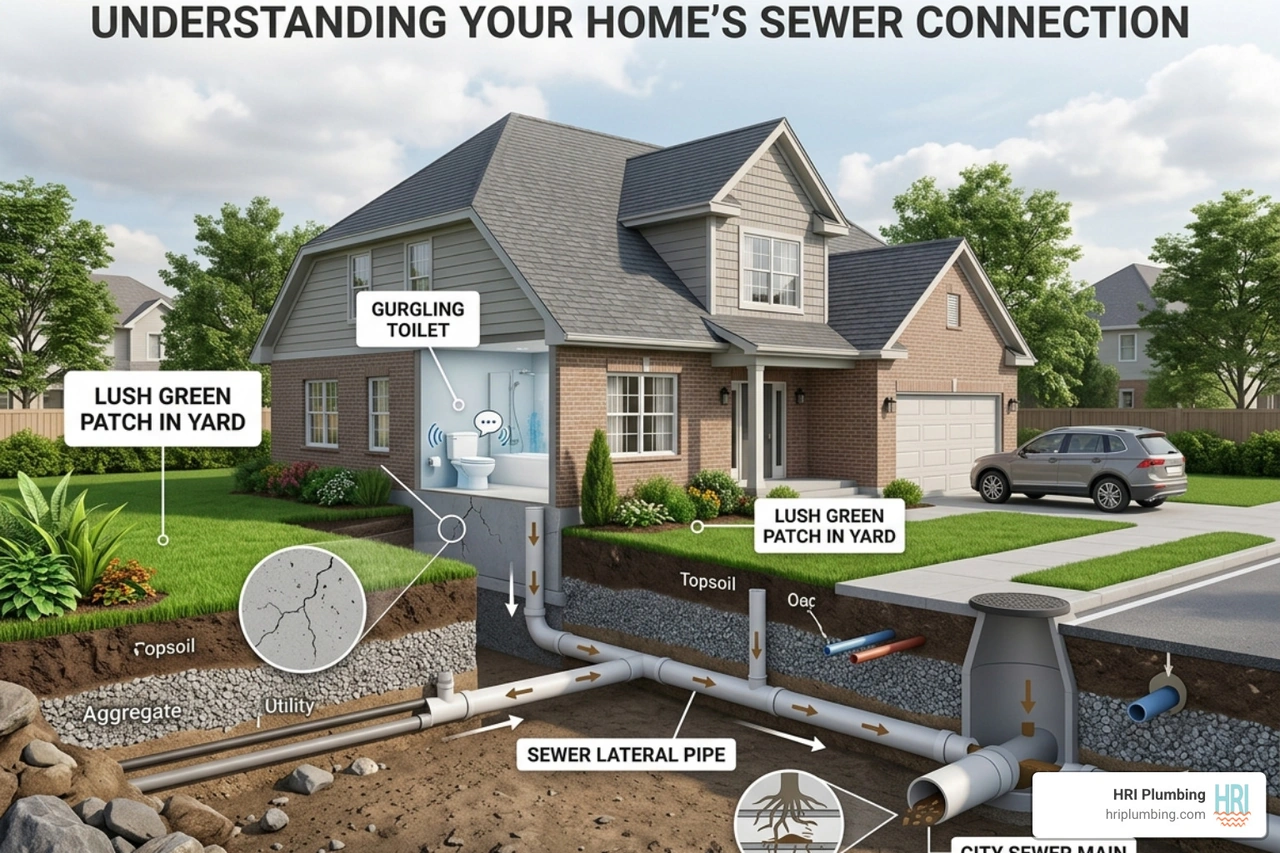
When we talk about sewer problems, we are usually referring to the "sewer lateral." This is the pipe that connects your home’s internal plumbing to the city’s main sewer line under the street. In Jacksonville and Springfield, IL, it is a common misconception that the city is responsible for this entire line. In reality, the homeowner is typically responsible for the maintenance and repair of the lateral from the house all the way to the property line or curb.
The age of your home plays a massive role in your risk level. In May 2026, many homes in our service area are still operating on original infrastructure that has simply reached the end of its lifespan. Depending on when your home was built, your pipes might be made of:
- Vitrified Clay: Common in older homes; these typically last 50-60 years before joints separate and roots move in.
- Cast Iron: Durable but prone to internal corrosion over 50-75 years.
- Orangeburg: Made of wood pulp and coal tar, these "fiber conduit" pipes were popular mid-century but often collapse after 30-50 years.
- PVC/ABS: Modern plastic piping that is much more resistant to roots and corrosion.
If your home was built before 1980, you are in a high-risk category for pipe failure. Shifting soil, freeze-thaw cycles in Central Illinois, and aggressive tree roots are constantly putting pressure on these aging materials.
7 Warning Signs You Have a Sewer Line Problem
Identifying a problem early can prevent a catastrophic backup into your living space. If you notice any of these signs that you might need a sewer line repair, it is time to call in the professionals. Often, these issues overlap with signs of hidden leaks in your plumbing system, making a professional diagnosis essential.
Slow Drains and Backups: Signs You Have a Sewer Line Problem
The most common indicator of a main line issue is a "systemic" backup. If only your kitchen sink is slow, it’s likely just a local clog. However, if multiple fixtures across different rooms are sluggish at the same time, the blockage is deeper in the system.
Because water follows the path of least resistance, main line clogs usually show up in lower-level drains first. You might notice water bubbling up into your basement floor drain or the shower stall in your lower-level bathroom. This isn't just a nuisance; it’s a health hazard. Raw sewage contains bacteria, viruses, and pathogens that can contaminate your home. If you notice these signs of plumbing issues below your foundation, stop using water immediately to prevent further overflow.
Unusual Gurgling Noises and Sewage Odors
Does your toilet sound like a science experiment? If you hear gurgling or bubbling noises when you run the bathroom faucet or the washing machine, it’s a sign that air is trapped in the system. A blockage or a break in the line prevents air from circulating through the vent stacks, forcing it to bubble back up through the water in your traps.
Furthermore, a healthy sewer system should be airtight. If you start smelling "rotten eggs" (hydrogen sulfide), it means sewer gas is escaping. While sometimes this is just a dried-out P-trap in an unused guest bathroom, a persistent source of sewage odors often points to a crack or a broken seal in the main sewer line.
Lush Grass Patches and Soggy Yard Spots
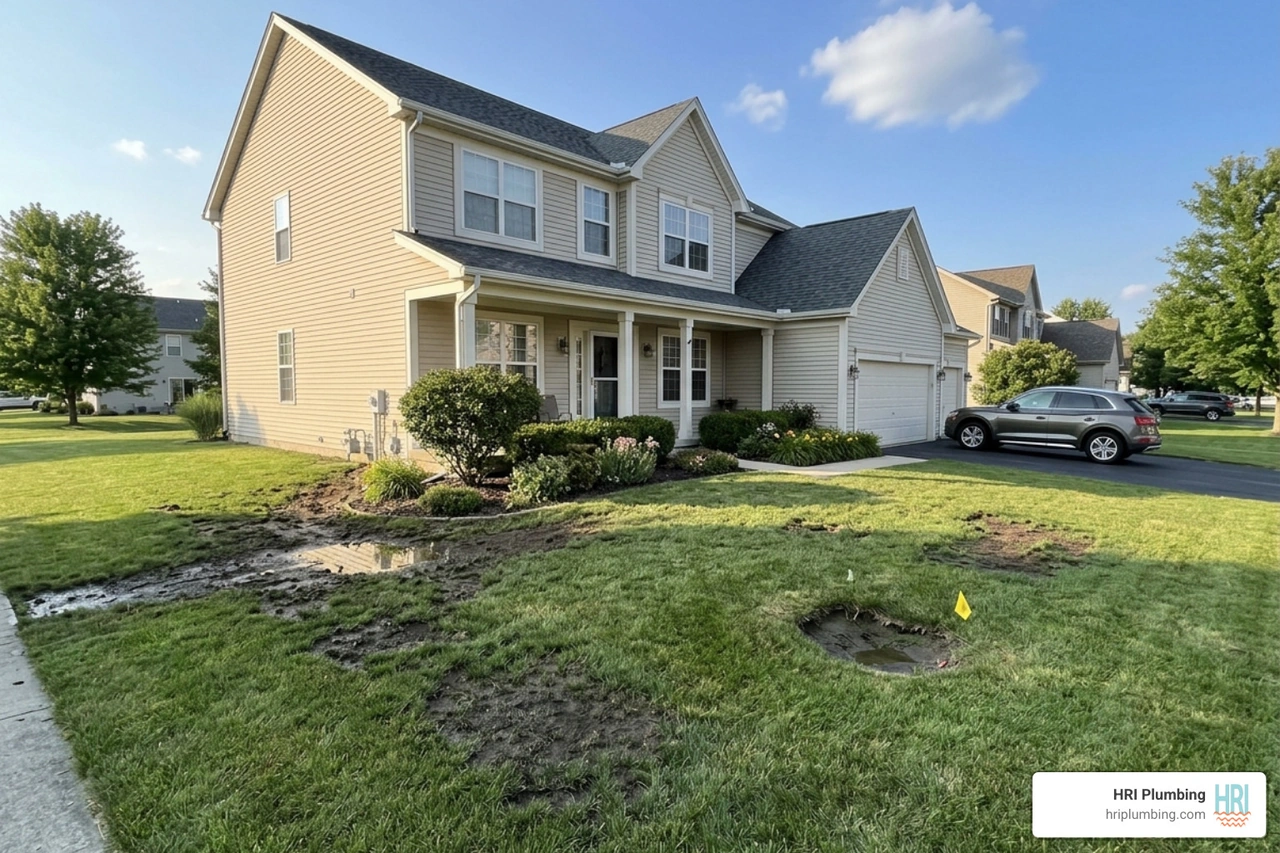
Sometimes the clearest signs you have a sewer line problem aren't inside the house at all. If you notice a patch of grass that is significantly greener, taller, or lusher than the rest of your lawn, your sewer line might be acting as an "unwanted fertilizer." Sewage is rich in nitrogen and nutrients that plants crave.
If the leak is significant, the ground may become soggy or develop sinkholes. This soil erosion is dangerous as it can undermine your landscaping or even your home's structural stability. These symptoms are very similar to the signs it could be time to replace your septic system, and both require immediate attention to prevent environmental contamination.
Foundation Cracks and Pest Infestations
In extreme cases, a leaking sewer line can lead to "slab leaks." When water constantly saturates the soil under your home, it can cause the foundation to settle or shift, leading to visible cracks in your walls or basement floor. Recognizing these spot early signs sewer line issues can save you from a massive structural repair bill.
Additionally, a broken sewer line is like an open door for pests. Rats, cockroaches, and sewer flies are biologically attracted to the environment of a sewer. A crack in your pipe provides them with a direct physical path into your home. If you have a pest problem that won't go away despite calling an exterminator, the "entry point" might be your plumbing.
Professional Diagnosis and Modern Repair Solutions
In the past, the only way to find a sewer problem was to dig up the entire yard. Today, we use much more sophisticated methods to see exactly what is happening under the ground.
Why a Camera Inspection is the Best Way to Confirm Signs You Have a Sewer Line Problem
A video camera inspection is the gold standard for diagnosis. We thread a high-definition, waterproof camera through your sewer line to get a real-time view of the interior. This allows us to distinguish between:
- Root Intrusion: Tree roots seeking moisture enter through tiny cracks and grow into massive "nets" that catch debris.
- Pipe Bellies: Sections of the pipe that have sunk, creating a "valley" where waste settles and clogs.
- Joint Separation: Older clay pipes shifting out of alignment.
This non-invasive approach ensures we aren't guessing with your money. For residents needing sewer repair in Jacksonville IL or sewer repair in Springfield IL, this is always the first step. You can learn more about the process in our sewer repair Springfield IL guide.
Trenchless Repair vs. Traditional Excavation
If we do find a break, you have choices. At HRI Plumbing, we specialize in both traditional and modern repair methods.
- Cured-in-Place Pipe (CIPP) Lining: This "trenchless" method involves inserting a resin-soaked liner into the old pipe. Once it cures, it creates a brand-new, seamless pipe inside the old one. It requires minimal digging and can last up to 50 years.
- Pipe Bursting: Another trenchless option where we pull a new HDPE pipe through the old one, breaking the old pipe apart as the new one takes its place.
- Traditional Excavation: Sometimes, if a pipe has completely collapsed, we must dig a trench to replace the section.
| Feature | Trenchless Repair (CIPP/Bursting) | Traditional Excavation |
|---|---|---|
| Disruption | Minimal; usually 1-2 small holes | High; requires digging a full trench |
| Landscaping | Preserves yards, driveways, and decks | May require replacing grass and concrete |
| Timeframe | Often completed in a single day | Can take several days to a week |
| Durability | High (50+ year lifespan) | High (New PVC/ABS pipes) |
Whether you need a simple spot repair or a full Sewer Line Repair Replacement, we provide honest recommendations based on the actual condition of your pipes.
Prevention and Proactive Steps for Homeowners
You don't have to wait for a disaster to take care of your plumbing. Here is how you can prevent signs you have a sewer line problem from appearing in the first place:
- Mind Your Landscaping: Avoid planting trees with aggressive root systems (like Maples or Willows) within 50 feet of your sewer line.
- Watch What You Flush: Only flush human waste and toilet paper. "Flushable" wipes, feminine hygiene products, and grease are the leading causes of preventable clogs.
- Regular Maintenance: For older homes, a camera inspection every 1-2 years can catch small cracks before they become collapses.
- Check Your Insurance: Many standard homeowners policies do not cover sewer lateral failure. Ask your agent about a "service line rider" to protect yourself from unexpected repair costs.
Trust the Experts at HRI Plumbing
Dealing with a sewer line problem is stressful, but you don't have to do it alone. We offer reliable, high-quality plumbing solutions across Jacksonville, Springfield, and Rushville. Our team is known for 24/7 support and an emphasis on honesty and integrity. We will never recommend a full replacement if a simple repair will solve the problem.
If you’ve noticed gurgling drains, foul smells, or soggy spots in your yard, don't wait for the problem to get worse. Contact us today for a professional camera inspection and get the peace of mind you deserve. Whether it's a residential home or a commercial property, we have the tools and the expertise to get your system flowing perfectly again. For more detailed information on our services, visit our Sewer Line Repair Replacement page.


