




What Every Illinois Homeowner Should Know About How a Septic System Works
How does a septic system work is a question worth understanding before a problem forces you to learn the hard way. About 21 million American homes — including many in central Illinois — rely on a septic system instead of a municipal sewer line. When it's working, you never think about it. When it's not, it becomes the most urgent and expensive problem in your home.
Here's a quick breakdown of how the process works:
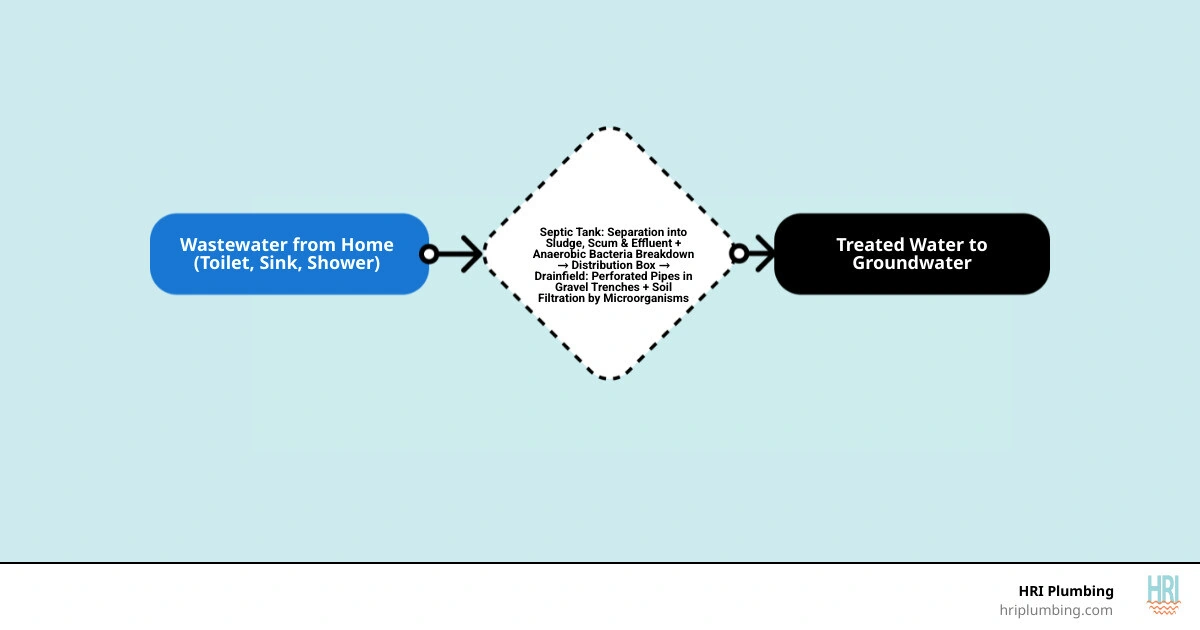
- Wastewater leaves your home through a single main drain line and flows into a buried septic tank.
- Inside the tank, waste separates into three layers: solids sink to the bottom (sludge), oils and grease float to the top (scum), and clarified liquid sits in the middle (effluent).
- Anaerobic bacteria naturally break down the solid waste inside the tank.
- Effluent flows out of the tank through an outlet baffle and into a distribution box.
- The distribution box sends the liquid evenly into the drainfield (also called a leach field).
- Perforated pipes in gravel-filled trenches slowly release the effluent into the surrounding soil.
- Soil microorganisms filter out harmful bacteria, viruses, and nutrients as the liquid percolates downward.
- Treated water eventually reaches the groundwater below — cleaner than when it entered the soil.
The whole system runs on gravity and biology. No moving parts in a conventional setup. But it only keeps working when it's properly maintained — and in Illinois, neglect can turn into a repair bill that reaches tens of thousands of dollars.
How Does a Septic System Work to Treat Wastewater?

To understand the heart of your home's waste management, you have to look at the "water in/water out" principle. Every time you flush a toilet in Springfield or run the dishwasher in Jacksonville, that same volume of water must exit the septic tank. If the tank is already full of liquid—which it always is—the incoming water pushes an equal amount of pre-treated liquid out toward the drainfield.
This is why hydraulic overload is so dangerous. If you run five loads of laundry back-to-back, the rushing water agitates the tank, preventing the layers from separating and potentially pushing raw solids into your yard. Septic Services are designed to ensure this balance remains stable, but the heavy lifting is done by anaerobic decomposition. These are "oxygen-hating" bacteria that live in the dark, airless environment of your tank, munching away at organic matter to reduce the volume of solids.
The Initial Stage: How Does a Septic System Work Inside the Tank?
The journey begins at the inlet baffle. This T-shaped pipe directs incoming wastewater downward, preventing it from splashing and disturbing the settled layers. Once inside, the magic of physics takes over.
- The Scum Layer: Fats, oils, and grease (FOG) are lighter than water. They float to the top, forming a hard crust. This layer actually helps seal the tank, keeping oxygen out so the anaerobic bacteria can thrive.
- The Sludge Layer: Heavy solids—like human waste and toilet paper—sink to the bottom. Over time, bacteria turn much of this into a dense, mud-like substance.
- The Effluent: This is the relatively clear liquid in the middle. It is the only part of the waste that should ever leave the tank.
If you notice slow drains or gurgling pipes in your home, it might mean your tank's layers have grown too thick. Residents needing Septic Tank Plumbing Springfield Il often find that their inlet baffle is clogged or the sludge has reached a critical level, requiring professional attention to restore the flow.
The Final Stage: How Does a Septic System Work in the Drainfield?
While the tank handles the "primary treatment," the real purification happens in the drainfield (or leach field). The effluent leaves the tank and travels through a distribution box, which acts like a traffic cop, ensuring the liquid is spread evenly across several perforated pipes.
These pipes are typically 4 inches in diameter and are buried in trenches filled with gravel. A standard drainfield trench is about 2 feet wide and 4 to 6 feet deep. As the effluent drips out of the holes in the pipes, it passes through the gravel and into the soil.
This is where aerobic (oxygen-breathing) bacteria live. As the liquid percolates through the soil, these microorganisms eat the remaining pathogens. By the time the water travels through several feet of Illinois soil, it is naturally filtered and safe to rejoin the groundwater. For new builds or expansions, getting the right Septic Tank Installation Chatham Il is vital because the soil must be "perc-tested" to ensure it can absorb water at the correct rate.
Comparing Conventional and Advanced Septic Systems
Not every property is suited for a standard gravity-fed system. High water tables or heavy clay soil (common in parts of central Illinois) might require an "advanced" system.
| System Type | Best Use Case | Key Features |
|---|---|---|
| Conventional Gravity | Standard lots with deep, porous soil. | Uses gravity; no moving parts; lowest maintenance. |
| Aerobic Treatment Unit (ATU) | Small lots or sensitive environmental areas. | Uses an air pump to boost bacterial action; treats waste more thoroughly before the drainfield. |
| Sand Mound | High water tables or shallow bedrock. | A man-made hill of sand and soil that treats waste above the natural ground level. |
| BAT Units | Areas requiring high nitrogen removal. | Can reduce nitrogen by 55-80% (vs. 5% in conventional tanks). |
If your old system is failing or your site has challenging soil, you might look into a Septic Tank Replacement Jacksonville Il to upgrade to a more modern, efficient design that protects your local environment.
Maintaining Your System for Long-Term Performance
A septic system is likely the most expensive "appliance" in your home. While a concrete tank can last 40 to 100 years, the drainfield—the most expensive part to fix—usually lasts about 25 to 30 years. You can extend this lifespan significantly with two simple habits: pumping and inspecting.
Most experts recommend a professional Septic Inspection Rochester Il at least every three years. During this time, a technician will measure the sludge and scum layers. If the bottom of the scum layer is within 6 inches of the outlet, or the top of the sludge is within 12 inches, it’s time to pump. For a typical family of four with a 1,000-gallon tank, this usually happens every 3 to 5 years.
What to Avoid Flushing to Prevent System Failure
The golden rule of septic systems is simple: if it isn't human waste or toilet paper, don't flush it. Your septic tank is a living ecosystem of bacteria; if you kill the bacteria or overwhelm them with plastic, the system fails.
Never flush or pour these down the drain:
- Non-biodegradables: "Flushable" wipes (they aren't!), diapers, cigarette butts, and feminine hygiene products.
- Harsh Chemicals: Large amounts of bleach, drain cleaners, and paint thinners kill the beneficial bacteria.
- Grease and Oils: These will quickly overwhelm the scum layer and can clog the inlet pipes.
- Garbage Disposals: These can increase the solids in your tank by 50%. If you use one in Rushville, you’ll need to pump your tank much more frequently.
If you’ve accidentally introduced these items and notice foul odors or wet spots in your yard, you may need a Septic Tank Repair Rushville Il to clear the blockages before they ruin your drainfield.
Professional Care for Your Local Septic System
At HRI Plumbing, we’ve seen it all—from simple clogs to total system collapses. We know that a septic failure isn't just a mess; it's a threat to your family's health and your property's value. That’s why we provide comprehensive Septic Services across Jacksonville, Springfield, and Rushville.
Our Best Practices for Homeowners:
- Install Risers: If your tank is buried deep, risers bring the access port to the surface, making inspections easier and cheaper.
- Conserve Water: Fix leaky faucets and use high-efficiency toilets to prevent "hydraulic overload."
- Protect the Drainfield: Never park cars or build structures over your leach field. The weight can crush the pipes and compact the soil.
- Divert Runoff: Ensure gutters and land grading move rainwater away from the drainfield so the soil doesn't become saturated.
Whether you need a routine check-up or emergency 24/7 support for a backup, our team is here to help central Illinois homeowners keep their systems flowing smoothly. Don't wait for the grass to turn "unusually green" over your pipes—give us a call today for honest, reliable maintenance.


