



Your Septic System Is Working 24/7 — Are You Keeping Up With It?
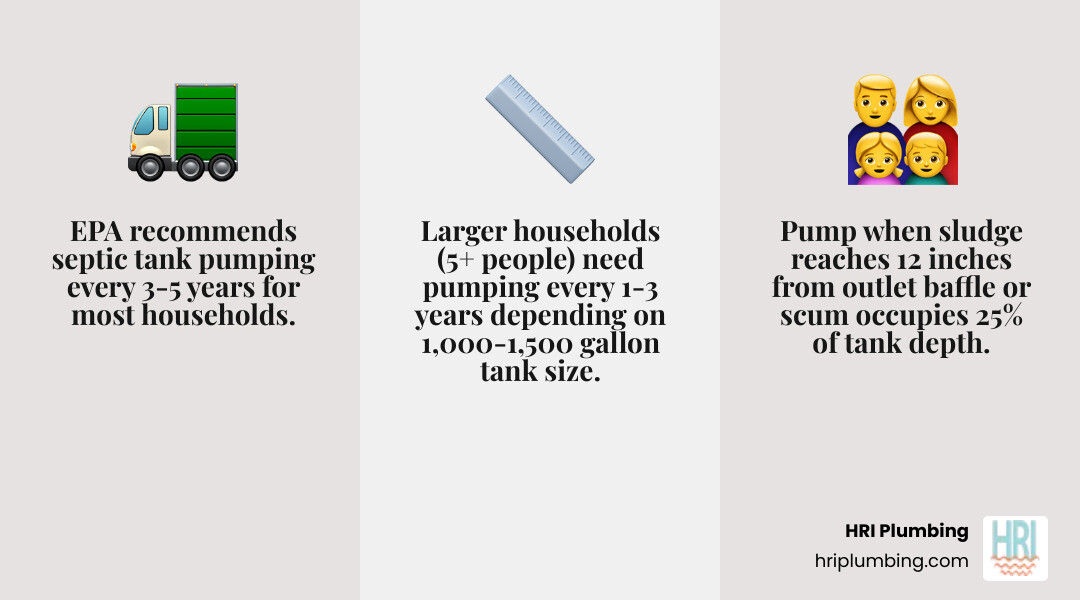
How often should a septic tank be pumped is one of the most common questions homeowners with private septic systems ask — and for good reason. The short answer: most households need septic tank pumping every 3 to 5 years. But your specific schedule depends on your tank size, how many people live in your home, and how much water and waste your household generates daily.
Here's a quick-reference guide to get you started:
| Household Size | 1,000-Gallon Tank | 1,500-Gallon Tank |
|---|---|---|
| 1-2 people | Every 5-6 years | Every 7-9 years |
| 3-4 people | Every 3 years | Every 4-5 years |
| 5-6 people | Every 2 years | Every 3-4 years |
| 7+ people | Every 1-2 years | Every 2-3 years |
The EPA recommends pumping when sludge and scum together occupy more than 25% of your tank's liquid depth — or when the sludge layer sits within 12 inches of the outlet baffle. Don't wait for a backup to find out you're past due.
For many homeowners in Jacksonville, Springfield, and Rushville, IL, the septic system is out of sight and out of mind — until something goes wrong. A neglected tank doesn't just cause unpleasant odors or slow drains. It can push solids into your drain field, leading to clogs and repairs that cost far more than routine maintenance ever would. A properly maintained septic system can last 25 to 40 years. One that's ignored can fail in a fraction of that time.
This guide walks you through everything you need to know: how pumping frequency is determined, what warning signs to watch for, and how to protect your system between service visits.
How Often Should a Septic Tank Be Pumped in Springfield and Jacksonville?
When we talk to homeowners in Springfield and Jacksonville about wastewater management, we often find that "out of sight, out of mind" is the standard policy. However, as of April 2026, the Environmental Protection Agency (EPA) continues to emphasize that the average septic system should be inspected every one to two years and pumped every three to five years.
While the three-to-five-year window is a solid rule of thumb, it isn't a "one size fits all" solution. Think of your septic tank like a kitchen trash can. If you live alone, it might take a week to fill up. If you have a family of six and a dog, it’s full by Tuesday. Your septic tank operates on the same principle of volume and capacity.
Key Factors Influencing How Often Should a Septic Tank Be Pumped
Several variables dictate how quickly your system reaches its limit. Understanding these can help you avoid the stress of an unexpected overflow.
- Household Size: This is the biggest driver. Every person in your home adds roughly 60 to 70 gallons of wastewater per day. A family of four can easily send over 250 gallons into the system daily. More people means more solids, which means the "trash can" fills up faster.
- Total Wastewater Volume: It’s not just about the number of people, but their habits. Frequent guests, long showers, and high laundry usage all contribute to the total flow. If your home is the designated spot for every holiday gathering in Jacksonville, your tank is working overtime.
- Garbage Disposal Impact: Here is a surprising fact: using a garbage disposal can increase sludge accumulation by up to 50 percent. These units grind up organic matter that takes much longer to break down, forcing you to pump more frequently—sometimes as often as every year or two for heavy users.
- Tank Size: Naturally, a 1,500-gallon tank provides more "breathing room" than a 1,000-gallon tank. For example, two residents using a 1,500-gallon tank might extend their pumping interval to 7 years or longer, whereas a family of four using a 1,000-gallon tank needs service every 3 years.
To ensure your system is handled correctly, work with professionals who understand the local soil and regulations. Our team at HRI Plumbing provides expert Septic Services to help you navigate these variables. If you’re unsure of your tank's current status, a Septic Inspection Chatham IL can provide the clarity you need.
Warning Signs You Need Septic Tank Plumbing in Rushville
Sometimes, the calendar isn't the best indicator—your plumbing is. If you live in Rushville and haven't had your tank serviced in a while, your home might be trying to tell you something.
Common red flags include:
- Slow-Draining Pipes: If every drain in the house seems sluggish despite using a plunger, the bottleneck likely isn't in the pipes—it's a full tank.
- Gurgling Sounds: Do your pipes "talk" back to you? Gurgling noises coming from the drains after you flush or run the dishwasher are often trapped air bubbles caused by a backup.
- Sewage Odors: If you notice a "rotten egg" smell near your tank or drain field, it’s a sign that gases are escaping because the system is overwhelmed. Check out our guide on the Source of Sewage Odors for more details.
- Lush, Green Grass: If the grass over your septic tank looks like a professional golf course while the rest of the yard is brown, you likely have a leak. The effluent is acting as an unintended fertilizer.
- Pooling Water: Standing water or soggy patches in your yard (when it hasn't rained) is a major warning sign that your drain field is failing to absorb liquid.
For a deeper dive into these symptoms, read our Septic Tank Pumping Signs Guide. Recognizing these early can be the difference between a routine pump-out and needing a full Septic Tank Plumbing Rushville IL repair.
Measuring Sludge and Scum to Determine How Often Should a Septic Tank Be Pumped
Inside your tank, waste separates into three layers: the scum layer (fats and oils on top), the effluent (liquid in the middle), and the sludge layer (heavy solids at the bottom).
Professional technicians use specialized tools to measure these layers during an inspection. According to technical standards, you need to pump when:
- The bottom of the scum layer is within 6 inches of the bottom of the outlet.
- The top of the sludge layer is within 12 inches of the outlet.
- More than 25 percent of the total liquid depth is comprised of sludge and scum.
While some DIY guides suggest using a "velcro stick" to measure these levels yourself, we strongly advise against it. Septic tanks contain toxic gases like methane and hydrogen sulfide that can be fatal if inhaled. Always leave the lid-lifting and measuring to the pros.
Protecting Your System and Extending the Time Between Pumpings
You don't have to just sit back and wait for the tank to fill up. There are proactive steps you can take to lighten the load on your system.
Water Conservation is KeyThe more water you send down the drain, the less time solids have to settle at the bottom of the tank. When water rushes through too quickly, solids can be pushed out into the drain field, causing catastrophic clogs.
- Install High-Efficiency Fixtures: Modern low-flow toilets use about 1.6 gallons per flush compared to older models that used up to 5 gallons.
- Laundry Management: Spread your laundry out over the week. Doing five loads on a Saturday morning sends hundreds of gallons of water into the tank at once, which can "flood" the system.
- Fix Leaks: A single running toilet can waste 200 gallons of water a day. That's enough to fill a small septic tank in a week!
Watch What You FlushYour septic system is a living biological environment. It relies on bacteria to break down waste. To protect these hard-working microbes, follow a strict "Human Waste and TP Only" policy.
Never flush or pour the following down your drains:
- Non-Biodegradable Items: Baby wipes (even "flushable" ones), feminine hygiene products, cigarette butts, and paper towels.
- Grease and Oils: These solidify in your pipes and create a thick scum layer that bacteria can't digest.
- Chemicals: Pesticides, paint thinners, and harsh drain cleaners can kill the beneficial bacteria in your tank.
- Medications: Many pharmaceuticals can disrupt the natural breakdown process.
If you’ve accidentally introduced these items into your system, you might need Septic Tank Repair Jacksonville IL to restore proper function.
Maintaining Your Drain Field and System Health
The drain field is just as important as the tank itself. This is where the liquid effluent is filtered by the soil. If the soil becomes compacted or oversaturated, the system stops working.
- Avoid Soil Compaction: Never drive vehicles or park heavy equipment over your septic tank or drain field. The weight can crush pipes and pack the soil so tightly that it can no longer absorb water.
- Divert Water: Ensure that your home's downspouts, sump pump discharge, and patio drains are pointed away from the septic area. Excess rainwater can saturate the soil, leaving no room for the effluent to filter through.
- Root Intrusion: Don't plant trees or large shrubs near the drain field. Roots are naturally drawn to the moisture and nutrients in the pipes and can quickly cause blockages or pipe bursts. Grass is the only thing that should grow over your septic system.
For a seasonal guide on keeping your system in top shape, check out our Spring Plumbing and Septic Inspection Checklist and our general advice on Preventative Plumbing Maintenance.
Professional Solutions for Long-Term Reliability
At HRI Plumbing, we believe in honesty, integrity, and providing our neighbors in Jacksonville, Springfield, and Rushville with the best possible service. Whether you need an emergency pump-out or you want to set up a comprehensive maintenance plan to ensure you never have to worry about a backup again, we are here to help.
A properly maintained septic system is an investment in your home's value and your family's health. Routine pumping typically costs a few hundred dollars, while a drain field replacement can cost between $5,000 and $15,000. The math is simple: preventative care pays for itself many times over.
Don't wait for the gurgling pipes or the soggy yard to take action. If you can't remember the last time your tank was serviced, it's time to call in the experts. From routine inspections to complex repairs, our 24/7 support ensures that you are never left dealing with a septic crisis alone.
Ready to secure your home’s plumbing health? Contact us today for reliable Septic Services and let us help you stay on the right schedule.


