



Why Rusty Water From Your Hot Tap Is a Problem You Shouldn't Ignore
The most common rusty water from hot water tap causes are a failing anode rod, sediment buildup inside the water heater tank, internal tank corrosion, or aging galvanized pipes in your home's plumbing system.
Quick answer — most likely causes at a glance:
- Failing anode rod — the sacrificial rod inside your water heater has worn down, allowing the steel tank to corrode
- Sediment buildup — mineral deposits accumulate at the bottom of the tank and discolor the water
- Internal tank corrosion — the tank lining has deteriorated, especially in heaters over 8–10 years old
- Corroded galvanized pipes — aging steel pipes release rust particles into your water supply
- Municipal supply disturbance — nearby water main work or fire hydrant flushing stirs up sediment temporarily
One morning everything seems fine. The next, you turn on the hot tap and brownish, orange-tinted water comes pouring out. It's unsettling — and for homeowners in Springfield, Jacksonville, and Rushville, IL, it's one of the more common plumbing concerns we hear about.
Here's the thing: rusty hot water almost always points to something specific and diagnosable. If your cold water runs clear but the hot water looks brown or reddish, the problem is almost certainly inside your water heater or your home's pipes — not the municipal supply. That distinction matters because it tells you exactly where to look.
This guide walks you through how to identify the source, what the risks are, and what to do next.
Discover more about rusty water from hot water tap causes:
Diagnosing the Primary Rusty Water from Hot Water Tap Causes

When you see discolored water, your immediate priority is narrowing down the source. Is the issue coming from the municipal supply in Springfield, or is it isolated to your home's system?
A quick diagnostic check can save you time and help you figure out if you need a professional plumber or if you should contact your local water utility.
| Diagnostic Pattern | Likely Source | Recommended Action |
|---|---|---|
| Both hot and cold water are rusty at all taps | Municipal water main or main service line | Wait 2–4 hours; call utility if it persists |
| Only hot water is rusty at all taps | Water heater (anode rod, sediment, or tank) | Flush tank; inspect anode rod |
| Both hot and cold water are rusty, but only at one tap | Corroded pipe or fixture at that specific location | Replace the affected pipes or faucet |
| Rusty water only in the morning, then clears up | Corroded galvanized pipes in the home | Schedule a pipe inspection |
Isolating the Source: Is It the Water Heater, Pipes, or Municipal Supply?
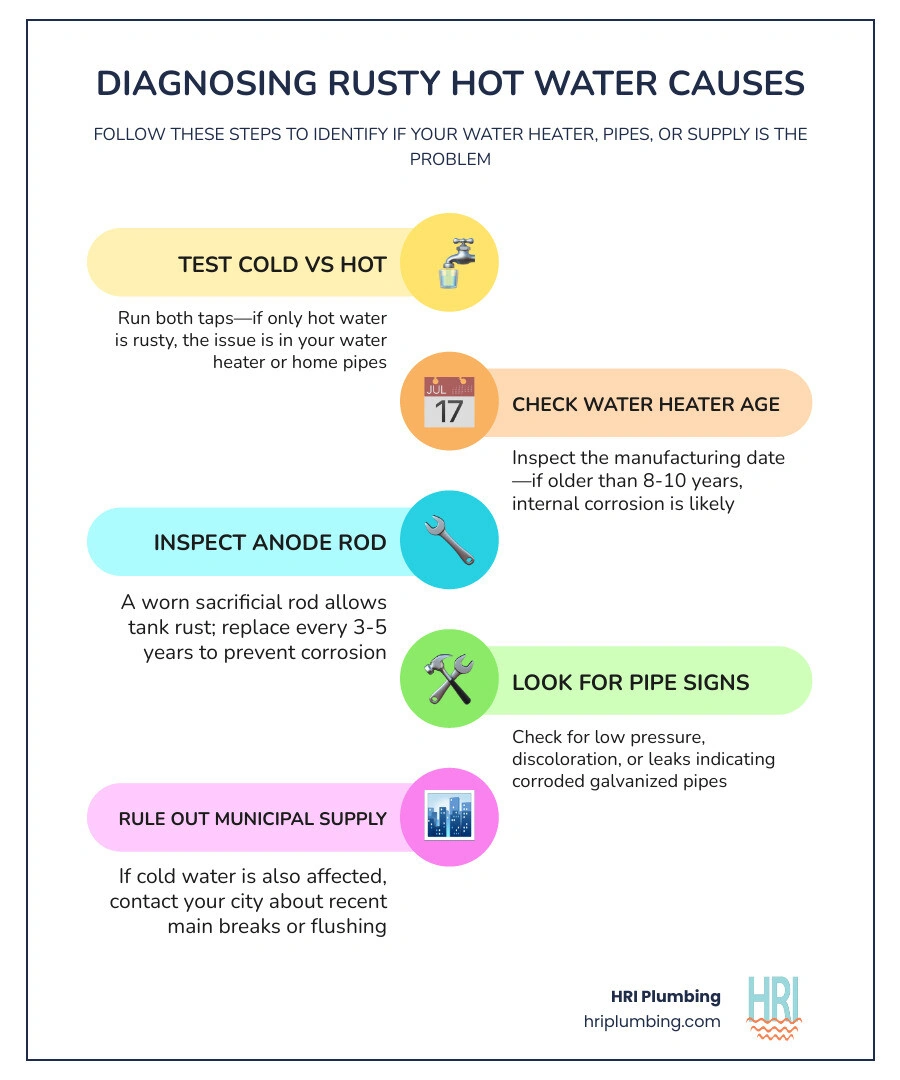
To isolate the issue, perform the two-glass test. Go to a faucet that hasn't been used for a few hours. Fill one glass with cold water and another with hot water.
- If only the hot water glass is discolored: The issue is localized to your hot water system. This is one of the classic Signs Your Water Heater Is Going Out. When internal tank corrosion begins, it often leads to other issues, such as your Water Heater Not Heating efficiently.
- If both glasses are discolored: The issue is either your home's main water line or the municipal supply. City water main breaks, construction work, or routine fire hydrant flushing can stir up iron oxide sediment. Run your outdoor hose bib for 10 to 20 minutes. If the water runs clear, the city's supply is fine, and the issue lies within your home's plumbing.
How a Failing Anode Rod and Sediment Buildup Act as Rusty Water from Hot Water Tap Causes
Traditional tank water heaters are made of steel, which naturally rusts when exposed to water and oxygen. To prevent this, manufacturers install a sacrificial anode rod (usually made of magnesium or aluminum). This rod is designed to corrode instead of the steel tank.
Anode rods typically last 3 to 5 years. Once the anode rod is fully depleted, the water begins attacking the steel tank itself, leading to internal corrosion and rusty hot water.
At the same time, hard water minerals like calcium and magnesium settle at the bottom of the tank over time. This leads to severe Sediment Buildup and Potential Water Heater Issues. As the sediment layer grows, it can trap moisture against the steel bottom, accelerating rust. It also acts as an insulator, which is why your Water Heater Is Making Unusual Sounds (like popping or rumbling) as boiling water bubbles through the sediment layer.
When Corroded Galvanized Pipes and Aging Plumbing Are the Rusty Water from Hot Water Tap Causes
If your home was built before the 1960s, it may still have galvanized steel pipes. These pipes are coated in zinc to prevent rust, but over decades, that zinc coating wears away. Once exposed, the bare iron rusts rapidly.
How do you know if your pipes are the culprit? Look for these signs:
- Discolored water that only appears at a single fixture.
- Gritty or flaky particles in your water.
- A gradual drop in water pressure, as rust restricts the inside of the pipes.
- Rust appearing first thing in the morning because the water sat in contact with the corroding metal overnight.
When replacing old plumbing, modern copper or PEX piping is the gold standard. If you connect copper directly to galvanized steel, it creates a galvanic reaction that accelerates corrosion. Professional plumbers prevent this by using specialized dielectric couplings to isolate the metals.
Is Rusty Hot Water Safe to Drink, Cook, or Bathe In?
The U.S. EPA classifies iron in water as a secondary contaminant, meaning it is primarily an aesthetic issue rather than a direct health hazard. However, that does not mean you should ignore it.
- Health Risks: While small amounts of iron are necessary for your body, drinking highly discolored water can cause stomach upset. Furthermore, heavy sediment and rust can create a rough interior surface inside your water heater, providing a perfect breeding ground for bacteria like Legionella.
- Skin and Hair: Bathing in rusty water can leave your skin feeling dry and irritated, and it can discolor blonde or chemically treated hair.
- Staining: Iron-rich water will leave stubborn orange, red, or brown stains on your sinks, toilets, and tubs. It will also ruin your laundry, leaving permanent rust spots on your clothes. Never use chlorine bleach on rust-stained clothes, as it will permanently set the stains.
When to Repair vs. Replace Your Water Heater
If your water heater is the source of the rust, can you save it? It depends on where the rust is occurring.
If the rust is caused entirely by sediment or a depleted anode rod, flushing the tank and replacing the rod can resolve the issue and extend the system's life.
However, if the steel tank shell itself has begun to rust, a leak is inevitable. Traditional tank water heaters last 8 to 12 years on average. If your unit is in that age range and is generating rusty water, it is time to start planning for a replacement.
To help you make the right choice, consider:
- Lifespan expectations: Check How Long Does a Water Heater Last to see where your unit stands.
- Physical warning signs: Review the critical Signs That It's Time to Replace Your Water Heater, such as water pooling around the base of the tank.
- Cost-efficiency: Weighing your options? Read our guide on whether you Should I Repair or Replace My Water Heater.
- Modern upgrades: If you decide to upgrade, explore the various Options for Replacing an Aging or Obsolete Water Heater, including high-efficiency tankless systems that eliminate tank-based rust entirely.
Resolving Discolored Water Issues in Springfield, Jacksonville, and Rushville
At HRI Plumbing, we understand how frustrating it is to deal with discolored tap water. Whether you are dealing with a Water Heater Not Producing Hot Water or you are experiencing other Common Water Heater Issues That Require Repair, our team is here to help.
We recommend flushing your water heater tank at least once a year to prevent sediment buildup. If you live in an area with hard water, installing a water softener can also prevent scale accumulation and prolong the life of your plumbing fixtures.
Don't let rusty water damage your appliances, ruin your laundry, or disrupt your home. Schedule professional water heater repair and replacement with HRI Plumbing today. We serve Springfield, Jacksonville, and Rushville, IL, with honest, reliable, and high-quality plumbing solutions.


