



Why Spring Sump Pump Testing and Maintenance Protects Your Home
Spring sump pump testing and maintenance is one of the most important things a homeowner can do before heavy rainfall and snowmelt push groundwater levels to their peak. In central Illinois, April and May bring unpredictable weather — and a sump pump that sat idle all winter may not be ready when you need it most. According to industry data, regular spring maintenance prevents up to 85% of common pump failures. Yet many homeowners skip it entirely, only discovering a problem when water is already pooling in the basement.
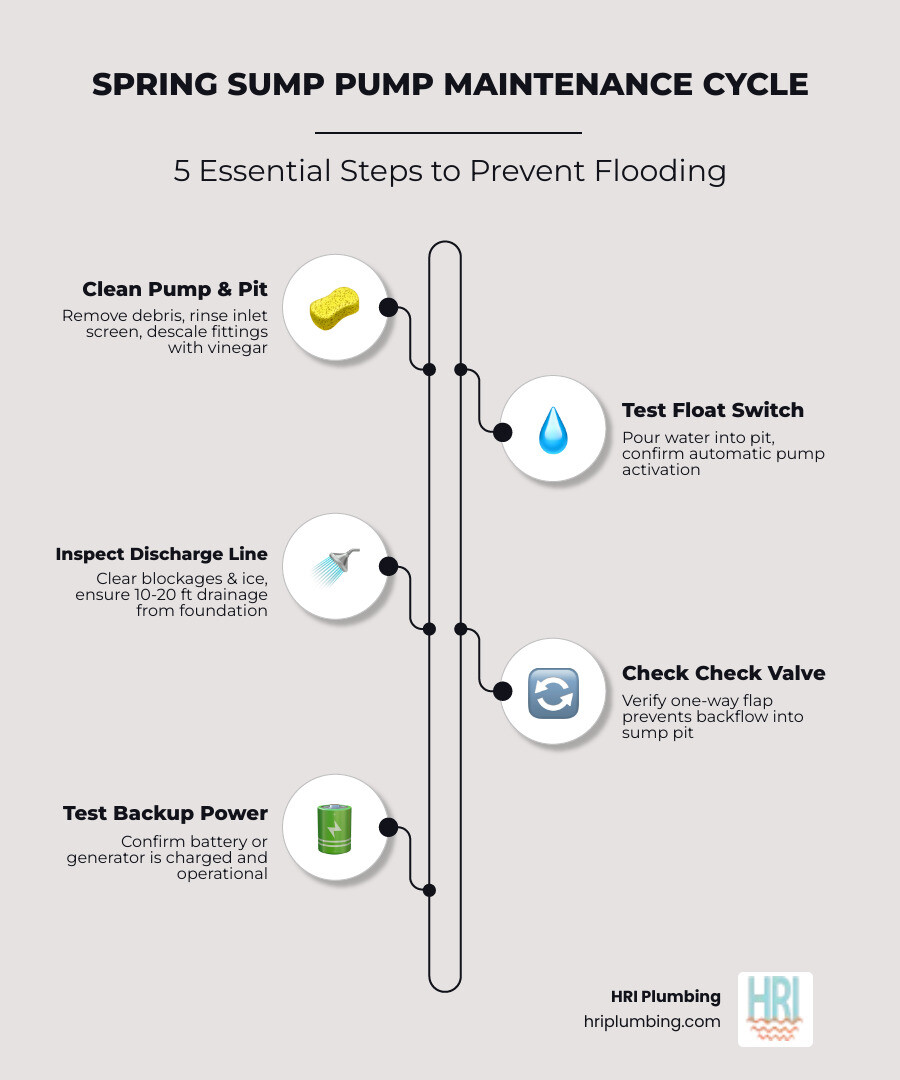
Here's a quick overview of what spring sump pump maintenance involves:
- Clean the pump and sump pit — remove debris, rinse the inlet screen, and descale fittings
- Test the float switch — pour water into the pit and confirm the pump activates automatically
- Inspect the discharge line — check for ice, blockages, and ensure water drains 10–20 feet from your foundation
- Check the check valve — confirm the one-way flap prevents backflow into the pit
- Test electrical components — verify the GFCI outlet, power cord, and dedicated circuit are all functioning
- Test your backup power — confirm battery backup or generator is charged and ready
Skipping these steps can lead to basement flooding that costs anywhere from $5,000 to $25,000 to repair — and most standard homeowner's insurance policies don't cover groundwater damage. Learn more about how a sump pump helps to protect against groundwater flooding.
Think of it like a neglected garden hose — it looks fine until the moment you actually need it, and then it lets you down completely. A sump pump is no different. A few simple checks each spring can be the difference between a dry basement and a very expensive disaster.
Essential Steps for Spring Sump Pump Testing and Maintenance
As we move through April 2026, the soil across central Illinois is becoming increasingly saturated. Whether you are in Springfield, Jacksonville, or Rushville, the hydrostatic pressure against your foundation is rising. Your sump pump is the only thing standing between a dry storage area and a soggy, moldy mess.
Before you dive into the "wet work," we always emphasize safety. A sump pump is an electrical appliance sitting in water—a combination that requires respect. Before performing any hands-on spring sump pump testing and maintenance, ensure you have the right tools:
- Protective waterproof gloves
- A bright flashlight
- A large bucket (5 gallons is ideal)
- A screwdriver and pliers
- A garden hose (if accessible)
- A wet/dry vacuum
The first step is a visual inspection. Remove the pit cover and look inside. If you see standing water, is it clear or murky? Is there an oily sheen? These can be clues about your home's drainage health. For a deeper look at what to watch for, check out our sump pump maintenance springfield-il-guide.
Cleaning the Pump and Sump Pit
Over the winter, debris like silt, sand, and even small pebbles can migrate into your sump pit. If this debris gets sucked into the pump, it can jam the impeller or clog the inlet screen, leading to motor burnout.
- Unplug the Unit: Never put your hands in the pit while the pump is powered.
- Remove Debris: Use your gloved hands or a wet/dry vac to remove any muck from the bottom of the basin.
- Clean the Inlet Screen: This is the "filter" at the bottom of the pump. If it’s covered in slime or sediment, the pump has to work twice as hard to move water. Rinse it with a garden hose.
- Descaling: In areas with hard water, mineral deposits can build up on the pump housing and float arm. We recommend using a 1:1 vinegar and water solution to scrub away these deposits. Do not use bleach, as it can damage the rubber components and seals within the pump.
Regularly cleaning the basin ensures that when the heavy rains hit, your pump can move the maximum volume of water possible. This simple act of sump pump repair to prevent flooding is the foundation of a reliable system.
Step-by-Step Spring Sump Pump Testing and Maintenance Checklist
Once the pit is clean, it’s time for the "Bucket Test." This is the gold standard for verifying that your pump actually works.
- The Setup: Ensure the pump is plugged back into its GFCI outlet.
- The Pour: Slowly pour about 5 gallons of water into the sump pit. Watch the float switch carefully.
- The Activation: As the water level rises, the float should lift freely. Once it reaches the "on" position, the pump should kick in immediately.
- The Discharge: You should hear a smooth humming sound (not a grinding or rattling noise) as the water is sucked out. The water level should drop rapidly.
- The Deactivation: Once the water is gone, the float should drop, and the pump should click off.
If the pump fails to turn on, or if it runs but the water level doesn't move, you might be facing a sump pump not working scenario. Common culprits include a stuck float switch or a vapor lock. If the pump sounds like it’s struggling, has your homes sump pump stopped working effectively? It might be time to call in the experts at HRI Plumbing to diagnose a failing motor before the next thunderstorm rolls through.
Inspecting the Discharge Line and Check Valve
The best pump in the world is useless if the water it moves has nowhere to go. The discharge line is the pipe that carries water from the pump to the outside of your home.
In central Illinois, we often see discharge lines that have become blocked by late-winter ice or debris like mulch and leaves.
- Check the Exit Point: Walk outside and locate where the pipe ends. It should be at least 10 to 20 feet away from your foundation. If it’s too close, the water will simply seep back down into the pit, creating a "recirculation loop" that wears out your pump.
- Clear Obstructions: Ensure the opening isn't buried under mud or blocked by a bird's nest.
- Inspect the Check Valve: This is the small device (usually with an arrow on it) located on the vertical pipe above the pump. Its job is to prevent water from falling back into the pit once the pump stops. If you hear a loud "thud" when the pump turns off, your check valve might be failing. Ensure the directional arrow is pointing up, away from the pump.
If you notice water pooling right against your basement wall or if the pipe appears cracked, you may need sump pump repair jacksonville-il to re-route the drainage and protect your foundation.
Ensuring Reliability with Professional Support
While DIY maintenance is great for day-to-day peace of mind, some components require a professional eye. Electrical safety is paramount. Your sump pump should always be plugged into a dedicated GFCI (Ground Fault Circuit Interrupter) outlet. Because pumps pull a high amount of current when they start, they should never be used with an extension cord, which can overheat and pose a fire risk.
If your pump is over 7 years old, it’s entering the "danger zone" for reliability. We often recommend a proactive sump pump repair-replacement strategy. Replacing a pump on a sunny Tuesday in April is much cheaper and less stressful than trying to find an emergency plumber at 2:00 AM during a flash flood.
Maintaining Backup Power and Alarms
Spring storms in Illinois are famous for knocking out power. If the lights go out, your primary sump pump stops working—exactly when you need it most. This is why a backup system is non-negotiable for finished basements.
- Battery Backup: These systems can pump 2,000 to 3,000 gallons per hour even without electricity. During your spring check, inspect the battery terminals for white, crusty corrosion. Clean them with a wire brush if necessary. If your backup uses a "wet cell" battery, check the distilled water levels monthly.
- Water-Powered Backups: These use your home's municipal water pressure to create a vacuum and suck water out of the pit. They never need a battery, but they do require a reliable water supply.
- Alarms: A sump pump alarm system is your early warning. It will shriek if the water level rises too high, giving you time to react before the floor gets wet. Test the battery in your alarm every spring!
For residents in Jacksonville, we specialize in sump pump backup system jacksonville installations to ensure your basement stays dry even when the grid goes down.
Why Professional Spring Sump Pump Testing and Maintenance Matters
At HRI Plumbing, we’ve seen it all—from pumps clogged with children’s toys to check valves installed upside down. While a bucket test is a great start, our professional technicians perform a comprehensive 20-point inspection that covers things most homeowners miss, such as vibration analysis and amp-draw testing on the motor.
We proudly serve Jacksonville, Springfield, and Rushville with 24/7 support. Whether you need a simple sump pump repair springfield-il or a complete sump pump replacement rushville-il, we bring honesty and integrity to every job. We also understand that your home's drainage is a total system, which is why we also offer HRI Plumbing Septic Services to keep your entire waste and water management system running smoothly.
Common Warning Signs of System Failure
Don't ignore the "cries for help" from your sump pump. If you notice any of these signs your sump pump needs professional repairs, act quickly:
- Strange Noises: Grinding or rattling usually means a damaged impeller or worn-out bearings.
- Frequent Cycling: If the pump turns on and off every few seconds (short-cycling), it will burn out the motor prematurely. This is often caused by an undersized pit or a faulty check valve.
- Constant Running: If the pump never stops, the float switch is likely stuck, or the pump is too small to handle the inflow.
- Visible Rust: Corrosion on the pump housing can lead to internal leaks.
Most pumps have a lifespan of 7 to 10 years. If yours is a "senior citizen," it's time to ask when to consider sump pump replacement.
Spring 2026 is here, and the rain isn't waiting. By following this guide and partnering with HRI Plumbing, you can rest easy knowing your home is protected. Give us a call today for a comprehensive spring inspection—your basement will thank you!


