


What You Need to Know Before Switching from Tank to Tankless

Switching from tank to tankless what to know comes down to a handful of key facts: tankless systems heat water on demand instead of storing it, they last significantly longer, and they require some home infrastructure upgrades before installation.
Here is a quick summary of what to expect:
- How it works: A tankless unit fires up only when you turn on a hot water tap, heating water as it flows through — no stored water, no standby heat loss
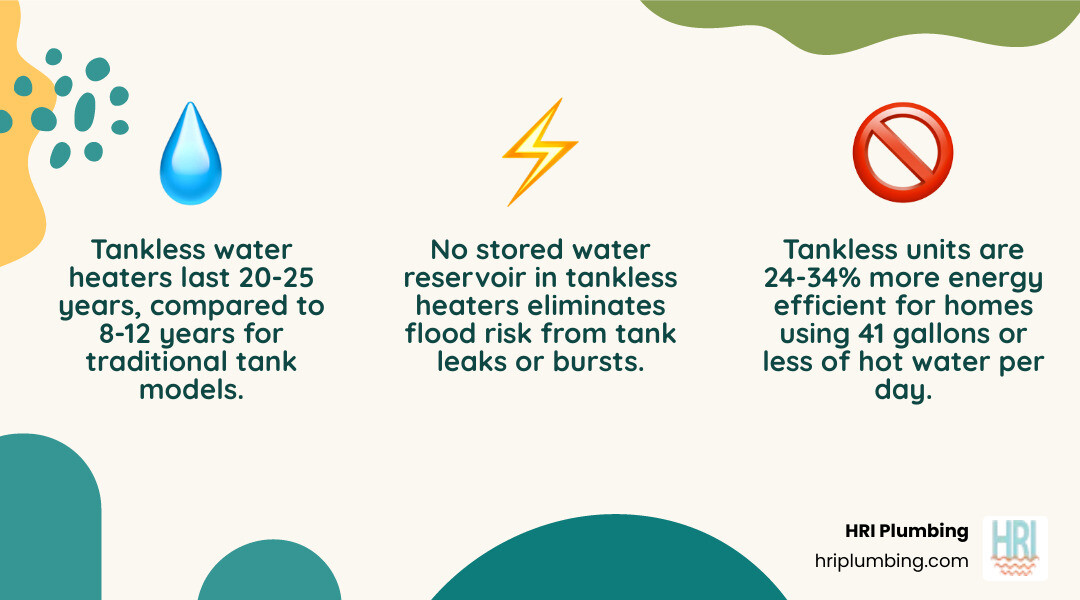
- Lifespan: Tankless heaters last 20-25 years on average, compared to 8-12 years for a traditional tank
- Efficiency: Tankless units are 24-34% more energy efficient for homes using 41 gallons or less per day
- Upgrades needed: Most conversions require changes to gas lines, venting, or electrical circuits
- Sizing matters: You must calculate your home's peak hot water demand in gallons per minute (GPM) to choose the right unit
- Maintenance: Annual flushing and descaling are required, especially in hard water areas like central Illinois
- Cost: Upfront costs are higher than a tank replacement, but long-term savings on energy bills offset the difference over time
If your water heater is getting older, running out of hot water, or quietly driving up your utility bills every month, you already know something needs to change. For homeowners in central Illinois, that frustration is real — and the switch to a tankless system is one of the most asked-about upgrades we hear about at HRI Plumbing.
But this is not a simple swap. Pulling out a tank and hanging a tankless unit on the wall sounds straightforward. In practice, it often involves upgrading gas lines, rerouting vents, and making sure your home's infrastructure can handle the higher demand. Getting those details wrong leads to poor performance, failed inspections, or costly repairs down the road.
This guide walks you through everything you need to know before making the switch — so you can move forward with confidence.
Switching from Tank to Tankless: What to Know Before You Buy
When switching from tank to tankless what to know, the primary differences are longevity and performance. Traditional tanks act like large kettles, keeping 40 to 80 gallons hot 24/7. In contrast, tankless "on-demand" units only heat water when a faucet is opened.
Standard tanks last 8–12 years before corroding, whereas tankless systems can last 20–25 years. Since nearly 75% of traditional tanks eventually leak or burst—spilling up to 80 gallons of water—switching to a tankless model virtually eliminates this flood risk.
| Feature | Traditional Tank Heater | Tankless Water Heater |
|---|---|---|
| Average Lifespan | 8–12 Years | 20–25 Years |
| Energy Efficiency (UEF) | Approx. 0.60 – 0.70 | Approx. 0.87 – 0.96 |
| Hot Water Supply | Limited to Tank Size | Endless (On-Demand) |
| Physical Size | Large Floor Footprint | Small Wall-Mounted Unit |
| Standby Energy Loss | High (Constant Reheating) | None |
Families in Jacksonville or Springfield often face the "cold shower lottery." Tankless systems provide endless hot water; as long as the unit is sized correctly for your flow rate, the water stays hot until the tap is closed.
This upgrade also boosts resale value. Research shows homes with tankless heaters can sell for 4% more. If you are weighing Options for Replacing an Aging or Obsolete Water Heater, the lower utility bills and increased home value make tankless a strong choice. Reclaimed floor space is another benefit. Since units are wall-mounted, Tankless Water Heaters Free Up Storage Space previously occupied by bulky tanks. Combined with Energy Saving Benefits Tankless Water Heaters provide—reducing costs by up to 40%—the long-term logic is clear.
How On-Demand Systems Work Compared to Traditional Tanks
Traditional heaters use "standby" heating, cycling on all day to maintain temperature. A tankless system uses a high-intensity "flash" process:
- Flow Detection: A sensor detects water movement when a tap opens.
- Ignition: The burner or element activates immediately.
- Heat Exchanger: Water travels through internal piping, heating instantly.
- Delivery: Hot water reaches the faucet in seconds.
While efficient, there are Benefits and Limitations of Using a Tankless Water Heater, such as a slight "lag time" or a "cold water sandwich" if the tap is cycled quickly. Why Some People Still Buy Traditional Water Heaters usually involves the simplicity of a direct replacement when infrastructure upgrades aren't feasible.
Key Benefits of Switching from Tank to Tankless: What to Know
Modern units are often ENERGY STAR® certified with a UEF up to 0.96, compared to 0.70 for tanks. This means Tankless Waters Heaters Can Help Lower Utility Costs by up to 34% for low-usage homes. If you need a Tankless Water Heater Jacksonville IL, you are also getting precise digital temperature control and peace of mind.
Essential Home Upgrades for a Successful Conversion
Your home might need specific upgrades to support the new unit:
1. Gas Line UpgradesTankless units require up to 199,000 BTUs instantly. We often upsize lines from 1/2-inch to 3/4-inch to ensure the unit receives enough fuel to operate at peak demand.
2. Venting RequirementsOld "B-vents" cannot handle the acidic condensation produced by tankless units. We install specialized stainless steel or PVC venting designed to manage moisture safely.
3. Electrical and DrainageUnits need power for digital sensors and a drain line for "condensing" models. Whether installing a Tankless Water Heater Springfield IL or Tankless Water Heater Rushville IL, these infrastructure checks are vital.
Sizing and Maintenance: Switching from Tank to Tankless What to Know
Sizing is based on Gallons Per Minute (GPM):
- Shower: 2.0 – 2.5 GPM
- Kitchen Sink: 1.5 GPM
- Dishwasher: 1.0 – 2.0 GPM
In central Illinois, cold winter groundwater means the heater works harder to reach 120°F. Once installed, Maintaining Tankless Water Heater systems is essential. Annual flushing prevents mineral scale from damaging the heat exchanger. Following Tankless Water Heater Repair Jacksonville IL Tips ensures your investment lasts the full 20 years.
Gas vs. Electric: Choosing the Right Energy Source
Gas units are generally better for Illinois winters due to higher flow rates. Electric units often require expensive panel upgrades to 200+ amps. For existing units, we provide Tankless Water Heater Repair Rushville IL and Tankless Water Heater Repair Springfield IL to maintain efficiency.
Common Mistakes to Avoid During Installation
Avoid DIY projects for tankless conversions. Common issues include undersizing, improper venting slope, ignoring water hardness, or incorrect gas pressure. Consult an Emergency Tankless Water Heater Repair Guide Jacksonville IL or Best Tankless Water Heater Repair Guide Rushville IL if problems arise. Professional installation is the best way to ensure safety and performance.
Conclusion: Making the Switch with HRI Plumbing
Switching from tank to tankless what to know is about more than just buying a new appliance; it’s about upgrading your home’s efficiency and your family’s comfort. While the initial conversion requires careful planning regarding gas lines, venting, and sizing, the payoff is a quarter-century of endless hot water and lower energy bills.
At HRI Plumbing, we pride ourselves on being the local experts for Jacksonville, Springfield, and Rushville. We understand the specific challenges of central Illinois homes—from our cold winter groundwater to our hard water mineral content. Whether you need a brand-new installation or a complex water heater repair or replacement, our team is committed to honesty, integrity, and high-quality results.
We offer 24/7 support because we know that water heater issues don't always happen during business hours. If you are ready to ditch the bulky tank and embrace the efficiency of on-demand heating, we are here to help you navigate the process without getting "burned."
Ready to see if your home is a candidate for a tankless upgrade? Contact us today at HRI Plumbing to schedule a professional assessment. Let’s make sure your next shower is the best one yet.


