



What Heavy Rain Does to Your Septic System (And Why It Matters)
How heavy rain affects your septic system is something every homeowner with a septic tank in central Illinois should understand before storm season hits. When heavy rain soaks the ground around your drain field, the soil can become so saturated that it simply cannot absorb any more liquid — including the wastewater flowing out of your septic tank. The result? Slow drains, gurgling toilets, foul odors, and in serious cases, raw sewage backing up into your home.
Here is a quick summary of how heavy rain impacts your septic system:
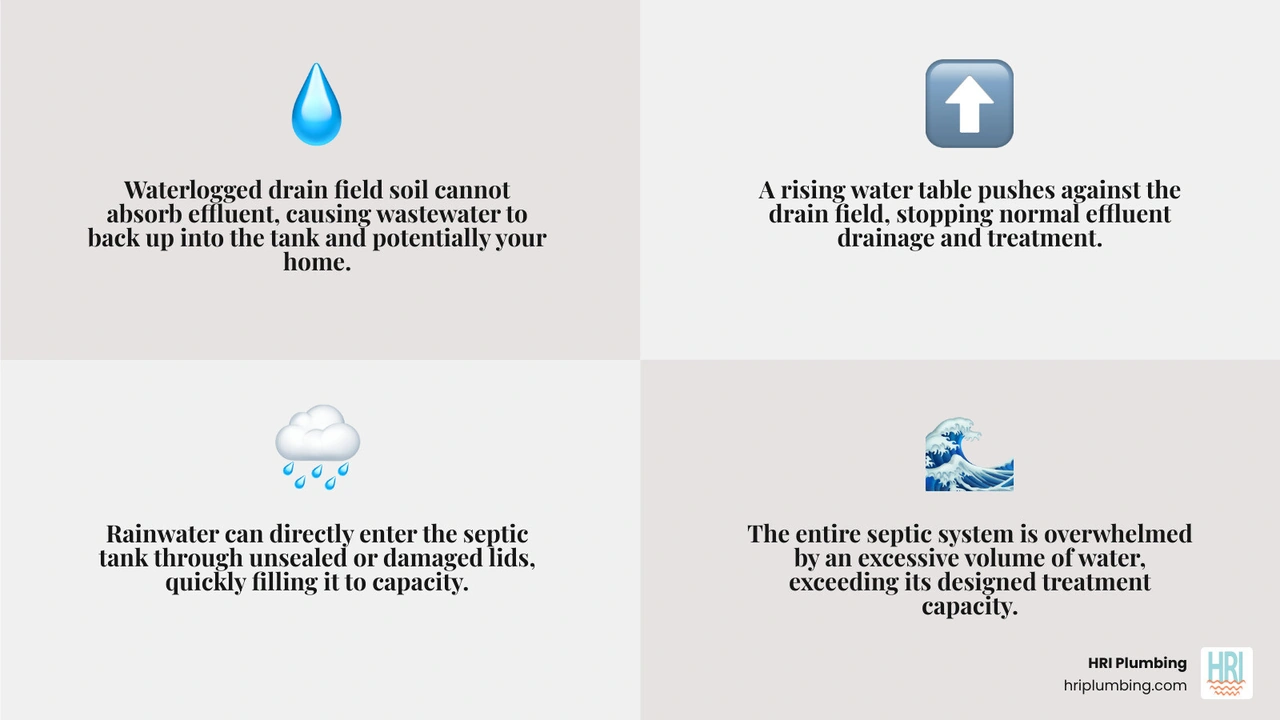
- Drain field saturation - Waterlogged soil cannot absorb effluent, causing wastewater to back up into the tank and your home
- Groundwater rise - A high water table pushes back against the drain field, stopping normal drainage
- Surface water intrusion - Rainwater can enter the tank through cracked or unsealed lids, flooding it beyond capacity
- Bacterial disruption - Excess water dilutes the helpful bacteria inside your tank that break down waste
- Oxygen deprivation - Saturated soil cuts off the oxygen that beneficial bacteria in the drain field need to function
- Hydraulic overload - The system receives far more water than it was designed to handle at one time
The EPA estimates that 10 to 20 percent of septic systems malfunction each year, and flooding is one of the leading contributing factors. For homeowners in Jacksonville, Springfield, and Rushville, IL — where clay-heavy soils are common — heavy rain can bring these problems on faster and keep them around longer than you might expect. Clay drains 10 to 100 times slower than sandy soil, which means recovery after a major storm can take days or even weeks.
The good news is that most rain-related septic problems are preventable with the right maintenance and preparation. This guide walks you through exactly what happens underground during a storm, how to spot trouble early, and what to do about it.
How Heavy Rain Affects Your Septic System
To understand how heavy rain affects your septic system, we first have to look at how the system works when it’s dry. Your septic system is a mini-wastewater treatment plant in your backyard. It consists of two main parts: the septic tank and the drain field (also called a leach field).
Inside the tank, solids settle to the bottom as sludge, and oils float to the top as scum. The liquid in the middle, called effluent, flows out into a series of perforated pipes buried in the drain field. This is where the real magic happens: the soil acts as a natural filter, removing bacteria, viruses, and nutrients before the water eventually reaches the groundwater.
When a central Illinois downpour hits, this process is interrupted. Heavy rain causes "hydraulic overload." This means the volume of water entering the system from the outside (rain) combined with the water coming from your house is more than the soil can handle. If the soil in your yard is already "full" of rainwater, there is nowhere for your wastewater to go.
Furthermore, groundwater levels can rise during a storm. If the water table rises above the level of your drain field pipes, it creates backpressure. Instead of effluent flowing out into the soil, groundwater can actually push its way into the pipes and back toward your tank. In extreme cases, if you have unsealed lids or cracks in your tank, surface water can pour directly into the system. This is why Septic Tank Plumbing Springfield IL services are so critical—ensuring your tank is watertight is your first line of defense.

Warning Signs of an Overwhelmed System After Heavy Rain
Your septic system will usually try to tell you it’s struggling long before sewage ends up on your bathroom floor. In April 2026, as we deal with the typical spring rains in Jacksonville and Springfield, keep a close eye (and nose) out for these red flags:
- Gurgling Pipes: If you hear a "glug-glug" sound from your drains or toilets after you flush or take a shower, it’s often the first sign of air being trapped by rising water levels in the system.
- Slow Drains: When the drain field is saturated, the water in your house doesn't have a clear path out. You might notice the kitchen sink or shower taking forever to empty.
- Sewage Odors: If you catch a whiff of rotten eggs or "sewer gas" around your yard or near your floor drains, the system is likely venting gases because it’s backed up.
- Standing Water or Muddy Soil: If you see puddles forming specifically over the area where your septic tank or drain field is located—even if the rest of the yard is drying out—your system is failing to process liquid.
- Unusually Green Grass: While we all want a lush lawn, grass that is much greener and faster-growing over the drain field than elsewhere can indicate that the soil is receiving too much nutrient-rich effluent that isn't being filtered properly.
If you Spot Early Signs Sewer Line Issues now, you can often take action to prevent a total system collapse.
Why Heavy Rain Affects Your Septic System and Drain Field Recovery
One of the most common questions we hear at HRI Plumbing is: "How long until my yard goes back to normal?" The answer depends almost entirely on the type of soil on your property. In our part of Illinois, we see a wide variety of soil compositions, from loamy farmland to heavy, stubborn clay.
| Soil Type | Drainage Speed | Typical Recovery Time |
|---|---|---|
| Sandy/Loamy Soil | Fast | 1 to 3 Days |
| Silt/Mixed Soil | Moderate | 3 to 7 Days |
| Clay-Heavy Soil | Very Slow | 1 to 2 Weeks (or longer) |
Clay is particularly difficult because it holds onto water like a sponge. Because clay drains 10 to 100 times slower than sandy soil, a single heavy storm can keep a drain field in Rushville or Jacksonville "offline" for a fortnight.
During this time, the "bacterial balance" in your tank is also at risk. Septic systems rely on anaerobic bacteria to break down solids. When a tank is flooded with oxygen-rich rainwater or simply diluted by high volumes of water, these bacteria can't do their jobs efficiently. Furthermore, if the drain field stays saturated, it loses the oxygen needed by aerobic bacteria in the soil to finish the treatment process. This is why following a Septic Tank Pumping Signs Guide is so important; a tank already full of sludge has even less "room for error" when the rain starts falling.
Immediate Steps to Take During a Septic Backup
If you realize your system is backing up during a storm, the most important thing to do is stop adding water. Every time you flush a toilet, run the dishwasher, or take a shower, you are adding to a "bucket" that is already overflowing.
- Extreme Water Conservation: Limit yourself to essential flushes only. Avoid doing laundry or running the dishwasher until the rain stops and the standing water in the yard recedes.
- Avoid the "Pump Trap": Many homeowners' first instinct is to call for a pump-out. However, you should not pump your septic tank while the ground is still saturated. This can cause "tank buoyancy." A 1,000-gallon concrete tank might seem heavy, but when it’s empty, the pressure from the surrounding water-logged soil can actually push the tank right out of the ground, snapping your pipes in the process.
- Manage Health Risks: Floodwater and septic backups can carry dangerous pathogens like E. coli and Giardia. If sewage backs up into your home, keep children and pets away from the area and use professional cleaning services to disinfect.
- Check for Surface Issues: Ensure your gutters aren't dumping water directly onto the tank area. If you have a pump system, check the alarm.
For those facing a true crisis, our Emergency Sewer Repair Springfield IL Guide provides more detail on handling immediate plumbing catastrophes.
Protecting Your Property from Rain-Related Septic Failure
Prevention is always better (and much more affordable) than a total system replacement. A new drain field can cost anywhere from $5,000 to $20,000 depending on the size and soil conditions. By making a few adjustments to your property, you can significantly reduce the impact of heavy rain.
How to Prepare Your Septic System for Heavy Rain
The best time to deal with a flood is before it happens. At HRI Plumbing, we recommend a "proactive" rather than "reactive" approach to septic health.
- Divert Runoff: Take a walk around your house during the next rain. Where is the water going? If your roof gutters are discharging near your septic tank or drain field, you are asking for trouble. Use downspout extensions to move that water at least 10 to 20 feet away from the septic area.
- Seal Your System: Ensure that your septic tank risers and lids are watertight. If surface water can leak through the lid, your tank will fill up with rain instead of wastewater. Installing watertight risers typically costs a fraction of what a repair would.
- Maintain the Pumping Schedule: Most systems need to be pumped every 3 to 5 years. If you haven't had yours checked recently, check out our Spring Plumbing and Septic Inspection Checklist to get your home ready for the season.
- Avoid Compaction: Never drive vehicles or heavy equipment over your drain field. This is especially dangerous when the soil is wet. Compaction squashes the air pockets in the soil, permanently destroying its ability to absorb water.
When to Call for Professional Septic and Sewer Services in Jacksonville
Sometimes, despite your best efforts, the weather wins. If you live in Jacksonville, Springfield, or Rushville and notice that your drains are still slow 72 hours after the rain has stopped, it’s time to call in the experts.
A professional inspection can determine if the problem is a simple clog, a full tank, or a more serious issue like a collapsed pipe or a "dead" drain field where the soil can no longer filter water. If you are seeing sewage surfacing in your yard, this is considered a health hazard and requires immediate Septic Tank Repair Jacksonville IL to protect your family and the local environment.
Long-Term Solutions for Flood-Prone Areas in Springfield and Rushville
For some properties in central Illinois, the local geography or soil type makes them naturally prone to flooding. If you find yourself holding your breath every time the weather forecast calls for rain, it might be time for more permanent "engineered" solutions.
- Curtain Drains and French Drains: These are gravel-filled trenches designed to intercept groundwater and divert it away from your drain field. They act like a "shield" for your septic system.
- Sump Pump Systems: If your basement or septic components are consistently threatened by rising water, a high-quality sump pump is essential. Whether you need a Sump Pump Repair Jacksonville Complete Guide or are considering a full Sump Pump Repair Replacement, keeping the water moving away from your foundation and septic system is key.
- Mound Systems: In areas with very high water tables or poor soil, we sometimes recommend a mound system, which raises the drain field above the natural ground level to ensure there is always enough dry soil to treat the wastewater.
At HRI Plumbing, we’ve spent years helping our neighbors in Jacksonville, Springfield, and Rushville navigate the challenges of Illinois weather. We pride ourselves on honesty, integrity, and providing reliable solutions that keep your home safe and dry. Whether you need an emergency inspection after a storm or want to set up a long-term maintenance plan, we are here for you 24/7. Don't let a heavy rain turn into a household disaster—give us a call today and let's make sure your septic system is ready for whatever the sky decides to pour down.


