




Is That Foul Yard Odor a Passing Nuisance or a Major Septic Problem?
Are you noticing a sudden, overwhelming sewage smell in your yard and wondering if it is a temporary side effect of the season, or if these are actually signs your septic tank needs immediate repair during the summer heat? When you step outside into the peak July temperatures, the last thing you want to encounter is a foul odor ruining your evening. For many Jacksonville homeowners, the primary dilemma is determining whether this smell is just a temporary result of heavy summer usage—like hosting weekend barbecues and running extra loads of laundry—or a critical warning sign that your underground system is failing.
At HRI Plumbing, our team typically sees a sharp increase in emergency calls during heatwaves because extreme temperatures actively accelerate biological breakdown in your wastewater tanks. This means those early warnings of system stress should never be ignored. What might seem like a passing nuisance is often the first physical symptom of gas expansion and drain field stress. Early detection is crucial to preventing a minor underground issue from becoming a major, destructive property disaster.
If you are dealing with sudden sewage odors or sluggish pipes, our comprehensive Plumbing Services can help you diagnose the root cause before the pressure escalates into a complete systemic failure.
The Science of Septic Systems Under Extreme Summer Temperatures
Homeowners often assume that a heatwave just makes existing smells travel further. While it is true that hot, humid summer air can trap excess gases closer to the ground, intensifying the odors around your property, the problem goes much deeper than surface-level air circulation. For Jacksonville, IL properties with septic systems, extreme heat creates a literal biological pressure cooker underground.
The Biological Cause: Septic tanks rely entirely on anaerobic bacteria to break down solid household waste into manageable liquid effluent. Under normal, moderate conditions, this biological process happens at a steady, balanced pace. However, when ground temperatures spike during a prolonged summer heatwave, the metabolic rate of these anaerobic bacteria skyrockets. They begin consuming and breaking down organic matter at a hyper-accelerated pace. While breaking down waste sounds like a positive thing, this intense overactivity produces a massive surplus of methane and hydrogen sulfide gases.
The Structural Impact: Your tank is a closed environment, meaning this sudden influx of expanding gas has nowhere to go. The increased gas pressure forces foul, rotten-egg odors out of the tank's vents and puts immense, destructive stress on the entire drain field. The lateral pipes and surrounding soil are suddenly forced to handle a higher volume of gas and rapidly displaced liquid.
The Solution: Recognizing that a heatwave triggers a period of intense biological activity is the first step in protecting your property. Instead of hoping the smell will simply dissipate when the weather cools down in the fall, you need to monitor the system's performance closely. If the gas pressure exceeds the drain field's capacity to vent and filter, the system will begin pushing untreated effluent back toward the surface or backward into your home. Having a professional evaluate the biological balance and physical integrity of the tank during these heat spikes ensures that excess pressure is safely managed before it causes irreversible structural damage.
Unmistakable Signs of a Failing Drain Field in July
When the peak July summer heat hits, your drain field is put to the ultimate test. It is the final filtration stage for your wastewater, relying on the surrounding soil to safely absorb, neutralize, and disperse liquid effluent. When the system is overwhelmed by gas pressure and excess waste, the drain field is usually the very first component to show physical signs of failure. Waiting for cooler weather is not an option; these symptoms require immediate professional assessment.
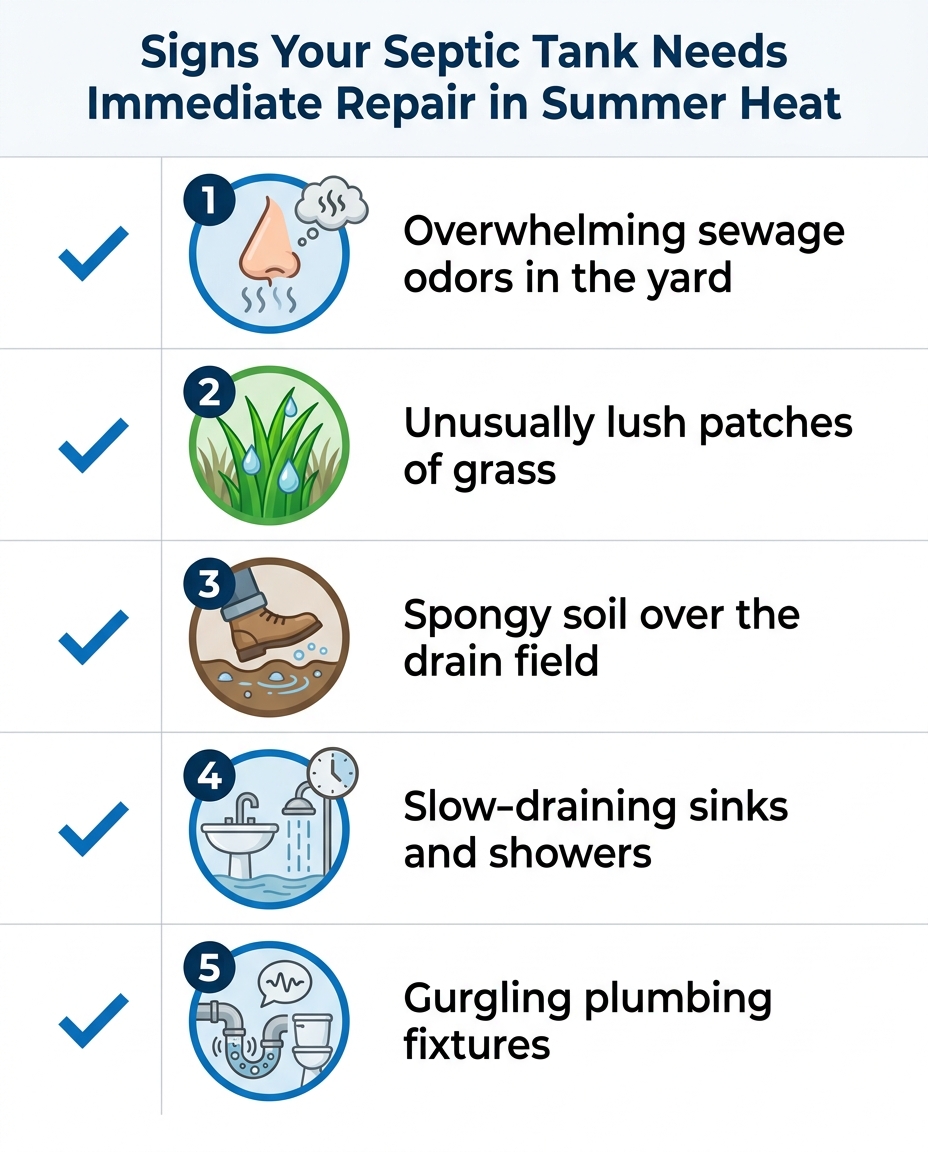
1. Overwhelming sewage odors in the yard: A faint, occasional smell near the tank lid might be normal venting, but a persistent, strong odor of hydrogen sulfide hovering over the yard indicates that gases are escaping through compromised, saturated soil.
2. Unusually lush, rapidly growing patches of grass: If one specific section of your lawn looks vibrant and healthy while the rest is suffering from summer drought, you likely have a subsurface leak feeding the roots.
3. Spongy soil or standing water: When the ground can no longer absorb effluent, wastewater pushes to the surface, creating muddy, foul-smelling puddles even when it hasn't rained in weeks.
When Lush Grass is a Red Flag
During a typical summer, most grass enters a state of dormancy to survive the intense heat and lack of rain. If you notice a sudden, vibrant green patch of grass directly over your drain field, it is not a landscaping miracle. It is the direct result of artificial fertilization provided by leaking raw sewage. The escaping effluent is incredibly rich in nitrogen and phosphorus, which supercharges plant growth. If you spot this distinct pattern in your yard, do not investigate by digging. Safely inspect the area from a distance to avoid exposure to dangerous biohazards. For targeted diagnostics, our Septic Services team can safely assess the integrity of your drain field without risking contamination.
Identifying Spongy Soil Conditions
A healthy, functioning drain field should feel just as solid and stable as the rest of your yard. If you walk over the area and experience a physical sensation of spongy, yielding soil—almost like walking on a wet mattress—the absorption trenches are completely saturated. The soil has lost its structural integrity because it is waterlogged with untreated wastewater that has nowhere else to go. Under no circumstances should you drive a lawnmower, tractor, or any heavy landscaping equipment over compromised soil. The added weight can easily crush the weakened lateral pipes below, turning a repairable drainage issue into a total system replacement.

How Central Illinois Soil Conditions Mask and Reveal Septic Stress
The local environment plays a massive role in how a wastewater system behaves under stress. In our years of dispatching technicians to Jacksonville, IL properties, we've learned that our native soil composition adds an extra layer of complexity to diagnosing summer failures. Central Illinois summer droughts often cause the top layer of soil to become heavily compacted and surface-dry. This baked, hardened crust can act like a temporary seal over your drain field.
Because of this soil compaction, a failing system might not immediately produce the classic symptom of pooling, muddy water. The dry ground temporarily masks the liquid effluent, making it much harder to spot a leak visually. However, this hardened soil also tends to crack and fissure under the intense sun. As the hyper-accelerated bacteria in your tank produce expanding methane and hydrogen sulfide gases, these gases follow the path of least resistance and are forced up through the dry, cracked ground.
This specific interaction between summer droughts, compacted clay-heavy soils, and escaping gases makes odor the absolute most reliable early warning sign in our region. Homeowners should closely monitor their specific yard topology. Pay attention to low-lying areas where gases might settle in the evening, and look for deep fissures in the soil directly above the lateral lines. If the ground is bone-dry but smells strongly of sewage, the underlying trenches are likely flooded, and the compacted topsoil is simply hiding the physical water from view.
Why Slow Drains and Gurgling Pipes Are Red Flags During Heatwaves
Septic issues rarely stay neatly confined to the backyard. Often, the very first physical symptoms of a failing outdoor system manifest inside the home. If you notice slow-draining sinks, sluggish showers, or toilets that struggle to flush during the peak July summer heat, you might be facing more than just a simple hair clog in the trap.
The Root Cause: The connection between outdoor heat and indoor plumbing comes down to gas pressure and fluid dynamics. When high temperatures cause anaerobic bacteria to overproduce gas, that pressure builds up rapidly inside the hot septic tank. If the drain field is saturated and cannot vent properly, the gas and wastewater have only one path of least resistance: backward into the house. This pressure pushes back into the home's plumbing system. As the gas forces its way up through the water in your P-traps, it creates distinct gurgling sounds in toilets and sinks.
Diagnosing the Difference: Differentiating between a localized blockage and a full-scale systemic failure is critical for protecting your home.
• Location of Issue — Isolated Plumbing Clog: Affects a single fixture (e.g., one shower). — Systemic Septic Failure: Affects multiple fixtures, usually on the lowest floor.
• Gurgling Sounds — Isolated Plumbing Clog: Rare, or confined to the specific blocked drain. — Systemic Septic Failure: Flushing a toilet causes the shower or sink to gurgle loudly.
• Response to Plunging — Isolated Plumbing Clog: Usually clears the blockage and restores flow. — Systemic Septic Failure: Pushes wastewater up into a neighboring drain instead of clearing.
The Solution: Ignoring these indoor signs during the summer can lead to catastrophic consequences, including raw sewage backing up into lower-level drains, basements, or first-floor bathrooms. If you are experiencing widespread sluggishness across multiple fixtures, professional Drain Cleaning and camera inspection services can pinpoint whether the blockage is in the pipe or if the entire tank is rejecting wastewater due to heat-induced pressure.
The Danger of Waiting: When to Call for Emergency Septic Intervention
When faced with foul odors and gurgling pipes, some homeowners adopt a "wait and see" approach, hoping that the symptoms will magically vanish once the heatwave breaks. Waiting out the heatwave is a dangerous strategy; in our extensive experience repairing local systems, it almost always leads to irreversible drain field damage. A septic system operates on a delicate biological and mechanical balance; once it begins to fail, the progression from foul odors to a complete sewer line or tank failure happens incredibly fast.
For Jacksonville, IL properties with septic systems, rapid diagnosis is the only reliable way to save the existing infrastructure. If the drain field becomes completely saturated with solid waste (known as the biomat) because the tank overflowed, the soil will permanently lose its ability to percolate. At that point, no amount of routine pumping will fix the issue—the entire drain field must be excavated and replaced, tearing up your yard in the process.
This is exactly why our team at HRI Plumbing focuses heavily on prompt emergency response and deep local expertise in diagnosing heat-stressed drain fields. We know exactly how Central Illinois weather impacts underground plumbing. A pattern we see often is homeowners waiting until their sewer begins backing up into the house, signaling a massive systemic failure. Recently, one local homeowner reached out to us during a brutal summer stretch with exactly this issue. Our team arrived quickly, diagnosed the collapsed infrastructure, and successfully replaced a large portion of the sewer line and a water line, completing the massive job in less than a day. The issue was resolved in a timely and professional manner, preventing further structural damage to the home.
That level of fast, professional intervention is exactly what is needed when dealing with critical waste management failures. If you suspect your system is failing, securing professional Sewer Line Repair & Replacement or septic diagnostics immediately can mean the difference between a simple tank pump-out and a massive, property-altering excavation.
Frequently Asked Questions About Summer Septic Tank Problems
Why does my septic tank smell worse in the heat?
Your septic tank smells worse in the summer because high temperatures actively accelerate the metabolism of anaerobic bacteria inside the tank. As these bacteria break down waste at a hyper-accelerated rate due to the peak July summer heat, they produce a massive excess of methane and hydrogen sulfide gases. When the internal pressure builds up, these foul-smelling gases escape through the tank vents or surrounding soil and drift into your yard.
Can heat cause a septic tank to back up?
Heat itself does not directly cause the backup, but the resulting biological overactivity and gas expansion certainly can. When the bacteria overproduce gas, the internal pressure of the tank increases significantly. If your drain field is already aging, compacted, or compromised, this added stress can push it to the breaking point, forcing wastewater to back up into your home's plumbing system.
What are the first signs of a failing drain field in summer?
The earliest physical indicators of a failing drain field include persistent sewage odors, unusually lush patches of grass, spongy soil, and slow indoor drains. Because summer droughts often dry out the topsoil, you might smell the escaping gases before you ever see standing water. If you notice multiple drains in your home gurgling simultaneously, the drain field is likely rejecting wastewater entirely.
How do I know if my septic system is full or failing?
A full tank simply needs routine pumping to remove the accumulated sludge and scum layers, whereas a failing system exhibits severe symptoms that persist even after pumping. If you have the tank pumped but continue to experience standing water over the drain field, severe yard odors, and sluggish flushing, the absorption trenches have failed. A professional camera inspection can verify if the lateral lines are blocked or if the soil is permanently saturated with biomat.
Are summer septic additives necessary?
Most residential systems do not require chemical or biological additives, especially during the hot summer months. In fact, extreme heat already hyper-accelerates the natural bacterial breakdown process inside the tank. Adding unnecessary chemicals can disrupt the delicate pH balance and biological ecosystem, potentially causing more harm than good. Routine maintenance and regular pumping are far more effective than over-the-counter additives.
Protect Your Property from Catastrophic Summer Backups
Sudden yard odors, unusually green grass, and slow drains are clear warning signs that your system is struggling under the weight of the season, not just normal summer nuisances. For Jacksonville, IL properties with septic systems, recognizing these specific environmental triggers is the absolute key to preventing a minor backup from turning into a major biohazard.
Clear explanations and recognizing specific warning signs are essential to protecting your property. When you understand the biological science behind gas expansion and bacterial overactivity, you can make informed decisions about your waste management infrastructure. Don't wait for a complete systemic failure to take action. Schedule a professional inspection today to evaluate your tank levels and drain field health, ensuring your plumbing remains safe, functional, and odor-free all season long.


