



What It Means When Your Water Heater Is Making Popping or Rumbling Noises
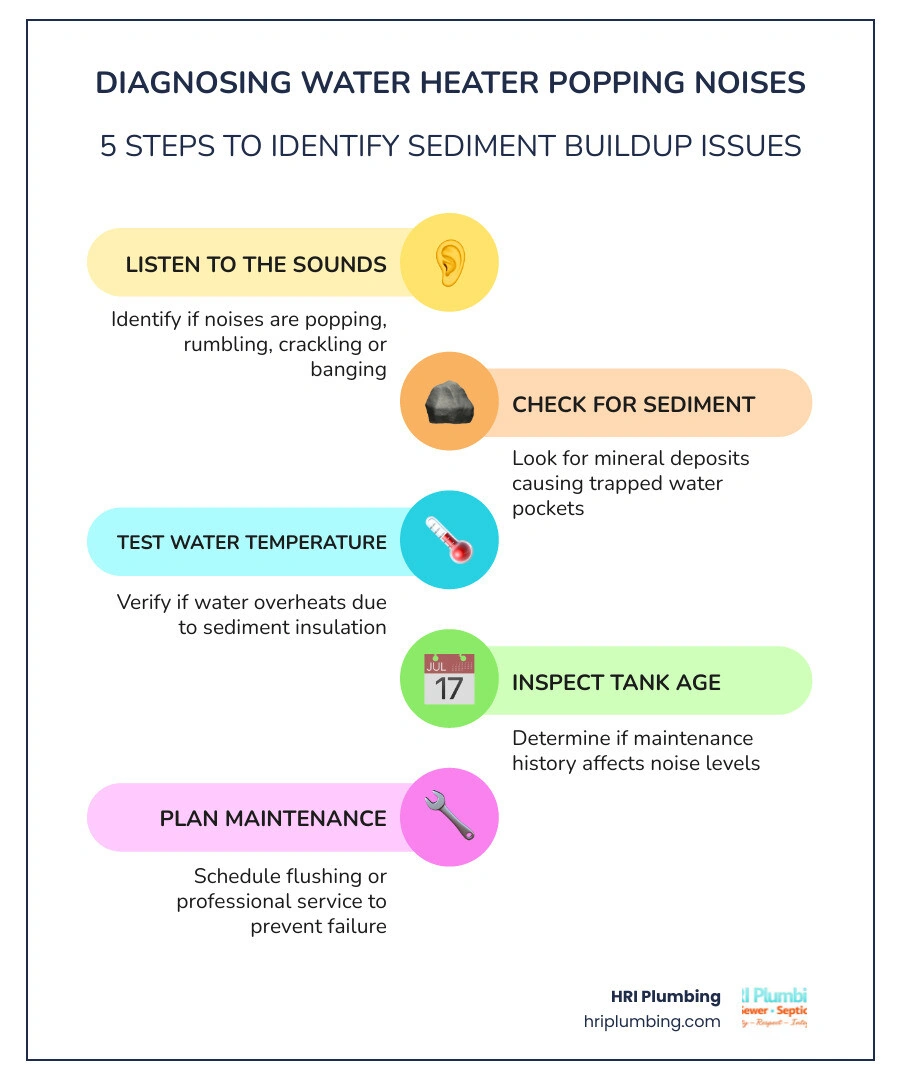
A water heater making popping or rumbling noises is almost always caused by sediment buildup at the bottom of the tank. As minerals from your water settle and harden over time, trapped water pockets get superheated beneath that layer — and the sounds you hear are those pockets bursting through. It's one of the most common plumbing concerns for homeowners in Springfield, Jacksonville, and Rushville, IL, and the good news is it's usually fixable.
Here's a quick breakdown of what those noises mean:
- Popping - Water trapped under sediment heats up and forces its way through the mineral layer
- Rumbling - A heavy layer of sediment shifting or steam moving through the tank
- Crackling - Buildup around electric heating elements, or the anode rod reacting with minerals
- Banging or knocking - Often water hammer in the pipes rather than the tank itself
The problem won't go away on its own. Left unaddressed, sediment keeps building up, your water heater works harder, your energy bills climb, and the tank itself can overheat or fail early. A well-maintained water heater can last 15 years or more — a neglected one often gives out in 8 to 10.
This guide walks you through exactly how to diagnose the problem, fix it yourself if possible, and know when it's time to call a plumber.
Handy water heater making popping or rumbling noises terms:
- how to know when to replace your water heater
- rusty water from hot water tap causes
- water heater leaking from the bottom what to do
Understanding a Water Heater Making Popping or Rumbling Noises
To understand why your water heater sounds like a microwave making popcorn or a pot of pasta boiling over, we have to look inside the tank. When everything is working perfectly, your water heater is a quiet, reliable partner in your daily routine. However, when things start going wrong internally, unusual sound effects are often your very first warning sign.
When you ignore these sounds, you are likely setting yourself up for some of the most Common Water Heater Issues That Require Repair. The noises are not just annoying; they are a cry for help from an appliance struggling against physical and chemical forces.
How Sediment Buildup Causes a Water Heater Making Popping or Rumbling Noises
Every drop of water entering your home in Springfield, Jacksonville, or Rushville contains microscopic mineral deposits. Over time, these minerals—primarily calcium and magnesium—settle out of the water and sink to the bottom of your tank, forming a thick, crusty layer of sediment.
This sediment layer acts like an insulating blanket directly over the burner (in gas models) or around the lower heating element (in electric models). When the heater turns on, water becomes trapped underneath this heavy mineral crust. As that trapped water quickly reaches its boiling point, it turns to steam. The steam bubbles expand and violently burst through the sediment barrier to escape into the main tank, creating the classic popping, crackling, or rumbling noises you hear.
This process leads to a major loss of heating efficiency and forces the system to run much longer than it should. To learn more about how this accumulation affects your plumbing system, check out our guide on Sediment Buildup and Potential Water Heater Issues.
Hard Water and Scale Accumulation
If you live in Central Illinois, you are likely familiar with the chalky white residue on your showerheads and faucets. This is scale, a direct result of hard water. Hard water acts as an accelerator for sediment buildup.
To put this into perspective, laboratory testing has shown that hard water can reduce a gas storage water heater’s heating efficiency from 70.4% to 67.4% in just two years of simulated use due to scale buildup. When scale coats the tank floor and heating elements, heat transfer is severely restricted.
Here is a quick look at how hard water compares to soft water when it comes to your water heater:
| Feature | Hard Water | Soft Water |
|---|---|---|
| Mineral Content | High in calcium and magnesium | Low mineral content |
| Sediment Accumulation Rate | Extremely rapid | Very slow |
| Heating Efficiency | Drops significantly over time | Remains consistently high |
| Lifespan of Elements | Shorter due to scale encrustation | Longer and cleaner operation |
| Noise Likelihood | Very high (popping/rumbling) | Low |
Is a Water Heater Making Popping or Rumbling Noises Dangerous?
The short answer is: not immediately, but it can become dangerous if ignored. A popping water heater is not going to blow up on day one, but the underlying issues can cause real damage over time.
When sediment traps heat at the bottom of the tank, the metal tank floor can overheat. This constant, extreme thermal stress weakens the steel and damages the protective glass lining of the tank, eventually leading to cracks and major leaks.
Furthermore, as a 50-gallon water heater heats incoming cold water from 40°F to 140°F, the water naturally expands by roughly three-quarters of a gallon. If sediment restricts water flow or blocks safety components, this thermal expansion can cause dangerous pressure spikes. If you notice these symptoms, it is clear your Water Heater Is Making Unusual Sounds that warrant immediate attention.
How to Resolve and Prevent Water Heater Noises in Springfield, IL
Fortunately, you do not have to live with a noisy water heater. There are clear, actionable steps you can take to quiet your system and ensure safe operation.
Taking proactive steps is the best strategy to protect your plumbing investment. By learning How to Extend the Life of Your Water Heater, you can avoid sudden breakdowns and keep your utility bills low.
Step-by-Step Guide to Flushing Your Water Heater Tank
Flushing your water heater is the most effective way to remove sediment and stop popping noises. Here is how to do it safely:
- Turn off the power: For electric water heaters, turn off the dedicated breaker in your electrical panel. For gas heaters, turn the gas control valve to the "Pilot" setting. Never flush a water heater with the power fully active, or you risk burning out the heating elements or cracking the tank.
- Shut off the cold water: Locate the cold water shutoff valve at the top of the water heater and turn it completely off.
- Connect a garden hose: Attach a standard garden hose to the drain valve located near the bottom of the tank. Direct the other end of the hose to a safe drainage area, such as a floor drain, utility sink, or outside.
- Open a hot water faucet: Turn on a hot water faucet on an upper floor of your home. This lets air into the system, breaking the vacuum and allowing the tank to drain smoothly.
- Open the drain valve: Carefully open the drain valve on your water heater. Be cautious, as the draining water will be extremely hot.
- Flush with cold water: Once the tank is empty, briefly turn the cold water supply valve back on for a minute or two. This helps stir up and wash out the stubborn sediment remaining at the bottom of the tank. Repeat this until the water exiting the hose runs crystal clear.
- Refill and restore power: Close the drain valve and remove the hose. Turn the cold water supply back on to refill the tank. Keep your hot water faucet upstairs open until water flows steadily without sputtering air. Once the tank is completely full, restore power or turn the gas valve back to "On."
If you accidentally restore power to an electric water heater before it is fully refilled, you run the risk of a dry fire, which leads to a Water Heater Not Heating at all.
Long-Term Prevention: Water Softeners and Maintenance
Flushing your tank is a great corrective measure, but preventing sediment from returning is even better.
Installing a water softener or a whole-house water conditioning system is the ultimate defense against hard water scale. By removing calcium and magnesium before they ever reach your water heater, you virtually eliminate the mineral buildup that causes popping noises.
Additionally, make sure to:
- Flush your water heater at least once a year (or every six months if you have exceptionally hard water).
- Have a professional inspect your system's sacrificial anode rod every 2 to 3 years. This rod attracts corrosive elements to protect the tank liner; if it degrades completely, your tank will rust out from the inside.
When to Repair vs. Replace Your Water Heater
If your water heater is relatively young (under 8 years old) and simply making noise, a professional flush or replacing a scaled-up electric heating element will usually solve the problem.
However, if your water heater is over 10 years old and has a heavy buildup of sediment, it is often more cost-effective to replace the unit rather than invest in repeated repairs. Over time, the thermal stress of heating through sediment damages the tank's integrity. If you notice rusty water, slow recovery times, or active leaks around the base of the tank, these are clear Signs Your Water Heater Is Going Out.
When deciding whether to call for a quick fix or upgrade to a modern, highly efficient model, ask yourself: Should I Repair or Replace My Water Heater?
If you are dealing with a constantly noisy system, a Water Heater Not Producing Hot Water, or if you spot any Signs That It's Time to Replace Your Water Heater, our team is here to help.
At HRI Plumbing, we provide honest, reliable plumbing services to families and businesses across Springfield, Jacksonville, and Rushville, IL. Whether you need a professional system flush, a quick repair, or a brand-new energy-efficient installation, we are dedicated to keeping your home comfortable.
Contact us today to schedule your service: HRI Plumbing Water Heater Repair & Replacement.


