



The Ticking Clock Under Your Floorboards
With the September pre-heating season already underway, understanding exactly why we recommend a complete crawlspace pipe audit before November is the most critical step you can take to protect your home this fall. While the weather outside might still feel mild, the unconditioned space beneath your floorboards is already beginning its seasonal shift. Many homeowners focus on furnace tune-ups and sealing windows, leaving the dark, damp environment of the crawlspace completely ignored until a disaster strikes.
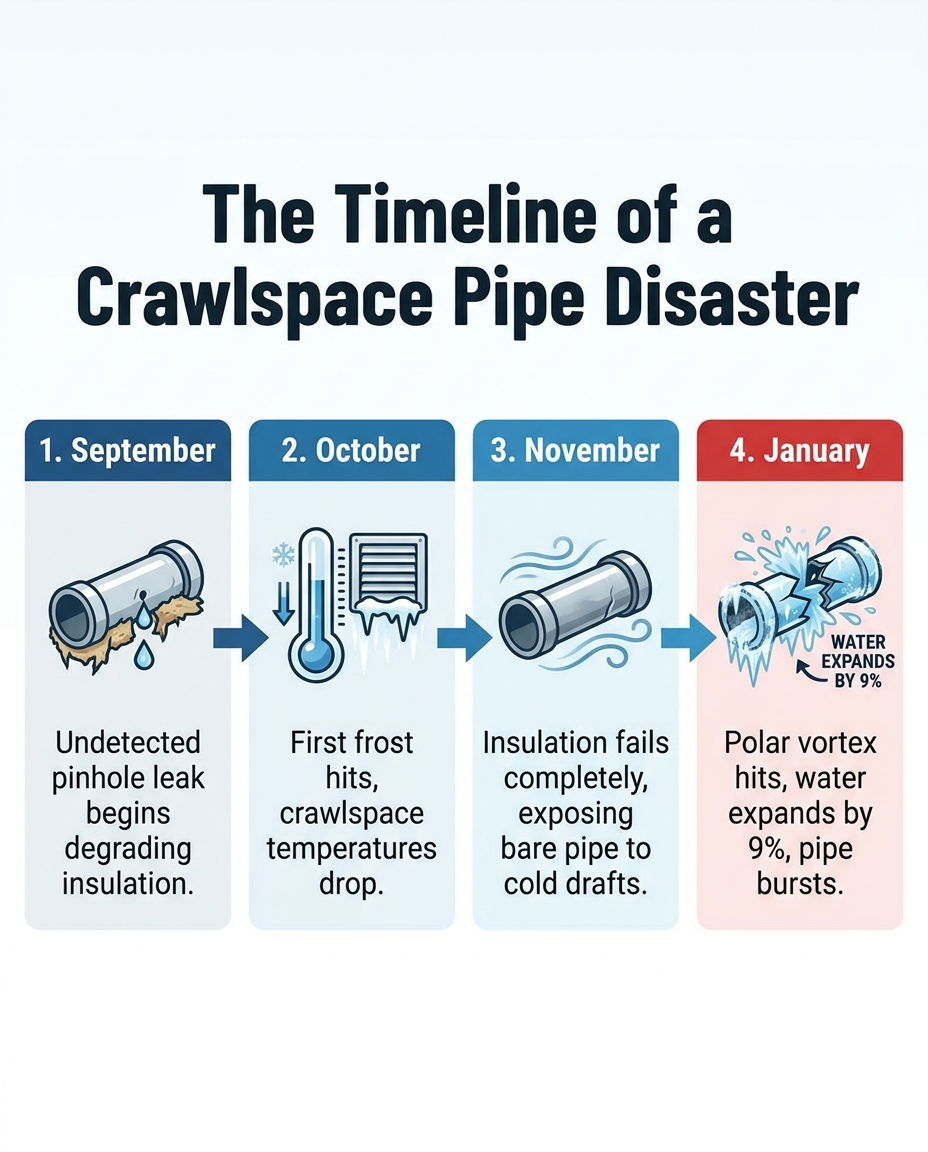
The concrete problem hiding under your home right now usually starts small. Undetected pinhole leaks and compromised pipe insulation in early fall might only lose a few drops of water a day. However, those minor vulnerabilities can easily turn into catastrophic burst pipes by mid-winter. You are currently at a critical decision point: you can schedule a professional crawlspace plumbing audit now while the weather is cooperative, or you can wait until the first hard freeze forces an emergency response.
If you need help preparing your home's infrastructure for the changing seasons, learning more about professional residential plumbing services is the best place to start. Securing your supply lines now ensures that when the temperatures inevitably drop, your home remains safe, dry, and fully functional.
The Compounding Danger of Unseen Pinhole Leaks
To understand why early fall preparation is so urgent, you have to look at the physics of freezing water. When water freezes, it expands by approximately 9%. This expansion creates immense, unavoidable pressure inside your plumbing system. Whether your home uses older copper lines, PVC, or CPVC pipes, none of these materials are designed to withstand the structural stress of expanding ice.
The problem begins with a micro-leak:
Long before a pipe actually bursts, it often develops a microscopic pinhole leak. In the mild days of September, this tiny leak creates a slow drip. That standing moisture begins to degrade the surrounding materials, soaking into nearby wood framing and saturating the pipe's protective insulation.
The cause of the compounding danger:
As we have discussed in the past when identifying vulnerable pipes in your crawlspace, wet insulation loses its thermal resistance entirely. Water is an excellent conductor of temperature. When the insulation wrapped around your pipe becomes soaked from a pinhole leak, it actually pulls the cold air directly against the pipe faster than if the pipe had no insulation at all.
The ultimate outcome:
What seems like a negligible, harmless drip in September becomes a rapidly expanding ice block when temperatures drop. The compromised section of the pipe, weakened by corrosion and surrounded by freezing moisture, becomes ground zero for a massive rupture.
Why Visual Inspections Fall Short
Many homeowners assume they can simply shine a flashlight under the house to check for issues. Unfortunately, dark, cramped crawlspaces make it nearly impossible for an untrained eye to spot micro-leaks. Moisture often hides directly behind existing, failing insulation or gets masked by heavy vapor barriers. A visual glance from the crawlspace access door will almost never reveal the slow, silent degradation happening on the backside of a supply line.

Why Insulating Before Auditing is a Costly Mistake
One of the most common DIY mistakes we see every fall is homeowners rushing to wrap their pipes with new foam insulation or electric heat tape without verifying the integrity of the lines first. While adding insulation is a vital part of winterizing your home, the sequence in which you do it matters immensely.
Trapping the moisture:
If you insulate over an existing, undetected pinhole leak, you are essentially wrapping a wet sponge around your plumbing. The new insulation traps the escaping moisture directly against the surface of the pipe. For metal pipes, this accelerates rust and corrosion rapidly. For synthetic pipes, it creates a constant environment of standing water that degrades joint adhesives.
Destroying the thermal barrier:
As mentioned earlier, wet insulation is useless insulation. If you spend your weekend carefully taping foam noodles around your crawlspace pipes, but a leak saturates that foam a week later, you have completely wasted your effort. The saturated material will freeze solid against the pipe during the first cold snap.
The professional rule of thumb:
Always audit and repair before you insulate. Securing the structural integrity of the water line is the mandatory first step. Only after the line is confirmed to be 100% watertight should any thermal barriers or heat tapes be applied. Skipping the audit phase simply hides a growing problem out of sight until the pipe inevitably fails.
Inside Our Professional Pre-Winter Inspection Routine
When you schedule a professional evaluation, you are getting far more than a quick visual sweep. Detailing the thoroughness of our proactive pre-winter inspection routine shows exactly why this methodology catches what a generic homeowner checklist misses. In our inspection routine, we follow a strict, systematic approach to evaluate the structural integrity of every crawlspace supply line.
1. Comprehensive Line Tracing: We physically trace the entire layout of the plumbing system underneath the home, ensuring no hidden branch lines or obscure connections are overlooked.
2. Insulation Evaluation: We carefully check existing pipe insulation for hidden signs of water damage, unnatural sagging, or gaps where cold drafts can penetrate.
3. Micro-Climate Assessment: We evaluate the overall environment of the crawlspace. This includes checking crawlspace vents, identifying structural drafts, and measuring the ambient conditions that will impact your pipes when winter arrives.
4. Fixture and Joint Stress Checks: We examine the specific connection points, elbows, and joints where pipes are most likely to experience pressure stress and thermal contraction.
If you want to ensure your home is thoroughly protected, utilizing professional leak detection services is the most reliable way to uncover hidden vulnerabilities before they become emergencies.
Pressure Testing and Moisture Mapping
What we look for goes beyond what the naked eye can see. Professionals use specialized tools and pressure checks to find microscopic leaks. By monitoring the water pressure in your system, we can detect if there is a slow loss of pressure indicating a hidden drip. Additionally, moisture mapping allows us to locate damp spots in the crawlspace soil or framing, leading us directly to the source of a leak that might be hidden behind heavy vapor barriers.
How Central Illinois Weather Targets Unconditioned Spaces
The urgency of completing this audit before November is directly tied to our specific regional climate. Here in Jacksonville IL, the weather can turn aggressively cold long before the official start of winter. The average first frost in Central Illinois typically occurs in October. This makes the September pre-heating season the absolute ideal preventative window.
Unconditioned crawlspaces are uniquely vulnerable to these early temperature drops. Even if you have your thermostat set to a comfortable 72 degrees inside your living room, the space beneath your floorboards is entirely excluded from that thermal envelope. Cold wind whipping against the foundation pulls heat out of the crawlspace rapidly.
Furthermore, our region is notorious for sudden polar vortex temperature plummets. When a mild late-fall afternoon suddenly drops into the teens overnight, minor drafts in an unconditioned crawlspace turn into major freeze risks. Your pipes do not have the luxury of gradually adapting to the cold; they are subjected to rapid thermal shock. Securing the environment and the pipes before these unpredictable temperature swings begin is the only way to guarantee your plumbing survives the season intact.
Securing Degraded Lines Before the Frost Hits
Identifying a vulnerability during an audit is only the first step; the next and most crucial step is professional remediation. When we uncover degraded lines, failing joints, or active pinhole leaks, immediate action is required to secure the system.
In many cases, a simple patch is not enough. If a section of pipe has been heavily corroded by trapped moisture or weakened by previous freeze-thaw cycles, patching it only delays the inevitable. These degraded sections require professional replacement to ensure they can withstand the immense pressures of winter water flow.
Real-world remediation:
One local homeowner reached out during a previous fall season after discovering a major leak underneath their home on a slab foundation. Rather than rushing a temporary fix, our technicians walked through the available options to address the underlying degradation. We installed new plumbing and updated the necessary toilet and exhaust fittings, fixing the major plumbing problem completely within the discussed timeframe. Because the issue was addressed proactively, the home was fully secured before the winter weather arrived.
Addressing major leaks underneath the home requires licensed professionals. Whether the solution involves minor joint repairs or more extensive repiping, this work must be executed with precision so that the new materials integrate seamlessly with your existing system and hold up against freezing drafts.
Proactive Prevention Beats a Deep Freeze Disaster
When deciding whether to schedule an audit now or roll the dice on the upcoming winter, it helps to compare the two likely outcomes. Catching small vulnerabilities in September saves homeowners from massive, chaotic emergency situations in January.
Consider the stark differences between proactive maintenance and reactive crisis management:
• Environment — The Early Fall Audit: Controlled, scheduled, and completed during mild daylight hours. — The January Deep Freeze Burst: Chaotic, freezing, often happening in the middle of the night.
• Water Damage — The Early Fall Audit: Zero to minimal. Leaks are caught while they are just slow drips. — The January Deep Freeze Burst: Extensive. Hundreds of gallons can flood the crawlspace rapidly.
• Collateral Impact — The Early Fall Audit: None. The system is secured before surrounding materials are harmed. — The January Deep Freeze Burst: High risk of ruined HVAC ductwork, compromised foundation, and mold growth.
• Stress Level — The Early Fall Audit: Low. You have peace of mind knowing your home is ready for winter. — The January Deep Freeze Burst: Extreme. Requires shutting off the main water valve and waiting without running water.
A burst pipe in a crawlspace rarely just affects the plumbing. The resulting flood can destroy subflooring, short out electrical wiring, and create a massive mold hazard that lingers long after the water is extracted. By choosing to act now, you eliminate the risk of needing emergency plumbing interventions when the January deep freeze inevitably arrives.
Frequently Asked Questions About Crawlspace Winterization
At what temperature do pipes freeze in a crawl space?
Pipes in an unconditioned crawlspace can begin to freeze when the outside air temperature drops to 20 degrees Fahrenheit or lower. However, if your crawlspace has heavy drafts or lacks proper skirting, wind chill can cause pipes to freeze even when the ambient outdoor temperature is slightly warmer. It is crucial to monitor the actual micro-climate under your home, not just the local weather report.
How do I protect my crawl space pipes from freezing?
The most effective protection starts with a professional audit to ensure there are no existing leaks. Once the pipes are confirmed to be sound, they should be wrapped in high-quality, properly sized foam insulation. Additionally, sealing major drafts in the crawlspace and ensuring your home's foundation skirting is intact will help block freezing winds from directly hitting your plumbing.
Should crawl space vents be closed in winter?
In most traditional unconditioned crawlspaces, vents should be closed and sealed during the winter months to block freezing air from rushing in. Leaving vents open allows icy wind to bypass the foundation and directly strike your water lines. However, homes with encapsulated or conditioned crawlspaces operate differently, so it is always best to have a professional evaluate your specific foundation type.
How do you winterize a crawl space?
Winterizing a crawlspace involves a multi-step approach that prioritizes the plumbing and the thermal envelope. First, a professional inspects and repairs any degraded water lines. Next, proper insulation is applied to the pipes, and foundation vents are sealed against winter drafts. Finally, any exposed outdoor hose bibs connected to the crawlspace lines are properly drained and shut off from the inside.
Why is it dangerous to insulate over an existing pipe leak?
Insulating over a leak traps water directly against the exterior of the pipe, which rapidly accelerates corrosion on metal lines and degrades adhesives on synthetic lines. Furthermore, the trapped water saturates the insulation material, completely destroying its ability to retain heat. When the temperature drops, that wet insulation will freeze solid, creating an ice block directly against your vulnerable pipe.
When is the best time of year to audit crawlspace plumbing?
The ideal time for a crawlspace plumbing audit is during the early fall, specifically in September or early October. This window allows professionals to assess your pipes, identify slow leaks, and complete necessary repairs before the first hard frost hits. Waiting until November or December drastically increases the risk of a freeze occurring before the system is secured.
Secure Your Home's Plumbing Before the Frost
The timeline is clear, and the window for preparation is closing. Understanding why we recommend a complete crawlspace pipe audit before November ultimately comes down to protecting your property from the devastating effects of expanding ice. Catching small vulnerabilities—like a degraded joint, a failing section of insulation, or a hidden pinhole leak—during the mild days of early fall is infinitely better than waking up to a flooded foundation in the dead of winter.
Do not wait until the first polar vortex threatens our region. Take control of your home's winterization process today. Reach out to a local expert to schedule your pre-winter inspection routine now, while the weather is still mild, and secure your peace of mind for the freezing months ahead.


