



Why Most Home Drain Clogs Are 100% Preventable
Knowing how to prevent clogged drains at home can save you from one of the most frustrating — and surprisingly costly — plumbing problems homeowners face. Most clogs don't happen overnight. They build up slowly from everyday habits: rinsing greasy pans, skipping a drain screen, or flushing the wrong things down the toilet. And in central Illinois, where roughly 85% of households deal with hard water, mineral scaling adds another layer of buildup that quietly narrows your pipes over time.
The good news? The vast majority of drain clogs are preventable with a few simple changes to your daily routine.
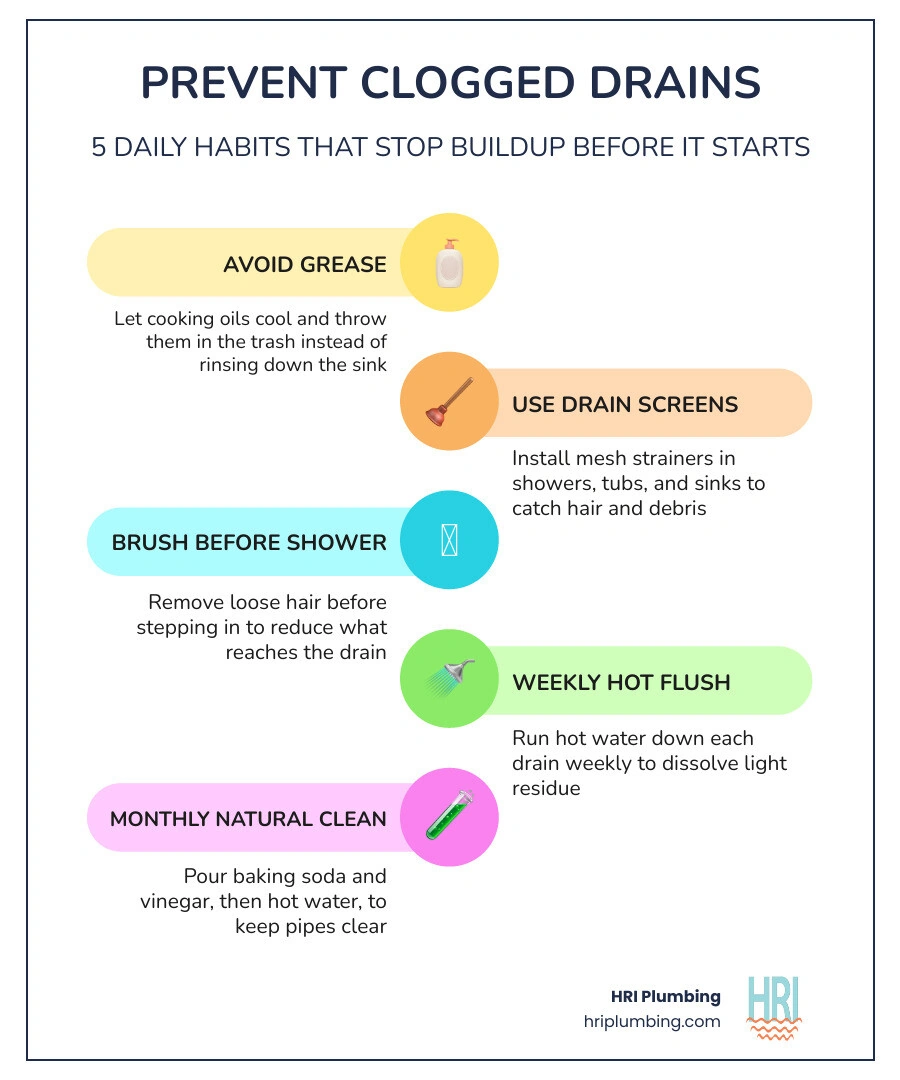
Here's a quick overview of the most effective ways to keep your drains clear:
- Keep grease, oils, and food scraps out of kitchen drains — let grease cool and toss it in the trash
- Install mesh drain screens in showers, tubs, and bathroom sinks to catch hair and debris
- Brush your hair before showering to reduce the amount that ends up in the drain
- Flush drains weekly with hot water to break up light residue before it hardens
- Use a baking soda and vinegar rinse monthly as a natural, pipe-safe maintenance treatment
Without these habits in place, buildup happens fast. In a multi-person household without a drain screen, a single shower drain can accumulate enough hair to cause a partial blockage in as little as 30 to 60 days. And households that regularly pour cooking oils down the sink can see significant pipe buildup within three to six months.
The sections below walk through each of these habits in detail — room by room — so you know exactly what to do (and what to stop doing) to keep your plumbing flowing smoothly.
Simple guide to how to prevent clogged drains at home terms:
How to Prevent Clogged Drains at Home with 5 Simple Habits
Preventative care is easier and far less stressful than dealing with a backed-up sink or tub. Keeping your plumbing system in good shape does not require special tools. In many cases, routine flushing, drain screens, and better daily habits can stop debris before it ever enters your pipes. You can also Help Prevent Clogged Drains by Being Mindful of What You Put Down Them to keep household drains clear.
Kitchen Habits: What Never to Put Down the Sink
Your kitchen sink is not a trash can. Even with a garbage disposal, many items should never go down the drain. Fats, oils, and grease are the biggest offenders. When poured down the sink as warm liquids, they cool and solidify inside pipes, trapping food particles and narrowing the line until water can no longer flow freely.
Starchy foods like pasta, rice, and potatoes can also swell and form a sticky paste. Coffee grounds, eggshells, and cake batter may settle in the P-trap and create blockages.
| Safe to Put Down Kitchen Drains | Never Put Down Kitchen Drains |
|---|---|
| Liquid dish soap and water | Cooking oils, lard, and butter |
| Thin, non-starchy food residues | Coffee grounds and eggshells |
| Ice cubes (for disposal cleaning) | Pasta, rice, and potato peels |
| Cold water | Chemical drain cleaners |
Bathroom Strategies: How to Prevent Clogged Drains at Home from Hair and Soap Scum
In the bathroom, hair and soap scum are the main causes of slow-draining sinks and showers. Hair catches on stoppers and pipe edges, while soap scum acts like glue, especially in hard-water areas.
Install mesh drain screens or silicone hair catchers over tub and shower drains, then clean them weekly. You can also learn How to Prevent Hair Clogs in Shower Drains by making small changes, such as brushing your hair before showering and switching from bar soap to liquid body wash.
Garbage Disposal Care: Keeping Blades Clear in Jacksonville, IL
Many homeowners in Jacksonville, IL treat garbage disposals like food processors, but they are designed for light food residue after plates have been scraped into the trash.
Always run cold water before, during, and for about 30 seconds after using the disposal. Cold water helps move small food particles through the system. Avoid fibrous foods like celery, onion skins, and corn husks, which can wrap around the blades and cause jams. For maintenance, grind a handful of ice cubes and a few citrus peels to reduce buildup and odors.
To protect your kitchen plumbing, make sure you know which items are safe:
- Understand that Only Certain Things Should Go Down the Garbage Disposal.
- Read our Garbage Disposal Cleaning Tips Jacksonville to maintain a fresh sink.
- Learn how to handle Persistent Garbage Disposal Odors safely.
- Find out how to Address Recurring Garbage Disposal Jams without damaging your appliance.
Safe DIY Maintenance: How to Prevent Clogged Drains at Home Naturally
When drains start running slowly, skip harsh chemical drain cleaners. Many commercial products are corrosive and can damage PVC, cast iron, or copper pipes. If they fail, you may also be left with standing water mixed with dangerous chemicals.
Instead, use a natural monthly rinse. Pour half a cup of baking soda into the dry drain, followed by half a cup of white vinegar. Cover the drain with a stopper or wet rag, let it sit for 15 to 30 minutes, then flush with hot tap water. Avoid boiling water if you have PVC pipes, since water over 140°F can soften pipe joints.
If you are noticing slow drains often, ask yourself: Do Your Drains Need to Be Cleaned? Catching minor buildup early helps prevent severe blockages later.
When DIY Prevention Fails: Recognizing Major Sewer Line Issues
Sometimes, despite your best preventative efforts, a clog still develops. While 90% of household drain clogs can be cleared with basic physical methods (like a plunger or a simple hand snake) in about 10 minutes for $0, some blockages are too deep or severe for DIY tools.
If you notice recurring clogs in the same fixture, gurgling sounds coming from your sinks, or multiple slow drains throughout your home, you are likely dealing with a deeper issue. It is important to know when to put down the plunger and call in a professional. Be sure to read about the common warning signs of deep blockages and explore Clogged Drains 3 Reasons for Calling a Plumber.
Identifying Single Fixture Clogs vs. Main Sewer Line Blockages
It is crucial to understand whether a clog is isolated to a single sink or toilet, or if it is located deep within your main sewer line.
An isolated clog only affects one fixture. For example, if your kitchen sink is backed up but your bathroom sinks and toilets drain perfectly, the clog is located in the kitchen's immediate drain line or P-trap.
A main sewer line blockage, however, affects your entire home. If you flush a toilet and water backs up into your bathtub, or if your toilet bubbles and gurgles when your washing machine drains, you have a main line issue. These deep blockages are often caused by tree roots seeking moisture and infiltrating pipe joints underground, or by years of grease and mineral scaling. Resolving a main line blockage requires professional diagnostic tools, such as a sewer camera inspection, to locate and identify the obstruction safely.
When to Call a Professional Plumber in Springfield and Rushville, IL
When DIY methods fail or you suspect a main sewer line blockage, it is time to call the experts at HRI Plumbing. Serving Jacksonville, Springfield, and Rushville, IL, our team provides fast, reliable, and honest plumbing solutions.
We use advanced techniques like hydro jetting—which blasts high-pressure water up to 4,000 PSI through your pipes—to completely clear away years of stubborn grease, mineral scale, and tree roots without damaging your plumbing system. We also offer 24/7 emergency plumbing services to handle sudden backups and keep your home safe from water damage.
For more localized tips and professional assistance, check out our helpful guides:
- Read our Drain Cleaning Jacksonville IL Guide.
- Review our Drain Cleaning Rushville IL Guide.
- Schedule our Professional Drain Cleaning Services to keep your home's plumbing flowing perfectly all year long.


